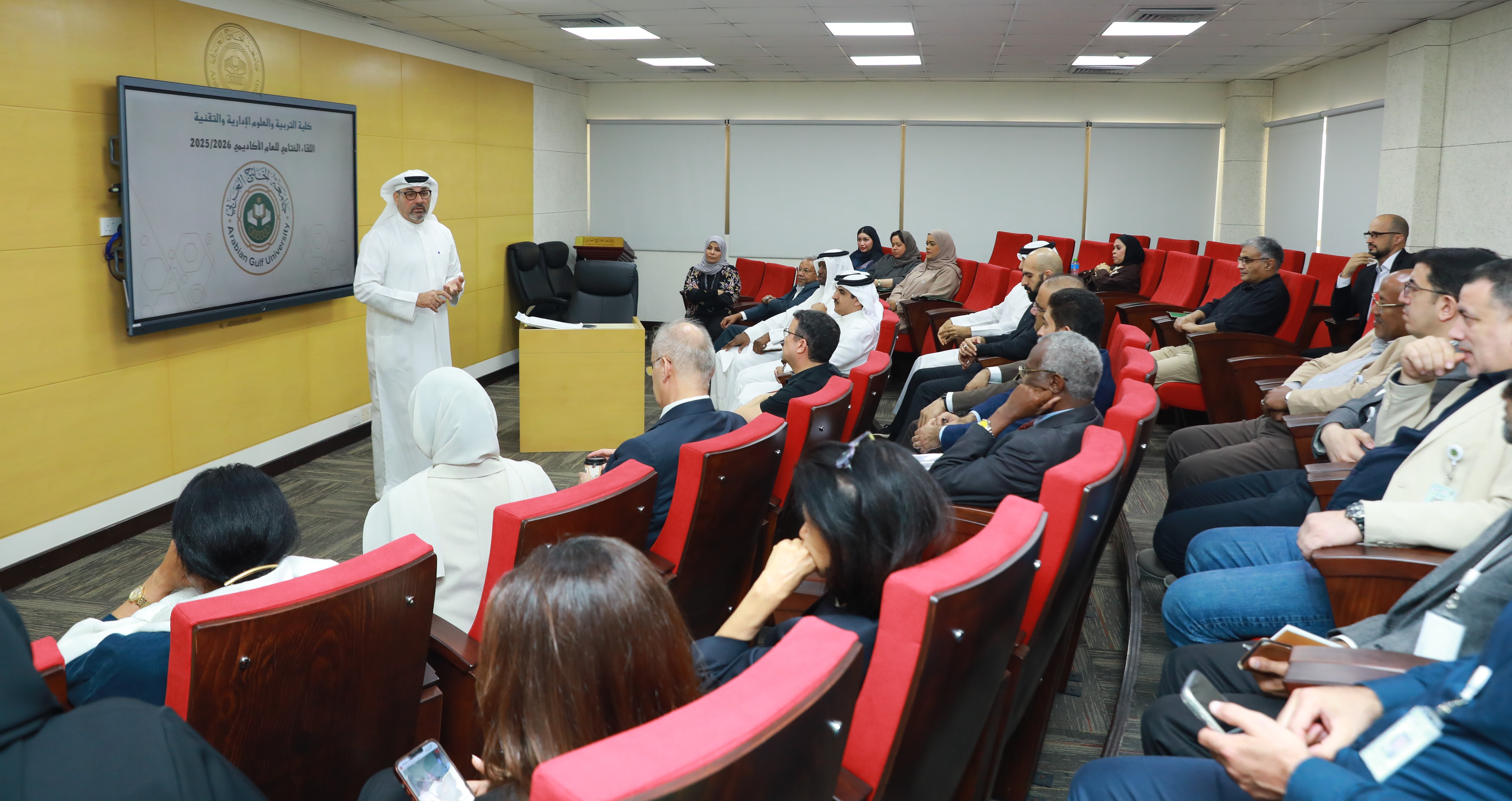
The College of Education, Administrative and Technical Sciences at Arabian Gulf University Showcases Its Academic, Research, and Community Achievements at an End-of-Academic-Year Meeting
Arabian Gulf University
30 Jun, 2026
The Dean of the College of Education, Administrative and Technical Sciences at Arabian Gulf University, Prof. Dr. Walid Zubari, reviewed the college’s most notable achievements during the 2025–2026 academic year, during the closing meeting organized by the college and attended by faculty members from various departments. He emphasized that these achievements reflect the college’s commitment to implementing the university’s strategic objectives and enhancing the quality of education, scientific research, and community service.
During the meeting, Dr. Zubari presented the college’s annual report, reviewing performance indicators that showed balanced growth across various academic, research, and institutional areas. The college comprises 49 faculty and administrative staff members, in addition to 33 associate professors, while the number of students stands at 250, distributed across its various departments, led by students in the Department of Business Administration, followed by the Department of Special Education.
The report indicated that the college offers 14 academic programs comprising 167 courses, and the current academic year saw the graduation of 42 students, in addition to the holding of 69 thesis defense committees and the approval of 72 research proposals, reflecting the college’s continued commitment to supporting the quality of graduate studies and advancing its academic outcomes.
In terms of research, the college produced 69 scholarly publications, including 54 research papers, 7 book chapters, and 4 scholarly books, with an average of 2.3 publications per faculty member, in addition to carrying out 18 research projects, with the Departments of Special Education and Business Administration topping the list of the most active departments in scientific publishing. The report also highlighted a number of international research achievements, including the filing of a U.S. patent application in the field of Internet address allocation, as well as faculty members receiving prestigious international awards, most notably the Berlyne Award from the American Psychological Association, and the Emerging Scholar Award in the field of gifted education, as well as winning first place for the best dissertation proposal in the field of autism.
In the context of strengthening institutional partnerships, Dr. Zubari noted that the college organized 280 scientific events, and its members participated in 185 academic and professional committees, in addition to signing a number of strategic cooperation agreements, including collaboration with Tabuk University on research consortia and visiting scholar programs, a partnership with Al-Salam Bank to reestablish Al-Salam Digital Education Lab, cooperation with the United Nations Industrial Development Organization (UNIDO) to establish a regional center for innovation and entrepreneurship on campus, and a partnership with the OAPEC Organization in the fields of energy and the environment.
At the same time, the college continues to actively support five scientific and academic chairs, including the His Majesty King Hamad Chair for Digital Education and the Shaikh Isa bin Salman Chair for Technology Management. It has also launched five vocational and professional diploma programs, most notably the STEM Diploma and the Cybersecurity Diploma, thereby helping to meet the needs of the job market and promote continued learning.
In terms of quality and academic accreditation, the academic year saw a number of significant achievements, most notably the inclusion of the College of Education’s programs in the Times Higher Education World University Rankings in the (301–400) category, the renewal of academic accreditation for the Department of Special Education’s programs through 2026; the completion of the external review of the master’s and doctoral programs in Innovation Management; the initiation of the review of the Natural Resources and Environment programs; and the organization of three regional training workshops in collaboration with the General Secretariat of the Gulf Cooperation Council and the Saudi Water Authority.
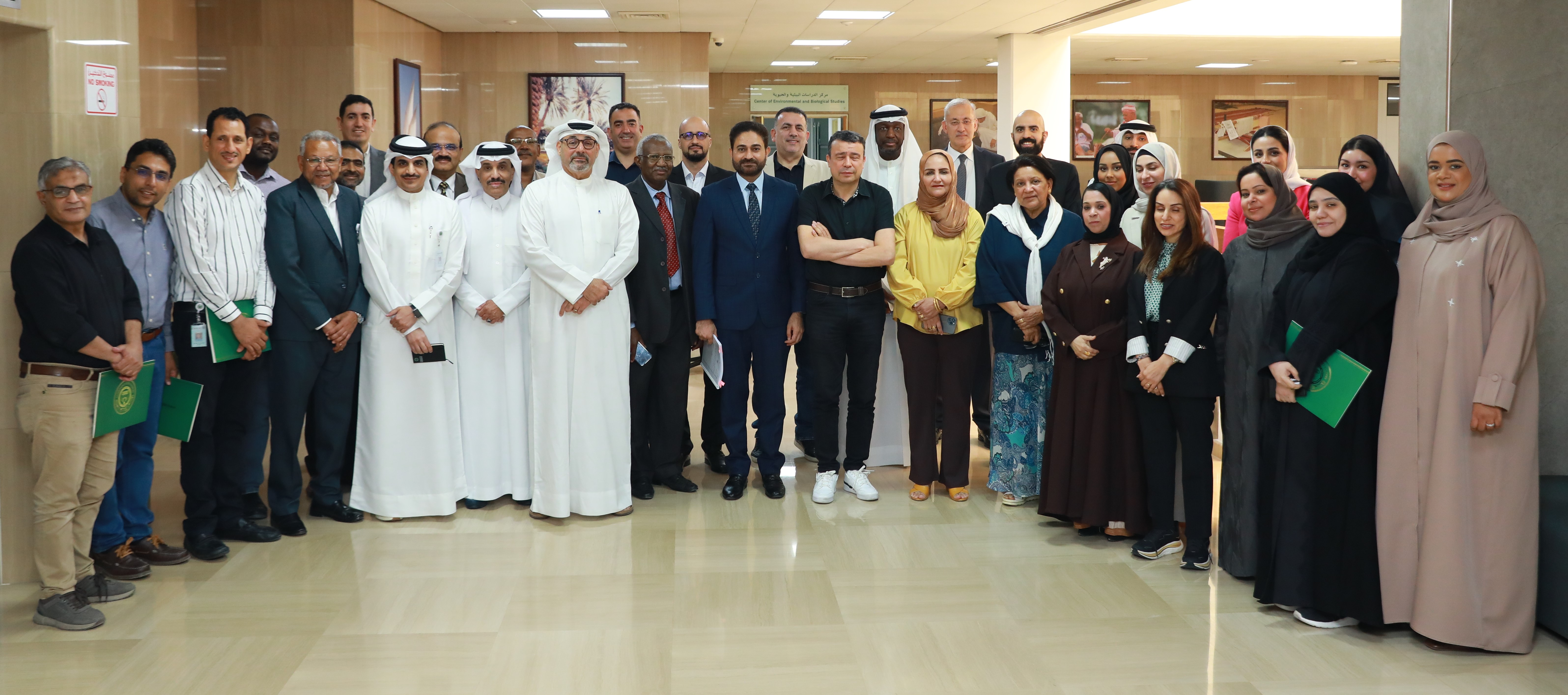
At the conclusion of the meeting, during which administrative staff supporting the college were honored, Prof. Dr. Walid Zubari affirmed that the college is moving steadily toward strengthening its academic and research standing regionally and internationally, noting that the next phase will focus on developing academic programs and aligning them with digital transformation and labor market needs; enhancing the quality of scientific research and publication in peer-reviewed journals; and expanding strategic partnerships to transform them into initiatives with tangible impact, thereby supporting the sustainability of community service at both the Gulf and regional levels.