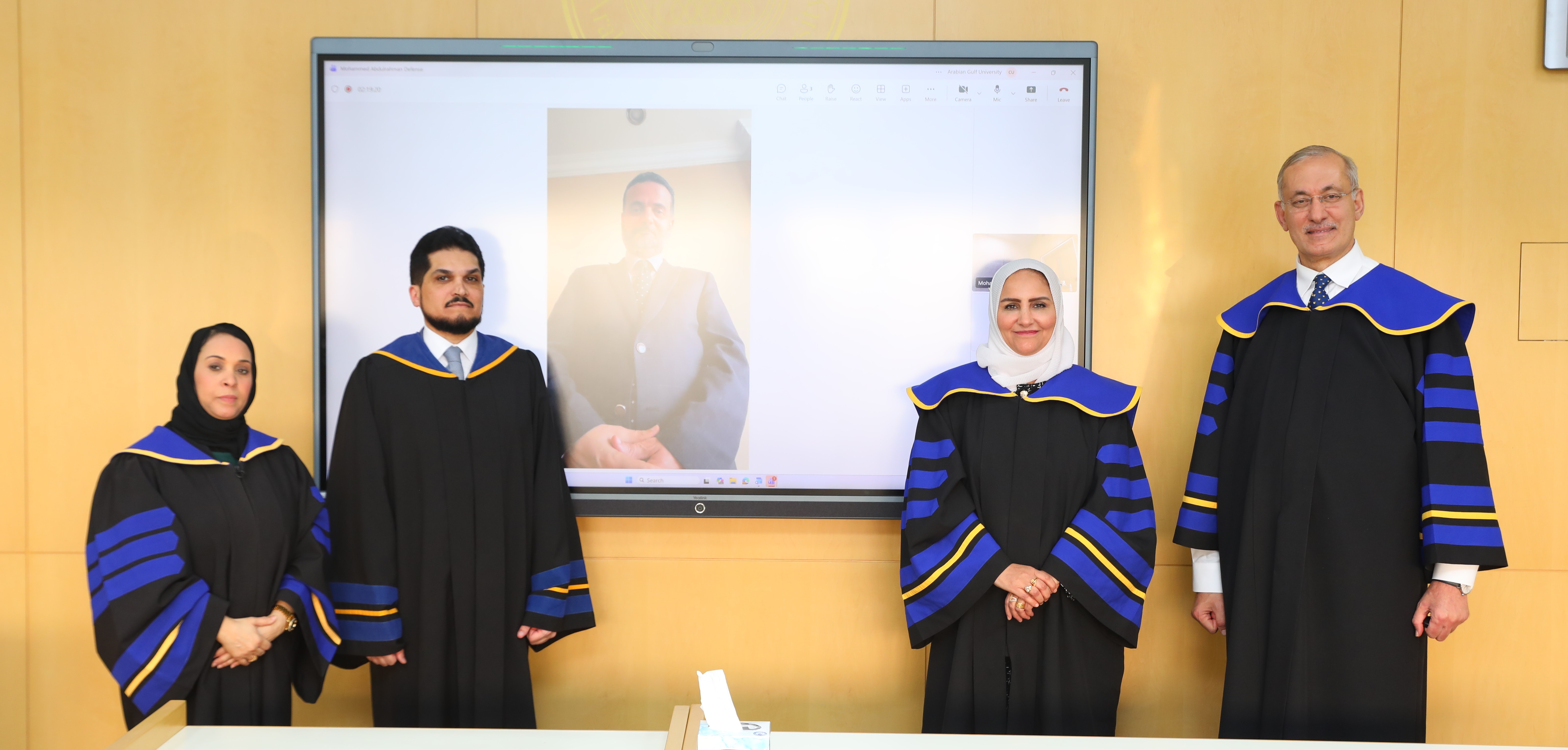
Al-Fares Presents PhD Dissertation on Developing an Innovative Global Framework for Diplomatic Transformation
Arabian Gulf University
12 Mar, 2026
Researcher Mohammed Abdulrahman Al-Fares, from the Innovation and Technology Management Programme at the College of Education, Administrative and Technical Sciences at Arabian Gulf University (AGU), discussed his PhD dissertation titled: “Innovative Diplomacy in Practice: Developing an Innovative Global Framework for Diplomatic Transformation.” The study aimed to analyse the radical transformations occurring in diplomacy amid accelerating globalisation, digitalisation, and shifting international power dynamics. It also proposed a global framework designed to redefine diplomacy as a dynamic system grounded in ethical leadership, strategic relevance, continuous learning, and comprehensive development.
The research found that diplomacy is evolving beyond traditional hierarchical models to embrace more flexible and comprehensive approaches, supported by digital infrastructure and multi-sectoral partnerships. However, several challenges such as institutional gaps, cybersecurity risks, and capability imbalances have emerged. In this context, the researcher developed a global innovation framework for diplomacy, the M.I.D. methodology, a six-stage roadmap to transition traditional diplomacy into a sustainable, innovative paradigm. This roadmap begins with resource and infrastructure preparation, raising awareness, and developing change leaders; then advances to adoption and integration via pilot projects and digital transformation, culminating in implementation and expansion of sustainable systems for managing data and agreements. Finally, it fosters global cooperation for lasting impact. This framework is characterised by its flexibility and adaptability at the local, regional, and global levels.
The researcher outlined his upcoming plans to promote his findings and advocate for the adoption of this framework as a globally recognised structure, encouraging countries to adopt it as a methodology for transitioning from traditional to innovative diplomacy. This framework can be localised to the specific circumstances of each country and issue. He described his thesis as a significant stride forward, balancing digital transformation with established values and comprehensive development, thereby providing policymakers with the clarity and tools necessary to build a more inclusive and sustainable future in the diplomatic field.
The study was supervised by Dr Afaf Bugawa, Associate Professor of Innovation and Technology Management, and Professor Odeh Al-Jayyousi, Professor of Innovation Policy.