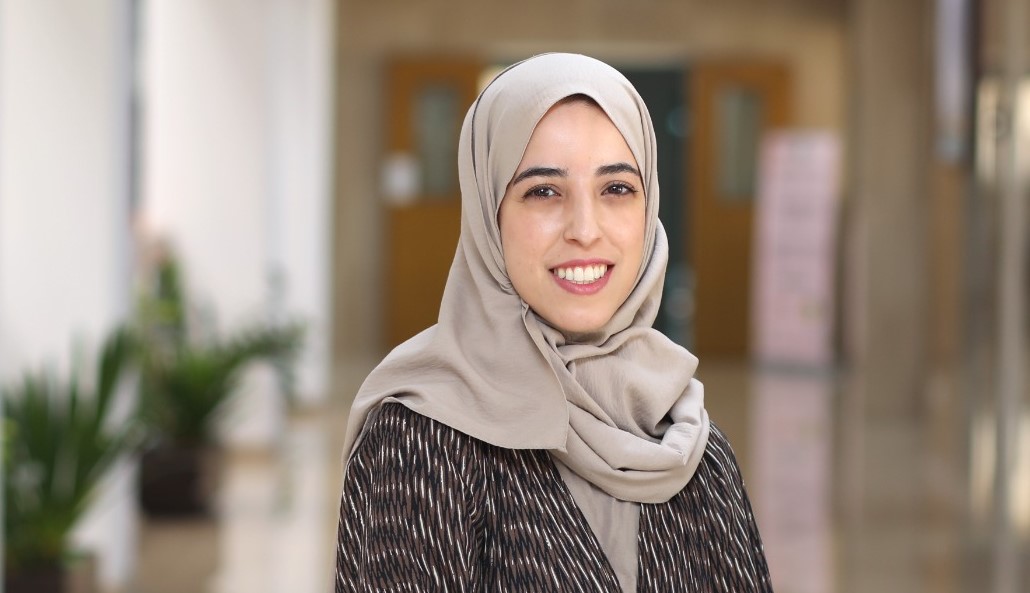
A Scientific Breakthrough in Treating Immune Disorders in Children Dr. Mariam Ashour Presents the Latest Advances in Pediatric Immune Disorders at Medical Conferences, Boosting Recovery Prospects
Arabian Gulf University
09 Apr, 2026
Dr. Mariam Farid Ashour, Assistant Professor in the Department of Pediatrics at the College of Medicine and Health Sciences and Head of the Community Service Unit at the Center for Consultancy and Training at Arabian Gulf University, affirmed that recent years have witnessed remarkable progress in the field of rheumatology and immunology in children, particularly in light of rapid developments in medical research and biotechnology, which opens new horizons for improving the quality of life for young patients and reducing long-term complications.
She noted that recent studies have focused on improving early diagnosis methods, as it has become possible to detect autoimmune diseases in their early stages using advanced genetic analysis and biomarker technologies, thereby helping to reduce the period of misdiagnosis, which previously posed a major challenge. She also highlighted the increasing collaboration between research centers and healthcare institutions to share data and develop standardized treatment protocols, which helps accelerate access to safer and more effective treatments.
In this context, biologic therapies have emerged as one of the most significant achievements in this field, as these medications precisely target the immune system, thereby reducing inflammation and preserving the function of joints and vital organs. Clinical trial results have shown significant improvement in children with conditions such as juvenile arthritis and systemic lupus erythematosus. Dr. Mariam Ashour, a consultant in pediatrics and rheumatology, emphasized that recent advances in treatments reflect a qualitative shift in the management of rheumatic and immune diseases in children, anticipating further achievements in the near future, driven by scientific innovation and ongoing international collaboration.
On the other hand, personalized medicine is gaining increasing attention, with treatment plans tailored to each child based on their genetic makeup and individual response to treatment, thereby enhancing treatment effectiveness and reducing side effects. Regarding comprehensive care, experts emphasize the importance of integrating medication with psychological support and physical rehabilitation, especially since chronic diseases can affect children’s physical development and mental well-being.
It is worth noting that Dr. Mariam Ashour recently participated in the 12th Annual Conference of the Saudi Society of Rheumatology, and the 4th Gulf Cooperation Council Rheumatology Conference, held in Jeddah, Saudi Arabia. She presented two research papers as part of the scientific program, reviewing the results of her research before a select group of specialists and experts in the field of rheumatology, within the framework of exchanging experiences and enhancing regional and international scientific cooperation.
As part of her efforts to raise awareness of pediatric rheumatic diseases at the national and regional levels, she also participated in the Second International Conference on Pediatrics, organized by the Royal Medical Services in the Kingdom of Bahrain, as a speaker in the “Meeting with Specialists” session, alongside a group of consultants and specialists in various fields of pediatrics. She delivered a lecture titled “Fever in Children from a Rheumatology Perspective,” in which she reviewed the precise diagnostic aspects of differentiating between common causes and rheumatic and inflammatory conditions, with a focus on clinical indicators that warrant early suspicion of systemic inflammatory diseases.