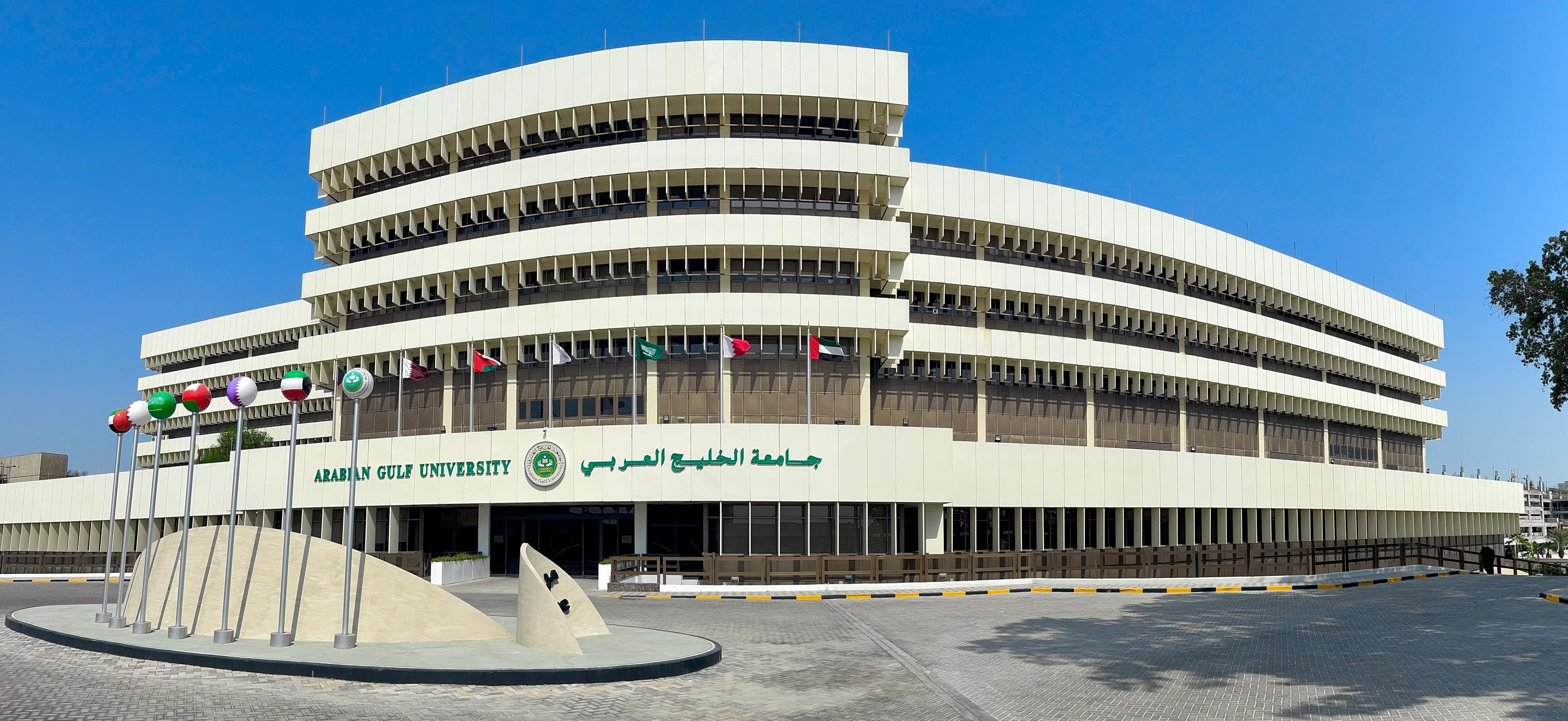
Marking the International Day of “Zero Waste”: The Arabian Gulf University Presents a Regional Model in Waste Managementt
Arabian Gulf University
30 Mar, 2026
The Arabian Gulf University (AGU) has reaffirmed the importance of transitioning towards sustainable production and consumption patterns that focus on reducing waste at source and maximising resource efficiency. This aligns with the circular economy approach, which has become a strategic option for addressing global environmental challenges, particularly climate change and the growing volume of waste.
Coinciding with the International Day of Zero Waste, AGU stands out as a leading regional model in advancing sustainability and environmental management. The University has adopted a comprehensive vision aimed at building human capacity and fostering innovation in environmental and green technologies. This is reflected in the launch of specialised academic and professional programmes, most notably the Professional Diploma in Waste Management, which is considered one of the region’s distinctive programmes. The programme aims to equip professionals with the skills needed to address contemporary environmental challenges by integrating theoretical knowledge with practical application.
Since its launch in 2021, the programme has attracted wide participation from across the GCC countries. It is supported by the United Nations Environment Programme and accredited by the Chartered Institution of Wastes Management, reflecting its quality and alignment with international standards.
The programme has graduated around 110 specialists from key sectors including industry, energy, healthcare, and municipalities. Graduates are actively contributing to the development of sustainable waste management practices in their respective countries, thereby enhancing the programme’s regional impact.

In this context, Dr Sumaya Yousif, Founder and Coordinator of the programme, Assistant Professor of Environmental Engineering at the Centre for Environmental and Life Sciences Studies within the College of Education and Administrative & Technical Sciences, and Director of the Corporate Communications Centre at AGU, stated that the programme is distinguished by its strong practical component, as it involves developing applied projects that address real-world challenges in municipal, industrial, medical, and agricultural waste management, in addition to organising field visits to recycling and waste treatment facilities, thereby strengthening the link between knowledge and practice.
She further emphasised that academic institutions are no longer limited to education alone, but have become active partners in achieving the Sustainable Development Goals (SDGs) and key drivers of change towards more aware and resource-efficient societies. Achieving the goal of “Zero Waste,” she noted, is a shared responsibility that requires collaboration between individuals and institutions. Investment in specialised education and capacity building, as exemplified by AGU, remains one of the most important pathways towards a more sustainable future.
The programme has also succeeded in building a regional network of experts, supporting institutions in developing waste reduction strategies, and enhancing institutional awareness of the importance of transitioning to a circular economy. It has further contributed to reducing environmental impact and promoting innovation in sustainable solutions. The University reaffirmed its commitment to continuously developing the programme through successive editions that respond to future challenges, reinforce the use of green technologies, and further embed sustainability concepts across the region.