

Master of Science in
Laboratory Medicine
MLM Program has three major areas of specialization, namely: Medical Biochemistry, Medical Microbiology and Immunology, and Pathology (Hematology)
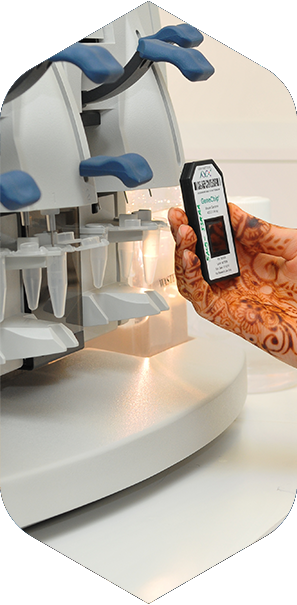
The Master of Science in Laboratory Medicine (MLM) program focuses on diseases representing a health burden in the countries of the Gulf Cooperation Council (GCC) and addresses specific disorders (genetic, neoplastic, infectious, immunologic and nutritional) which are of current concern.
The program seeks to foster interdisciplinary and interprofessional understanding and action. This two-year program leads to a Master of Science degree.

Specialized tracks in Medical Biochemistry, Medical Microbiology & Immunology, and Pathology (Hematology).

Strong focus on diseases representing major health burdens in GCC countries.

Interdisciplinary and interprofessional learning environment that promote collaboration and advanced laboratory medicine practice

Comprehensive curriculum integrating foundational core courses with advanced specialty modules.

Research-oriented training with laboratory-based thesis projects.
Curriculum
Structure

Semester 1 - Core Courses
12 Credit Hours

Semester 2 - Specialization courses
12 Credit Hours

Semester 3
4 Credit Hours
Semester 4 - Thesis
8 Credit Hours
Credit Requirement

Three specialization tracks

Track 2: Medical Microbiology & Immunology

track 1: Medical Biochemistry

Track 3: Pathology (Hematology)
Target
Audience

Science Graduates
planning a career in the area of laboratory medicine
Technicians
wishing to upgrade their expertise in specialized areas of laboratory medicine
Healthcare Professionals
interested in Laboratory Medicine

Science Graduates
pursuing Clinical Diagnostics and Molecular Research Careers
Research
Areas
Hematopathology research
Microbiology research
Biochemistry research

Study Plan
Explore the complete list of courses
LEarning
& Research facilities
Well-equipped specialized laboratories
Lecture rooms
Biological Safety Level 2 (BSL-2) laboratories
Specialized molecular biology laboratory
Translational laboratories
LEarning
Outcomes

Perform advanced techniques utilizing modern instrumentation and methodologies.

Utilize data entry software and analyze results of experiments reaching reasonable conclusions. Develop oral and written communication skills to effectively convey their ideas, plans, and results of experiments at various scientific levels.

Plan and carry out research projects relevant to the needs of their respective communities within the framework of their laboratory capacities.

Demonstrate a full understanding of ethical issues inherent in medical research involving animals or humansDemonstrate leadership capabilities in managing laboratories including the evaluation of cost-benefit of various techniques to be adopted.
Ready to take
the NExt Step?
Join AGU and be part of a community that shapes leaders and innovators.
Apply Now