
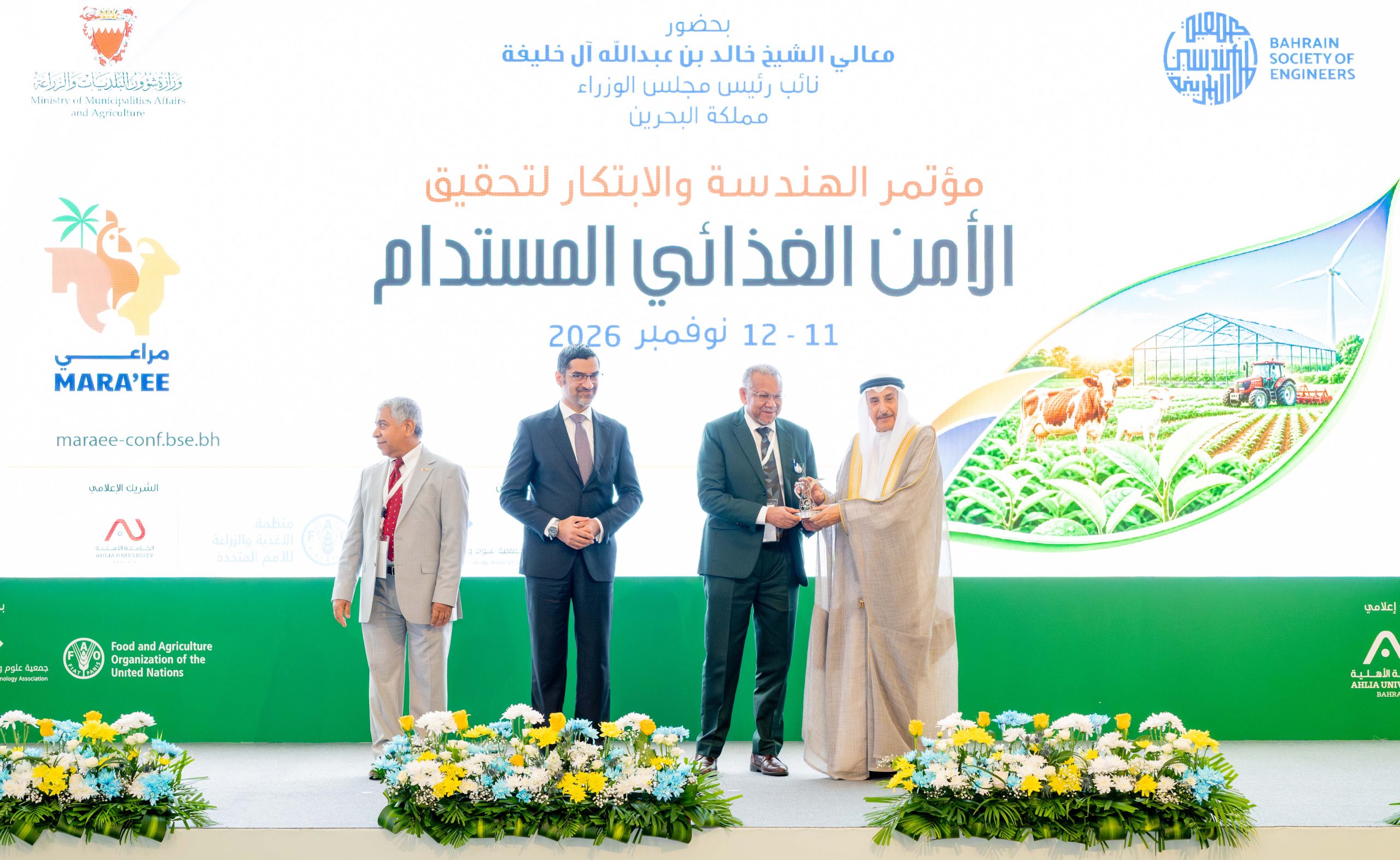
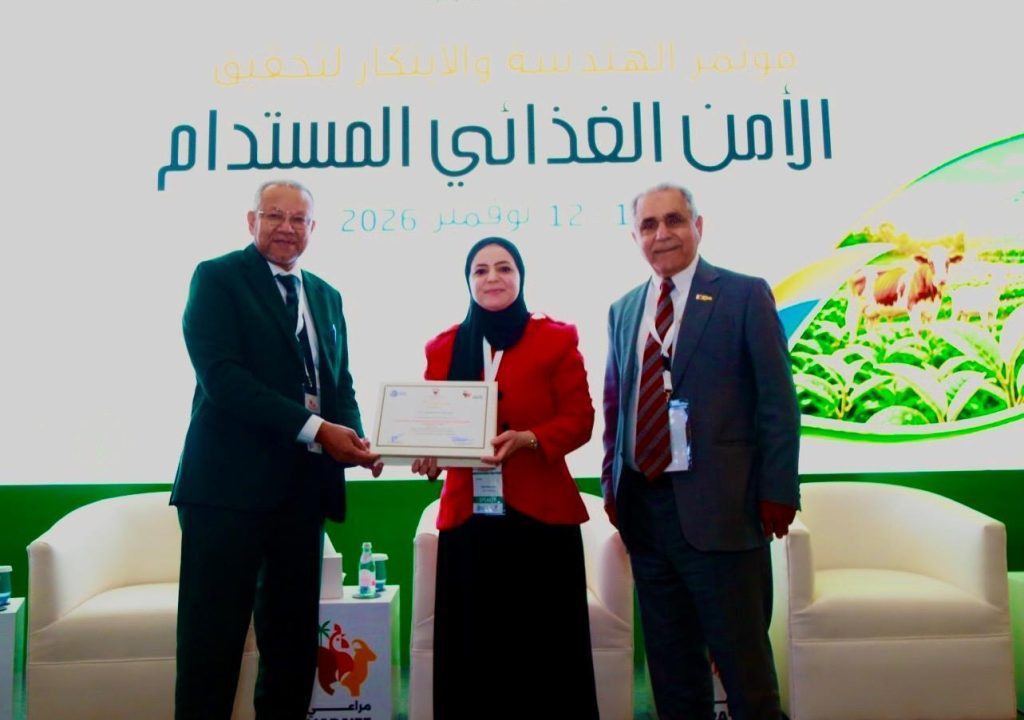
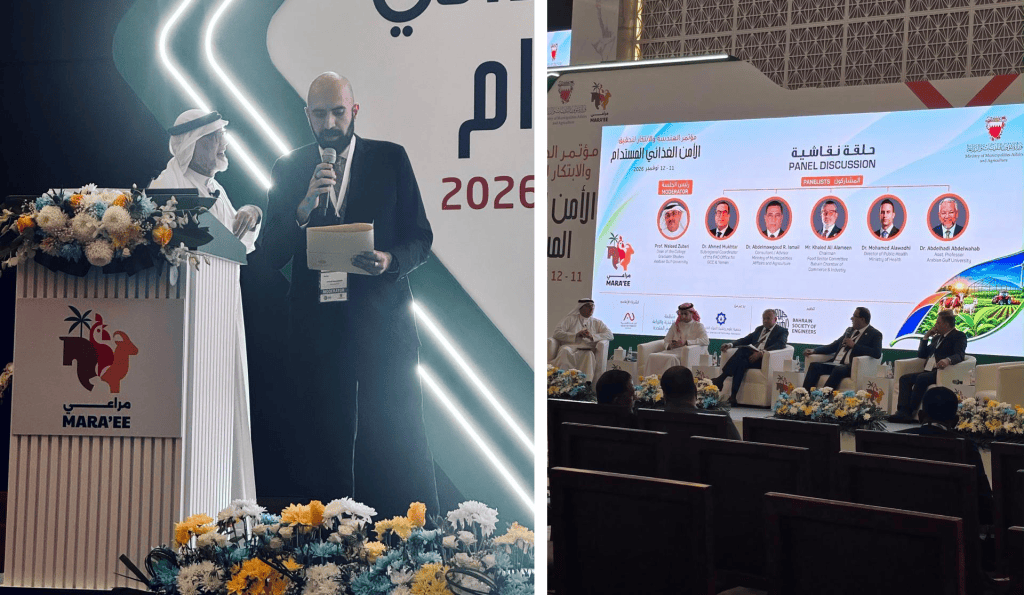
A number of faculty members and students from Arabian Gulf University highlighted issues of food security and sustainability in the Gulf Cooperation Council (GCC) countries through research papers and innovative projects they presented during their participation in the “Engineering and Innovation to Promote Sustainable Food Security 2026 ,” organized by the Ministry of Municipalities Affairs and Agriculture in collaboration with the Bahrain Society of Engineers and hosted by the Gulf Convention Center at the Gulf Hotel in the capital, Manama. The event brought together a select group of academics, researchers, and specialists in the fields of agriculture, engineering, and the environment.
The conference discussed the latest engineering applications and innovative technologies that support food security, as well as ways to develop agricultural and livestock production and improve the efficient use of natural resources, in light of the environmental and climate challenges facing countries in the region.
During the conference, the Dean of the College of Education, Administrative and Technical Sciences, Professor of Water Resources Prof. Dr. Walid Zubari, delivered a keynote presentation titled “Food Security in the Gulf Cooperation Council Countries: From Dependence to Resilience,” in which he addressed the most significant challenges related to food security and ways to strengthen the region’s capacity to build more sustainable and resilient food systems.
Prof. Dr. Zubari also chaired a panel discussion featuring Dr. Mohamed Al-Awadi, Dr. Abdulhadi Abdulwahab, and Dr. Ahmed Mokhtar, representing the Food and Agriculture Organization of the United Nations (FAO), and Dr. Abdulmawjud Rajab Ismail, representing the Ministry of Municipalities Affairs and Agriculture of the Kingdom of Bahrain. The session addressed the most significant issues and trends related to the future of food security in the region.
For his part, Dr. Abdulhadi Abdulwahab delivered a scientific presentation on quinoa production using soilless cultivation techniques, as well as a keynote presentation titled “Smart Irrigation for Date Palms in Open Fields: Enhancing Productivity and Rationalizing Irrigation Water Consumption,” in which he reviewed the potential of smart technologies to improve the efficient use of water resources and increase agricultural production. He also chaired a scientific session titled “Food Security and Sustainable Management.”
In the area of sustainable water resource management, Dr. Fadia Mohammed Tashoush presented a research paper titled “Assessment of the Sustainability of Wastewater Management in the Kingdom of Bahrain,” in which she addressed a vital aspect related to the sustainability of water resources and the importance of developing their management in a way that supports environmental goals and contributes to enhancing both water and food security.
Students from the College of Education, Administrative and Technical Sciences made a notable contribution to the conference through a series of research and applied projects that focused on devising smart and sustainable solutions to agricultural and environmental challenges, improving the efficiency of natural resource management, and supporting the food security system in the Kingdom of Bahrain and the Gulf Cooperation Council (GCC) countries.
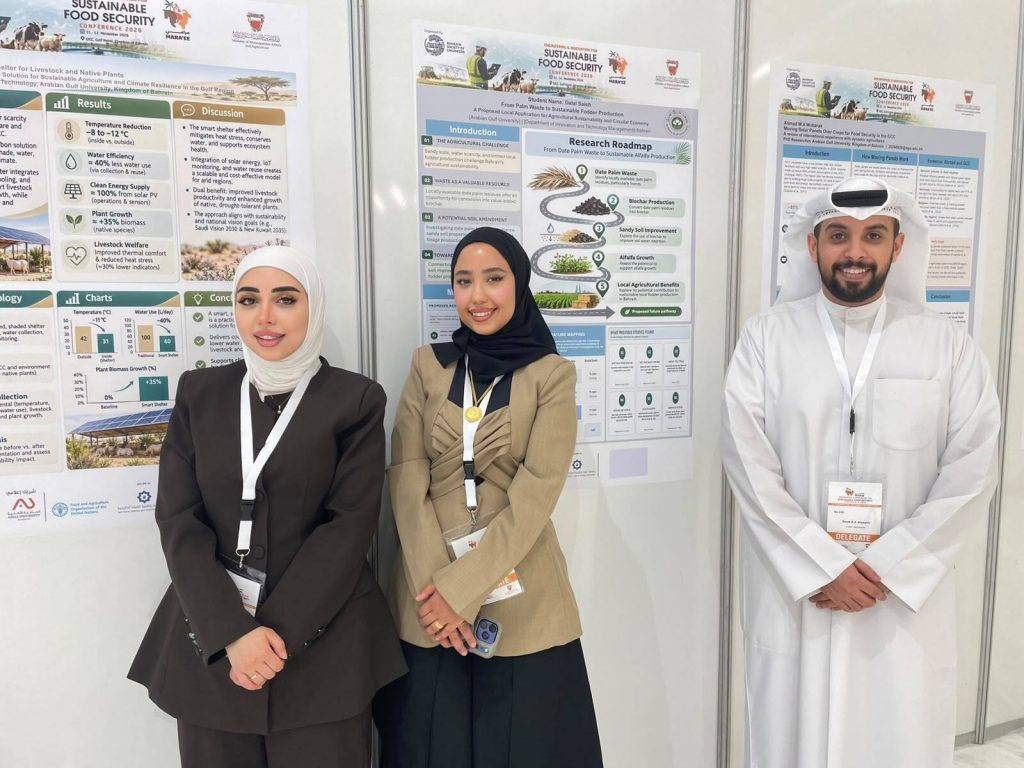
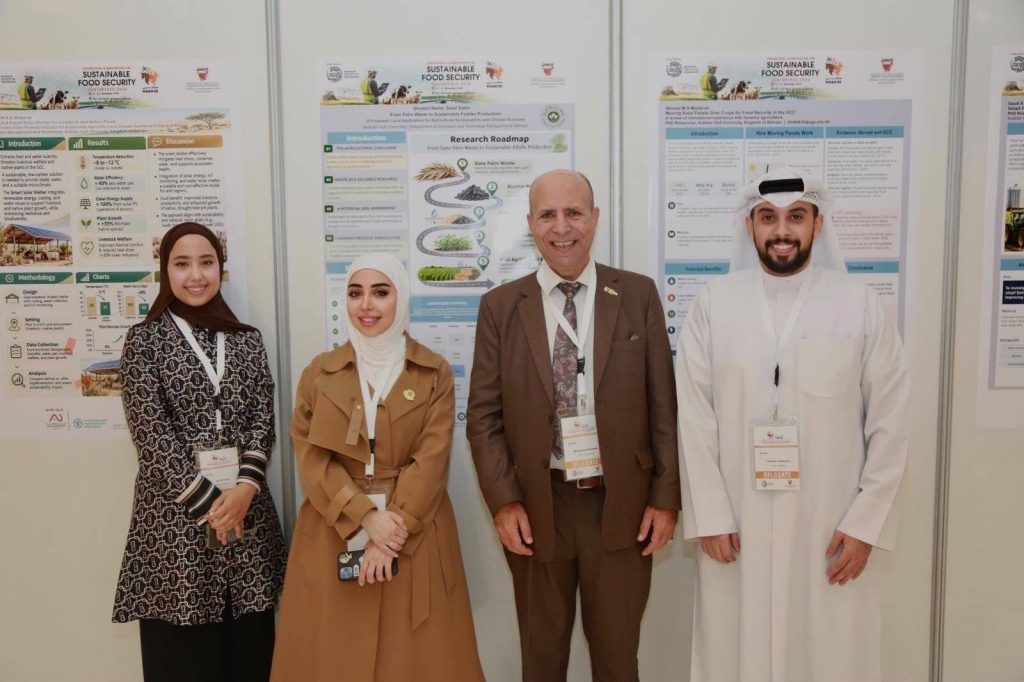
In this context, student Saud Al-Azmi presented the project “Smart Farming Technologies to Enhance Food Security in Bahrain,” highlighting the role of modern technologies in developing the agricultural sector and strengthening its ability to contribute to the food security system. Meanwhile, student Batoul Mubarak presented the project “Dhill: A Smart Solar Shelter for Livestock and Native Plants,” which utilizes solar energy solutions and smart design to provide a suitable environment for livestock and native plants.
In the field of livestock production infrastructure development, students Alia Al-Hassawi and Asma Jumaa presented the project “Hexagonal Collection Center for Milk Transport Lines Serving Six Dairy Farms in Kuwait,” which offers an engineering model for developing milk collection and transport mechanisms and improving the efficiency of operational processes at dairy farms.
Student Ahmed Mubarak also presented the project “Adaptive Photovoltaic Agricultural Shading Systems for Sustainable Tomato Production in the Gulf Cooperation Council (GCC) Countries,” which aims to utilize solar energy and smart shading systems to improve agricultural production conditions and enhance sustainability in Gulf environments.
As part of efforts to utilize agricultural waste and convert it into value-added resources, student Dalal Saleh presented the project “Biochar Extracted from Date Palm Waste to Improve Sandy Soil and Support Sustainable Alfalfa Production in Bahrain,” which focuses on repurposing date palm waste to improve soil properties and increase agricultural production efficiency.
The projects presented by the university’s students reflect the diversity of innovation in the agricultural sector, ranging from smart agriculture and renewable energy to the development of livestock production systems and water resource management, to soil improvement and the utilization of agricultural waste. This approach promotes the application of scientific research and technology in developing practical solutions to agricultural and environmental challenges, and contributes to building a more efficient and sustainable food system in Bahrain and the Gulf region.
Arabian Gulf University’s participation in the conference is part of its commitment to strengthening its scientific presence in specialized forums, linking scientific research and innovation to priority development challenges in the Gulf Cooperation Council countries, and enriching the research and practical experiences of its students, and providing them with the opportunity to present their ideas and projects to specialists, experts, and decision-makers, and to exchange knowledge and expertise with them. This helps hone their skills and prepare qualified Gulf professionals to utilize scientific research and innovation in supporting sustainable development and enhancing food security in the region.