

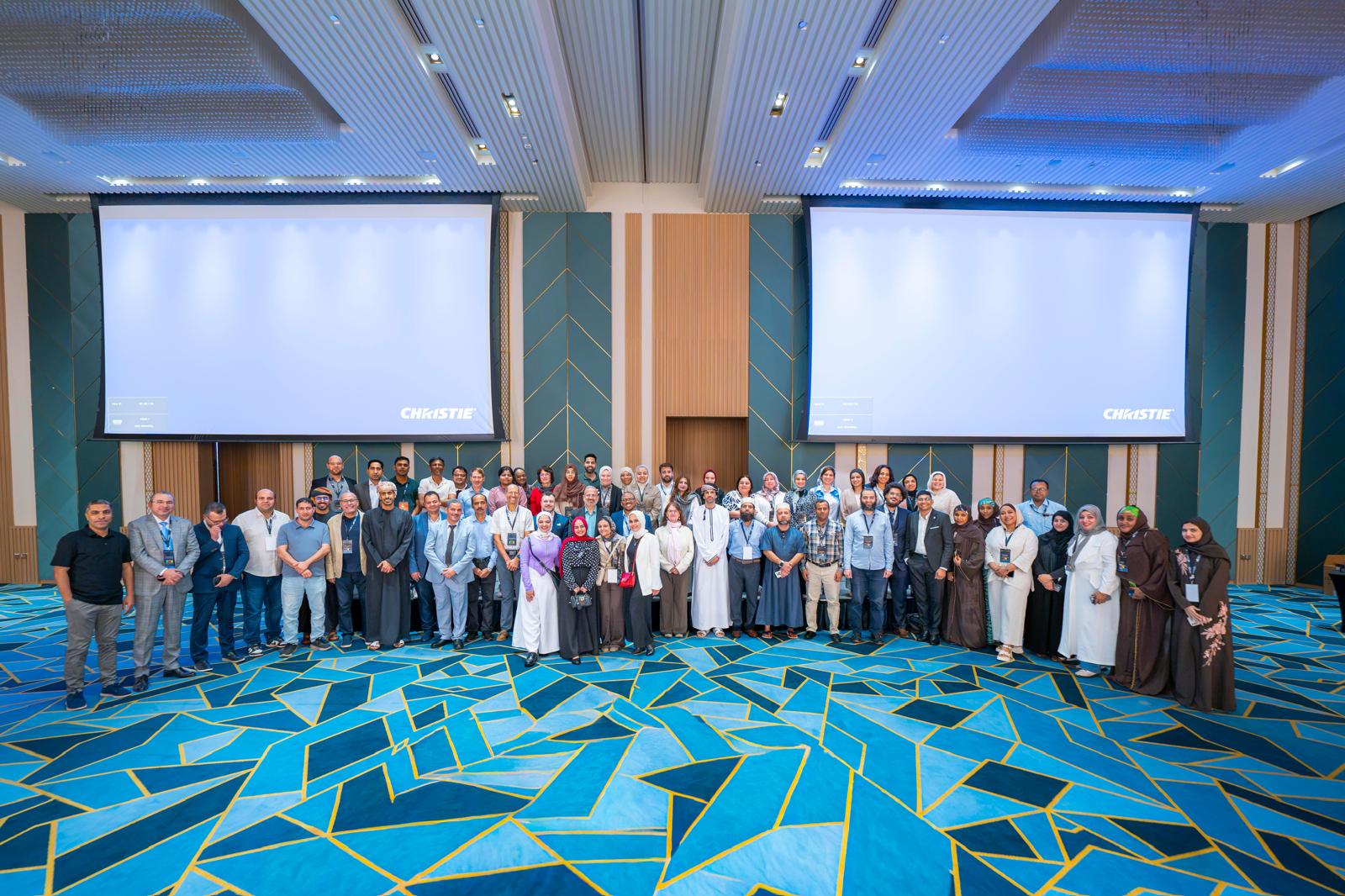
Arabian Gulf University participated in the 4th International Conference on Environmental Microbiology and Biotechnology, organized by the Department of Biology at the College of Science at Sultan Qaboos University, in collaboration with the Middle East Society for Microbial Ecology and Biotechnology (MESME), in the Omani capital of Muscat, with the participation of a select group of researchers, academics, and specialists from around the world.
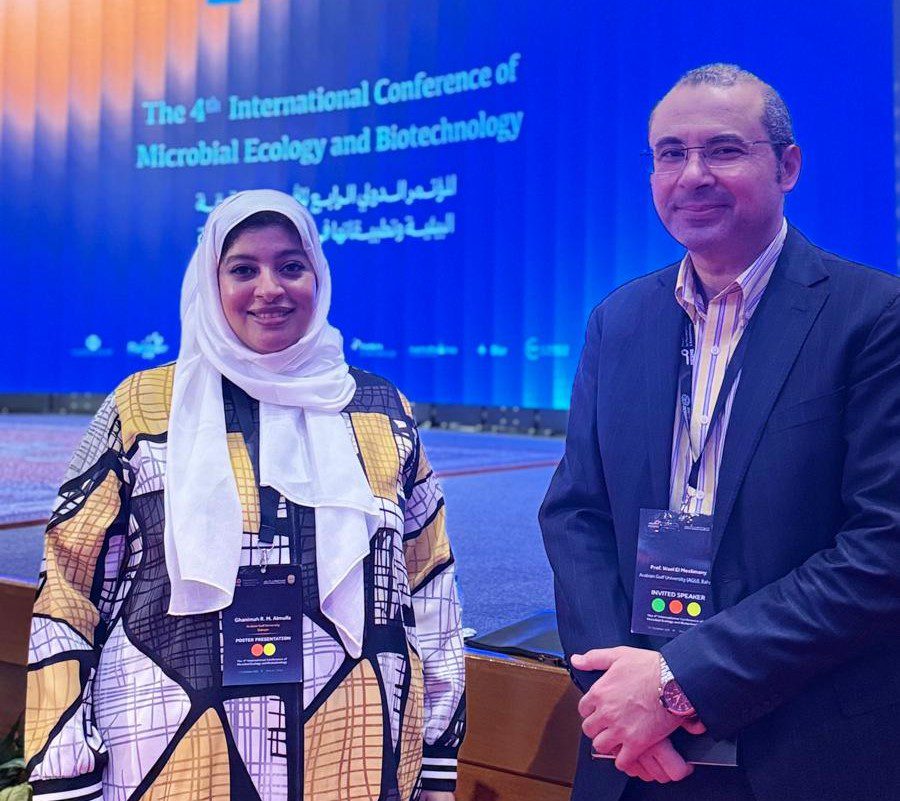
The university was represented at the conference by Prof. Dr. Wael Ahmed Al-Meslamani, Professor of Environmental Microbiology and Biotechnology at the Center for Environmental and Biological Studies, and Ph.D. student Ghaneima Al-Mulla. Their participation reflects the university’s commitment to strengthening its presence in international scientific forums, exchanging research expertise, and developing academic cooperation in fields related to environmental sustainability and innovative biotechnological applications.
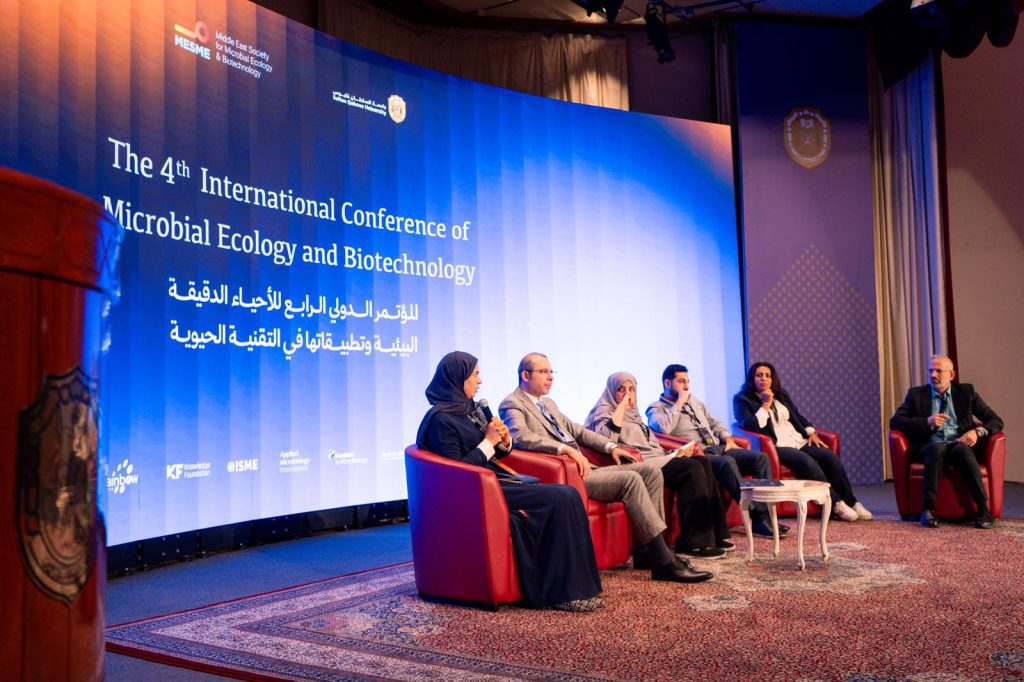
The conference aimed to strengthen regional and international scientific cooperation among academic and research institutions concerned with microbiology and its applications in biotechnology, review the latest studies and innovations in the field of environmental microbiology, and apply research findings to develop practical solutions to challenges related to the environment, agriculture, and industry.
During the conference, Professor Wael Al-Meslamani presented the findings of a scientific study titled “Functional Responses and Compositional Changes in a Halophilic Bacterial Community During the Biodegradation of Oily Sludge from Oil Spills.”
The study highlights the role of bacterial communities adapted to high-salinity environments in biodegradation processes, as well as the potential these processes offer for developing innovative environmental solutions to treat oil spills and mitigate their impacts, particularly in harsh environments.
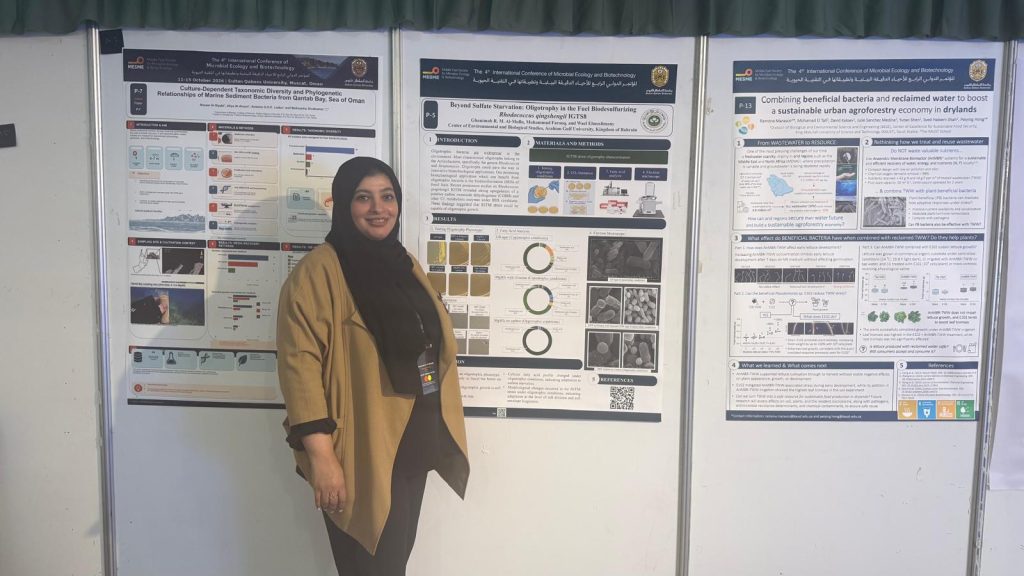
For her part, Ph.D. student Ghaneima Al-Mulla presented a research poster titled “Beyond Sulfate Deficiency: Oligotrophy in Bacteria Capable of Biosulfur Removal from Fuel,” which addressed a research topic related to understanding the physiological characteristics and nutritional requirements of bacteria involved in the biosulfur removal from fuels, thereby supporting the advancement of scientific knowledge in the field of biotechnology and its industrial and environmental applications.
The conference lasted four days, with the participation of 12 speakers from international universities and scientific institutions in the Middle East, North Africa, Asia, and Europe, as well as researchers representing 28 countries.
Its sessions covered a variety of topics in microbial ecology, the microbiome, biotechnology, and sustainability, while also exploring the research potential offered by the unique environments of the Middle East—including desert, marine, and hot spring environments—and encouraging the use of their characteristics to develop innovative scientific applications.
Furthermore, the conference focused on enhancing knowledge transfer and the application of modern technologies, linking basic research to practical applications, as well as supporting young researchers and graduate students by providing opportunities to present research, exchange experiences, network with experts, and build international research collaboration networks.
Arabian Gulf University’s participation in this conference is part of its efforts to strengthen its scientific presence regionally and internationally, expand opportunities for cooperation with academic and research institutions, and contribute to the development of biotechnology-based solutions to address environmental and industrial challenges. Such participation also provides opportunities to exchange knowledge and expertise, support researchers in their scientific careers, and explore new avenues for research collaboration and the development of scientific applications with a sustainable impact.