

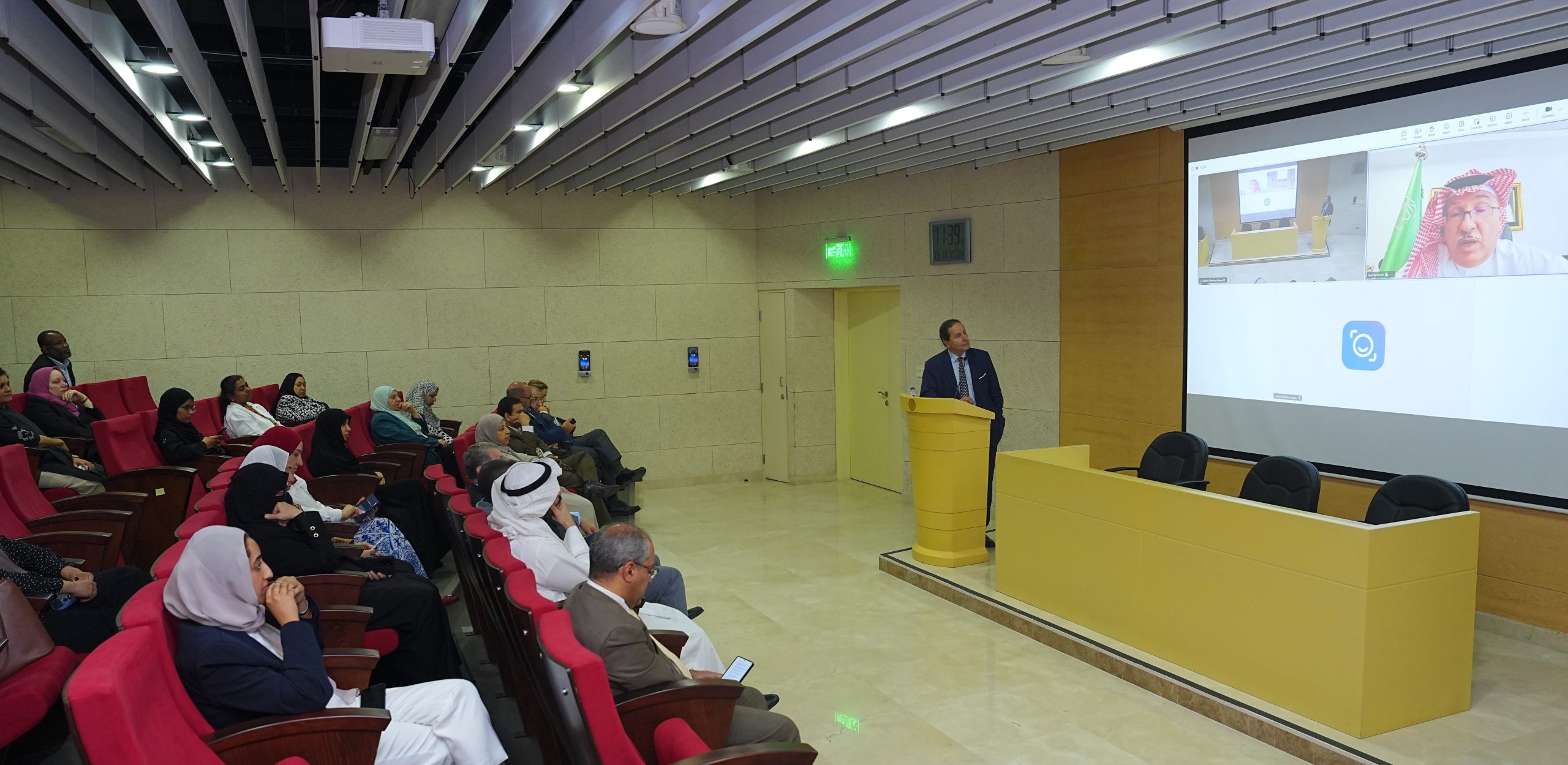
The College of Medicine and Health Sciences at Arabian Gulf University, as part of the activities of the His Highness Shaikh Jaber Al-Ahmad Al-Sabah Academic Chair in Clinical Microbiology and Immunology, organized a specialized scientific symposium titled “Transboundary Infectious Diseases: Prevention and Control.” The symposium addressed the evolving challenges posed by emerging and re-emerging infectious diseases to public health systems, as well as the risks of pandemics and their repercussions in light of environmental changes, migration patterns, increasing rates of international travel, and large gatherings.
The symposium aimed to raise awareness of cross-border health challenges, exchange scientific expertise on ways to prevent and contain infectious diseases, and review modern practices and trends aimed at enhancing preparedness and response to epidemic outbreaks, with a focus on the reality and health needs of the Gulf Cooperation Council (GCC) countries.
The symposium was accredited for four hours of Continuing Medical Education (CME) by the university’s Department of Microbiology, Immunology, and Infectious Diseases. A number of academics, experts, and consultants participated in the scientific program, presenting papers that addressed key issues in the field of infectious disease prevention and control.
Dr. Abdullah Al-Saleh, Head of the Department of Microbiology, Immunology, and Infectious Diseases, stated that the symposium included interactive scientific sessions that highlighted the most significant developments and challenges in this field. It also featured a presentation titled “Mass Gathering Medicine,” presented by Professor Ziad Maimash, Senior Advisor to the General Supervisor of the King Salman Humanitarian Aid and Relief Center and a professor at Al-Faisal University in Riyadh, which addressed the health aspects associated with large human gatherings and the challenges they pose to healthcare systems and public health frameworks.
For his part, Prof. Dr. Mohamed Ridha Barbush presented a working paper titled “Vaccine-Derived Viruses and Their Risks to Polio Eradication,” while Dr. Adel Al-Sayed, Public Health Advisor at the Ministry of Health in the Kingdom of Bahrain, reviewed the key lessons learned from the COVID-19 pandemic to enhance preparedness for future outbreaks in the Kingdom.
Dr. Lamine Sham also discussed ways to reduce the burden of respiratory syncytial virus (RSV) among the elderly and groups most vulnerable to complications, emphasizing the role of targeted vaccination in preventing infection and its complications.
Professor Dr. Mohamed Hani Shehata, Head of the Department of Family and Community Medicine at the university, concluded the scientific sessions of the symposium with a paper addressing “The Challenges of Community Vaccination and the Potential Risks of Increasing Hesitancy Toward Vaccines.”
The sessions featured scientific discussions that allowed participants to exchange views, experiences, and knowledge, and to propose shared perspectives for addressing contemporary health challenges across the Gulf region.
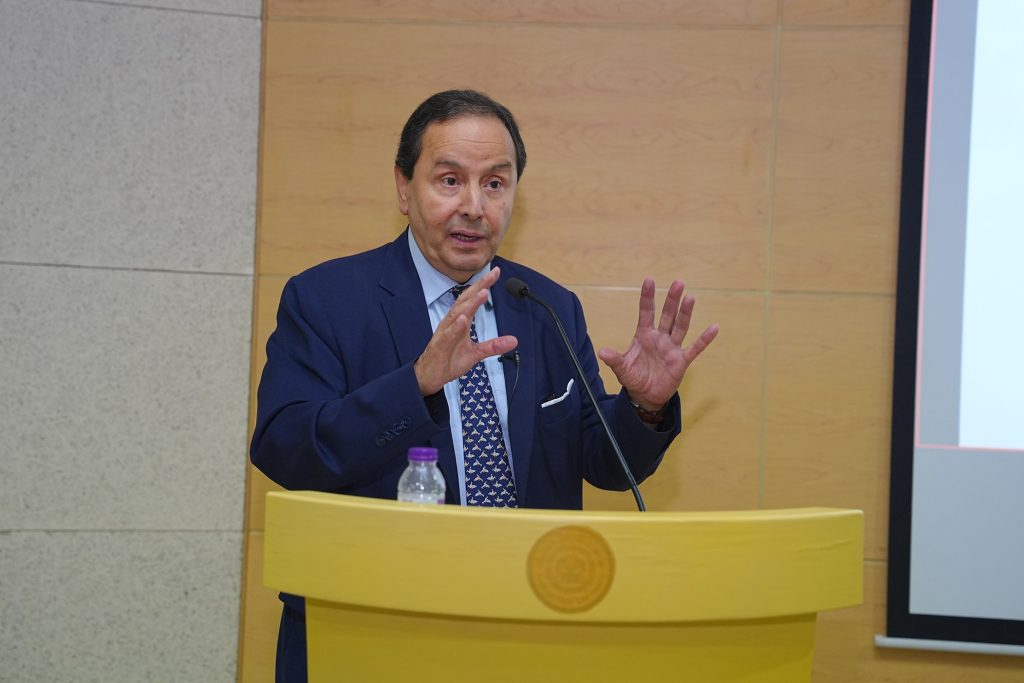
The symposium concluded with a number of recommendations, most notably the importance of adhering to polio vaccination programs—particularly among patients with primary immunodeficiency—to limit the likelihood of the emergence and spread of vaccine-derived viral strains. It also emphasized the importance of strengthening prevention against respiratory syncytial virus (RSV), particularly among children and the elderly, through adherence to recommended vaccination programs.
Participants also emphasized that one of the most important lessons learned from the COVID-19 pandemic is the importance of continuously monitoring global epidemiological developments and strengthening the readiness of health facilities and medical personnel, thereby contributing to the consolidation of community-based prevention and early preparedness to confront any future pandemics. They affirmed that the success of these efforts requires government support and effective international cooperation.
Participants also noted that building public confidence in vaccination programs is largely linked to effective health education and the role of healthcare practitioners in providing evidence-based scientific recommendations, underscoring the importance of training physicians to communicate with patients and explain the role of vaccines in limiting the spread of diseases and preventing their complications.
The symposium was organized as part of the scientific efforts undertaken by the Shaikh Jaber Al-Ahmad Al-Sabah Academic Chair in Clinical Microbiology and Immunology, with the aim of promoting scientific research, education, and innovation in the fields of microbiology and immunology, and expanding the horizons of collaboration among related disciplines, thereby contributing to addressing the challenges posed by infectious diseases in the region.
The Chair works to fulfill its mission by providing high-quality medical education, supporting pioneering research, and fostering scientific collaboration among different institutions and disciplines, as well as attracting outstanding talent, increasing research funding, and developing research capabilities in the coming years, with the aim of establishing a research center that enjoys international prominence and recognition in the fields of clinical microbiology and immunology.