

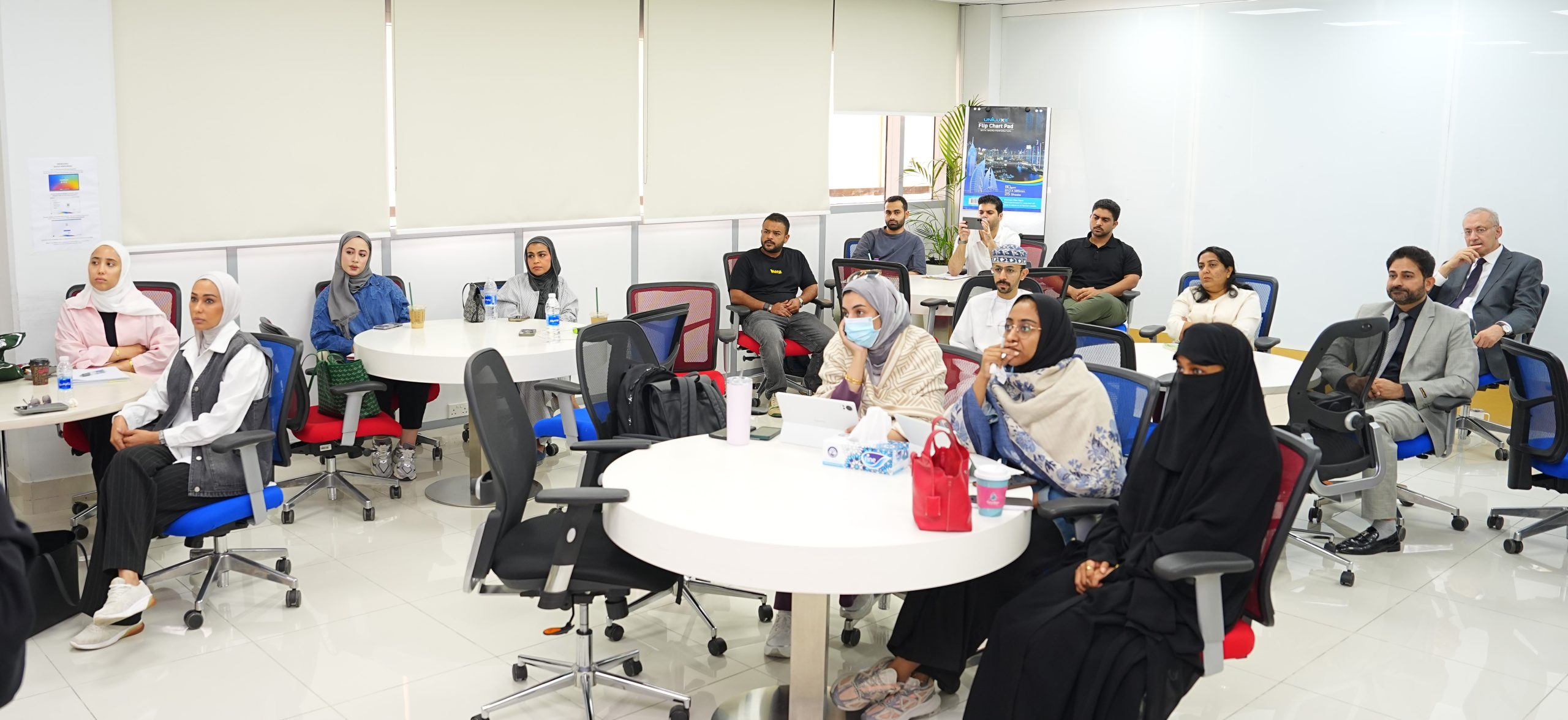
The Center for Environmental and Biological Studies at Arabian Gulf University, as part of the activities of the Chair of His Highness Sheikh Zayed bin Sultan Al Nahyan for Environmental Sciences, organized an interactive scientific lecture titled “The Hierarchical Analysis Process for Environmental Decision-Making.” This event was part of the Center’s efforts to introduce scientific tools that support environmental decision-making and to strengthen the link between scientific research and environmental planning in the Gulf Cooperation Council (GCC) countries.
The lecture addressed the importance of following clear scientific methodologies in environmental decision-making, particularly in cases where there are multiple alternatives and environmental, economic, and social considerations overlap. It explained that decisions on such issues are not based on a single criterion but require balancing multiple criteria and taking into account the varying priorities and perspectives of the stakeholders.
The lecture also reviewed the “Hierarchical Analysis Process” methodology developed by mathematician Thomas Saaty in the 1970s, which is considered one of the most widely used methods for comparing alternatives in environmental decision-making. The methodology involves organizing the problem under study into a hierarchical structure comprising the objective, criteria, and alternatives, then conducting pairwise comparisons between their elements, ultimately ranking the alternatives based on experts’ judgments and assessments, while verifying the consistency of these judgments before adopting the results.
Among the most notable advantages of this methodology are its ability to simplify complex decisions, its capacity to combine quantitative and qualitative data within a single framework, and its suitability for issues involving multiple stakeholders. The lecture addressed its various applications, particularly in evaluating and weighing options for reducing carbon emissions. The lecture concluded with a hands-on session in which attendees used a web-based application to implement the steps of the methodology, followed by a discussion on ways to apply it in environmental planning.
It is worth noting that Arabian Gulf University has hosted the His Highness Sheikh Zayed bin Sultan Al Nahyan Chair in Environmental Sciences since the 1997–1998 academic year. The Chair aims to make outstanding intellectual contributions to environmental fields through scientific research, the promotion of scientific publication, and the development of specialized capabilities in the Gulf region.