

Arabian Gulf University explored opportunities for academic and research collaboration with the University of Bristol in the fields of molecular medicine, regenerative medicine, and stem cells during an academic and scientific visit by Dr. Wael Kafina, Associate Professor of Regenerative Medicine at the University of Bristol, to the university on the sidelines of his participation in the Artificial Intelligence in Medicine Conference, which the university recently organized.
During the visit, Dr. Kafina met with Dr. Ghazi Abdulrahman Al-Otaibi, Vice President for Academic Affairs and Scientific Research at Arabian Gulf University, and Prof. Dr. Mohamed Saleh Madadin, Dean of the College of Medicine and Health Sciences, and Professor Dr Rima Abdulrazzaq, Dean of Graduate Studies and Scientific Research. The meeting addressed prospects for cooperation between the two universities, as well as ways to exchange expertise and benefit from international experiences in developing academic programs and supporting scientific research in specialized medical fields.
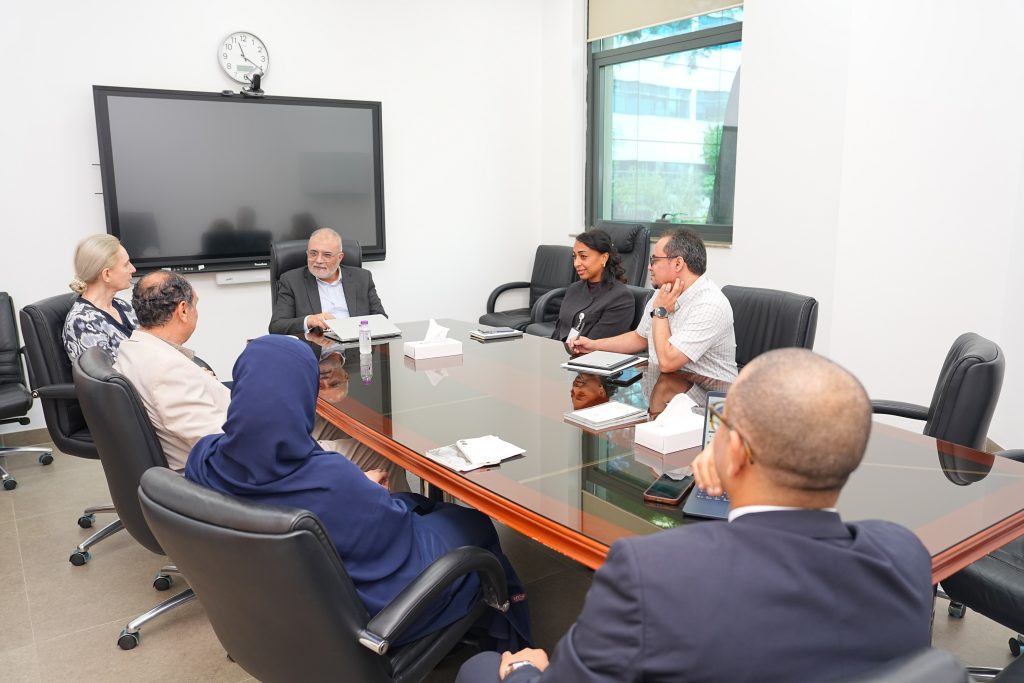
Dr. Wael also visited the Princess Al-Jawhara Al-Ibrahim Center for Molecular Medicine, Genetics, and Genetic Diseases, where he met with the center’s director and head of the Department of Molecular Medicine, Dr. Amani Owaidha, and several department members. He reviewed the academic and research programs offered by the center—particularly the graduate programs—and discussed ways to develop them and update their scientific and research content in light of international academic experiences.
Discussions focused on areas of mutual research interest and potential opportunities for implementing future research projects in molecular medicine, regenerative medicine, and stem cells, as well as developing academic and research capabilities and enhancing the exchange of scientific and technical expertise between the two sides.
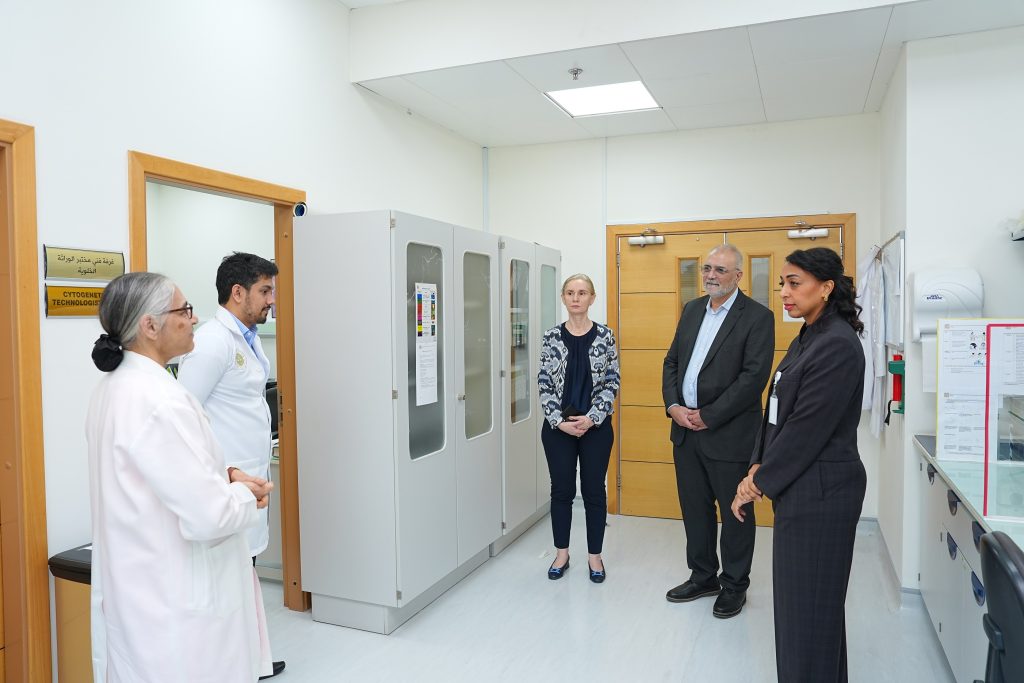
The visit included a tour of the center’s facilities and its diagnostic and research laboratories, during which Dr. Kafina was briefed on the available capabilities and equipment and discussed with specialists opportunities for exchanging expertise and developing laboratory and research capabilities in areas of mutual interest.
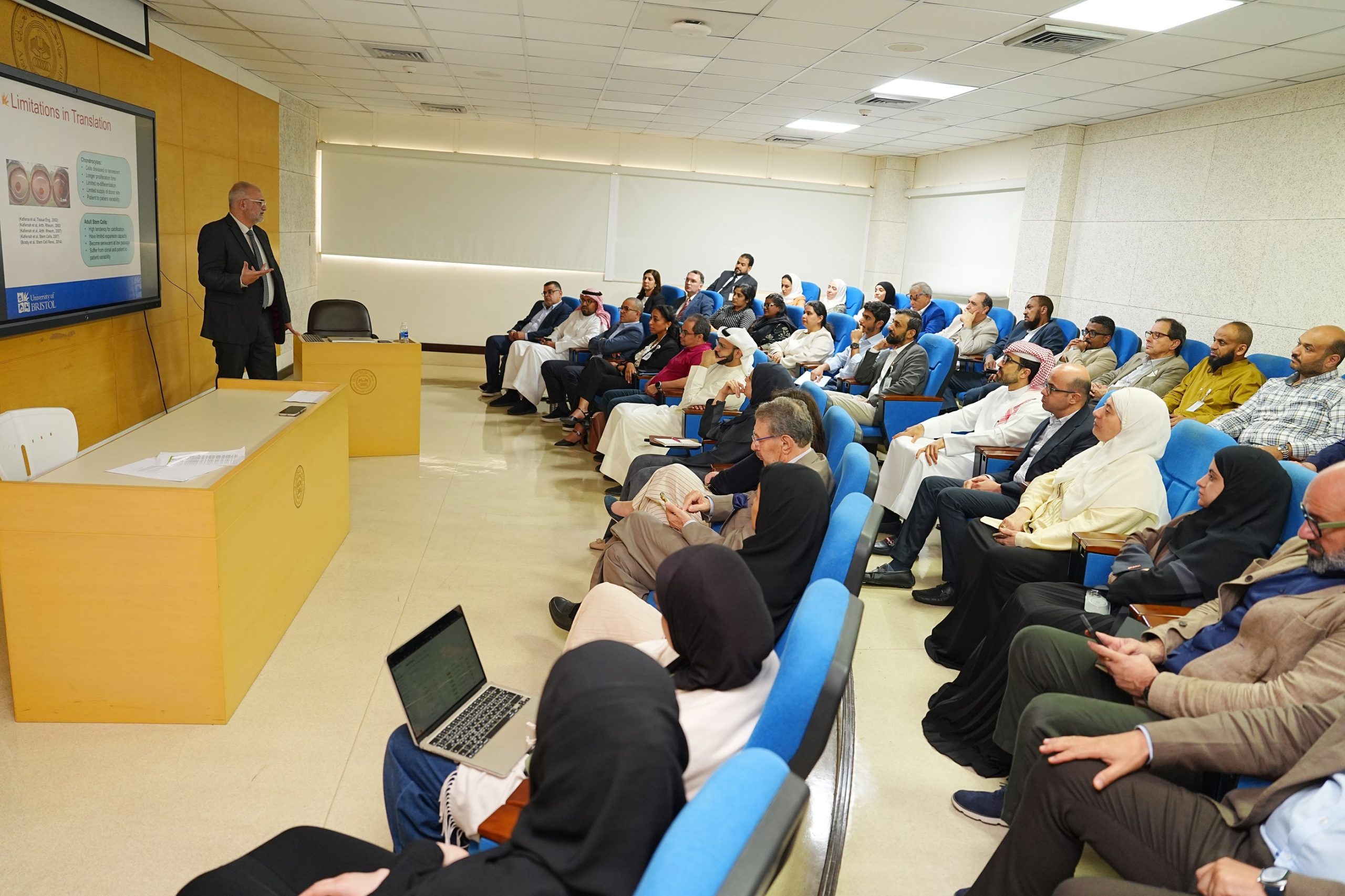
As part of the visit’s scientific program, Dr. Kafina presented a seminar titled “From Joints to Pandemics: Tissue Repair Engineering Using Stem Cells,” in which he reviewed the applications of stem cells and regenerative medicine techniques in tissue repair, as well as the promising research and medical prospects they offer.
The visit provided an opportunity to showcase the academic and research capabilities available at the university, exchange expertise, and discuss opportunities for future collaboration in the fields of molecular medicine, regenerative medicine, and stem cells.