

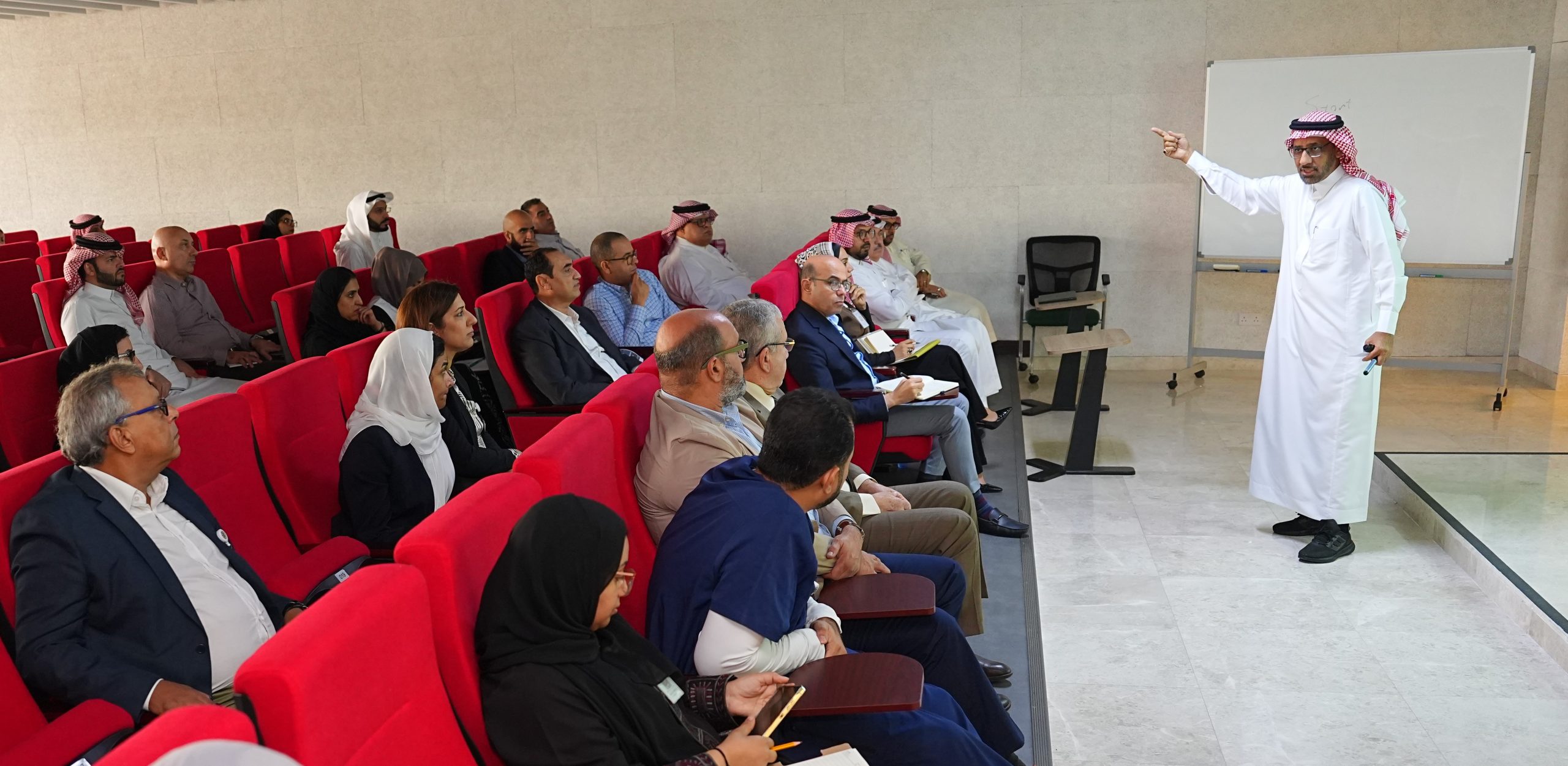
Arabian Gulf University organized a specialized workshop titled “Performance Evaluation Criteria,” presented by Mr. Abdulbasit Al-Sufyani, management consultant at Nakheel Al-Waha Consulting, with broad participation from the university’s academic and administrative leadership. The workshop was held as part of the university’s efforts to develop its institutional framework, enhance human capital efficiency, and establish a performance culture based on quality, excellence, and results.
The workshop focused on reviewing modern concepts and methodologies of performance management—as one of the fundamental pillars for institutional development and productivity enhancement—through five main themes that addressed basic terminology and definitions; the distinction between performance management and performance evaluation; evaluation criteria and mechanisms for their adoption; determining the relative weights of criteria and evaluation metrics; and exploring implementation requirements and future steps within the university system.
Al-Sufyani reviewed the conceptual framework of High-Performance Work Systems (HPWS), explaining the complementary relationship between performance management (PM) and performance appraisal (PA), and clarifying that performance appraisal is merely one component of the comprehensive performance management system, which is based on a continuous and interconnected cycle that begins with planning and goal-setting, continues through implementation, guidance, and follow-up, and concludes with measuring results, identifying areas for improvement, and addressing shortcomings—thereby contributing to the renewal of the performance cycle and enhancing institutional effectiveness.
The workshop addressed two reference models for identifying competencies, qualifications, and personal traits. The first is the KSA model, which is based on three main dimensions: Knowledge, Skills, and Attitudes, as integrated components for measuring an employee’s ability to fulfill their responsibilities and achieve job objectives.
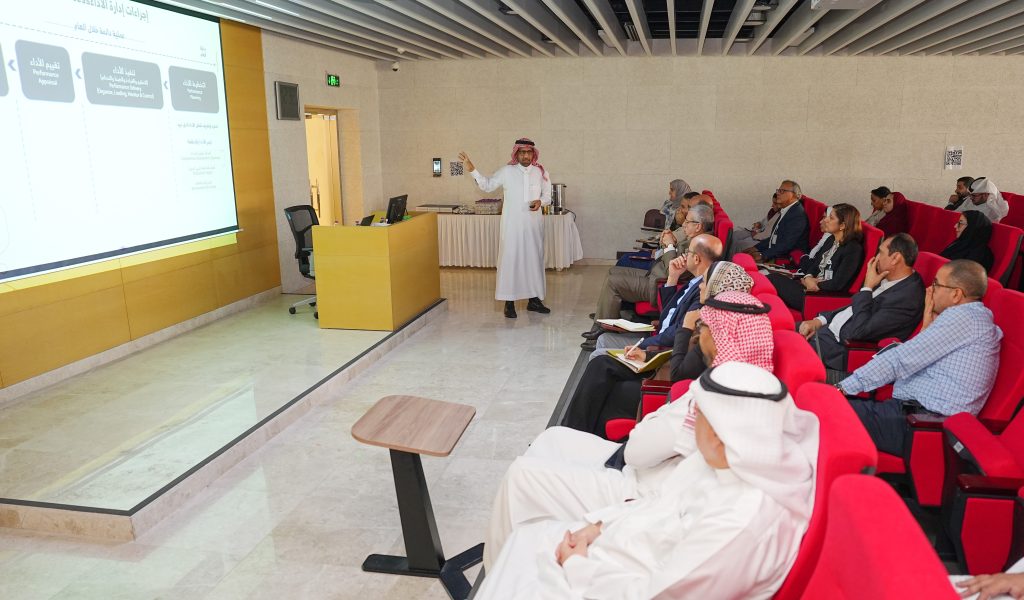
The lecturer also reviewed the PPC model, which focuses on three pillars for evaluating job performance: performance and productivity standards; adherence to rules, regulations, the code of professional conduct, and the university’s values; and personal traits and abilities, foremost among which are leadership, problem-solving, teamwork, and creative and innovative thinking; reflecting the importance of integrating the quality of professional achievement, institutional behavior, and individual capabilities in building a productive work environment.
The workshop addressed the guidelines governing the evaluation process and the mechanisms for applying the five-level performance scale, ranging from poor performance to outstanding and exceptional performance, while emphasizing the need to base evaluation results on practical evidence and documented facts from the workplace, thereby reinforcing the principles of fairness, objectivity, accuracy, and transparency, and ensuring a more realistic assessment of performance efficiency, productivity levels, and the quality of outputs.
The workshop featured active participation from attendees through a series of practical exercises and hands-on activities, which utilized quick response (QR) code technology to assess participants’ understanding of performance management standards and evaluation mechanisms, and to link theoretical concepts to practical applications in the university work environment.
This workshop is part of Arabian Gulf University’s efforts to develop its administrative and academic systems, enhance the efficiency of its human resources, and adopt modern management practices that contribute to raising the level of institutional performance and improving the quality of educational and administrative services and outcomes. It also reflects the efforts of the Institutional Communication Center and relevant departments to support development initiatives and establish an institutional culture based on efficiency, accountability, and continuous improvement, thereby advancing the university’s mission and objectives in serving the Gulf Cooperation Council (GCC) countries.