by ashokaib | Jan 8, 2025 | Uncategorized
The Arabian Gulf University (AGU) is set to organise an international conference titled “Tackling the Obesity Epidemic: Insights for a Healthier Future” in May at the Bahrain Conference Centre. The conference aims to discuss global challenges associated with the obesity epidemic and to showcase the latest scientific developments and practical solutions for effective weight management and obesity prevention.
A distinguished assembly of doctors, experts, researchers and policymakers from around the world will participate in the conference to present the latest research and successful practices in the fields of health and nutrition. The event is expected to offer innovative insights into a healthier and more sustainable future, attracting a wide audience interested in public health, including physicians, nutrition specialists, researchers, and students of medicine and health sciences. It is anticipated that the conference will serve as a unique platform for networking and building international partnerships aimed at bolstering efforts to combat obesity.
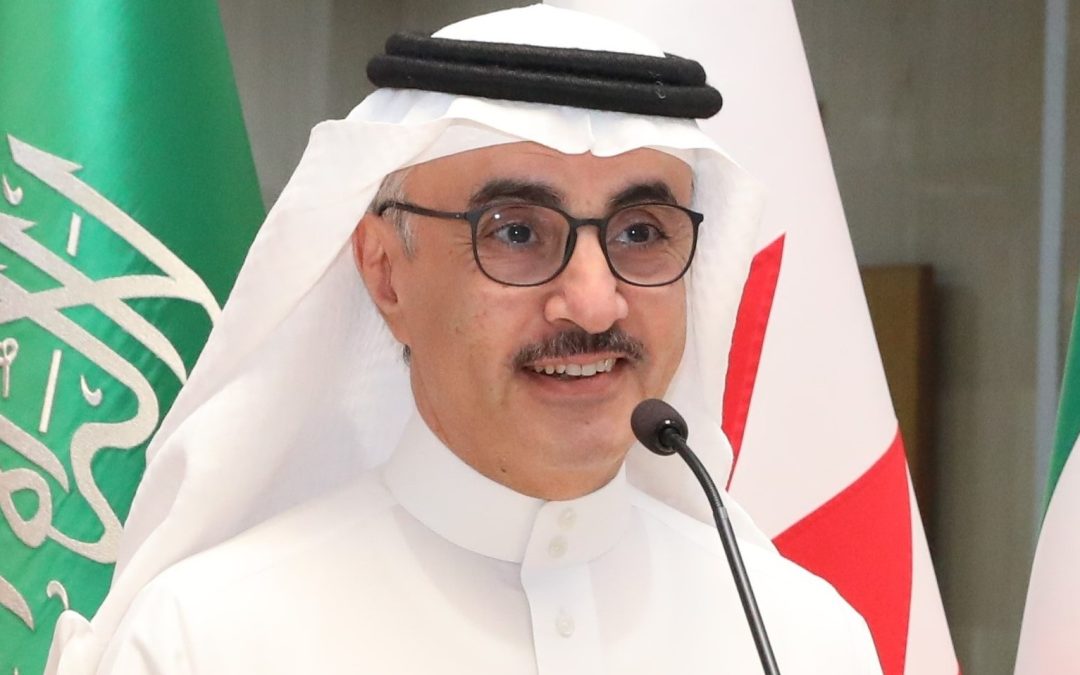
His Excellency Dr Saad bin Saud Al Fuhaid, President of AGU, stated that the agenda for the two-day conference, which is scheduled for May 8-9, 2025, will include discussion sessions and interactive workshops covering a diverse range of topics. Key themes will involve the role of technology in weight management, national strategies to combat obesity, psychological and social factors that promote a healthy lifestyle, and the pathophysiology of obesity along with its related genetics, as well as chronic health conditions associated with it such as diabetes, dyslipidaemia, heart diseases, liver issues, mental health disorders and cancer.
The conference will also address various aspects of obesity prevention and management, including childhood and adolescent obesity, and obesity concerning women’s health, with a focus on recent research in obesity and nutrition, lifestyle interventions, anti-obesity medications and the latest updates on surgical interventions for the treatment of severe obesity. Discussions will include societal challenges in the fight against obesity, with prominent speakers in the field of obesity treatments from various participating countries leading the key sessions.
by ashokaib | Jan 8, 2025 | Uncategorized
Making minor changes and committing to simple habits can lead to great achievements. A few minutes daily practising a new healthy habit can yield remarkable results for health. Lifestyle medicine can be applied to support this.
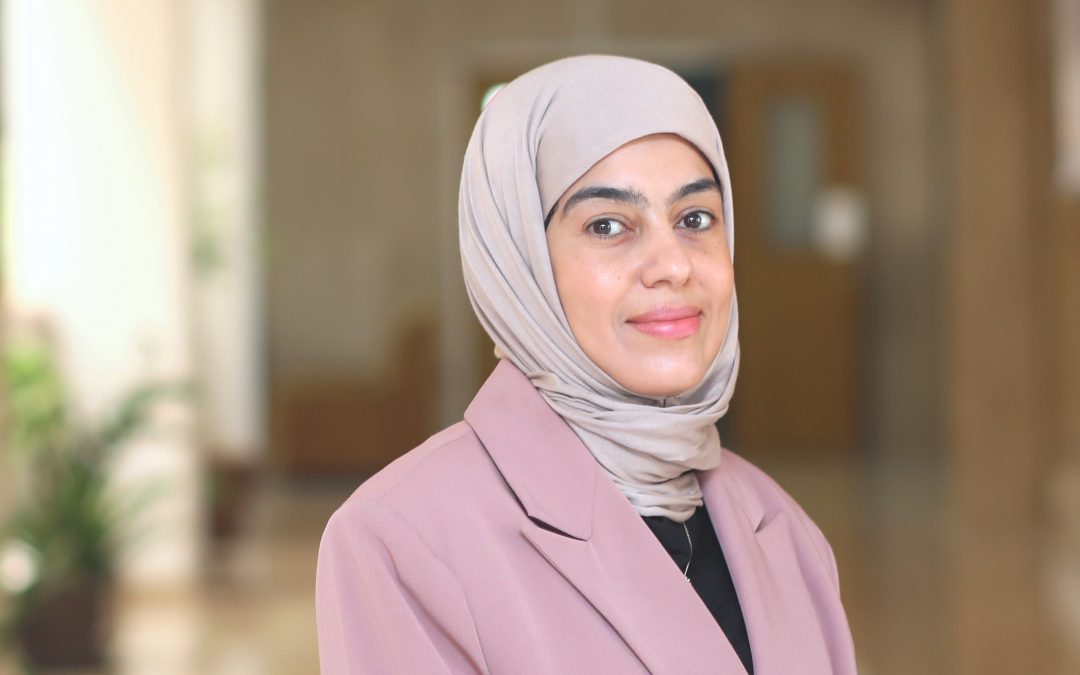
In the following interview, Dr Fatima Habash, Consultant in Family Medicine and Nutrition - Certified International Consultant for Lifestyle Medicine at King Abdullah Medical City, Assistant Professor of Family and Community Medicine - Arabian Gulf University, introduces us to lifestyle medicine and how it can be applied positively to health.
Dr Fatima initially clarified that lifestyle medicine is a relatively new speciality defined by the American College of Lifestyle Medicine as a medical discipline based on using therapeutic lifestyle interventions as a primary method for treating chronic conditions. Lifestyle medicine practitioners apply evidence-based, guideline-directed lifestyle change emphasising holistic health for treatment. When applied intensively, this often leads to reversing these conditions. Such conditions include, but are not limited to, cardiovascular diseases, type 2 diabetes, and obesity.
The six pillars of lifestyle medicine - a whole food, plant-predominant eating pattern, physical activity, healthy sleep, stress and tension management, avoiding harmful substances like smoking and drugs, and developing positive social relationships - also provide effective prevention against many health problems and chronic diseases and have a positive impact on overall health and quality of life.
She added that at the start of a new year, many people seek to adopt new healthy habits such as improving dietary practices, starting an exercise regimen, improving sleep, quitting smoking, or even spending quality time with family and friends. However, changing behaviours and making changes in our daily routines can seem like a huge task, and we might pressure ourselves to make drastic changes, setting big and often unrealistic expectations, potentially leading to discontinuation, disappointment, and self-criticism.
Scientific studies by behavioural science researchers have shown that several factors assist in starting and continuing behaviours that, over time, become healthy habits, reflecting positively on life quality and well-being. Factors hindering the adoption of healthy behaviours might include finding them difficult, forgetfulness, procrastination, lack of time, or absence of motivation and incentives. Scientific evidence indicates that several supportive factors can help not only start healthy habits but also maintain continuity.
- The ideal time to start a healthy habit, like beginning an exercise regime, is often with a new beginning—such as the start of the year, a new week, or a birthday. New beginnings always offer the perfect timing to start.
- To reduce the difficulty of starting and continuing, set small goals—such small behaviours that can eventually become habits. The idea is to make these behavioural changes so small that they are easy to do. Creating habits and initiating change is easier than most people think. Implementing small, achievable habits is the best way to build any sustainable behavioural habit, especially healthy ones. Begin by deciding on the habit you want, then reduce its size until it is very small. For example, if you wish to start with a sports programme, you might commit to a brisk 15-minute walk daily or even a two-day-a-week half-hourly gym session. This way, it's made so easy that there is no reason not to do it. Even when in a rush, sick, or busy, it's so small that you can still manage it. Over time, you can develop this habit gradually and sustain it.
- Identify the place and time that naturally suits your current routine. Ask yourself what follows this habit? For example, you might walk during lunch breaks or immediately upon waking in the morning. This may be the ideal time for you to exercise.
- Make it enjoyable and try always to associate these habits with positive emotions, through celebration and reward—whether cheering out loud for your achievement, singing an encouraging motivational song, or receiving a simple reward that makes you happy like enjoying your favourite drink, a warm shower, or even buying new sports shoes. Whatever helps you feel successful and accomplished, this is what will help you adopt the habit.
- Three things usually come together simultaneously to initiate any change in our health behaviours. There must be motivation to perform the behaviour. Secondly, possessing the skills that enable you to perform the behaviour. Thirdly, having a continuous reminder to perform this behaviour. When these three things come together at the same moment, behaviour change occurs and, over time, becomes a habit. Our motivation to engage in the health goals and behaviours we aspire to won't always be high. The way to overcome this is by making the behaviour very easy to perform.
- Creating an environment conducive to change and the inclusion of healthy behaviours is essential and necessary. If you want to quit smoking, for example, share your decision with family and friends, inform them of your quit date, and try to avoid places and gatherings where this habit is prevalent. Some may find it challenging to commit to exercise, but having a friend or family member to work out with can make exercise time enjoyable and provide support as there is someone constantly encouraging you.
- Including sustainable healthy behavioural habits requires positive thinking and outlook, learning self-compassion, changing the negative critical talk in our heads, and embracing positive self-talk, which boosts confidence to continue adopting and changing habits. Take two minutes to list all the ways you criticise yourself when you do something wrong. Now take another two minutes to note all the ways you tell yourself you did a good job. Usually, the list of self-criticism is long and rich, and the list of celebrations is very short. An important point is that you may experience some setbacks when starting a particular healthy habit, and it's crucial to comprehend that and not let it be a reason for discouragement.
Ideas for Starting Healthy Habits with the New Year:
- Reduce restaurant meals rich in saturated fats, salt, sugars, preservatives, and processed ingredients, replacing them with homemade meals. It might seem daunting for some, but you can tell yourself: "I will enjoy spending quality time preparing and consuming homemade healthy meals for five days a week, limiting restaurant meals to no more than two a week." Eating fruits and vegetables offers numerous health benefits as they contain fibre, vitamins, minerals, anti-inflammatory, and antioxidant properties, which many may overlook consuming in sufficient quantities. To start including sufficient vegetables and fruits, you might say: "I will ensure I add one to two servings of vegetables to lunch and dinner; I will make it enjoyable by trying new and appetising salad recipes to avoid boredom. I will ensure that the snacks I have include one to two servings of fresh fruits."
- Start an exercise regimen. Make your golden rule "Move more and sit less." You can set the larger goal of engaging in 150 minutes of aerobic exercises weekly, such as brisk walking or swimming, which translates to about 30 minutes over five days a week. At the start, aim for 15 minutes daily and gradually increase to reach the desired goal. Incorporating resistance exercises is very crucial for maintaining and building muscles, as the body loses 5% of muscle mass every decade after age 35. This might seem challenging to start with resistance exercises, so to ease it, begin and learn the proper way of doing resistance exercises with a trainer at the gym twice a week as a start. To reduce sitting time, attempt to move every 50 minutes, as studies have shown prolonged sitting times are linked to numerous health issues like early mortality and the onset of heart disease and diabetes.
- Do you find it difficult to get enough sleep? Sleep quality impacts overall health, including weight regulation, sugar control, skin health, general activity, concentration, and mental health. Make improving sleep quality a goal to achieve with the new year by ensuring 7-8 hours of sleep nightly for adults and sticking to a regular sleep and wake schedule throughout the week.
- Smoking has several health hazards and has been classified by the World Health Organization as a carcinogen. If you are a smoker, the new year might be an excellent starting point to quit smoking. Consult your doctor and work with them on a clear plan to help you quit smoking and invest in your health.
- Studies have shown that spending quality time and interacting with family and friends significantly impacts mental and physical health and life quality. Let one of your goals for this year be setting aside time to connect with them through personal meetings or even phone calls.
Be your first encourager, start with small beginnings, celebrate your achievements even if they seem simple, and work gradually over time to let them grow to be sustainable healthy habits that enrich your life and support your health.
by ashokaib | Jan 7, 2025 | Uncategorized
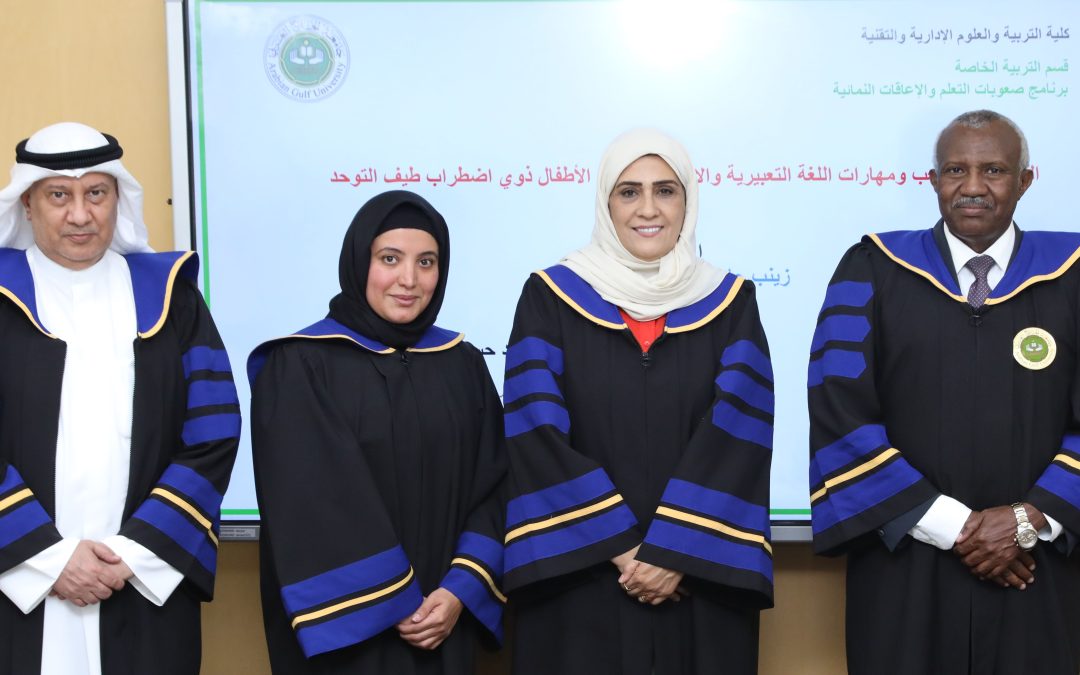
Ms Zainab Hajiah Redha, researcher at the Arabian Gulf University (AGU), examined the relationship between play and expressive and receptive language skills in children with Autism Spectrum Disorder (ASD). The study aimed to identify the most common forms of play among children with ASD and to determine if variations exist in play forms according to the severity of autism. It also sought to explore any correlation between play and the expressive and receptive language skills in these children.
The research came as part of the requirements to obtain a Master’s degree in Learning Difficulties and Developmental Disabilities, with a focus on autism. Ms Redha employed a descriptive-correlational and comparative methodology. The study sample comprised 71 children with ASD enrolled in special education centres in Kuwait, consisting of 50 males and 21 females. The research utilised the Expressive and Receptive Language Skills Scale and the Play Forms Scale designed for children with ASD.
The research findings revealed a significant correlation between play forms and language skills in children with ASD. Most dimensions of the play scale were found to be at an average level, with the exception of aggressive play, which was at a low level. The overall score for the play scale was also at an average level.
Additionally, the results highlighted variations in most dimensions of the play scale based on the severity of autism in children with ASD, as well as in the overall score of the scale, except for aggressive play, where no statistically significant differences were found across different severity groups.
Meanwhile, Ms Redha recommended the inclusion of play activities that enhance communication and linguistic expression, such as role-playing, dialogue, and the use of words and sentences in play contexts among children with ASD. She also advised regular and comprehensive assessments of play and communication skills among students with ASD to track progress and identify individual needs.
by ashokaib | Jan 6, 2025 | Uncategorized
The Professional Diploma in Waste Management Programme at the Arabian Gulf University (AGU) organised a series of field visits to several waste recycling sites in the Kingdom of Bahrain with the aim of enhancing the students’ theoretical knowledge with a series of practical field applications.
The students visited the Samsung Sewage Treatment Plant in Hidd and learned about the stages of wastewater treatment where sludge is converted to thermal energy through incineration technology which reduces the emissions from the use of non-renewable fuel such as diesel, in addition to adopting a circular approach that conserves resources, reduces costs and preserves the environment.
The Programme Coordinator, Assistant Professor of Environmental Engineering and Coordinator at the College of Education, Administrative and Technical Sciences, Dr Sumaya Yusuf, stated, “Waste management has become one of the most pressing global environmental issues and a challenge facing urban cities worldwide. Understanding environmental pollution and managing waste in a sustainable manner has become essential; it is crucial for diploma students to grasp the importance of sustainable waste management that preserves resources through a circular methodology rather than a linear one that depletes them.” She stressed the importance of raising awareness of sustainable production and consumption in our region by learning about various successful experiences and projects.
Meanwhile, students learned during the visit about ways to treat sludge as a resource rather than waste to maximise its benefit, as well as opportunities to use triple-treated water in light of the region’s water scarcity. Sustainable production and consumption conserve resources and reduce waste, the sustainable management of which, adopting a circular economy, preserves the environment, health, and society.
It is noteworthy that the College of Education, Administrative and Technical Sciences at AGU has inaugurated the fourth batch of the Professional Diploma in Waste Management Programme in cooperation with the Centre for Community Service, Consultation, Training and Continuing Education. Students from the Kingdom of Saudi Arabia, the UAE, and the Kingdom of Bahrain were admitted, representing industrial, commercial, municipal, educational research, business administration and investment sectors.
The programme is the first of its kind in the Arabian Gulf, accredited by the Chartered Institution of Wastes Management (CIWM). It has graduated 56 specialists to date who have contributed to promoting sustainable practices in the Gulf and is offered through a flexible educational system that combines online and in-person attendance. There are 36 participants enrolled in the current batch. The programme is supported by the UN Environment Programme, West Asia Office.
by ashokaib | Jan 6, 2025 | Uncategorized
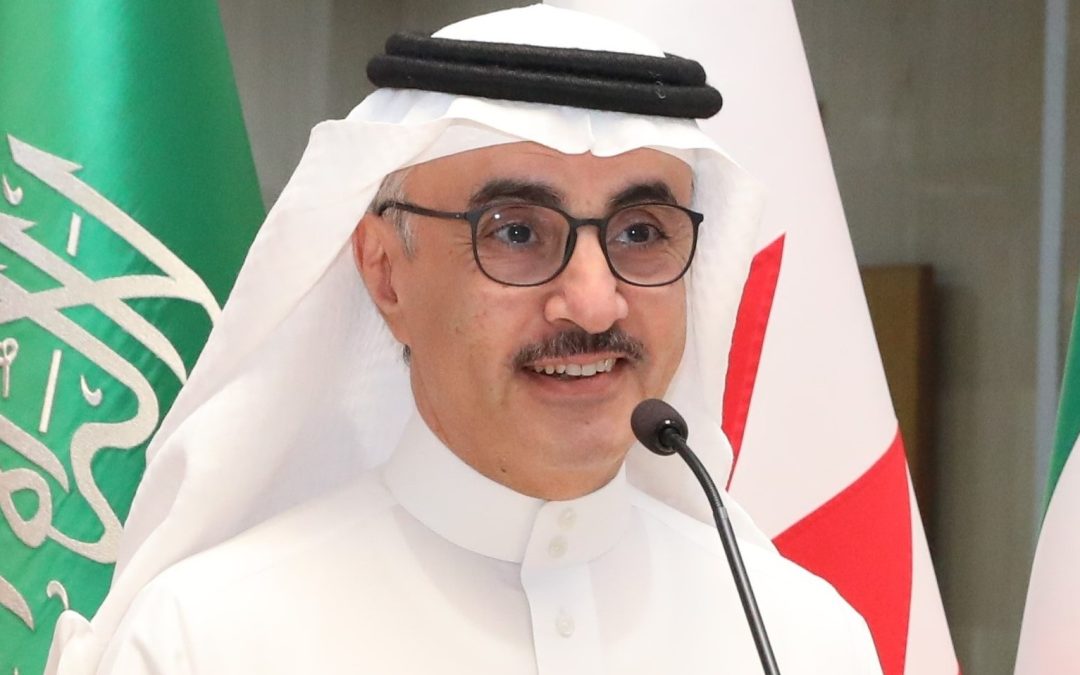
His Excellency Dr Saad bin Saud Al Fuhaid, President of the Arabian Gulf University (AGU), extended his heartfelt congratulations to His Majesty King Hamad bin Isa Al Khalifa, King of the Kingdom of Bahrain, on the occasion of the national football team’s achievement in securing the title of the 26th Arabian Gulf Cup for the second time in the history of Bahraini football; an achievement that is a source of pride for Gulf sports as a whole.
Dr Al Fuhaid remarked that the historic reception of the national football team members, along with their administrative and technical staff, by His Majesty King Hamad bin Isa Al Khalifa, yesterday, in honour of their victory in the tournament for the second time, which took place in the sisterly State of Kuwait, was a heartwarming sight that delighted the hearts of all Gulf citizens.
He commended the indomitable spirit and determination displayed by the Bahraini players, as well as the high level of professionalism and competitive skills that distinguished the national team throughout the tournament, elevating the name of the Kingdom of Bahrain on this Gulf stage and leading the team to this well-deserved triumph.
Moreover, Dr Al Fuhaid praised the successful organisation of the tournament in the sisterly State of Kuwait, affirming that this remarkable Gulf sporting event is a model to be emulated in the organisation of sporting activities at the Gulf, regional and international levels. He also noted the embodiment of the unified Gulf spirit among players and fans alike, reflecting the depth of sincere fraternal relations among Gulf countries.