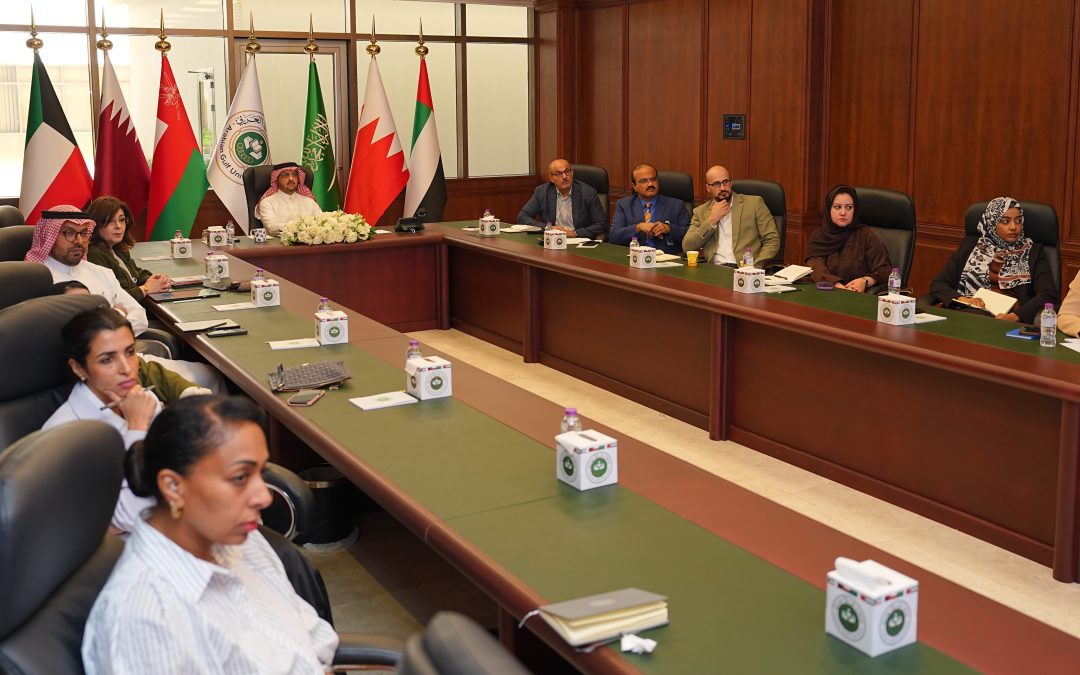
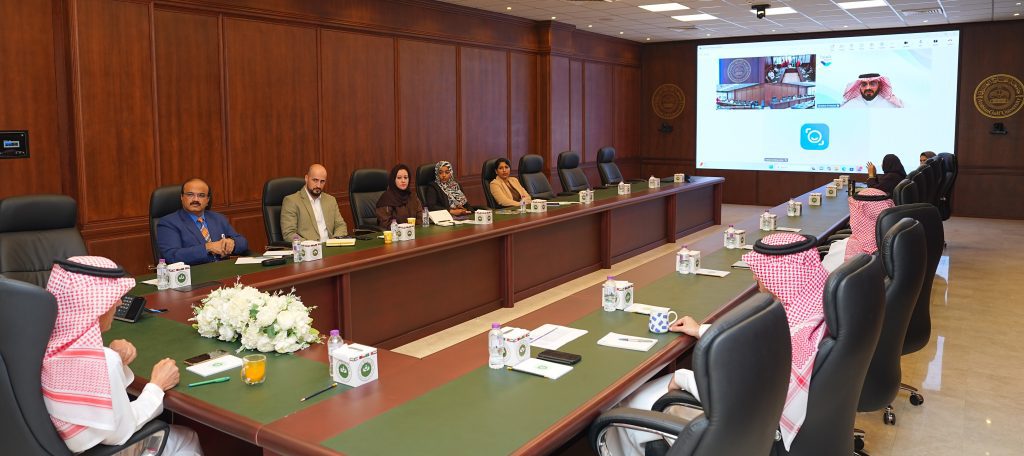
Arabian Gulf University held a preparatory meeting with Dr. Abdullah Al-Hanshad, an advisor to the National Commission for Academic Accreditation and Assessment in the Kingdom of Saudi Arabia, with the aim of reviewing academic quality and accreditation requirements and strengthening cooperation and the exchange of expertise in the fields of assessment and academic quality assurance. This initiative is part of the university’s commitment to fostering a culture of quality and academic excellence and to enhancing its educational and administrative practices in accordance with established standards, thereby contributing to the improvement of the quality of its academic outcomes and supporting its journey toward institutional and program accreditation.
During the meeting, the university’s quality system and mechanisms for evaluation and continuous improvement were reviewed. Participants also discussed academic accreditation requirements and related preparatory procedures, reviewed academic programs and practices, and explored opportunities to enhance performance and strengthen the university’s readiness for upcoming assessment and accreditation phases.
His Excellency Dr. Saad bin Saud Al-Fahaid, President of Arabian Gulf University, emphasized that this preparatory meeting represents an important milestone in the university’s journey toward enhancing the quality of education and improving its academic and institutional practices, noting that the meeting allows the university to benefit from specialized expertise in the fields of assessment and accreditation, and to assess its level of readiness and the requirements for the next phase.
His Excellency highlighted the importance of the meeting in supporting the university’s efforts to achieve the highest standards of academic quality, praising it as an opportunity to exchange expertise and benefit from specialized experiences in the field of academic assessment and accreditation. He said: “The university views academic evaluation and accreditation as a continuous process of improvement and development,” emphasizing the university’s commitment to instilling a culture of quality across its various sectors and academic programs, thereby enhancing its competitiveness, elevating its educational outcomes, and keeping pace with the needs and future aspirations of the Gulf Cooperation Council (GCC) countries.
The holding of this preparatory meeting reflects Arabian Gulf University’s commitment to continuing to develop its academic system and to enhancing the quality of education, scientific research, and community service, in line with its vision, mission, and strategic goals.
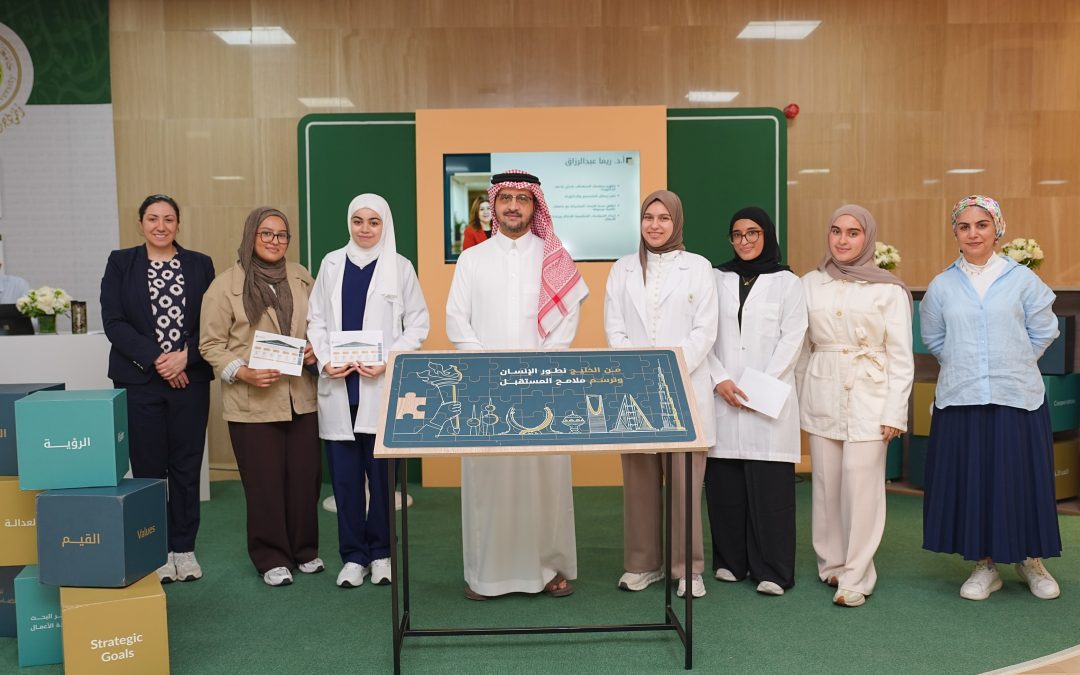
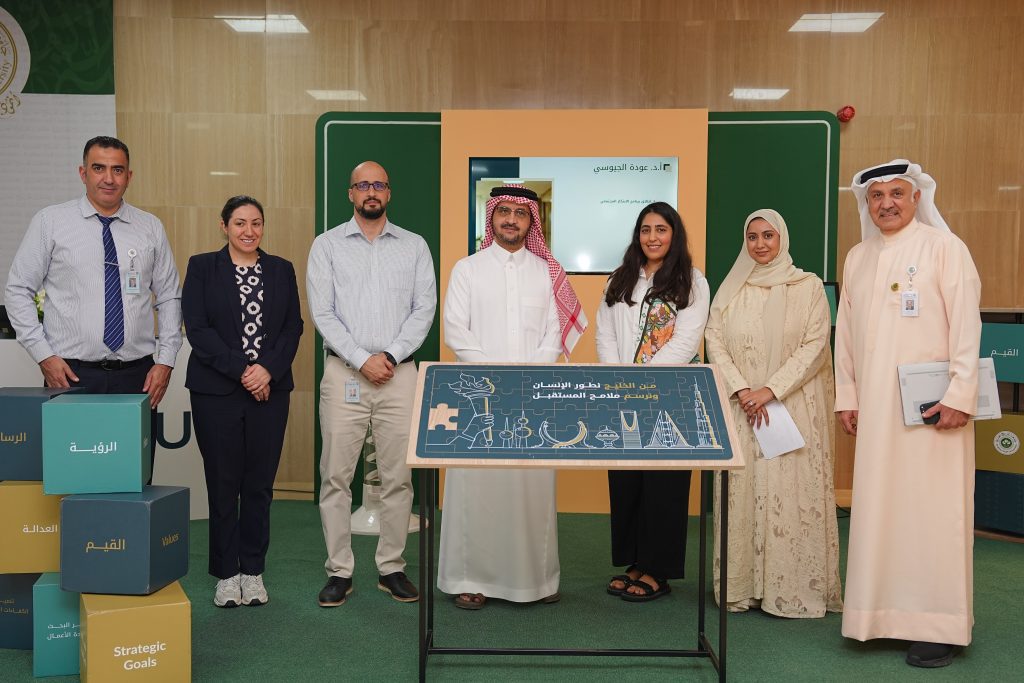
Arabian Gulf University launched an introductory event titled “Get to Know the Vision, Mission, and Strategic Goals of Arabian Gulf University,” with the aim of raising institutional awareness of the university’s vision, mission, values, and strategic goals, and solidifying the participation of its members in its journey toward achieving its future aspirations, amid remarkable engagement from the university’s academic, administrative, and student communities.
The event is part of the university’s efforts to build a stimulating academic environment and enhance internal communication regarding its strategic priorities, thereby contributing to the unification of efforts and the integration of roles and strengthening the partnership among the various components of the university community in achieving the university’s goals and aspirations.
The vision of the Arabian Gulf University is centered on its role as an “academic beacon for human development and shaping the future,” while its mission focuses on building competitive talent by providing distinguished education, conducting innovative scientific research in a stimulating and contemporary academic environment, and establishing high-quality and effective partnerships that meet the needs of the Gulf Cooperation Council (GCC) countries and promote sustainable development.
The university’s journey is guided by a set of institutional values, including belonging, justice, cooperation, innovation, and excellence, reflecting its commitment to enhancing the quality of its educational outcomes and strengthening its academic, research, and community impact.
The event will run for a full month, showcasing the university’s strategic goals, foremost among which are improving the quality of educational outcomes, enhancing the impact of research, innovation, and entrepreneurship, supporting the development of Gulf society, developing human capital, establishing institutional excellence, and achieving financial sustainability.
In this regard, Dr. Ghazi bin Abdulrahman Al-Otaibi, Vice President for Academic Affairs and Scientific Research at Arabian Gulf University, emphasized that the university’s mission extends beyond providing knowledge to creating a sustainable impact on individuals and society, noting that every strategic objective and every initiative launched by the university represents a step toward a more innovative, collaborative, and sustainable future.
He said: “Our mission at Arabian Gulf University is not limited to providing knowledge; rather, it extends to making a sustainable impact on individuals and society. Every strategic goal we set and every initiative we launch represents a step toward a more innovative, collaborative, and sustainable future. Through this event, we reaffirm that realizing our vision is a shared responsibility that begins with an awareness of our mission, which is embodied in teamwork, and transforms aspirations into tangible achievements.”
The university invites its community to engage with the event and learn about the content of its vision, mission, and strategic goals, as part of an interactive initiative that combines the promotion of institutional directions with the enhancement of community engagement, thereby contributing to the development of a shared understanding of the university’s priorities and future trajectory.
His Excellency Dr. Nader Abdullah Al-Jalal, Minister of Higher Education and Scientific Research of the State of Kuwait, learned about the academic and research experience at Arabian Gulf University during a visit in which he was received by His Excellency Dr. Saad bin Saud Al-Fahaid, President of the University. He was briefed on the university’s history, its academic programs, and its educational, medical, and research facilities. He also met with Kuwaiti students studying at the university, listened to their future aspirations and impressions of their educational experience, and learned about the supportive academic and research environment the university provides—an environment that helps prepare and qualify them to actively contribute to serving the State of Kuwait and supporting the Gulf region’s development.
During the visit, His Excellency the President of Arabian Gulf University, Dr. Saad bin Saud Al-Fahaid, gave a presentation on the university’s history since its founding in 1980 by decree of Their Majesties and Highnesses, the leaders of the Gulf Cooperation Council (GCC) countries, and its achievements over more than four decades in preparing and qualifying Gulf talent in specialized fields. He also reviewed the academic programs offered by the College of Medicine and Health Sciences and the College of Education, Administrative and Technical Sciences, praising the continuous support and patronage the university has received from Their Majesties and Highnesses, the leaders of the GCC, which has played a pivotal role in strengthening its academic mission and cementing its status as a joint Gulf initiative for investing in people and knowledge. He also praised the role played by Kuwait in supporting the university’s progress since its founding and commending the excellence of Kuwaiti graduates in the various specialized fields they studied at the university, as well as their active role in serving their homelands and communities.
His Excellency the Minister was also briefed on the King Abdullah bin Abdulaziz Medical City project, the significant contribution it represents to the university’s health education and training system, and its anticipated role in strengthening the university’s capabilities in the fields of medical education, scientific research, and health services, explaining that the university’s academic and research progress is grounded in a robust institutional governance framework, anchored in the General Conference of Ministers of Higher Education of the Gulf Cooperation Council (GCC), the Board of Trustees, the University Council, and the University Presidency, emphasizing the University’s commitment to continuing efforts to advance scientific research and expand specialized fields in ways that enhance the University’s competitiveness and solidify its academic standing.
His Excellency the University President explained that the 2025–2026 academic year saw the publication of 497 scientific and research outputs, and that 76% of the published research was in the first and second quartiles (Q1 and Q2) according to the international SCImago ranking, which confirms the quality of the university’s scientific output and its growing research presence. He noted that the university takes pride in hosting specialized academic chairs named after leaders of the Gulf Cooperation Council (GCC) countries, which focus on various vital fields, including biotechnology, smart agriculture, digital education, and medical microbiology. These chairs have contributed to the publication of 24 peer-reviewed scientific papers in a single year. He noted that these achievements, international rankings, and accreditations are the result of the support and patronage the university receives from Their Majesties and Highnesses, the leaders of the GCC, and represent a testament to its ongoing efforts to enhance the quality of education and scientific research, support knowledge production, and consolidate its academic presence at the regional and international levels.
His Excellency the University President also referred to the University’s Strategic Plan (2026–2030), which is guided by an ambitious vision for the University to be “an academic beacon for human development and shaping the future,” in line with its Gulf-focused mission to prepare talent, build human capital, and contributing to sustainable development in the societies of the Gulf Cooperation Council. The plan focuses on enhancing the quality of educational outcomes, strengthening the innovation and entrepreneurship ecosystem, and instilling a culture of excellence and financial sustainability—all of which contribute to supporting the university’s goals, advancing its academic and administrative performance, and keeping pace with future changes and needs.
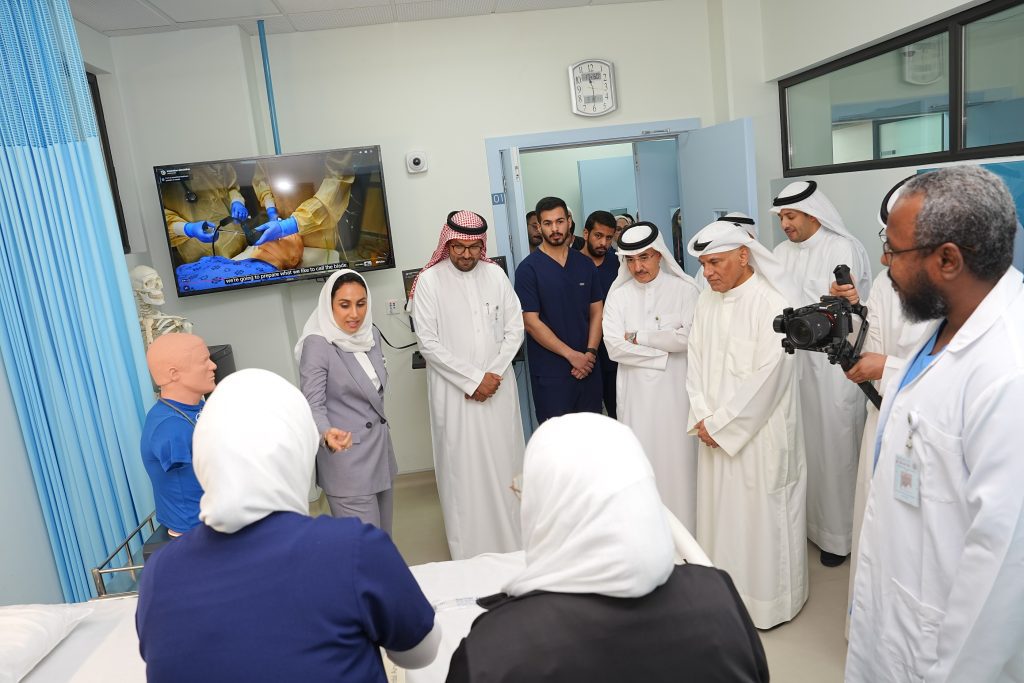
After that, a tour was held which included a visit to the university’s academic and training facilities, as well as the Medical Skills and Simulation Center, which recently received the ASPIRE Global Award for Excellence in Medical Education in the category of Excellence in Medical Simulation, awarded by the Association for Medical Education in Europe.
His Excellency the Kuwaiti Minister of Higher Education and Scientific Research was briefed on the center’s expansion phases and its role in supporting the educational process and clinical training, as well as in developing the skills of students and healthcare practitioners through an advanced training environment that simulates real-world professional scenarios, thereby contributing to improving the quality of health education outcomes and enhancing the quality of healthcare.
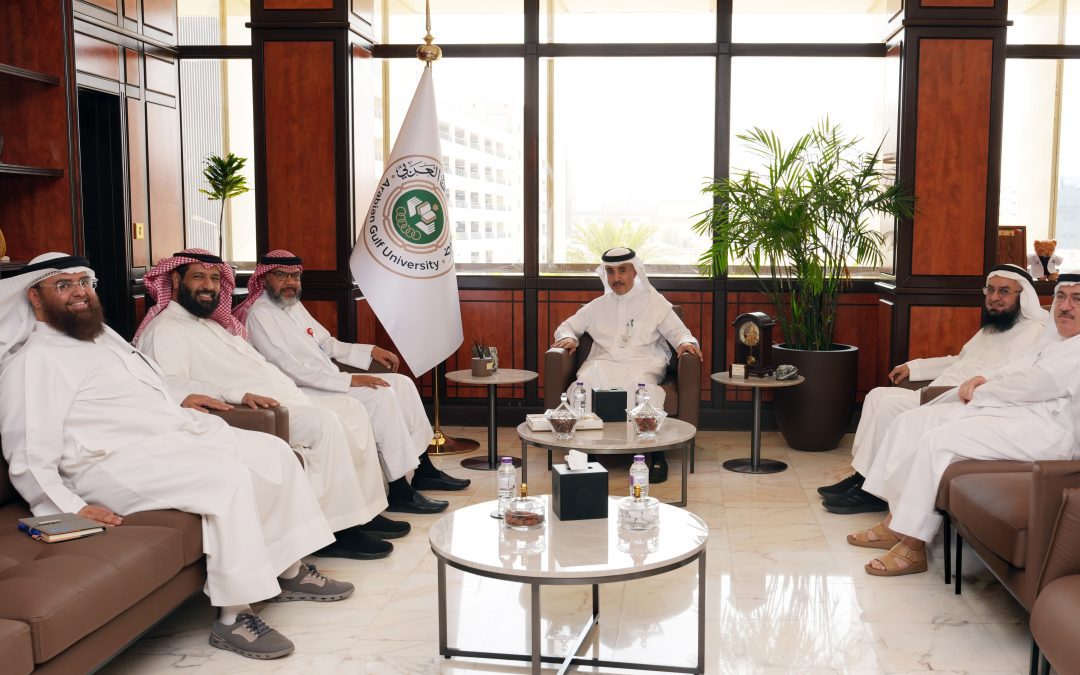
His Excellency Dr. Saad bin Saud Al-Fahaid, President of Arabian Gulf University, received in his office the Director General of the General Directorate at the Council of Islamic Endowments Affairs His Excellency Ahmed Khalil Khairi and his accompanying delegation to discuss prospects for joint cooperation and ways to open up opportunities for real estate investment between the two sides, in a manner that serves the development goals of the endowments and supports the academic and educational environment.
During the meeting, the importance of a strategic partnership between academic institutions and endowment bodies in the Kingdom of Bahrain was emphasized, and a number of promising real estate initiatives and projects were reviewed, aimed at maximizing the use of assets and land and transforming them into development projects with sustainable financial and social returns.
His Excellency the University President, Dr. Saad Al-Fahaid, said: “This meeting underscores the University’s commitment to building bridges of cooperation with prestigious national institutions such as the Council for Islamic Endowments Affairs. Through this initiative, we seek to adopt an innovative investment approach that integrates academic vision with expertise in endowment investments, thereby benefiting the development of infrastructure and public services in the Kingdom.”
For his part, His Excellency Ahmed Khalil Khairi praised this step, emphasizing that the administration is committed to diversifying its investment portfolio and directing endowment capital toward high-quality real estate projects in collaboration with leading educational and academic institutions, thereby contributing to sustainable development and the implementation of the leadership’s directives. At the conclusion of the meeting, the two parties agreed to explore available real estate investment opportunities and expand areas of future cooperation between the university and the General Directorate of the Council of Islamic Endowments Affairs.
The meeting was attended by the following representatives from the General Directorate: Ali Abdulrahman Matar, Director of Investment and Waqf Affairs; Amjad Khashman, Head of the Investment Department; and Nazih Abdulbasit, Head of the Marketing Group. Representing the university were Dr. Shaher bin Dhafer Al-Shahri, CEO of the University Hospital; Hisham Al-Ansari, Director of Administrative and Financial Affairs; and Abdullah Ni’ma Najm, Director of University Housing.
Arabian Gulf University’s Center for Consultancy and Training announced that registration is now open for the sixth cohort of the Professional Diploma in Waste Management program, which it offers in collaboration with the Center for Environmental and Biological Studies at the university’s College of Education, Administrative and Technical Sciences. The program is internationally accredited by the British Chartered Institute of Waste Management (CIWM) since 2021.
The new cohort is scheduled to begin in November 2026, following the program’s continued success since its launch in October 2021. The program has received support from the United Nations Environment Program and has earned international accreditation from the Chartered Institute of Waste Management in the United Kingdom. It has also contributed to the graduation of five cohorts comprising participants from major public and private sector institutions in the Kingdom of Bahrain, the Gulf Cooperation Council (GCC) countries, and a number of Arab nations.
The Professional Diploma in Waste Management includes specialized course modules covering the latest practices in the sustainable and integrated management of various types of waste, including municipal, medical, industrial, commercial, and agricultural waste—whether hazardous or non-hazardous—and is taught by a select group of international experts and lecturers specializing in this field.
The program also focuses on highlighting the role of environmental innovation and the circular economy in the development of waste management systems, and their relationship to the water-energy-food nexus, in addition to reviewing sustainable alternatives and modern technologies that support environmental sustainability. The program is aimed at managerial leaders, professionals, technicians, recent graduates, and anyone interested in developing their professional knowledge and skills and enhancing their specialized capabilities in related fields.
Earning this diploma enhances participants’ competitiveness in the job market, particularly in light of the accelerating global trends toward sustainability, the circular economy, resource efficiency, and the transition to renewable energy sources. The program also provides specialized knowledge and advanced skills that positively impact professional performance and productivity. This diploma is the first of its kind in the West Asia region; it aims to build professional and leadership capacities in the field of sustainable and innovative waste management. It is accredited by the Chartered Institute of Waste Management (CIWM) and supported by the United Nations Environment Program (UNEP), West Asia Office.
The program is delivered through a blended learning model that combines in-person and virtual learning. Since its launch, it has successfully attracted participants from various municipal, industrial, health, economic, commercial, and academic sectors across the Gulf Cooperation Council (GCC) countries and a number of Arab nations, thereby contributing to the region’s sustainable development goals and national visions.
The program’s importance stems from the growing environmental challenges associated with waste management and resource sustainability, and the resulting need to develop national talent capable of adopting sustainable practices and applying the principles of the circular economy. The diploma program was designed in response to the growing need to raise awareness and disseminate specialized knowledge in the field of sustainable waste management, as well as to promote the concepts of sustainable production and consumption.
This approach is based on a vision that views waste as a resource that can be utilized and transformed into added value—environmentally, economically, and socially. It also embodies the role of the Arabian Gulf University, as a regional university for the Gulf Cooperation Council (GCC) countries, in building specialized expertise, disseminating knowledge, and raising environmental awareness—thereby contributing to sustainable development efforts and the achievement of environmental and economic priorities in the region.