

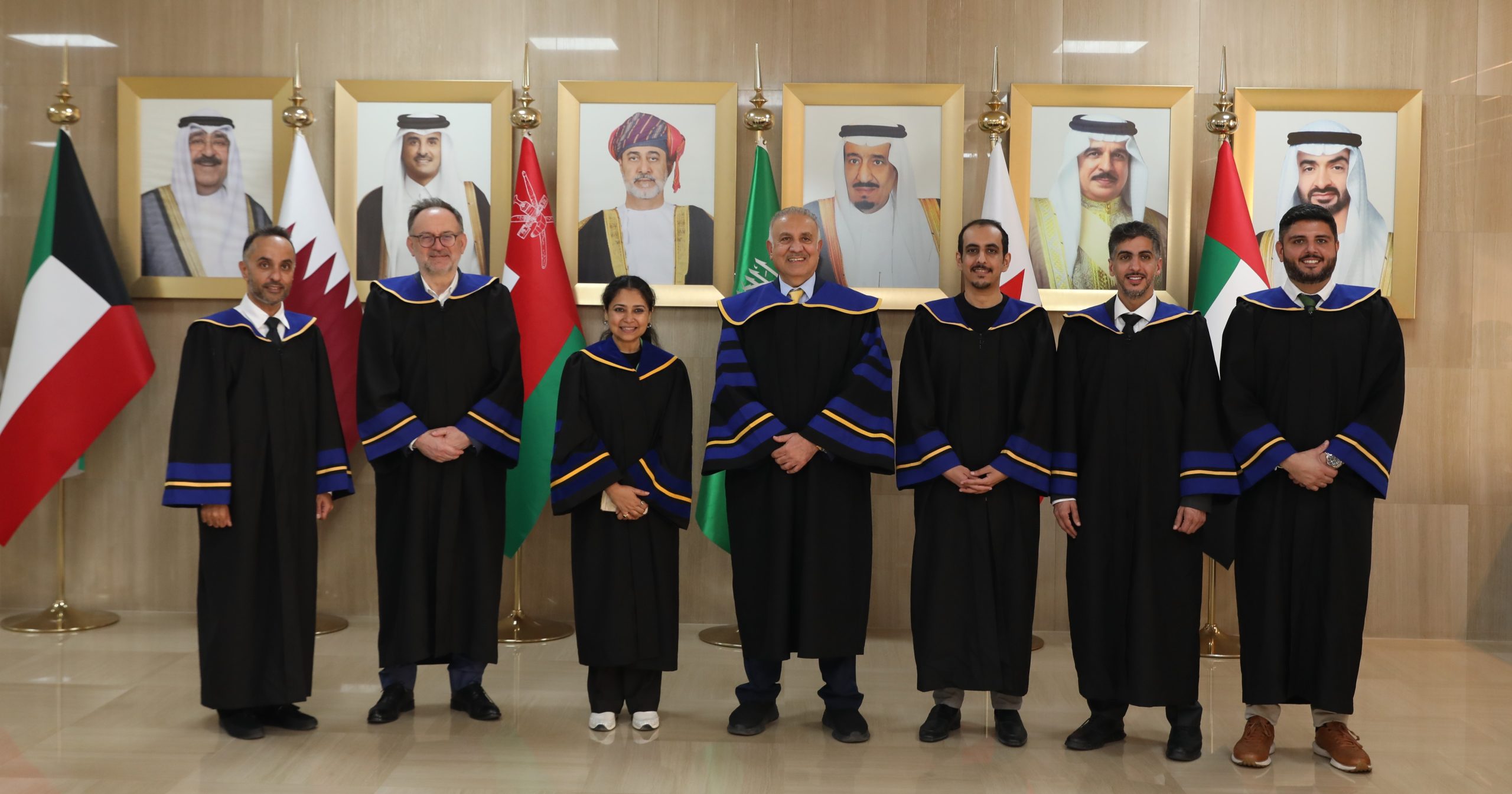
Researchers in the MBA program at Arabian Gulf University examined the challenges affecting the growth and sustainability of startups in the Gulf Cooperation Council (GCC) region through case studies covering Saudi Arabia, Kuwait, and Bahrain, as part of a research project titled “Entrepreneurship in Saudi Arabia, Kuwait, and Bahrain: Challenges in Legislation, Financing, and Talent Retention.” The researchers—Mohammed Al-Dakhil, Mashari Budi, Jassim Al-Sheiba, and Khalid Al-Shahil—recently presented their findings.
The study, supervised by Prof. Dr. Adel Ismail Al-Alawi, Professor of Business Administration and Information Systems in the Department of Business Administration at Arabian Gulf University, addresses the operational and institutional factors associated with three main themes: regulatory frameworks, access to capital, and talent management. The researchers analyzed how these pillars collectively shape the entrepreneurial ecosystem in the Gulf Cooperation Council (GCC) region, using a qualitative exploratory approach.
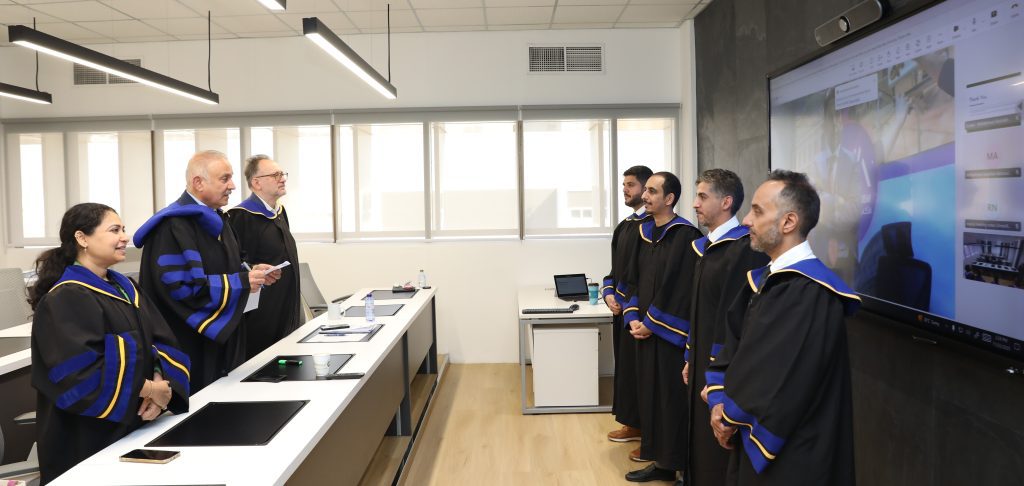
The researchers conducted 40 semi-structured interviews with startup founders, and the data collected was subjected to systematic analysis. The results revealed that the three countries have made tangible progress toward digitizing business registration procedures and providing support programs for early-stage companies; however, structural challenges continue to pose a fundamental obstacle.
Among the most prominent challenges are inconsistent policy implementation, regulatory ambiguity, and limited access to financing during growth stages, as well as ongoing difficulties in attracting and retaining specialized talent. The researchers emphasized that government initiatives, such as “Mansha’at,” “Bader,” and “Tamkeen,” along with national funds, have helped address some of these challenges and strengthen the support provided during the early stages.
The study revealed that these mechanisms remain insufficient to meet the requirements for expansion and growth, while the shortage of talent and overreliance on expatriate staff constitute a fundamental constraint on the sustainability of high-growth ventures.
The findings offer valuable insights for policymakers, most notably the need to enhance regulatory clarity, adopt specialized sector-specific support programs, formulate coordinated investment strategies, and strengthen ties between universities and startups to foster talent development and capacity building.