by ashokaib | Sep 11, 2024 | Uncategorized
The College of Medicine and Health Sciences at the Arabian Gulf University (AGU) organised personal interviews over two consecutive days for students applying to the Bachelor of Science in Nursing programme for the 2024-2025 academic year for Bahraini nationals. This is a new four-year academic programme.
The interview committees assessed the applicants’ capabilities and skills, as well as the suitability of their personalities for nursing studies. They also evaluated the candidates’ understanding of the nature of the profession and the challenges faced by nursing students and healthcare professionals, with approximately 360 students competing for admission to the programme.
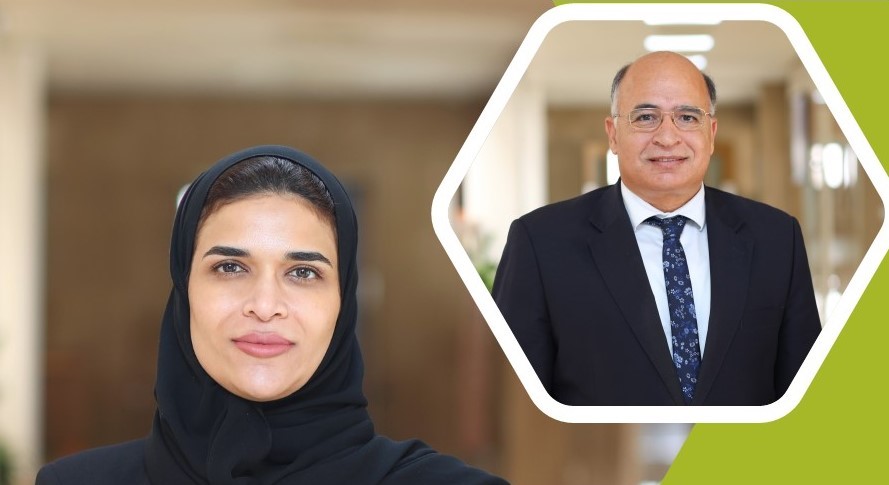
Dr Abdelhalim Abdelfattah Deifalla, Dean of College of Medicine and Health Sciences, explained that the Bachelor of Science in Nursing programme aims to develop leadership skills and research abilities among accepted students, while also focusing on enhancing their clinical skills.
“Graduates will be prepared to take on leadership roles in the nursing profession and contribute to the advancement of nursing practice through evidence-based research,” he explained.
Moreover, he emphasised the shift towards person-centred healthcare, which requires building new competencies for graduates to achieve this in various healthcare settings.
On her part, Dr Hawazen Rawas, Programme Head, noted that this programme is designed to meet the demand for skilled nurses to provide healthcare services at different levels.
“Its curriculum emphasises both theoretical knowledge and practical clinical experience, ensuring that graduates are well-equipped to tackle the complex healthcare challenges facing the region. The curriculum also considers the unique cultural and health considerations of the GCC region, preparing graduates to provide quality care to patients from diverse cultural backgrounds,” she said.
Dr Rawas pointed out that the launch of the programme is a significant step toward enhancing the quality of health education in the region and producing specialised professionals who will contribute to improving healthcare services.
She further explained, “Nursing is one of the most critical pillars of the health system, as the success and quality of health services depend on the competence of nurses This programme is part of the university’s vision to support sustainable health development goals and contribute to improving the quality of life for individuals in the GCC.”
Dr Rawas added: “The future of the nursing profession in the GCC is promising, with increasing job opportunities due to the expansion of the health sector and growing demand for specialised care. By investing in nursing education, AGU aims to be part of the solution to health challenges and develop professionals capable of providing humane and high-quality care.”
by ashokaib | Sep 10, 2024 | Uncategorized
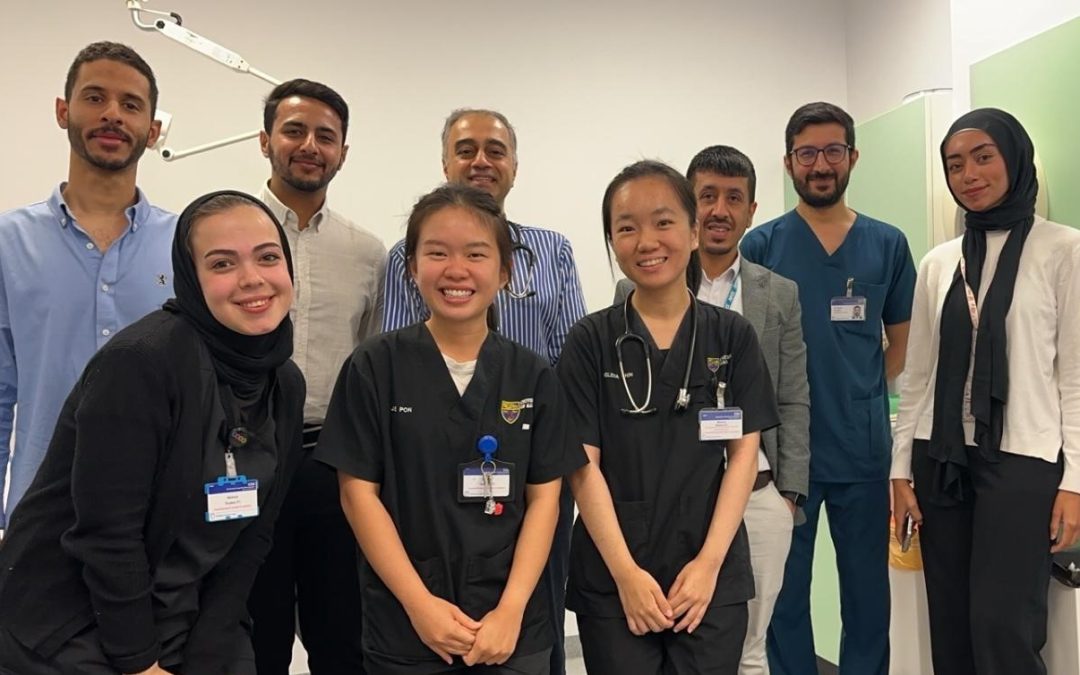
Medical students at the Arabian Gulf University (AGU), Mr. Mohammed Bouhamoud Al Qahtani and Mr. Qusai Al Dandan, have successfully completed a training course organised by Queen Elizabeth Hospital in Birmingham, alongside fellow medical students from around the globe.
Mr. Al Qahtani, a student at the College of Medicine and Health Sciences, described the experience as highly enriching, stating that they learned extensively under the guidance of Prof. Suhail Khan, who oversaw the course throughout an intensive three-week training period, focusing on heart disease patients with a variety of medical conditions.
He stated: “During my training journey, the opportunity to work with esteemed specialists in cardiology was a period rich in knowledge. Moreover, we gained insights into numerous aspects of medical ethics and patient interaction, thanks to Prof. Suhail Khan, who instilled in us a sense of pride in being part of his training medical team. He has a unique ability to train novice doctors from different countries, given his extensive experience as a senior lecturer at the College of Medicine, University of Birmingham.”
Mr. Al Qahtani noted that he worked closely with his colleague Mr. Al Dandan from Saudi Arabia, as well as with several medical students worldwide. Together, they examined patients suffering from heart muscle weakness and failure, congenital heart defects, underwent catheterisation, heart transplants, and other related ailments. They participated in patient assessments and clinical examinations, studied the medical histories of the cases they encountered, and engaged in group discussions on each specific case. Additionally, they attended surgical procedures for catheterisation and open-heart surgery, observing firsthand how new life can be given to patients in need of heart transplants.
In conjunction with participating in routine daily assessments of heart patients—be it in emergency situations or regular check-ups—the training participants gained insight into the hospital’s mechanisms for patient preparation before, during, and after surgery.
Mr. Al Qahtani addded: “We witnessed several impressive catheterisation procedures. Among the most remarkable surgeries I attended with the professional doctors who provided our training was the aortic valve replacement for a young man in his thirties, who had suffered for years since childhood. Furthermore, we attended outpatient clinics with Prof. Suhail Khan, which gave us exposure to a plethora of diverse medical cases.”
by ashokaib | Sep 10, 2024 | Uncategorized
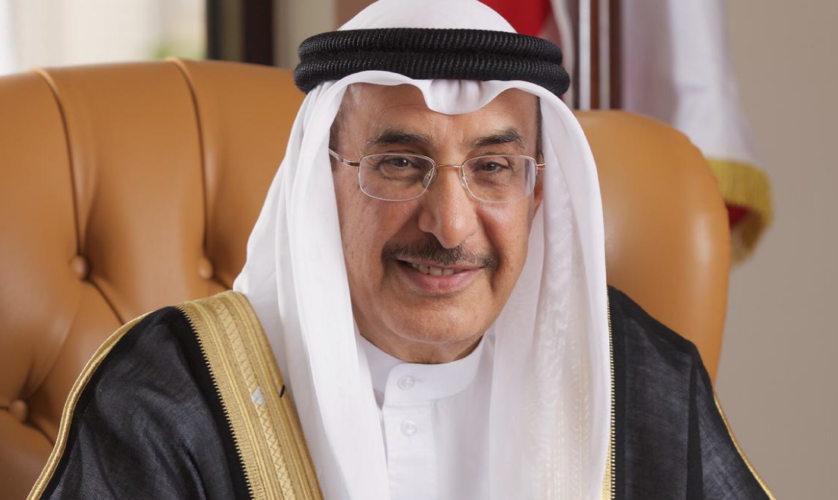
His Excellency Shaikh Khalid bin Abdulla Al Khalifa, The Deputy Prime Minister, chaired the Weekly Cabinet meeting held today at Gudaibiya Palace.
The Cabinet approved a memorandum from the Ministerial Committee for Legal and Legislative Affairs regarding a Memorandum of Understanding between the agriculture and animal resources of the Ministry of Municipalities Affairs and Agriculture and the Arabian Gulf University for cooperation in scientific research and training in the agricultural field.
by ashokaib | Sep 10, 2024 | Uncategorized
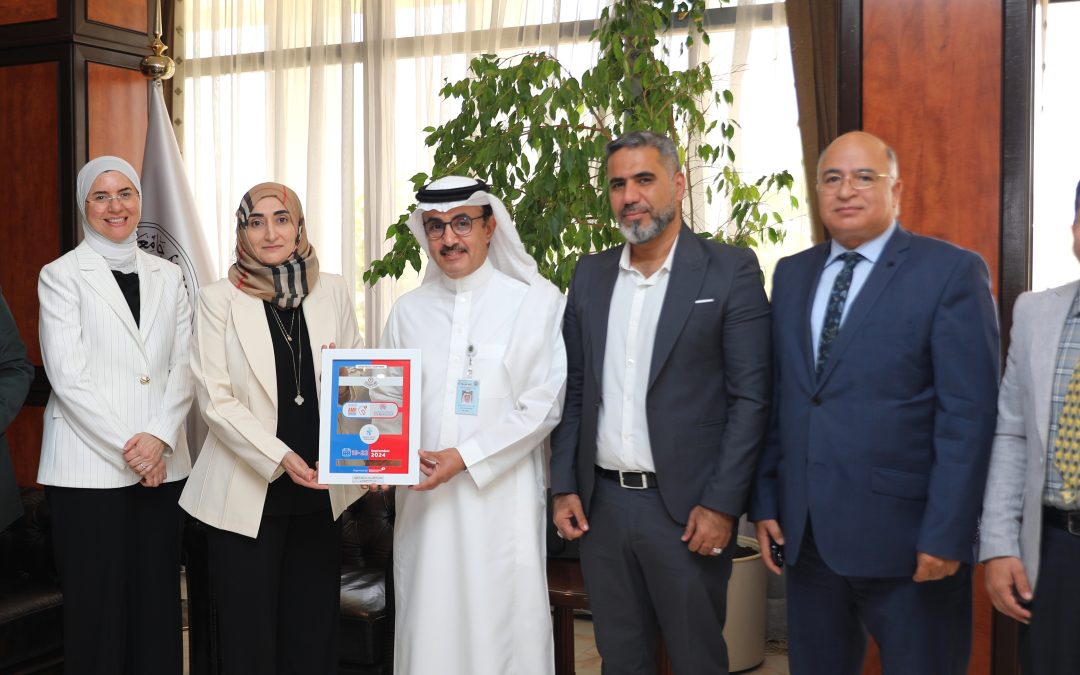
Dr Saad bin Saud Al Fuhaid, President of the Arabian Gulf University (AGU), reviewed the preparations for the the second edition of the International Conference on Antibiotic-Resistant Microbes and Infectious Diseases, along with the workshop on antimicrobial agents. These events are scheduled to take place on September 19 - 22, organised by the Infectious Diseases Association at the Bahrain Medical Society, in collaboration with Education Plus.
This came while Dr Al Fuhaid received Dr Jameela Al Salman, Shura Council Member and Assistant Professor of Medicine at AGU, and Consultant in Internal Medicine, Infectious Diseases, Geriatrics and Infection Control, as well as the Head of the Infectious Diseases Association within the Bahrain Medical Society. The meeting was attended by Dr Amin Abdullah, General Manager of Education Plus, alongside several university officials.
The President emphasised the institution’s commitment to fostering cooperation with the conference organising committee and praised Dr Al Salman's efforts in holding medical conferences related to antibiotic-resistant microbes and infectious diseases, which bolster ongoing advancements in the medical sector.
On her part, Dr Al Salman expressed her appreciation for the close collaboration with AGU and the various contributions that play a prominent role in achieving the full success and objectives of the conference and workshop. She highlighted that the efforts of the President of the University are valued and cherished, reaffirming his commitment to paving the way for another chapter of success in organising medical conferences.
She provided a brief overview of the organising committee's preparations for the conference and workshop, confirming that registration is open for those interested via the website: (https://educationplus.me/amr-2024/).
At the end of the meeting, Dr Al Salman presented a commemorative gift to the President of AGU on this occasion.
by ashokaib | Sep 10, 2024 | Uncategorized
Your path to health and well-being begins at the University Medical Centre in King Abdullah Medical City, where the journey to precise diagnosis, treatment and healing starts at the Radiology Department. The department is characterised by expertise and modern technological equipment. The Medical Centre is currently undergoing significant enhancements in the Radiology Department, including new diagnostic devices and a commitment to attracting specialised medical talents. To better understand the newly revamped department, Al Khaleej Al Tibbi spoke with Dr Mai Mattar, Head of the Diagnostic Radiology Department at the University Medical Centre and Musculoskeletal Radiology Consultant.
What equipment will be replaced with modern devices?
The Radiology Department will gradually replace all current equipment without affecting its operations, including the Magnetic Resonance Imaging (MRI) machine and the Computed Tomography (CT) scan. Additionally, the department will also upgrade the contrast imaging equipment, mammography machine, and portable X-ray machine, which bridges the gap between internal care and emergency services. Furthermore, we will be acquiring four new ultrasound machines, which will be shared between the Radiology Department and two more for the Obstetrics and Gynaecology Department, along with a dedicated machine for the Infertility Department. It's worth noting that the current ultrasound machine is new and has not yet reached one year of service; however, we are always keen to have the latest equipment and technologies, hence our decision to upgrade.
Will there be any new technologies introduced to the current equipment?
Yes, new technologies will be incorporated into some existing machines to keep up with advancements. The ultrasound machines, for instance, are from GE and have been programmed with sensors to enhance image clarity and quality. The MRI will also be larger and less intrusive than previous models, by around 80%, and will feature artificial intelligence capabilities to help reduce time and improve diagnostic accuracy.
The new MRI device will have a full-screen entertainment system that can display any programme or video during the procedure, which is essential for those who tend to feel anxious or for children, who can watch cartoons on the MRI's screen. Similarly, the CT scanner will feature artificial intelligence support to expedite imaging and improve accuracy, particularly for heart examinations, where significant advances have been made, as well as for endoscopic procedures.
Additionally, the new contrast imaging machines will require numerous examinations that entail substantial radiation exposure for patients. The new machines will reduce radiation exposure noticeably, making them completely safe, especially for children.
Mammography has evolved with new technologies, now offering three-dimensional imaging for enhanced examination precision, making the experience more comfortable and considerate for patients during the procedure, which applies the same to biopsy equipment.
What is the purpose of this significant overhaul in the Radiology Department?
At the University Medical Centre, we value the crucial role that diagnostic equipment plays in diagnosing and assisting in treating medical conditions. Our role extends beyond just serving our centre; we also cater to all neighbouring clinics and centres thanks to our reputation for accurate diagnostics, bolstered by specialisations within the Radiology Department. We hold significant responsibility towards our patients to enhance service quality and healthcare standards.
On another note, attracting specialised medical personnel and increasing the number of technicians in the department brings added benefits. The presence of specialised doctors in precision disciplines in the Radiology Department will elevate the department's efficiency. We have attracted some of the best Bahraini talent in subspecialties, including orthopaedics, spinal, gastrointestinal radiology, and lung imaging, along with a female doctor soon to specialise in breast and gynaecological imaging.
Additionally, we have established fruitful collaborations with renowned companies for remote radiology reading to cover all existing specialities in the centre and support our doctors during their leave periods. Reports are generated by specialists with sub-specialty expertise, rather than general expertise. We provide services 24 hours a day, seven days a week.
In cases of emergency, reports are delivered within an hour, while regular cases will receive reports in under 24 hours. The key focus is on minimising patient wait times, before and after examinations, and ensuring the quality of reports. We are also working to attract new skilled professionals with extensive experience, particularly in MRI and CT scans, to facilitate patient examinations and reduce waiting times.
When will the department begin receiving patients in its new format?
We expect to receive patients for portable imaging in September, followed by all ultrasound machines, then in November for CT scans, the contrast imaging devices, and mammography in the latter half of December.
The machines will be installed, and subsequently, our doctors and technicians will undergo training provided by foreign experts to ensure proper use before any patient visits.
What are your future plans for the Radiology Department to make it the closest and most significant in the Gulf region?
We are continuously evolving to enhance our equipment, and our aspiration is to be the best Radiology Department in Bahrain and to function as an integrated unit. We will also be expanding with a new branch alongside King Abdullah City, a jewel of Bahrain. Consequently, we will be training doctors and technicians to serve both the University Medical Centre and the Medical City, with the goal of recruiting a larger number of qualified Bahraini specialists.