by ashokaib | Sep 3, 2024 | Uncategorized
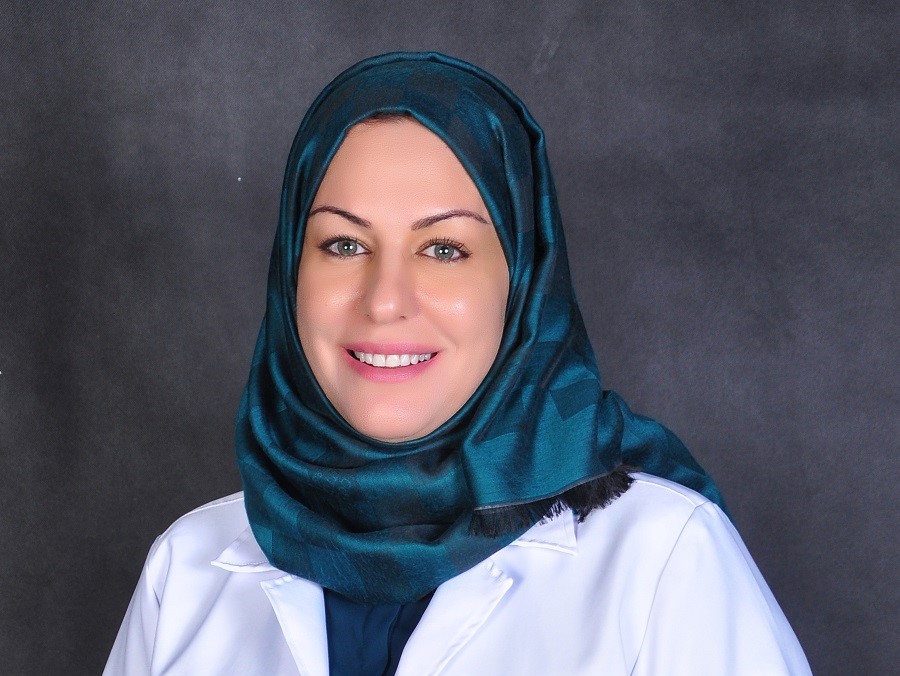
Dr Nada Al Youssef, Consultant Ophthalmologist and Cornea Surgeon, has emphasised the critical need for regular eye examinations for children and adolescents, particularly with the onset of the new school year. She underscored the necessity of eye assessments for children aged 3 to 5 years to prevent conditions such as lazy eye, medically known as amblyopia. One of the primary contributors to lazy eye is the failure to diagnose and treat poor vision during early childhood.
Dr Al Youssef pointed out that one of the most prevalent causes of lazy eye is strabismus, which can result from refractive vision defects such as hyperopia, or from a significant disparity in refractive errors between the two eyes. If diagnosis and treatment are delayed beyond the age of six, there is a risk of permanent visual impairment in the weaker eye. This occurs because the brain may disregard the blurred image from the weak eye while favouring the clearer image from the stronger eye, leading to underdevelopment of the neural pathways connecting the weak eye to the brain. As a result, persistent visual weakness, known as amblyopia, develops.
These issues can be effectively managed in childhood through the prescription of appropriate eyeglasses. In some cases, occlusion therapy, which involves covering the healthy eye for a specified duration, may be necessary to encourage the brain to accept input from the weaker eye.
Dr. Al Youssef cautioned that without early diagnosis and intervention, individuals may experience lifelong visual impairment in the affected eye, which is unlikely to improve with treatment later in life. Therefore, it is crucial to conduct eye examinations for children before the age of six, ideally between 3 and 5 years, to identify any vision problems and initiate timely treatment to prevent amblyopia.
Moreover, correcting vision defects in children and adolescents is vital for academic success. Weak vision can hinder a student’s performance, often leading to academic struggles that may potentially be resolved with corrective eyewear. For adolescents, it is imperative to have an eye examination at the beginning of the school year to detect and address refractive vision defects such as myopia, hyperopia, and astigmatism.
Dr Al Youssef underlined that keratoconus, a condition that particularly affects adolescents and young adults, can only be diagnosed through specialised examinations conducted in eye clinics. This eye disease is notably prevalent in the GCC and the Middle East, affecting nearly 19 percent of adolescents in the region. Regular monitoring is essential for this category, including routine eye tests and topographic imaging of the cornea to facilitate early detection of keratoconus. The cornea should appear transparent and circular; however, changes to a conical or irregular shape can result in visual impairment, primarily manifesting as myopia and astigmatism.
She further explained that in advanced stages, scarring may occur on the cornea, which compromises its transparency and leads to significant visual decline. Early diagnosis of keratoconus is critical to prevent progressive vision deterioration, which may ultimately require corneal transplant surgery.
Dr Al Youssef added that with timely intervention, preventive treatments using collagen crosslinking technology are now available to strengthen corneal tissue, thereby stabilising vision and mitigating further deterioration.
by ashokaib | Sep 1, 2024 | Uncategorized
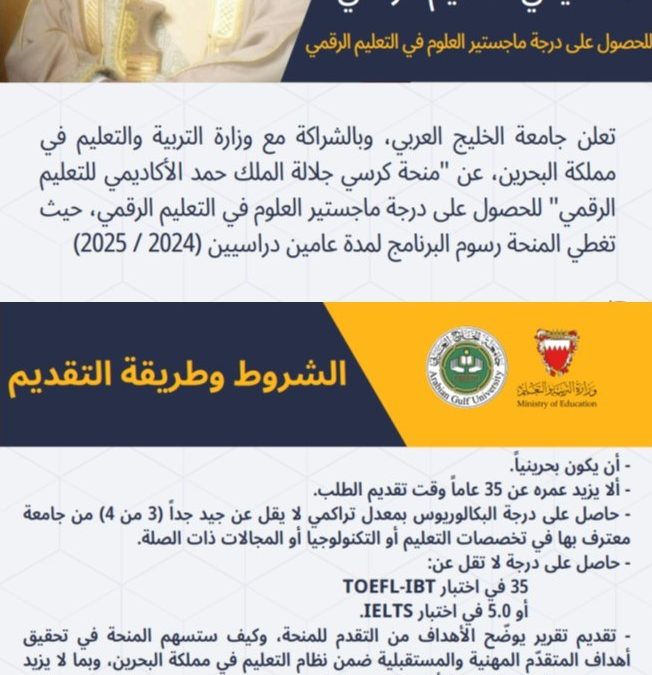
The Arabian Gulf University (AGU), in collaboration with the Ministry of Education of the Kingdom of Bahrain, has announced the establishment of the “His Majesty King Hamad Academic Chair Scholarship for Digital Education”, aimed at enabling recipients to pursue a Master of Science in Digital Education. This scholarship will cover the programme fees for two academic years (2024/2025), provided that the applicant meets the following criteria:
- The applicant must be a Bahraini national.
- The applicant must not exceed 35 years of age at the time of application.
- The applicant must fulfil the admission requirements for the Master of Science in Digital Education programme at the Arabian Gulf University, which include:
1. Holding a bachelor’s degree with a cumulative GPA of no less than 3.0 (very good) out of 4.0 from a recognised university in the fields of education, technology or related areas.
2. Achieving a minimum score of 35 on the American TOEFL-IBT test or 5.0 on the British IELTS test.
3. Submitting a report that outlines the objectives of the scholarship application and detailing how the scholarship will aid in achieving the applicant’s professional and future goals within the education system of the Kingdom of Bahrain. This report should not exceed 400 words and can be submitted in either Arabic or English.
4. Successfully passing a personal interview and any exams or academic assessments as determined by the programme.
5. Providing a health fitness certificate issued by a government hospital.
Application Process
Interested candidates are invited to submit a request letter for the scholarship via email to Scholarship@moe.gov.bh during the application period, which runs from August 30, 2024, to September 6, 2024. Applicants must include the following documents with their request:
1. A copy of their passport.
2. An updated CV.
3. A copy of the certified bachelor’s degree.
4. An English language proficiency certificate.
5. The scholarship application report.
6. The health fitness certificate.
7. Any additional documentation, such as letters of recommendation from employers or academics with whom the applicant has worked, if available.
by ashokaib | Sep 1, 2024 | Uncategorized
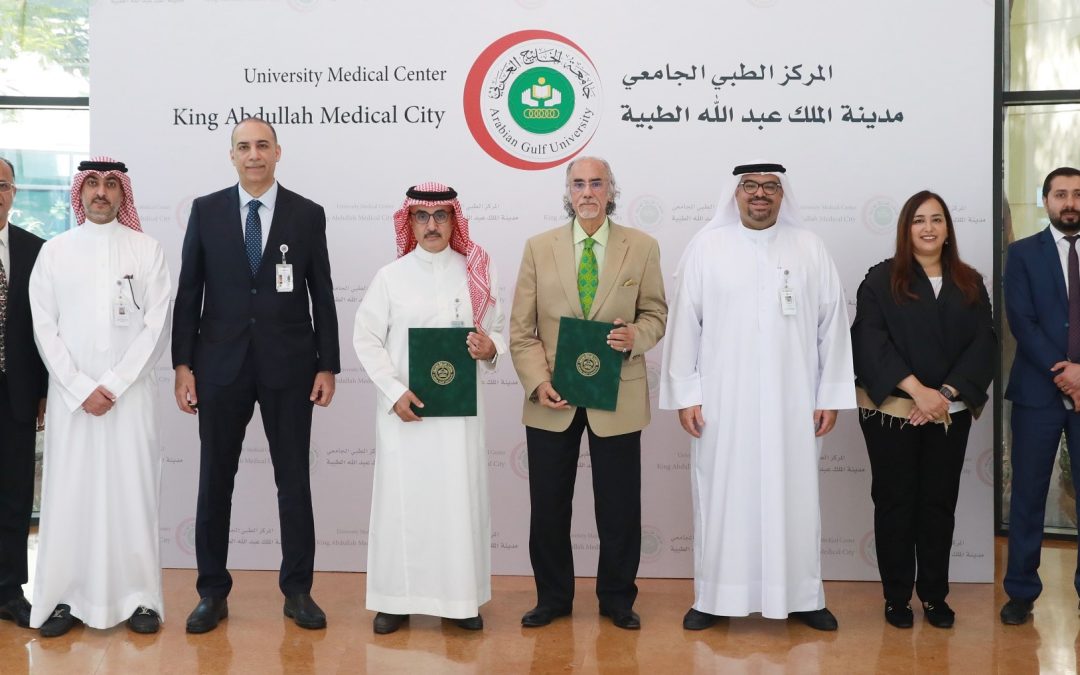
His Excellency Dr Saad bin Saud Al Fuhaid, President of the Arabian Gulf University (AGU), and Dr Khalid Burhanuddin Al Awadhi, CEO of Gulf Pharmacy, have signed contracts for the purchasing of a range of cutting-edge diagnostic medical devices, marking the first such procurement in the Kingdom of Bahrain. These high-quality devices, designed for advanced ultrasound imaging techniques, will serve both the Radiology Department and the specialties of Gynaecology and Obstetrics, including infertility treatment and IVF techniques at the University Medical Centre at King Abdulla Medical City.
The collaboration seeks to bolster the diagnostic and therapeutic capabilities of the centre by incorporating the latest medical technology to better serve patients and visitors, in line with the strategic academic and healthcare objectives of AGU.
During the signing ceremony, Dr Al Fuhaid emphasised the university’s commitment to the ongoing development of the University Medical Centre across all dimensions, equipping it with state-of-the-art medical devices that adhere to the demands of contemporary medicine. He highlighted that this initiative will significantly reduce the time and resources required for accurate diagnosis and optimal treatment.
Dr Al Fuhaid explained that the upcoming phase in the journey of the University Medical Centre will represent a transformative leap in advanced medical services within the Kingdom of Bahrain and the broader GCC region. He added that the enhancement of medical devices across various departments and specialties will adhere to the latest international standards, thereby ensuring the delivery of superior treatment services to patients who rely on the quality of care provided by the centre across all vital medical fields, built upon its esteemed reputation developed over the years.
On his part, Dr Al Awadhi reaffirmed that the partnership with the University Medical Centre aims to deepen cooperative efforts and augment the centre’s diagnostic and therapeutic capacities, thereby improving healthcare services available to patients and achieving integration that elevates medical care standards in the Kingdom of Bahrain.
Following the signing, Dr Al Awadhi commended the exemplary services provided by the University Medical Centre and highlighted the pivotal role it plays in offering the latest medical technologies to patients. He expressed his enthusiasm about this partnership, which he believes will further strengthen the collaborative relationship among Gulf Pharmacy, AGU and the University Medical Centre.
Commenting further, Dr Al Awadhi said: “Today, we are formalising an agreement with the University Medical Centre in King Abdullah Medical City to supply radiological imaging devices that are currently unavailable in the Bahraini market. Their introduction at the University Medical Centre is anticipated to herald positive developments for patients in the Kingdom.”
He added: “These advanced devices possess sophisticated technologies capable of discerning intricate details within multiple layers of the human body, enabling the detection of conditions that may not be clear and obvious through conventional imaging devices. It will provide healthcare professionals with a comprehensive understanding of diseases, facilitating precise diagnostics and the formulation of tailored treatment strategies for patients.”
On the occasion, Dr Salman Hamad Al Zayani, CEO of the University Medical Centre, affirmed that signing contracts with Gulf Pharmacy is a significant advancement in the array of medical services offered by the centre. He noted that the introduction of more accurate and advanced medical devices will usher in a notable transformation in service delivery, adding to the achievements the centre has accomplished since its establishment in 2012.
Dr Al Zayani added: “The signing of this contract today is a testament to our unwavering commitment to enhancing the University Medical Centre, which has earned the trust of the Bahraini community and the GCC region as a leading institution for high-quality specialised medical services.”
by ashokaib | Aug 29, 2024 | Uncategorized
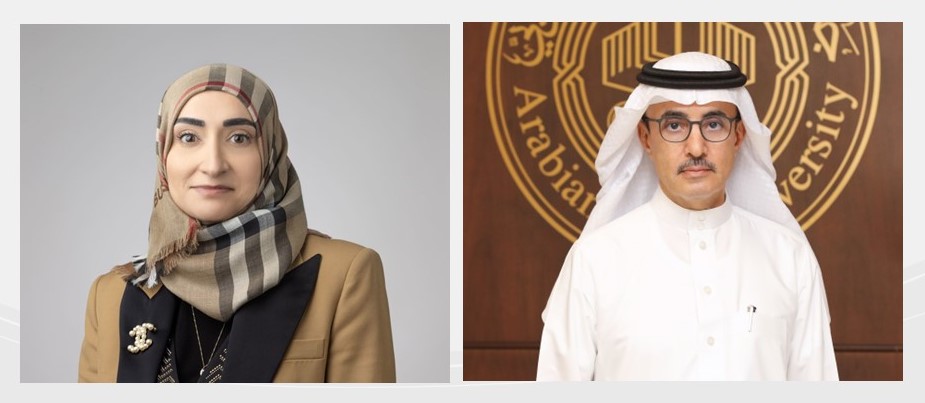
His Excellency Dr Saad bin Saud Al Fahid, President of the Arabian Gulf University (AGU), extended his sincere congratulations to Her Excellency Jameela Mohammed Redha Salman, Member of the Shura Council and an Infectious Diseases Consultant at the University Medical Centre, on her recent appointment as Chair of the Strategic and Technical Advisory Group on Antimicrobial Resistance (STAG-AMR) by the World Health Organisation (WHO). This advisory group is the principal body of the WHO addressing the critical issue of antibiotic resistance. Dr Al Salman’s selection as one of the distinguished global experts highlights her extensive experience, dedication and significant contributions to combating infectious diseases.
The President emphasised that Dr Al Salman’s appointment to this vital international role represents a remarkable national achievement, adding to the successes accomplished by Bahraini women. He commended her medical and research efforts, as well as her unwavering national contributions, which have played a prominent role in advancing the health system in the Kingdom of Bahrain.
He further expressed his wishes for her continued success in enhancing the health system and for her fruitful collaboration with the WHO in developing policies and strategies aimed at improving health, medical and therapeutic services for patients.
It is noteworthy that the STAG-AMR plays a crucial role in providing guidance to the Director General of the WHO and the Antibiotic Resistance Division on comprehensive global policies and strategies to tackle the phenomenon of antibiotic resistance within the framework of human health, while considering relevant decisions and resolutions from the World Health Assembly.
In her response, Dr Al Salman underscored that chairing this esteemed international committee is a testament to the Kingdom’s ongoing efforts to enhance the quality of healthcare. She expressed her profound pride and appreciation for the exemplary support and attention afforded to the health sector and its personnel by the Wise Leadership of the Kingdom, which has facilitated the advancement of this vital sector.
Additionally, Her Excellency conveyed her heartfelt congratulations to Her Royal Highness Princess Sabeeka bint Ibrahim Al Khalifa, Consort of His Majesty the King and President of the Supreme Council for Women (SCW), acknowledging the pivotal role of the Council in promoting the status of women across various fields of national endeavour, which has empowered Bahraini women to assume leadership and international roles.
Dr Al Salman also praised the health achievements accomplished by the Kingdom and reaffirmed Bahrain’s commitment to providing a sustainable and integrated health environment for all. She highlighted the Kingdom’s distinguished history of health excellence, including the comprehensive response to the COVID-19 pandemic, which received commendation from the WHO and various global entities for its speed, initiative and allocation of necessary resources to address health challenges.
She further expressed her heartfelt gratitude to the WHO, under the esteemed leadership of Dr Tedros Adhanom Ghebreyesus, Director General, as well as to all members of the organisation. Dr Al Salman noted that this significant appointment contributes to the Kingdom’s growing list of achievements, affirming her commitment to collaboratively advance the group’s objectives and to produce essential decisions and recommendations that align with global health trends.
Furthermore, it is important to note that the STAG-AMR comprises 25 members who are leading experts in the field of infectious diseases from around the globe.
by ashokaib | Aug 28, 2024 | Uncategorized
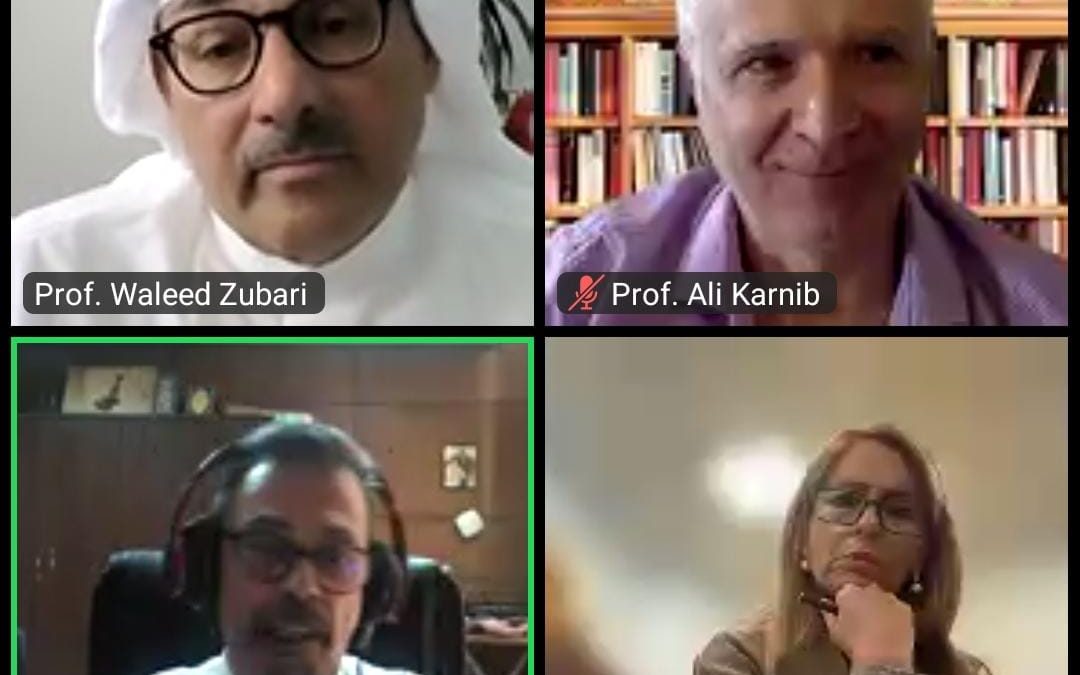
The Arabian Gulf University (AGU) has recently participated in a virtual expert group meeting on “The Water-Energy-Food-Ecosystems Nexus: A Framework for Climate Change Adaptation from Regional to Community Scales”. This roundtable was organised yesterday, Tuesday (August 28, 2024), by the UNESCO Regional Office in Cairo in collaboration with the League of Arab States. The meeting aimed to review the latest developments in the implementation of the Water-Energy-Food-Ecosystem Nexus (WEFE Nexus) in the region and to showcase examples of its application at national, local and Arab community levels. This initiative seeks to enhance the nexus approach and engage youth as future stakeholders, leveraging their innovative perspectives and social awareness to address nexus challenges through a potential youth-led research initiative at UNESCO. The virtual expert meeting saw the participation of more than 60 individuals.
AGU was represented by Prof. Waleed Zubari, Water Resources Management Professor. During the roundtable, experts discussed how to advance nexus thinking and approaches as frameworks for addressing sustainable development in light of climate change impacts within the Arab region.
The participants emphasised the significant rise in demand for fresh water, energy, and food in the Arab region, largely driven by population growth and economic development. They highlighted the urgent need for a comprehensive and systematic approach to address the interdependence of water, energy and food resources. This is particularly important given the existing gap between these resources and their interconnected ecosystems, wherein water is necessary for energy generation, while both water and energy are required for traditional food production.
Moreover, the experts stressed the importance of understanding the interdependencies and trade-offs involved in the planning and management of these three sectors, as well as recognising the synergies between them. This understanding is essential for the development of integrated strategic plans.
In his speech, Prof. Zubari noted that, although the concept of the water-energy-food nexus is widely recognised in the Arab region as a suitable solution for securing these three vital sectors and their sustainable management, progress in its implementation remains limited. He identified several constraints related to the enabling environment, which can be categorised into scientific aspects concerning the role of research in bridging knowledge gaps, governance aspects related to institutional structures for the nexus, capacity aspects focusing on enhancing institutional and individual capabilities, and investment aspects aimed at stimulating private sector involvement in innovative projects related to the water-energy-food nexus.
Prof. Zubari concluded his address by recommending the establishment of a research network to bridge the science-policy interaction gap, identify best governance practices, and develop capacity-building programmes to address existing gaps related to the nexus approach.