by ashokaib | Jun 4, 2025 | Uncategorized
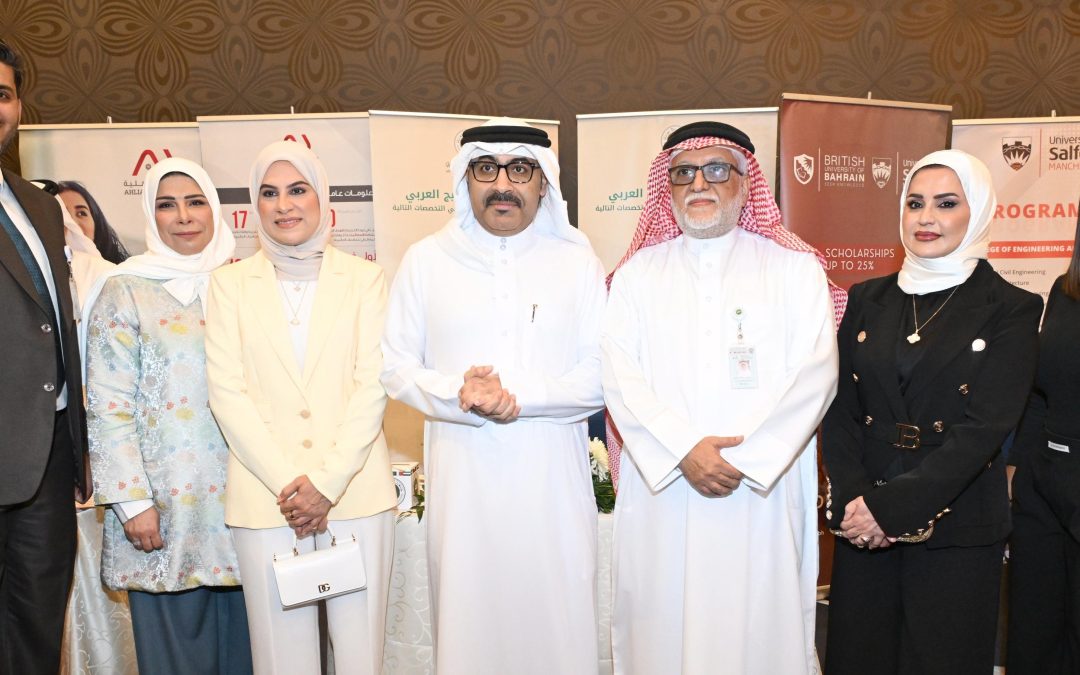
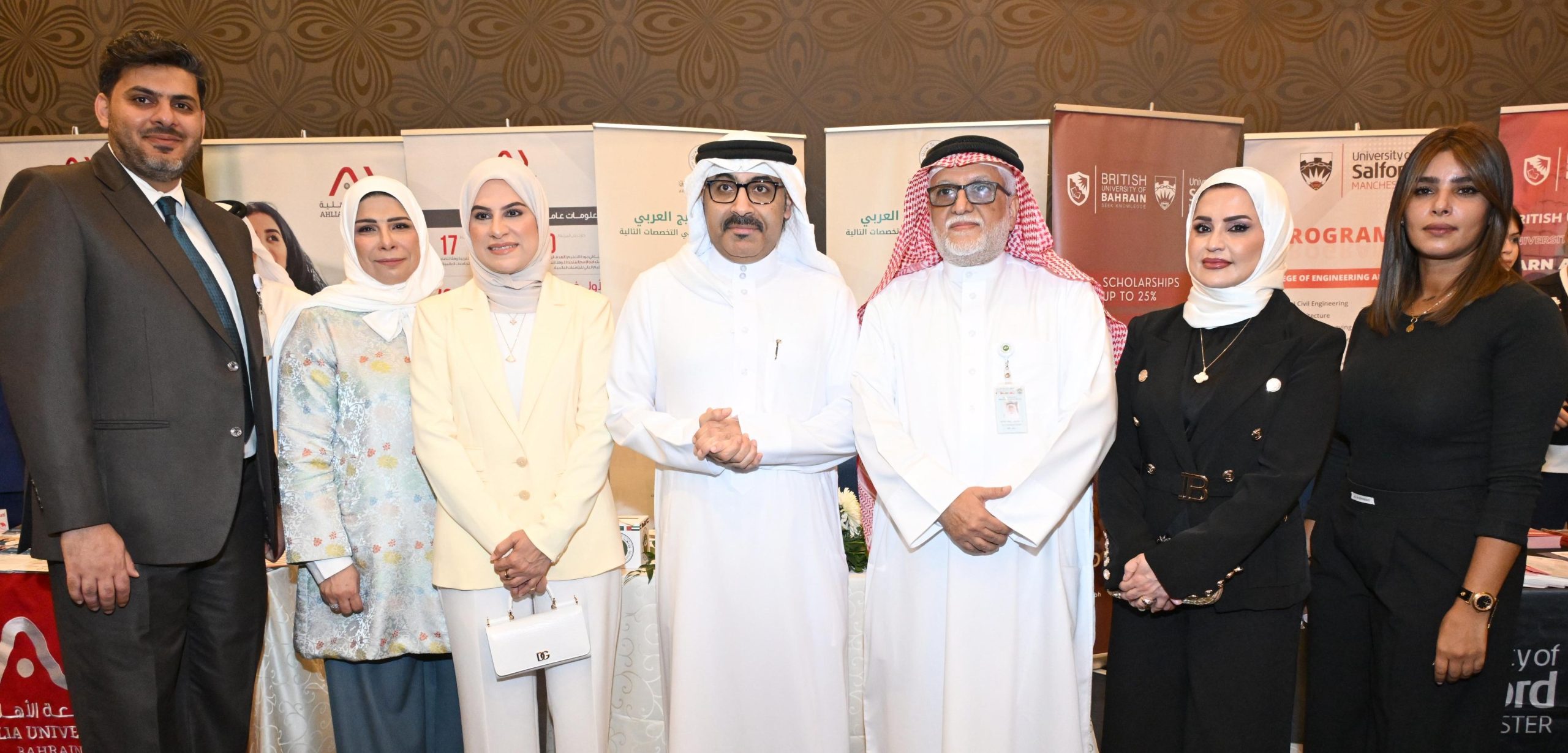
The Arabian Gulf University (AGU) took part in the Al Ayam University Exhibition, which commenced on Tuesday morning, in the presence of His Excellency Dr Mohammed bin Mubarak Juma, Minister of Education and Chairman of the Higher Education Council, and Dr Diana Abdulkarim Al Jahrami, Secretary General of the Higher Education Council.
Representing AGU at the opening ceremony on behalf of His Excellency Dr Saad bin Saud Al Fuhaid, President of the University, was Dr Abdulrahman Yousif, Vice President for Support Services and Institutional Support. The event also witnessed the attendance of a number of university presidents.
The exhibition was held in conjunction with the local press’s recognition of outstanding high school and preparatory school students, as part of efforts to honour their achievements and assist them in selecting specialisations aligned with their interests, abilities, and future aspirations.
During the opening, Dr Abdulrahman Yousif congratulated the high-achieving students of the 2024–2025 academic year, commending their excellence as a testament to hard work and diligence. He emphasised that their accomplishments reflect a deep awareness of the value of education as a pillar of development and progress. He also praised the dedication and unwavering support of parents in providing a nurturing environment throughout their children’s academic journey.
Dr Yousif lauded the Al Ayam University Exhibition as an annual success that serves as a valuable gateway for high school graduates to obtain comprehensive information on academic programmes and universities, thereby aiding them in making informed decisions about their educational paths.
He reaffirmed AGU’s commitment to participating in key educational exhibitions both within Bahrain and abroad, with the aim of introducing its diverse academic offerings.
At the undergraduate level, AGU offers the Doctor of Medicine and the Bachelor of Science in Nursing. At the postgraduate level, the College of Medicine and Health Sciences provides a range of diploma, master’s, and doctoral programmes, including the Postgraduate Diploma in Clinical Research, PhD and MSc in Molecular Medicine, MSc in Regenerative Medicine, MSc in Personalised Medicine, Clinical Master’s in Family Medicine, and MSc in Laboratory Medicine.
The College of Education, Administrative and Technical Sciences also delivers high-quality, practice-based programmes at both master’s and doctoral levels. These include Master’s and PhD in Gifted Education, Master’s and PhD in Learning Difficulties and Developmental Disabilities – specialising in intellectual disabilities and autism – MSc in Digital Learning, MSc in Next Generation Computing (specialising in Artificial Intelligence and Formal Methods in Cybersecurity), MSc in Natural Resources and Environmental Management (with specialisations in Water Resource Management, Environmental Management, and Desert and Soilless Agriculture), and a Master of Business Administration (MBA) offering concentrations such as Public-Private Partnerships and Facilities Management.
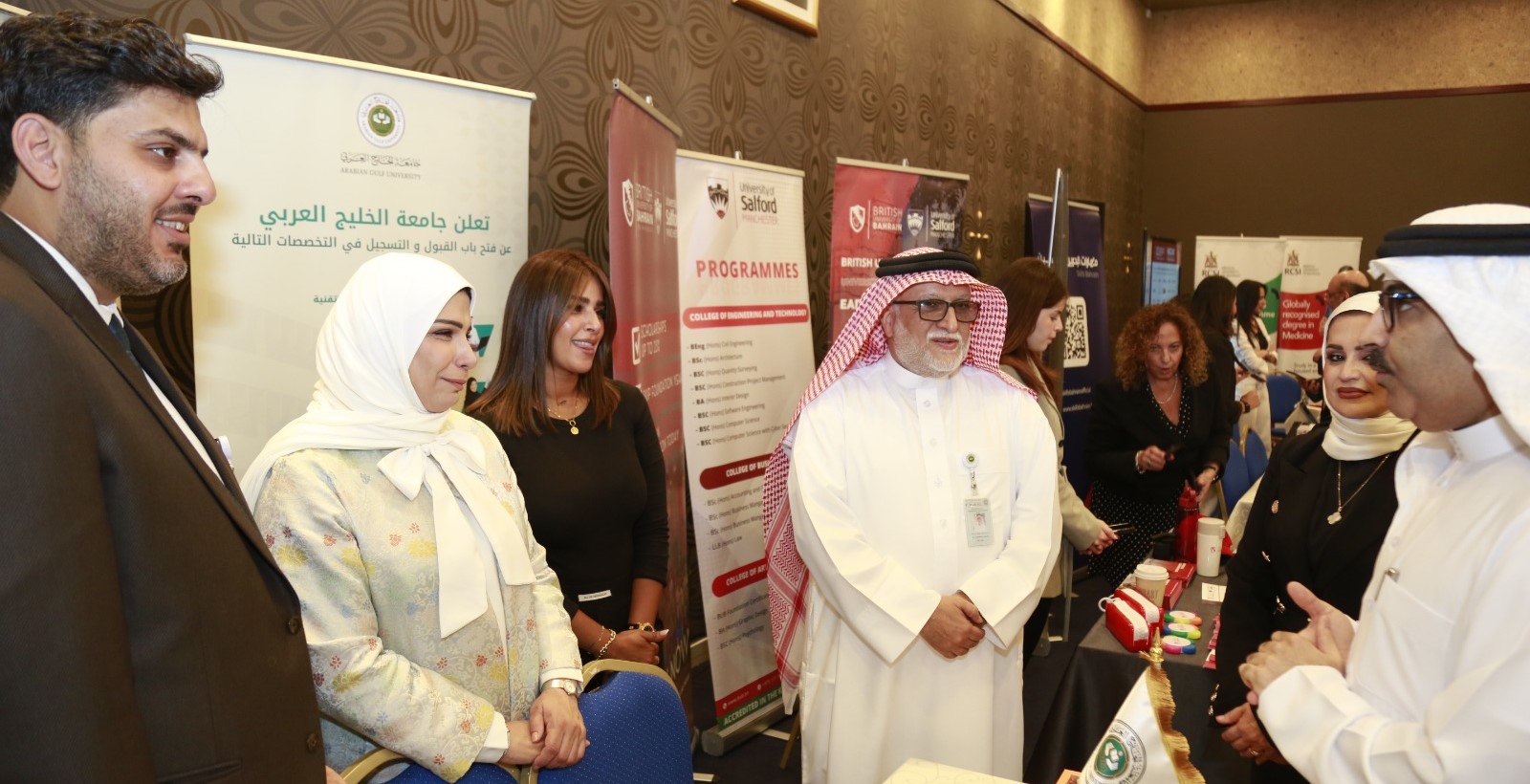
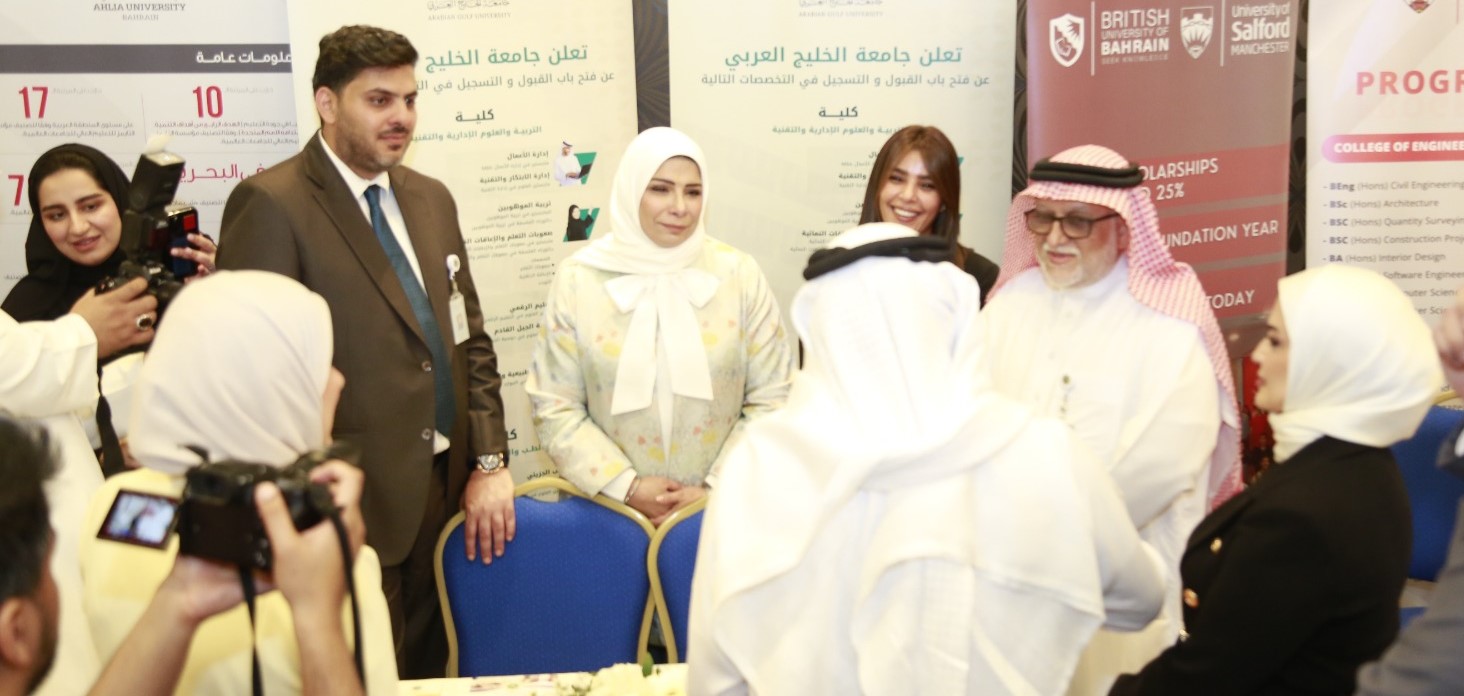
The AGU pavilion at the exhibition attracted a large number of students, parents, and interested visitors who explored the university’s academic programmes across the bachelor’s, master’s, and doctoral levels in both the College of Medicine and Health Sciences and the College of Education, Administrative and Technical Sciences. The exhibition provided an important opportunity to equip students with the knowledge and practical skills required to enhance their prospects for admission into specialisations that align with the needs of both the local and Gulf labour markets.
by ashokaib | Jun 2, 2025 | Uncategorized
Mohammed bin Yousuf Al Zayani, a PhD candidate in the Department of Innovation and Technology Management at the College of Education, Administrative and Technical Sciences, Arabian Gulf University (AGU), presented findings from his research on the relationship between business model innovation (BMI), sustainable competitive advantage (SCA), and sustainable performance (SP) among small and medium-sized enterprises (SMEs) in Bahrain. Conducted as part of his PhD in Innovation Management, the study affirms the importance of understanding these dynamics to foster business sustainability and adapt to the growing challenges of global markets.
The findings revealed that strategies for BMI directly enhance SCA and SP, with competitive advantage serving as a mediator in achieving long-term success. Additionally, the study highlighted the role of organisational culture as a motivating factor in promoting SP practices. Al Zayani emphasised the necessity of SMEs aligning innovation initiatives with their development goals and strategic visions.
Employing a mixed-method approach, Al Zayani utilised questionnaires to assess key variables, analysed data through structural equation modelling (PLS-SEM), and conducted qualitative analysis using NVivo and Atlas.ti software. The findings offer practical insights for Bahraini companies seeking to adopt innovative business models that bolster their sustainability and competitiveness.
This research contributes significantly to the literature on Innovation Management, illustrating how BMI can serve as a vital tool for achieving sustainable success, paired with strong organisational culture.
by ashokaib | Jun 1, 2025 | Uncategorized
The Arab Gulf Journal of Scientific Research, published by the Arabian Gulf University (AGU), has risen in the new review of scientific journals by the SCImago Journal Rank platform. The journal has moved up in the SJR ranking for 2024 from Q4 (Quarter 4) to Q2 (Quarter 2), a qualitative leap that is considered the best in the journal's history spanning more than forty years. According to the latest indicators published on the SCImago website for 2024, the SJR index has increased to 0.343, after being 0.181 in 2023 and 0.104 in 2022, which is the highest figure recorded by the journal since its establishment.
Commenting on this occasion, His Excellency Dr Saad bin Saud Al Fuhaid, President of the University, expressed his pride in this progress, stressing that this achievement reflects the development of the quality of research published in the journal, the increase in its impact on the scientific community, and the growth in the number of citations to it as a reliable scientific source, which enhances its position among prestigious scientific journals.
For his part, the Editor-in-Chief of the journal, Professor Waheeb Al Naser, explained that this improvement in the ranking came as a result of the continuous support from the President of the University and his deputies, the cooperation of the deans of the two colleges and their affiliates, and the International Advisory Committee of the journal, in addition to the effective partnership with the global publishing house, Emerald. He also praised the efforts of the editorial board, the participating editors, and the international referees, whose expertise and global reach contributed to enhancing the journal's presence and impact.
Notably, in 2024, the journal witnessed qualitative leaps in performance indicators, represented by an increase in the number of citations per document during the two, three, and four-year periods, and an increase in the total number of citations to 275 compared to 78 in 2023 and only 9 in 2022, in addition to the growth in the number of published research papers to 128, which embodies a significant development in scientific productivity.
The number of self-citations reached only 20, which confirms the strength of external citations and the rise of the journal's impact globally. This achievement is an important milestone in the journal's journey, enhances the position of AGU as a leading research institution, and opens up broader prospects for scientific cooperation at the regional and international levels.
by ashokaib | May 29, 2025 | Uncategorized
The Arabian Gulf University (AGU) has taken part in the World Federation for Medical Education (WFME) 2025 Conference, currently being held in Bangkok, Thailand. During the event, Mr Khabab Abdulmoneim Al Haj, Director of Quality and Accreditation at the College of Medicine and Health Sciences, delivered two presentations highlighting the University’s pioneering approach to quality in medical education, grounded in simulation, problem-based learning, and innovation. His sessions emphasised the positive outcomes of engaging students in shaping the learning environment, earning AGU recognition on the global stage.
Representing the University, Mr Al Haj shared AGU’s extensive experience and innovations in advancing quality standards and amplifying the student voice within healthcare education. He also underscored the institution’s ongoing commitment to continuous improvement and smart education systems, shedding light on the implementation of ISO 21001:2018 – the Educational Organisations Management System – in an accredited medical college setting.
In an interactive presentation, Mr Al Haj outlined the University’s bold journey towards adopting and integrating the ISO 21001:2018 standard within its quality and accreditation framework. He explained how the standard served not merely as a compliance tool, but as a catalyst for enhanced governance, improved learning outcomes, and a deeply embedded culture of continuous improvement.
Commenting on this occasion, Mr Al Haj stated: “Our story resonated with medical education professionals from around the world. Quality must transcend mere compliance; it should be an enabler of meaningful transformation.” He also highlighted the effectiveness of empowering the student voice and the importance of integrating students into quality circles across healthcare education.
In a separate poster session, Mr Al Haj presented AGU’s 2025 initiative titled Quality Circles, launched under the guidance of the University President and the Director of the Centre for Quality Assurance and Strategic Planning. Developed in response to limited student involvement in institutional evaluations, the initiative turned challenges into an opportunity for creating a participatory model that empowers students in decision-making processes.
“Through the Quality Circles, students collaborated with quality teams to devise practical solutions, exchange perspectives, and inspire change in a genuine and engaging manner,” he noted. “Quality voices go beyond assessment—they are about trust, empowerment, and a sense of belonging. Seeing our students evolve into true partners in shaping their educational environment is both rewarding and a source of pride.”
The initiative was commended as a pioneering model, offering a framework that other institutions can adopt to enhance student engagement in educational quality development. Mr Al Haj added that the conference also provided valuable opportunities to network with peers from across the globe, explore best international practices, and attend a wide range of insightful sessions. The University’s participation helped forge strong foundations for potential future collaborations in the fields of quality and medical education.
AGU’s active involvement in WFME 2025 reflects its steadfast commitment to delivering innovative medical education that blends academic excellence with community engagement and student empowerment. It also reaffirms the University’s growing role in shaping international discourse on the future of health professions education.”
by ashokaib | May 28, 2025 | Uncategorized
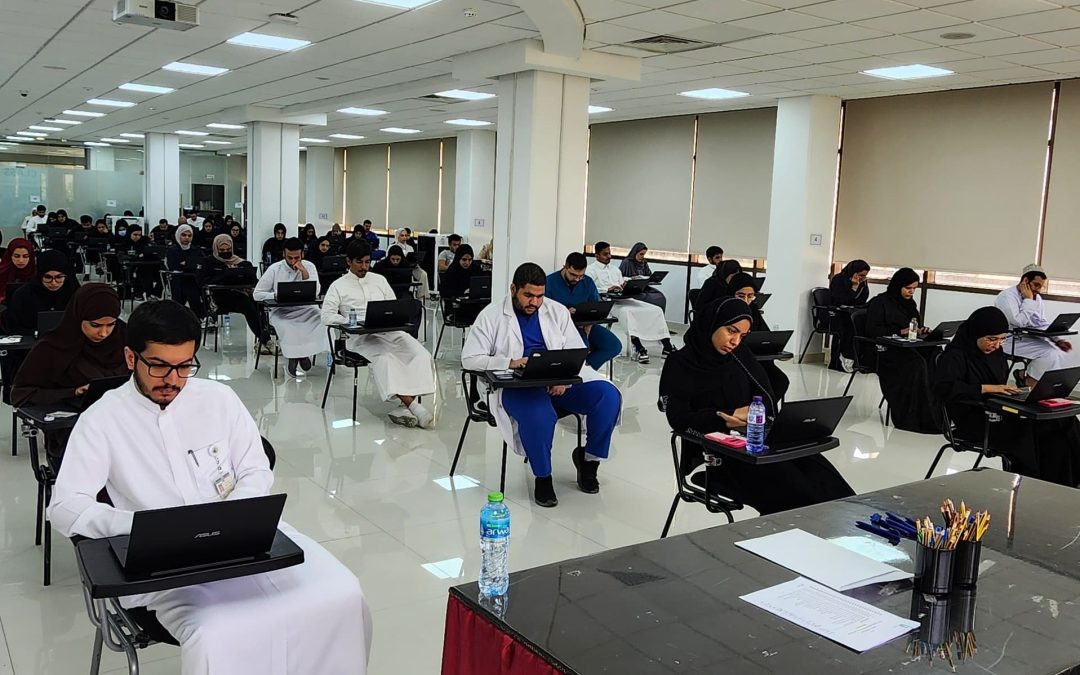
Arabian Gulf University (AGU) has commenced the final written and clinical examinations for 178 Gulf students in their sixth and final year at the College of Medicine and Health Sciences with 100% attendance rate. His Excellency Dr Saad bin Saud Al Fuhaid, President of the University, accompanied by Dr Abdel Halim Deifalla, Dean of the College of Medicine and Health Sciences, inspected the progress of the examinations.
The Dean stated that the sixth-year students’ exams a are organised using advanced computer programs that adhere to international standards, tailored to meet the specific needs of each student. The organisational procedures have created a conducive environment, enabling students to undertake their exams without significant obstacles. He also expressed pride in the achievements of the university’s medical students over the years.
Dr Mona Arekat, Vice Dean of Clinical Affairs at the College of Medicine, confirmed that the written exams were successfully completed without technical issues, thanks to the teamwork and continuous support from the university administration.
The clinical exams are scheduled for Wednesday and Thursday, 28 and 29 May. External examiners, including professors from various disciplines within the Gulf, Lebanon, and the United Kingdom, have been invited to participate. The College of Medicine and Health Sciences regularly invites external examiners to ensure the quality and integrity of the clinical assessments, alongside faculty members from local hospitals.
Dr Arekat emphasised the college’s keenness to motivate students with the goal of completing their medical education and pursuing postgraduate specialisation. Graduates are expected to become proud representatives of their alma mater, returning to their home countries as specialists across various medical fields, thereby contributing to the enhancement of healthcare services. She reaffirmed the university’s strategic mission to graduate highly qualified medical cadres capable of meeting the evolving needs of the Gulf healthcare sector and supporting regional development.