by ashokaib | Apr 21, 2025 | Uncategorized
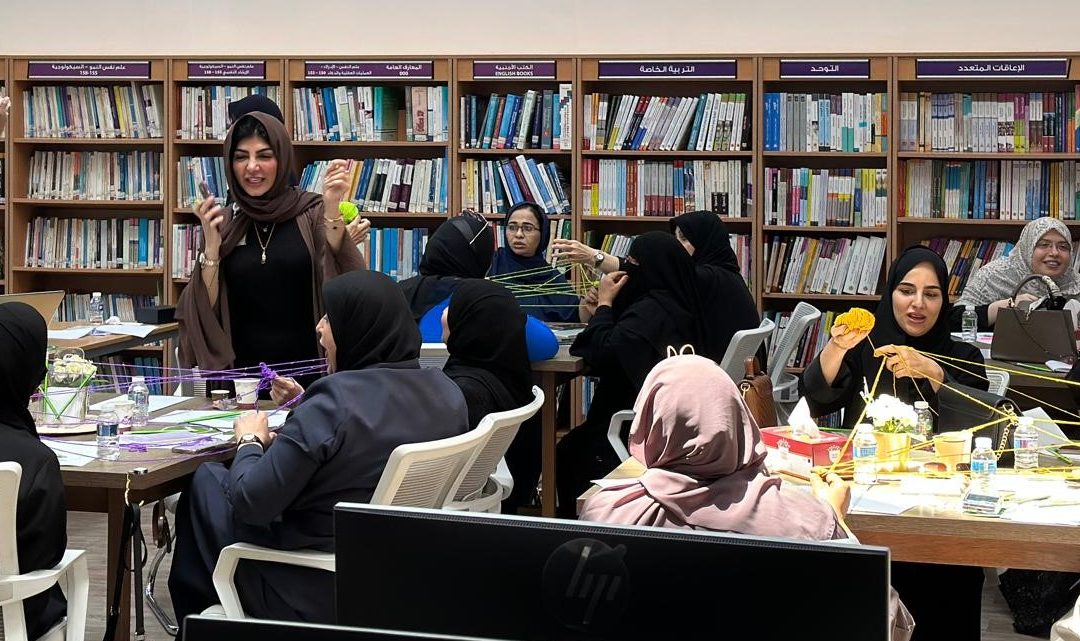
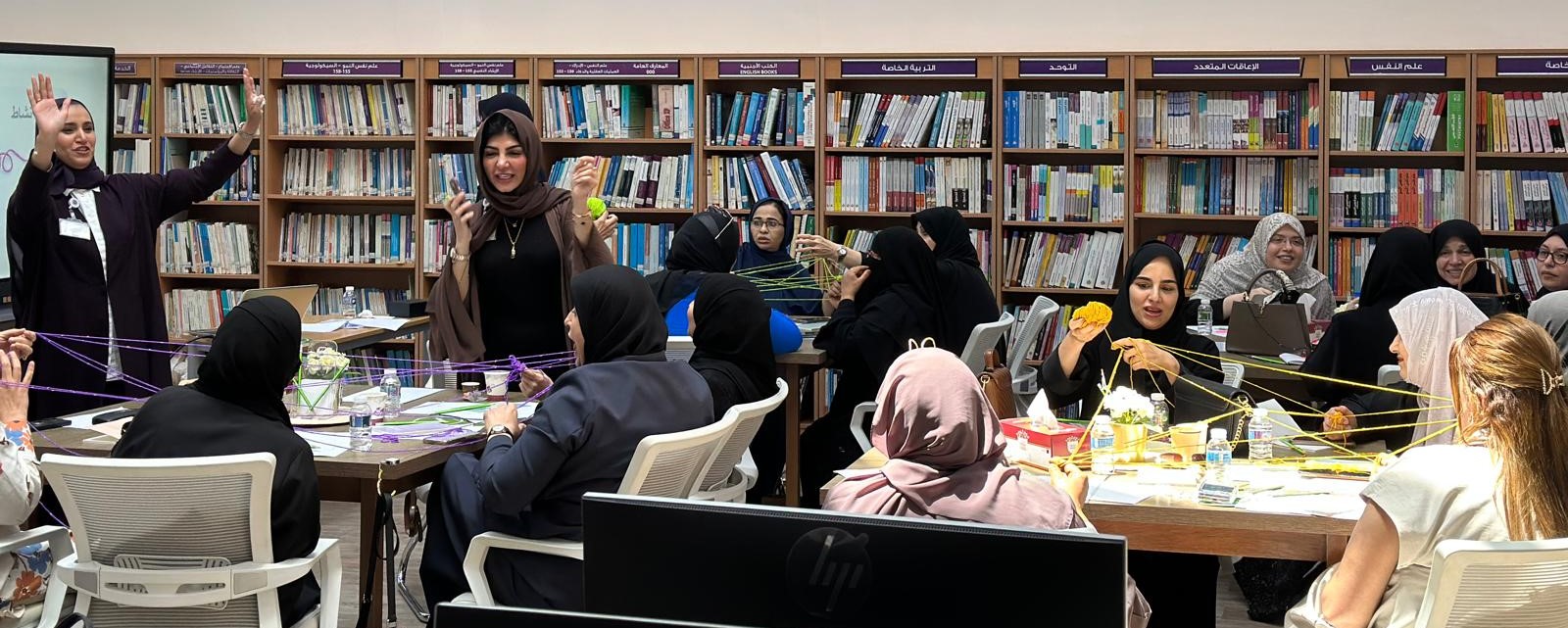
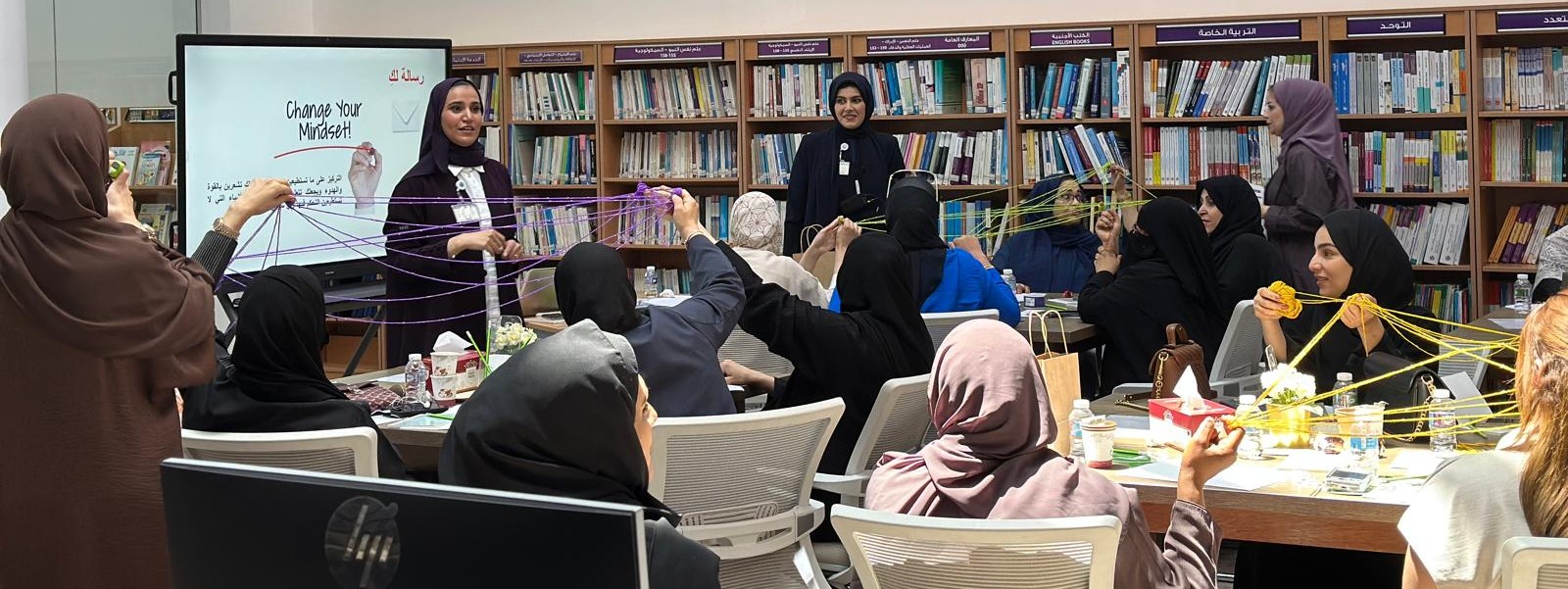
The Arabian Gulf University (AGU) doctoral students from the Department of Special Education’s Learning Difficulties and Developmental Disabilities programme have conducted a series of workshops at the Shafallah Centre for People with Disabilities in the State of Qatar to explore strategies for reducing anxiety among parents of individuals with developmental disabilities. The visit formed part of the department’s field training curriculum under the supervision of Dr Maryam Al Sherawi, Professor of Special Education.
The programme included a “Once Upon a Time” workshop for the centre’s teachers and specialists, focusing on the use of social stories in special education for students with intellectual disabilities. Sessions to exchange expertise with the centre’s staff featured a lecture on Augmentative and Alternative Communication (AAC) delivered in collaboration with the Educational Services Department’s guidance team. Parents, who praised the content and delivery of the sessions, recommended extending the workshop to a larger cohort to maximise its impact.
The doctoral students also toured the centre’s Rehabilitation and Vocational Training Department, observing its production workshop where students create agricultural products and thermal‑printed artworks, then package and market them within the Qatari market. In addition, they visited the physiotherapy and occupational therapy units, as well as the sensory‑enhancement facility for pupils with autism, which contributes to reducing their anxiety.
Dr Al Sherawi said the visit aimed to broaden the postgraduate students’ horizons by providing direct engagement with real‑world practices in the field of developmental disabilities, thereby enhancing their academic and professional skills.
This activity is part of the field applications course offered by the Learning Difficulties and Developmental Disabilities programme, which seeks to strengthen collaboration between AGU and specialist community institutions in disability care, enrich students’ competencies and support the development of both educational and social sectors.
The cooperation between AGU and the Shafallah Centre is designed to reinforce practical training in postgraduate programmes and connect students with professional and field realities, achieving an integration of theoretical knowledge and hands‑on practice within care and rehabilitation institutions.
Parents and teachers participated actively throughout the programme, which concluded with the distribution of participation certificates. The visit generated several recommendations from the centre, notably organising workshops for a broader group of Shafallah Centre members and formalising relations through a memorandum of understanding between AGU and the centre.
The centre also welcomed the prospect of doctoral students undertaking the practical component of their studies on site, fostering an ongoing exchange of expertise to extend the benefits of this partnership.
by ashokaib | Apr 21, 2025 | Uncategorized
The Arabian Gulf University (AGU) has opened admissions for the academic year 2025/2026 to its Master’s and Doctoral programmes at the College of Education and Administrative and Technical Sciences for GCC nationals and Arab residents in GCC states. This initiative forms part of AGU’s strategic expansion to provide specialised, advanced academic offerings that support regional development goals and meet the future needs of the Gulf labour market.
The move also aligns with the university’s strategy to strengthen scientific research, foster innovation and address the demands of the Gulf and wider Arab job markets through high‑quality programmes with modern, practical applications.
Available qualifications include Master’s and PhD in Gifted Education; Master’s and PhD in Learning Difficulties and Developmental Disabilities, specialising in Learning Difficulties, Intellectual Disability and Autism; Master of Science in Digital Education; Master of Science in Next‑Generation Computing with specialisms in Artificial Intelligence and Formal Methods for Cybersecurity; Master of Science in Natural Resources and Environment with specialisms in Water Resources Management, Environmental Management, Desert Aquaculture and Soilless Agriculture; and the Master of Business Administration (MBA) with specialisms in Public‑Private Partnerships and Facilities Management.
Applicants must be citizens of GCC member states or Arab nationals residing within the GCC. Candidates for Master’s and Doctoral programmes are required to hold a minimum undergraduate grade of A, while those applying for postgraduate diplomas must have achieved at least B+. All applicants must also meet the university’s English‑language requirements via the British IELTS or an equivalent American TOEFL score, pass a personal interview and satisfy any additional assessments or academic criteria specified by their chosen programme and approved by AGU. A health‑fitness certificate and a certificate of good conduct from the applicant’s awarding institution are also mandatory.
AGU offers a 40 per cent tuition‑fee discount to self‑funded students in programmes offered by the College of Education and Administrative and Technical Sciences (excluding the MBA) and provides flexible study through a part‑time enrolment system.
by ashokaib | Apr 21, 2025 | Uncategorized
The University Medical Centre (UMC) of King Abdullah Medical City has introduced a cutting-edge surgical laser device, one of the latest tools in urology. The innovative technology offers precise disintegration of urinary tract stones using laser techniques. This represents a significant therapeutic advancement, enabling the removal of stones from the kidneys, ureters, and bladder without the need for major surgical procedures. The device also reduces operating time, minimises potential side effects and complications, and enhances patient recovery, thereby elevating the quality of healthcare services provided.
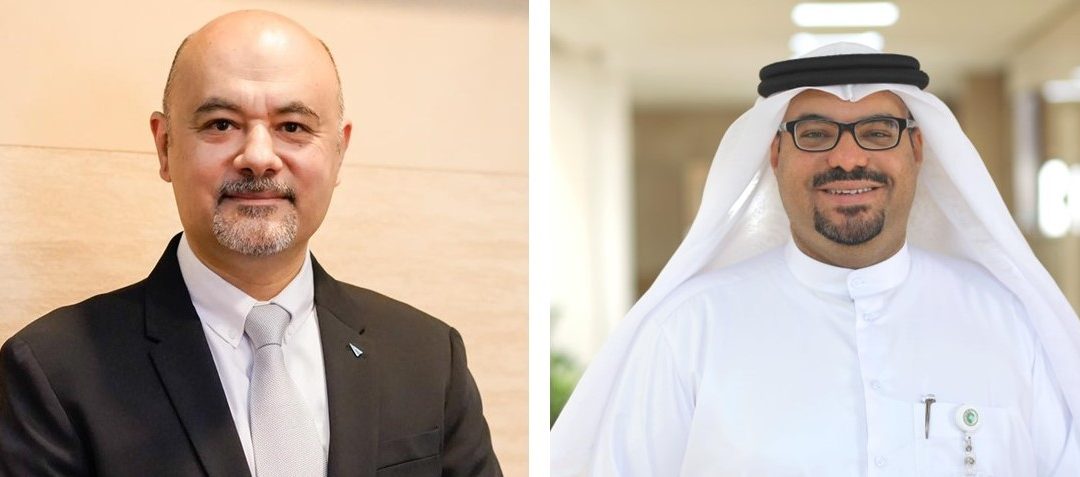
Dr Salman Hamad Alzayani, CEO of UMC, stated that this device marks a qualitative enhancement to the centre’s medical services, within a comprehensive development plan focused on modernising medical equipment and boosting performance across subspecialties. He expressed gratitude to His Excellency Dr Saad bin Saud Al Fuhaid, President of Arabian Gulf University (AGU), for his unwavering support of the centre’s developmental efforts.
Dr Hamad Alhellow, Consultant Urologist and Kidney Surgeon at UMC, noted that the new device is characterised by its high precision, safety, and efficiency in fragmenting stones in the kidneys, ureters, and bladder through minimally invasive procedures. This advancement allows the medical team to perform sophisticated techniques such as dusting, basketing, and reflux control, significantly improving outcomes in complex and recurrent cases. The device supports a broad range of endoscopic interventions and is capable of handling delicate cases thanks to its advanced technology, ensuring high accuracy in dissolving stones without damaging healthy tissue, reducing post-op pain and complications, shortening operation times, and limiting the duration of hospital stays. This saves time, effort, and costs for patients, enhancing the centre’s leadership in providing specialised care in the field of urology.
The acquisition of this device aligns with UMC’s strategic goal to equip all departments with the latest medical technologies, enabling doctors to perform their duties more efficiently and to offer patients safer, more effective treatment options. This ultimately elevates healthcare standards in accordance with international standards and addresses patient needs with precision and safety.
by ashokaib | Apr 21, 2025 | Uncategorized
Fatima Al-Aoun, an Environmental Management master’s student at the Environmental and Biological Studies Centre at the College of Education, Administrative and Technical Sciences at Arabian Gulf University (AGU), has won first place as part of a student team at the DataCosmos Hackathon 2025. The event was organised by the National Space Science Agency under the theme “Unifying the 3Ss: Space, Sustainability, Solutions” in collaboration with Open Cosmos and Bahrain Polytechnic.
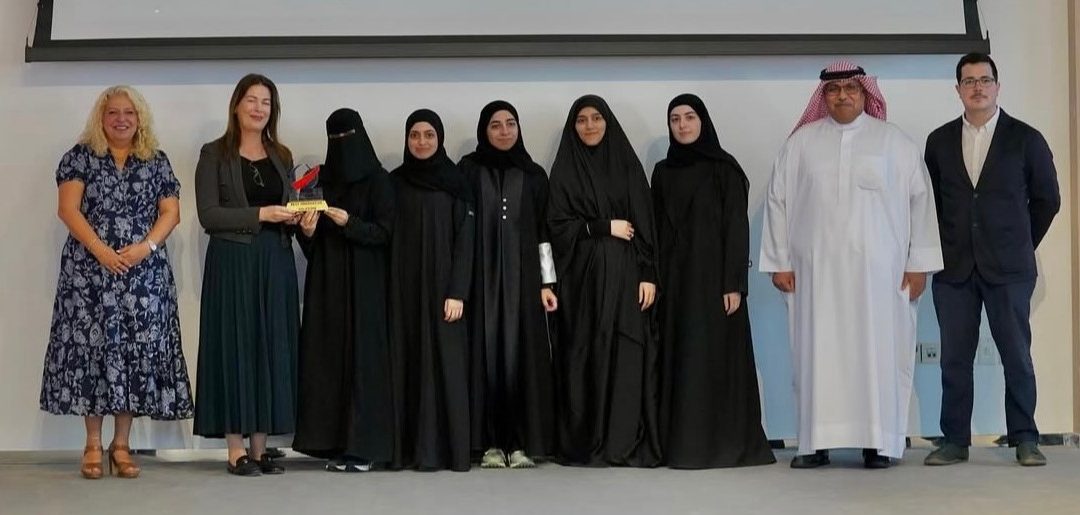
With participation of Amal Marzouq, Nour Mohammed, Raghad Ibrahim, Batoul Alsayed, and Fatima Al-Aoun, the winning project focused on transforming floodwater in the Kingdom of Bahrain from an environmental challenge into a sustainable resource. Using satellite data, the team monitored and analysed floodwater collection areas across Bahrain by comparing satellite images captured during heavy rainfall and dry days. They extracted water indicators from these images to identify flood-prone locations, water collection points, and nearby agricultural sites, aiming to promote sustainable water utilisation.
The project proposed sharing the coordinates of these sites with relevant authorities to facilitate rapid intervention and effective management. Additionally, the team suggested reusing this water for industrial cooling and other applications, thereby enhancing sustainability and reducing water wastage.
Fatima Al-Aoun expressed her enthusiasm in winning first place, since the project was rooted in an environmental reality which the team succeeded in transforming to a viable scientific project. The achievement is a testament to teamwork and a shared belief in the role of science in serving both the environment and society.
For her part, Dr Maha Alsabbagh, Head of the Environmental and Biological Studies Centre at AGU, congratulated Fatima Al-Aoun on her success, praising her academic excellence and that of the participating team.
by ashokaib | Apr 20, 2025 | Uncategorized
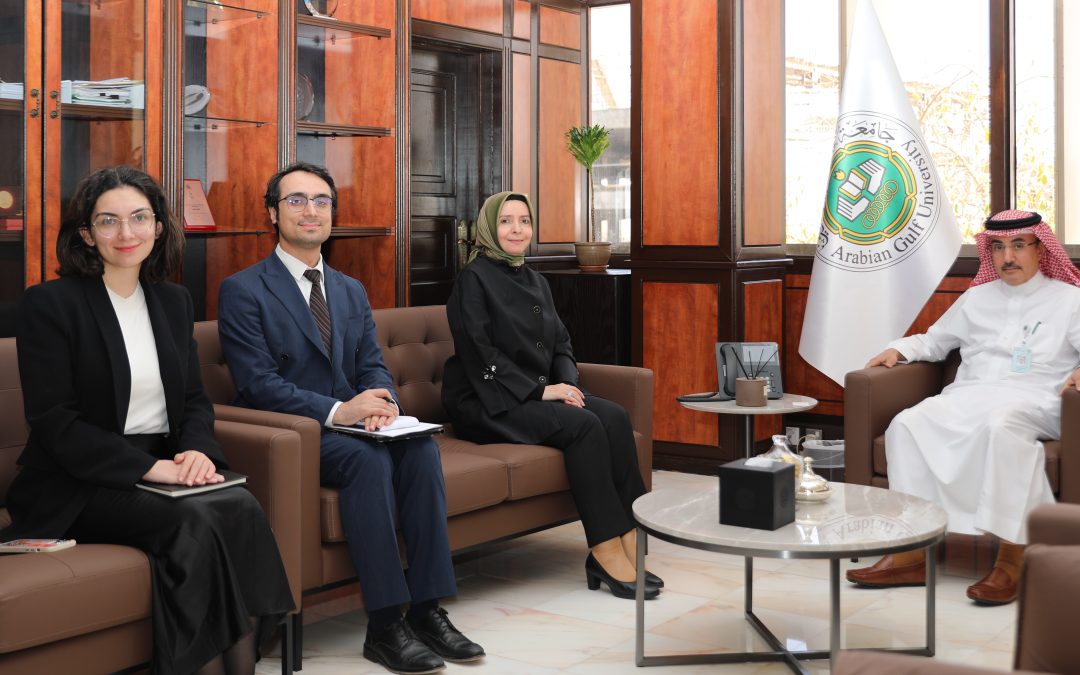
His Excellency Dr Saad bin Saud Al Fuhaid, President of the Arabian Gulf University (AGU), welcomed Her Excellency Dr Ayşe Hilal Sayan Koytak, the newly appointed Ambassador of the Republic of Turkey to the Kingdom of Bahrain. This meeting marked her introduction as the new ambassador.
During the meeting, His Excellency expressed his eagerness to enhance academic, scientific, and research collaboration between the two countries, aiming to expand the horizons of joint initiatives. He wished her success in her diplomatic duties.
The discussions covered several topics of mutual interest, exploring ways to strengthen cooperation between AGU and Turkish universities and research centres, particularly in higher education, scientific research, and innovation. The President also briefed the guests on the university's key academic programmes and initiatives focused on supporting creativity, innovation, and improving the quality of higher education.
For her part, Her Excellency the Ambassador expressed her gratitude and appreciation for AGU, commending its leading role in advancing higher education in the region and its innovative academic programmes. She praised the university's efforts in developing academic skills and promoting a culture of innovation, wishing it continued progress and prosperity.
Additionally, both sides discussed opportunities for academic exchange, activating twinning programmes, and student exchanges between AGU and educational and research institutions in Turkey.