by ashokaib | Feb 20, 2025 | Uncategorized
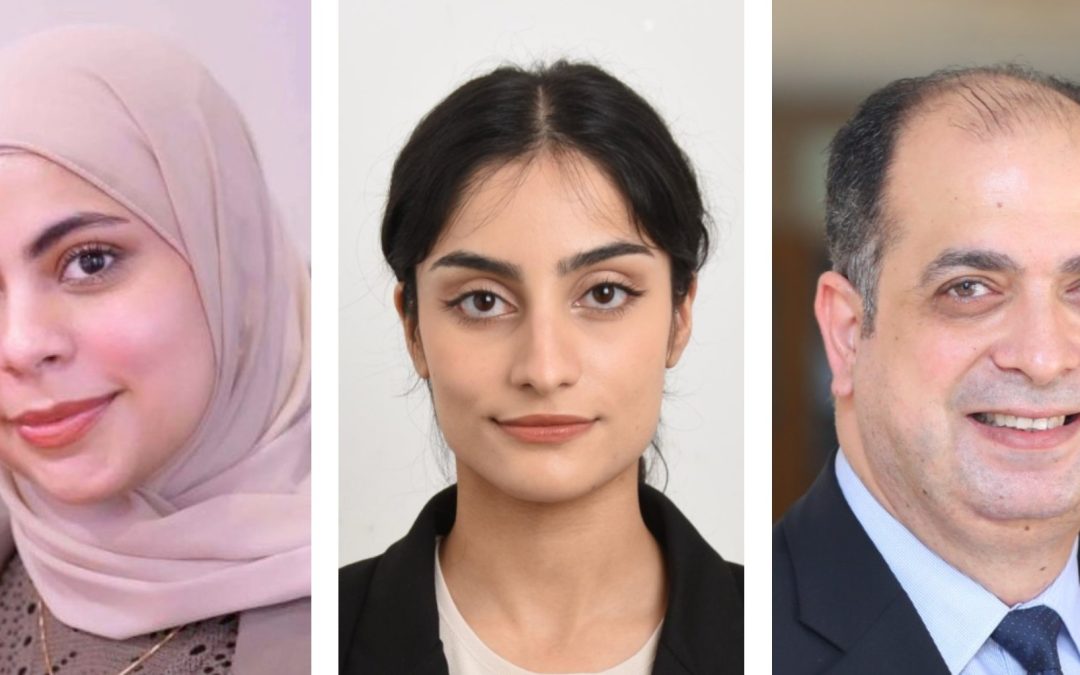
A study conducted by a research team from the College of Medicine and Health Sciences at Arabian Gulf University (AGU) confirmed the importance of psychological support for medical students, especially first-year students, to reduce the incidence of eating disorders and avoid their complications. The study, which was recently published in the Q1 classified Frontiers in Psychology journal, stressed that the high incidence of eating disorders or their complications is largely linked to interaction with global, regional and local stress factors.
The head of the research team, Professor of Clinical Physiology and Head of the Department of Physiology at the College of Medicine and Health Sciences, Dr Yahya Mohamed Naguib, explained that eating disorders are among the most dangerous forms of mental illness and may lead to multiple complications in various body systems. Due to high levels of stress, medical students are more vulnerable to psychological and mental challenges, which may lead to an increased likelihood of developing eating disorders. Social stigma and misinformation, especially in the Middle East, contribute to the problem, as well as underreporting and challenges in seeking appropriate treatment early, since eating disorders remain an understudied phenomenon in the region, limiting options for diagnosis and treatment.
For her part, researcher Munira Al-Mahmeed, the first researcher in the study and a fifth-year student at the College of Medicine and Health Sciences, explained that the current study aimed to assess the prevalence of eating disorders among students of the College of Medicine and Health Sciences at AGU, the potential contributing factors, and the impact of the COVID-19 pandemic as an independent global stressor.
The study relied on a questionnaire consisting of demographic data and the EAT-26 test, in addition to stressors related to the COVID-19 pandemic. The study was conducted on students of the College of Medicine and Health Sciences at AGU starting from the preparatory year to the sixth year. Data was collected from September 2022 to February 2023.
Researcher Muna Al-Mutawa, co-researcher and fifth-year student at the College of Medicine and Health Sciences, indicated that 397 students participated in the study. The results showed that 32.1% of the students tested, most of whom were female students, were at increased risk of developing eating disorders.
The study indicated that students who lived in university housing or group housing were less likely to develop eating disorders. The study also showed that students most at risk of developing eating disorders were students in the first years of study (pre-clinical years). As expected, mental health status was significantly associated with increased risks. One of the most important results of the study demonstrated that interaction with global stressors, such as the Covid-19 pandemic, was significantly associated with a deterioration in the condition of individuals at risk of developing eating disorders.
Researcher Munira Al-Mahmeed stated, “The study concluded that eating disorders are widespread among medical students, and that the increased risk of developing these diseases is linked to global stress factors and consequently, regional and local stressors. The study also highlighted under-acknowledged psychological and mental concerns, which calls for increasing awareness programs on campus, development of individually designed eating disorder treatment programs, and improvement to the overall quality of life and education.”
by ashokaib | Feb 20, 2025 | Uncategorized
Students of the Arabian Gulf University (AGU) celebrated "Saudi Founding Day," in the presence of the President of the University, His Excellency Dr Saad bin Saud Al Fuhaid, a number of officials from the Embassy of the Kingdom of Saudi Arabia in the Kingdom of Bahrain, and members of the academic and administrative staff of the university.
In his speech, D Al Fuhaid extended his warmest congratulations to the Custodian of the Two Holy Mosques, King Salman bin Abdulaziz Al Saud, His Royal Highness Prince Mohammed bin Salman, the Crown Prince and Prime Minister of the Saudi Arabia, and the generous Saudi people. He said: "Saudi Founding Day, which falls on February 22nd of each year, is a great national occasion, where the sacrifices of the ancestors who gave their all to achieve security, stability and prosperity are remembered, emphasising the great responsibility to preserve these gains. Continuous work and solidarity among the people of the nation under the leadership of the Custodian of the Two Holy Mosques and His Royal Highness the Crown Prince is the way to achieve further progress."
The celebration, organised by the university students, included an exhibition and corners reflecting the historical and cultural depth, including popular heritage, national arts, traditional cuisine, the history of the founding, drawing, in addition to multiple student activities including a number of folk dances.
His Excellency the President of AGU affirmed that Founding Day represents an important historical milestone in the ancient history of the Kingdom of Saudi Arabia, which was built on solid foundations of unity and cohesion, inspired by a great legacy to build the nation and consolidate the principles that made the Kingdom one of the most prominent global powers.
He pointed out that this day is a reminder to current and future generations of the importance of preserving the nation's achievements and strengthening its leading role in the region and the world, noting the directives of the wise leadership that contributed to the development of the Kingdom in various fields, and its keenness on education, where AGU had a major role in supporting and promoting higher education in the region.
Addressing the students, he added: "The celebration of Founding Day reflects the pride of Saudis in their history, their cohesion, and their future vision that seeks to achieve leadership and innovation in all fields, and this in turn motivates all educational institutions in the region to enhance cooperation and exchange knowledge, to contribute to achieving the sustainable development goals."
by ashokaib | Feb 20, 2025 | Uncategorized
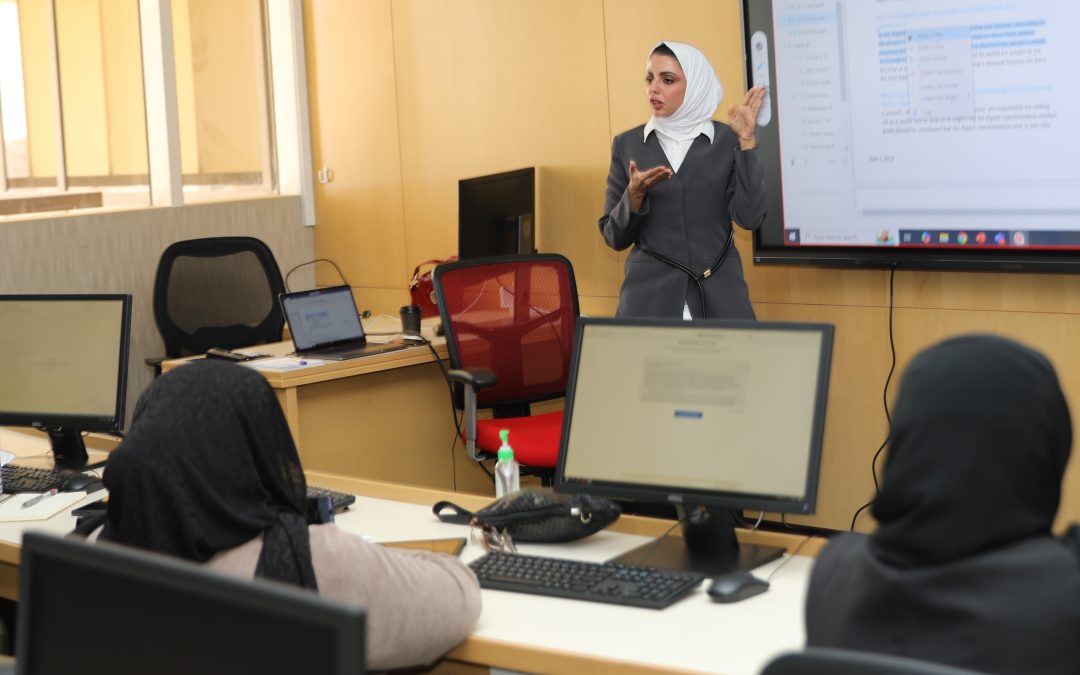
A PhD student in the Department of Innovation and Technology Management at the College of Education, Administrative and Technical Sciences at Arabian Gulf University (AGU), Shaikha Al-Juwaisri presented an interactive workshop on descriptive analysis using the ATLAS TI software, reviewing a case study on the process of content analysis and building a network of tags and concepts to develop a theory based on descriptive data.
The workshop included a showcase of AI techniques in descriptive data analysis, and the role of the researcher in refining descriptive data, formulating appropriate hypotheses, and theory-building.
Al-Juwaisri stated, “In light of the rapid developments in the field of artificial intelligence, AI techniques in metadata analysis have become one of the main axes that improve decision-making across many sectors. These techniques enable companies and organisations to make the most of indirect and variable data, which provides crucial insights into future operations and trends.” She noted multiple AI techniques employed in this field, including machine learning, which enhances the ability to classify data and discover hidden patterns that may not be apparent. Deep learning also facilitates dealing with complex metadata such as images and texts, allowing for more accurate and sophisticated analysis.
She added, “Text data analysis and pattern recognition techniques are powerful tools for extracting deep meanings from unstructured data. Metadata analysis also provides businesses with the opportunity to understand user behaviour and trends more accurately, which opens a new horizon for developing advanced marketing and commercial strategies.” These techniques represent a qualitative shift in how organisations deal with data, she explained, which improves performance efficiency and accuracy of predictions while enhancing competitiveness in the market.
The workshop was attended by a group of post-graduate students and academic staff members of the Innovation Management Program, which was established in 2016 and has produced over 60 graduates who currently work in leadership positions across the Gulf.
by ashokaib | Feb 19, 2025 | Uncategorized
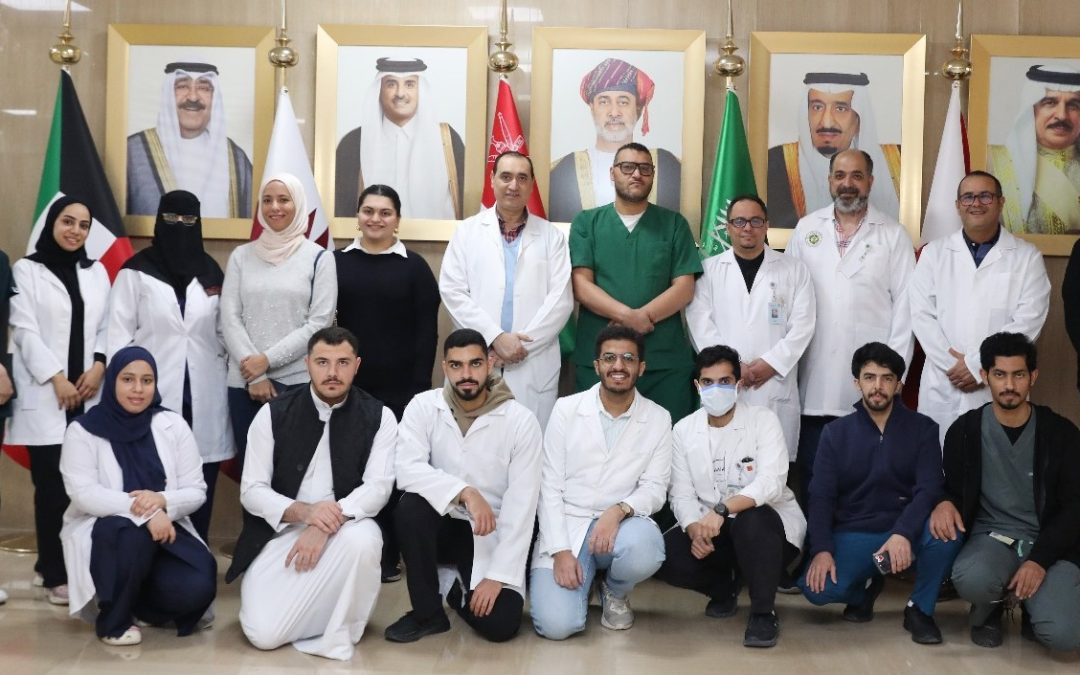
The workshop "Basic Research Techniques and Practices Involved in Laboratory Animal Research", organised by the Animal Facility and Care Unit at the Arabian Gulf University (AGU), in partnership with the AGU Centre for Community Service, Training, Consultancies and Continuing Education, has concluded. The workshop aimed to train participants on the ethics and techniques of dealing with laboratory animals, presented by a group of academic staff at the College of Medicine and Health Sciences.
The Head of the Animal Unit, Prof Khaled Greish, indicated that this training workshop targeted workers and researchers in the field of applied experimental medical research on laboratory animals in various institutions. He added that the workshop aims to qualify researchers in all aspects of experimental research involving laboratory animals.
Prof Khaled Greish presented a comprehensive training unit on the ethics and rules of humane treatment of laboratory animals, and methods of preparing tumours and injecting them into laboratory animals to measure the effects of their interaction with experimental drugs for cancer treatment.
For his part, Associate Professor in the Department of Molecular Medicine, Dr Noureddine Ben Khalaf, explained AGU’s experiments in genetic engineering of laboratory animals to measure the effectiveness of treating many incurable diseases. The Technical Supervisor at the Animal Unit, Mr Amar Marwani, also presented a set of lectures on basic professional skills for conducting tests on animals. Meanwhile, Associate Professor of Physiology at the College of Medicine and Health Sciences, Dr Yahya Naguib, reviewed the modern methods available at the university for studying psychological and neurological diseases, as well as the possibility of experimenting with many new treatment methods.
It is noteworthy that the Animal Facility and Care Unit established by AGU is the only one of its kind in the Kingdom of Bahrain. The unit aims to qualify interested students and researchers in the region on the basic skills for conducting experimental research on animals, and to enable researchers to conduct pre-clinical medical research. The unit re-offers these training workshops throughout the year.
by ashokaib | Feb 18, 2025 | Uncategorized
The participants in the panel "AI Applications in the Water Sector”, which began yesterday and was jointly organised by the Energy Department of the General Secretariat of the Gulf Cooperation Council (GCC), the Gulf Water Sciences and Technology Association (WSTA), and Arabian Gulf University (AGU), emphasised the necessity of enhancing sustainable water management practices through research and the application of AI in improving water management.
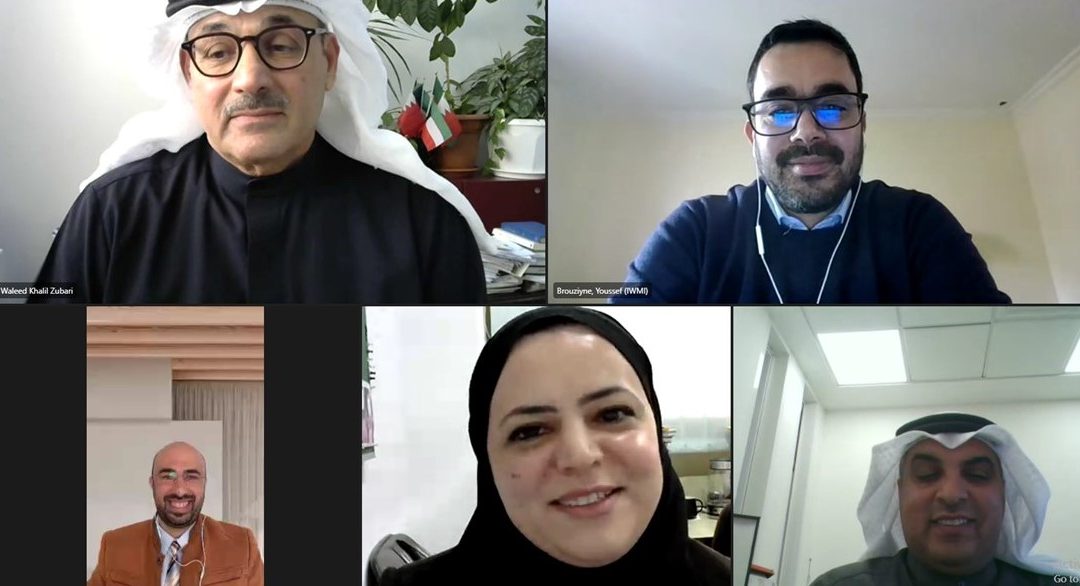
Participants in the panel, which was moderated by Professor of Water Resources Management at AGU, Prof Waleed Zubari, reviewed how to use this technology to address water challenges in the Gulf region, which suffers from a scarcity of water resources due to the arid climate and population expansion.
Zubari pointed out the importance of holding this panel to provide innovative solutions to water problems in the region, which faces unique water challenges that require effective management of water resources. Through the application of AI technologies, management can be advanced on three main levels: improvement, prediction and analysis, including demand management; detection of waste sites and leaks; improvement of water desalination processes. He added that these tools provide innovative solutions that will improve water sustainability in the region.
The panel, in which the Regional Representative of the International Water Management Institute (IWMI) in the Middle East and North Africa, Dr Youssef Brouziyne, and Consultant in Digital Intelligent Systems, Chair of the Institute of Electrical and Electronics Engineers Education Chapter, UK and Ireland, Dr Zeyad Yousif Al Shibaany spoke, discussed the latest AI application in water resources management, reviewing the challenges facing the adoption of these technologies and how to overcome them, in addition to future trends and opportunities provided by this technology to improve water management in the Gulf and Arab region.
The two speakers stressed that AI represents a strategic necessity to achieve water sustainability in the Gulf, as every drop of water becomes more important while facing the challenges of water scarcity. They answered questions from the panel watchers, who exceeded 120 academics, researchers and interested parties from different countries, and exchanged expertise with them on means to apply AI in the water sector in the Gulf.
For his part, the Director of Energy at the GCC General Secretariat Dr Mohammad Falah Al Rashidi, stressed the importance of AI in enhancing water resources management, especially in Gulf countries that suffer from major challenges in this field, such as water scarcity and the increasing effects of climate change.
Heightened demand for water and the scarcity of natural resources require the adoption of advanced technologies such as AI to confront these difficulties. Dr Al Rashidi pointed out that AI offers great potential in the water sector, such as predictive analytics to improve water consumption, and the use of smart sensors to detect and reduce waste. However, he stressed the need to address some challenges related to data availability, regulatory frameworks, and capacity building to ensure the effective integration of these technologies in the water sector.
For his part, the Chairman of the Board of Directors of WSTA, Eng. Abdulrahman Almahmoud, stressed that water resources management is one of the most prominent strategic challenges facing the Gulf, as these countries suffer from significant scarcity of natural water resources, in contrast to population growth and rapid economic development that increases the demand for water and the costs of providing it. He explained that with the rapid developments in the fields of emerging technologies, AI comes with its enormous capabilities to provide innovative solutions to manage water resources efficiently and effectively.
In this context, the panel participants called for raising awareness regarding the importance of AI in addressing water challenges, encouraging innovation and partnerships between the public and private sectors to develop smart and sustainable solutions for water resource management in the region.