by ashokaib | Sep 10, 2025 | Uncategorized
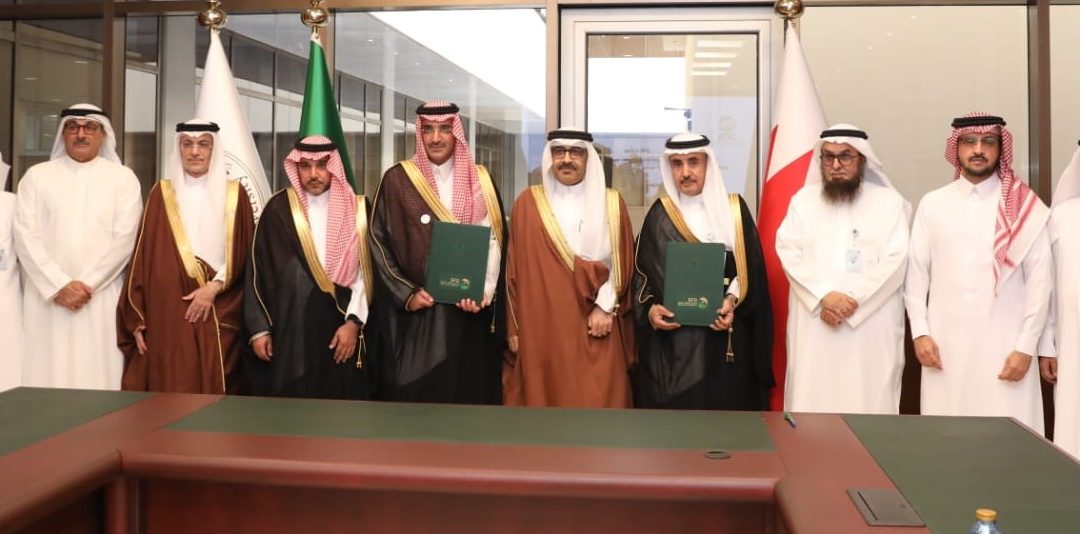
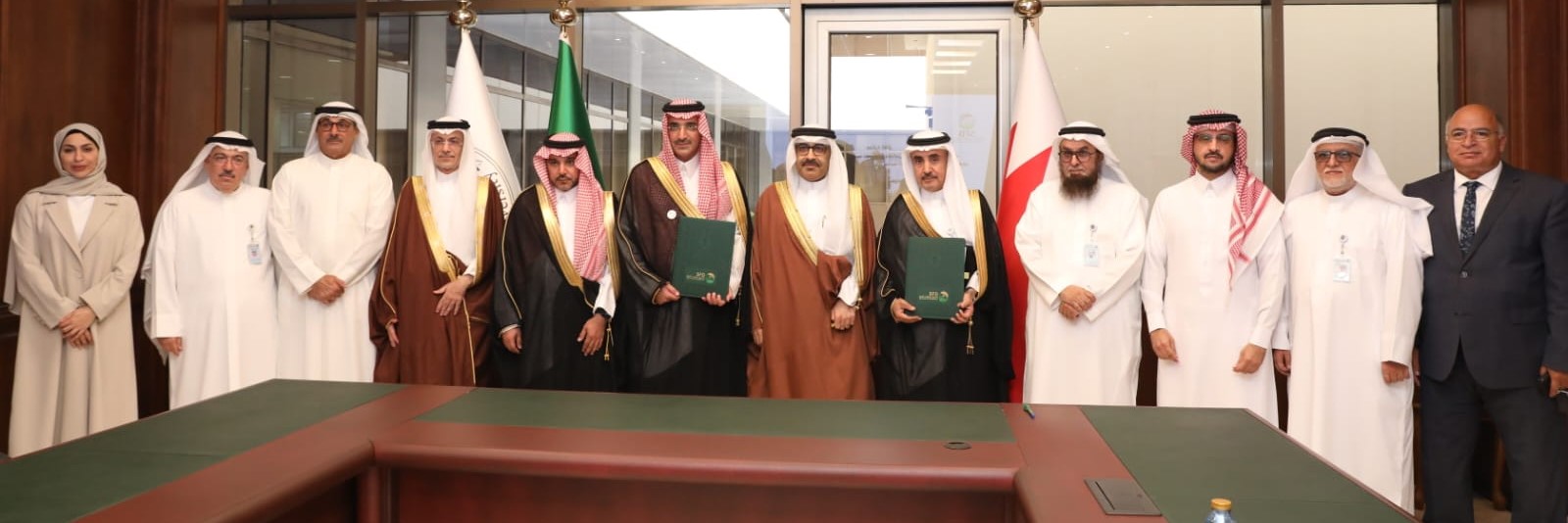
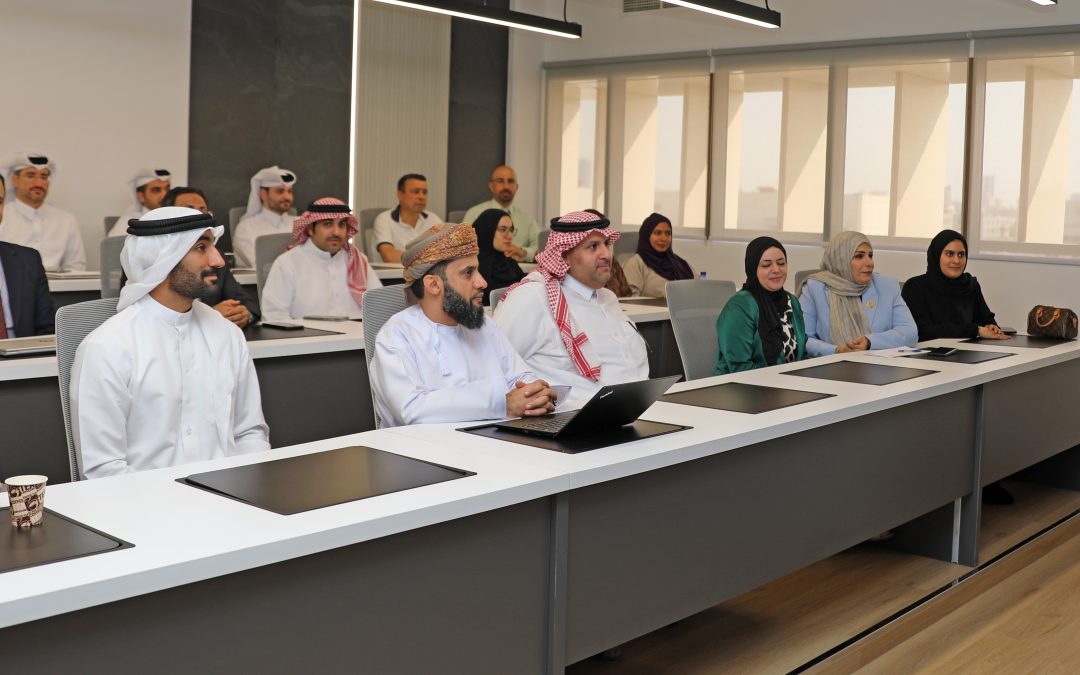
The Arabian Gulf University (AGU), represented by its President, His Excellency Dr Saad bin Saud Al Fuhaid, and the Saudi Fund for Development (SFD), represented by its Chief Executive Officer, His Excellency Mr Sultan bin Abdulrahman Al Murshed, signed a Memorandum of Understanding (MoU) aimed at completing the equipping and operation of King Abdullah Medical City in the Kingdom of Bahrain.
The signing ceremony was attended by His Excellency Dr Mohammed bin Mubarak Juma, Minister of Education and Chairman of the Higher Education Council Board of Trustees, within the framework of strengthening development cooperation between the Kingdom of Saudi Arabia and the Kingdom of Bahrain.
The MoU stipulates the allocation of funding amounting to SAR 43 million, covering information technology systems, equipment and non-medical furnishings, in order to ensure the readiness of the medical city for full academic and healthcare operations by November 2026. This initiative reflects the deep-rooted fraternal ties between the two countries and comes in response to the directives of their leaderships to enhance avenues of development cooperation.
The project is expected to enable the University to operate a fully integrated teaching hospital that meets the highest international medical standards, thereby enhancing Bahrain’s healthcare system, serving citizens and residents across the Gulf region, and embodying a successful model of Saudi-Bahraini development integration.
On this occasion, HE the President of AGU affirmed that the MoU represents an extension of the generous support provided by the Kingdom of Saudi Arabia, under the leadership of the Custodian of the Two Holy Mosques King Salman bin Abdulaziz Al Saud and His Royal Highness Prince Mohammed bin Salman, Crown Prince and Prime Minister, as well as the gracious patronage of His Majesty King Hamad bin Isa Al Khalifa, King of the Kingdom of Bahrain, and His Royal Highness Prince Salman bin Hamad Al Khalifa, Crown Prince and Prime Minister.
“The King Abdullah Medical City will stand as a pioneering medical and academic landmark at the Gulf level, contributing to the advancement of healthcare and serving citizens and residents alike,” Dr Al Fuhaid commented.
For his part, HE the CEO of SFD explained that this MoU falls within the framework of the strong strategic partnership between the Fund and Bahrain, stressing that the project “will create a prominent step in healthcare and educational services, and further strengthen Gulf development integration”.
King Abdullah Medical City is regarded as a comprehensive development project designed to enhance healthcare and academic services in the Kingdom of Bahrain and the GCC states, in line with the region’s forward-looking healthcare strategies.
by ashokaib | Sep 9, 2025 | Uncategorized
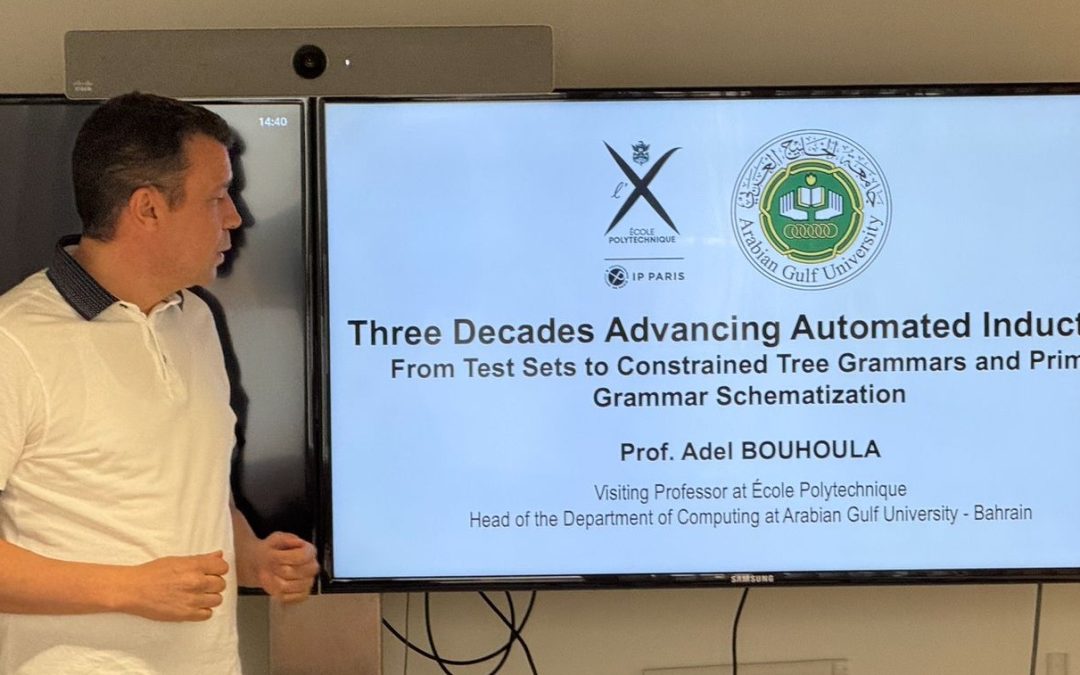
The École Polytechnique, part of Institut Polytechnique de Paris (IPP), ranked 41st globally in the latest QS rankings, hosted Prof. Adel Bouhoula, Head of the Department of Computing at the Arabian Gulf University (AGU), as a Visiting Professor during the summer of 2025.
During the scientific visit, Prof. Bouhoula presented the outlines of his research project, which aims to design an advanced computing system capable of automatically verifying the safety of critical and complex industrial systems, while minimising human interaction as much as possible. This contributes to enhancing global standards of digital safety.
He also delivered a lecture highlighting the results of over three decades of research dedicated to developing innovative technologies designed to create secure and reliable digital systems. These systems focus on addressing software errors and technical vulnerabilities that could otherwise lead to severe consequences in vital sectors such as healthcare, finance, aviation, space and defence.
Prof. Bouhoula further underscored the importance of this research in strengthening safety and security across critical industries, thereby fostering a safer and more reliable digital society. Expressing his pride in the invitation, he said: “Joining this world-renowned institution is an honour that enhances the standing of the Arabian Gulf University and underscores its reputation in strategic fields, foremost among them cybersecurity and the automated reliability assurance of critical systems.”
He described this collaboration with Institut Polytechnique de Paris as a significant step towards expanding AGU’s international partnerships and showcasing the ability of Arab expertise to contribute to the global scientific landscape.
by ashokaib | Sep 9, 2025 | Uncategorized
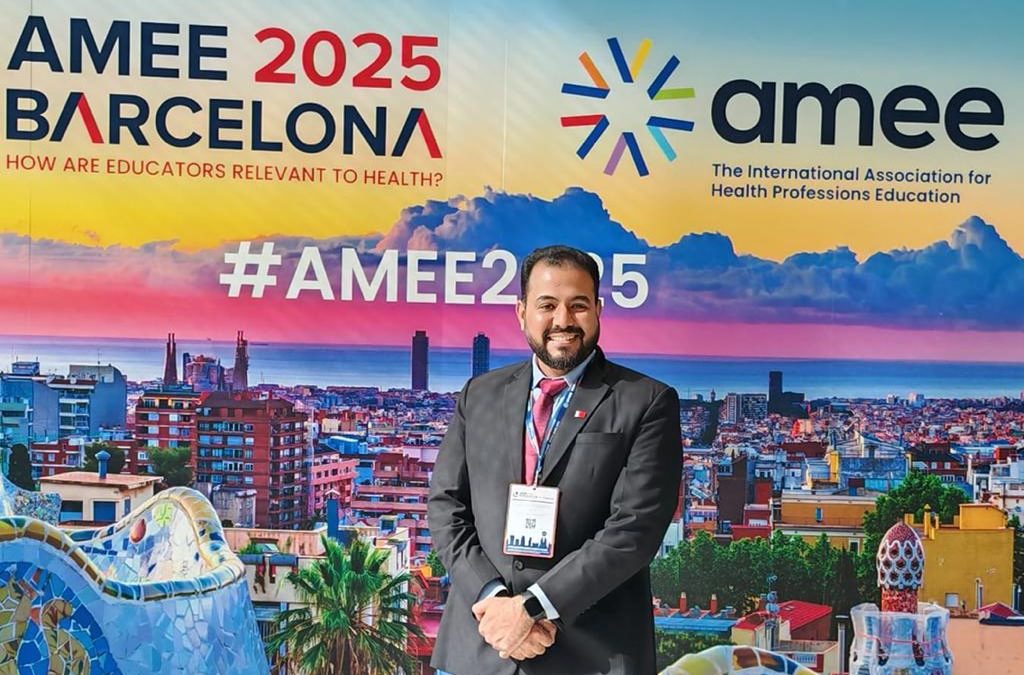
Dr Abdullah Ismail Mohammed, Assistant Professor in the Department of Surgery at the College of Medicine and Health Sciences at the Arabian Gulf University (AGU), has recently participated in the AMEE 2025 International Conference on Medical Education, held this year in Barcelona, Spain. He presented a research study entitled: “Taking Informed Consent: Effect of Studying in English and Practising in Arabic on the Experience of Junior Surgeons”.
The study addressed one of the key challenges facing junior surgeons in the Arab world, such as the linguistic gap between the language of medical education (English) and the language of patient communication (Arabic). The findings revealed that this disparity can affect new doctors’ ability to clearly and effectively explain medical procedures to patients, which in turn impacts the quality of informed consent, which is a cornerstone of ethical medical practice.
During his presentation, Dr Abdullah explained that junior surgeons often struggle to translate precise medical terminology into simplified language that patients can easily understand, which may lead to misunderstandings or hesitation in decision-making. He also highlighted the importance of developing training programmes focused on medical communication skills in Arabic, alongside raising awareness of the critical role of language in building trust between doctor and patient.
The study received wide interest from conference participants, particularly in light of the global trend towards strengthening effective communication between healthcare providers and patients, and respecting diverse cultural and linguistic backgrounds.
by ashokaib | Sep 8, 2025 | Uncategorized
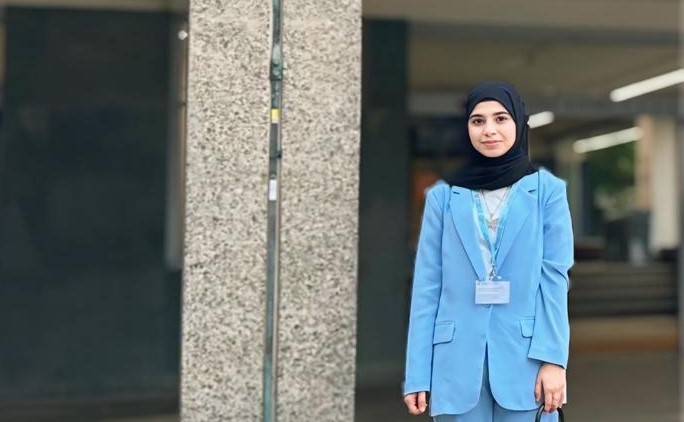
The Three students from the Gifted and Talented Programme at the College of Medicine and Health Sciences at the Arabian Gulf University (AGU) participated in the international summer training programme at the University of Cambridge. The students, Ms Hebatullah Al Taweel, Ms Amina Al Busmait and Ms Zainab Sayed Shubber, enrolled in two specialised courses in the fields of psychology and biomedical sciences.
The first course, entitled Introduction to Individual Differences, explored variations among individuals and methods of measurement. It focused on four main themes that contribute to these differences, highlighting the role of psychological factors in shaping patterns of thought and behaviour. The second course, entitled Exciting Cells: Fundamentals of Neurobiology, extended over five consecutive days, comprising 7.5 training hours, and concluded with the awarding of certificates of attendance to the participants. This course concentrated on understanding electrical signals in nerve cells and their role in sensation and communication, while also showcasing the contributions of distinguished Nobel Prize-winning scholars from the University of Cambridge.
The participation offered the students a unique opportunity to acquire advanced scientific knowledge, develop critical thinking and analytical skills, and enhance their ability to bridge theoretical sciences with modern research applications. The programme also broadened their horizons and enriched their academic personalities through engagement in a global learning environment at the University of Cambridge.
This training programme reflects the College of Medicine and Health Sciences’ and the Deanship of Student Affairs’ commitment to supporting gifted students and providing them with opportunities to gain pioneering scientific and research experience through collaboration with some of the world’s most prestigious universities.
by ashokaib | Sep 7, 2025 | Uncategorized
The General Secretariat of the Gulf Cooperation Council (GCC), in partnership with the Arabian Gulf University (AGU), is organising a pioneering training workshop entitled “Emerging Technologies for the Sustainable Management of Water Resources in the GCC Countries”, to be held from 7–10 September at AGU’s campus in the Kingdom of Bahrain, with the aim of securing a sustainable water future.
This marks the third training workshop within the capacity-building programme for water sector specialists in GCC countries jointly conducted by the General Secretariat and AGU. The first workshop focused on the “Unified Water Strategy for the GCC 2035”, while the second addressed the “Use of Dynamic Mathematical Modelling in Water Resource Planning and Management”.
The current workshop brings together 22 mid-career professionals from the six GCC states, representing a wide spectrum of the water sector, including public water authorities, utilities companies, planning departments and policy-making bodies.
Commenting on the occasion, Prof. Waleed Khalil Zubari, Professor of Water Resources at AGU,and Workshop Coordinator and Trainer, explained: “This workshop represents an important practical step towards building GCC capacities in the field of emerging technologies, foremost among them artificial intelligence and its multiple applications in enhancing efficiency and sustainability within the water sector. These technologies are increasingly being applied in water analysis, optimisation, and forecasting. With this workshop, we move from theory to practice by equipping participants, who represent the future leaders of the water sector, with the practical tools needed to implement intelligent, sustainable and resilient water resource management systems, thereby contributing to the security of our water future.”
For his part, Dr Mohammed Falah Al Rashidi, Director of Energy Affairs at the GCC General Secretariat, underscored the pivotal role of the Secretariat in supporting such initiatives, stating: “In line with the GCC’s objectives of achieving integration and interconnectedness among member states, this specialised workshop aligns with our strategies to develop Gulf human capital and build high-level national competencies. Investing in the development of our water sector professionals, and equipping them with the latest technological tools, is an investment in the water security of our future. It is a cornerstone for realising the visions and aspirations of our leaders towards sustainability and prosperity.”
The training is being delivered by Prof. Waleed Zubari, who is also the Dean of College of Education, Administrative and Technical Sciences at AGU; Prof. Adel Bouhoula, Head of the Department of Computing and Professor of Computer Science, Cybersecurity and Artificial Intelligence at AGU, Dr Ziad Al Shibani, Associate Professor in Digital Manufacturing and Artificial Intelligence in the United Kingdom; and Dr Munaf Al Khuzaai, Postdoctoral Researcher specialising in GIS applications, Artificial Intelligence and Modelling.
The workshop programme has been designed to address the region’s unique water challenges by providing participants with advanced skills in emerging technologies. It includes practical training sessions led by AGU experts alongside international specialists in both the water and computing sectors, with a focus on the practical application of Artificial Intelligence, Geo-AI, the Internet of Things (IoT), Blockchain and Quantum Computing. The workshop will conclude with a strategic forum, during which participants will develop actionable proposals and work plans to address their respective countries’ water challenges using these cutting-edge technologies.