by ashokaib | Feb 13, 2025 | Uncategorized
A research team from Arabian Gulf University (AGU) conducted a first of its kind field study in the Kingdom of Bahrain on the prevalence rate of Attention Deficit Hyperactivity Disorder (ADHD), in partnership with the Bahrain ADHD Society and the Directorate of Primary Healthcare Centres.
The study concluded that the causes of the prevalence of ADHD among school-age children in Bahrain are still unknown, with the aim of determining the prevalence rate of ADHD and its associated problems among children between the ages of 6 and 12 years.
The research team was headed by Professor of Psychiatry Dr Ahmed Malallah AlAnsari, while the team consisted of Dr Mohammed Khalid Al Medfa, Dr Khaldoon Abdul Razzaq Al Roomi, Dr Wafaa Al Sharbaty, Dr Amer Almarabheh, Dr Eman Haji, Dr Mona Ahmed Almahri, Dr Nabil Ali Suliman, and Dr Haitham Jahromi.
The study used a cross-sectional design with a convenience sample of children attending eight primary healthcare centres covering all four governorates in Bahrain. The total sample size was calculated based on an expected prevalence rate of 5%, with an expected number of 438 children. The research team divided the children who underwent routine health check-ups into two groups: the first included 300 children aged 6-7 years, while the second group included 150 children aged 10-12 years, with equal representation of both genders.
All mothers agreed to participate in the first stage of the interview, where they completed the brief Conners Index questionnaire. Children who scored higher than 15 out of 30 were interviewed by a psychologist, and mothers were asked to fill out the Conners parent and teacher questionnaire.
The prevalence of ADHD in both groups was 4.22%, with 5% in the first group and 2.22% in the second group. The male-to-female ratio was 2.22:1. The prevalence of oppositional defiant disorder among children with ADHD was 52.6%, while the prevalence of conduct disorder was 36.3%.
This is the first national study in Bahrain on the prevalence of ADHD using a two-stage sampling technique, with a prevalence rate of 4.22%, which is a similar rate to other studies using similar methodologies.
by ashokaib | Feb 11, 2025 | Uncategorized
His Excellency Dr Saad bin Saud Al Fuhaid, President of the Arabian Gulf University (AGU), expressed the university's pride in the outstanding capabilities of women in the academic sector. He praised the prominent pioneering experiences of women in higher education and their influential role in the development of women's partnership in building a history of scientific and research achievements, both at AGU and other Gulf and regional universities.
He expressed his pride in the many achievements of Gulf women, demonstrating the growing importance of their developmental role in all vital fields, especially in science, technology, engineering, and mathematics (STEM). He stressed that women's participation is essential to building a better world through science and modern technology.
Coinciding with the International Day of Women and Girls in Science, observed annually on February 11th, His Excellency Dr Al Fuhaid affirmed the AGU’s commitment to attracting outstanding female talent and providing them with opportunities for development and scientific achievement.
He explained that the university is diligently working to send distinguished female academics to prestigious universities in America and the European Union, such as Harvard University, McGill University, Oxford University, and other renowned institutions.
The number of female graduates has shown a noticeable increase compared to male graduates, confirming women's excellence in science and their contribution to improving education and their interest in the sciences of the future.
He stated, "Every woman scientist in the fields of science, medicine, engineering, mathematics, technology, and innovation plays a significant role in the advancement and prosperity of nations. They are largely responsible for improving the quality of life, facing challenges, and overcoming many crises. This year's celebration, under the theme +Unpacking STEM careers: Her Voice in Science+ focuses on highlighting the need to bridge the gender gap in science, encouraging supportive policies, and strengthening the media's role in showcasing the scientific achievements of women.”
He explained that female scientists at AGU have made significant contributions that have enhanced the university's scientific progress, leading them to achieve advanced scientific positions due to their competence, dedication, and achievements in various sciences and fields.
He noted their active and impressive participation, worthy of praise, in various international conferences and their receipt of global awards in science, technology, engineering, and mathematics.
They have also contributed through consultations, studies, training, and the preparation and organisation of conferences in the fields of medicine, environment, education, sustainable development, and innovation.
by ashokaib | Feb 11, 2025 | Uncategorized
Secretary General of the Gulf Cooperation Council (GCC) Deans of Medical Colleges Committee, Dean of the College of Medicine and Medical Sciences at the Arabian Gulf University (AGU), Prof. Abdelhalim Deifalla, emphasised the importance of sharing expertise and fostering cooperation among medical colleges in the Gulf to enhance medical education and improve the quality of healthcare services in the region.
During his participation in the Medical Education Conference 2025, which began yesterday in the Omani capital, Muscat, organised by Sultan Qaboos University, he stated that the GCC Deans of Medical Colleges Committee, which was established in 1992, is dedicated to advancing medical education at both undergraduate and postgraduate levels.
The committee continuously works on refining curricula, teaching methodologies, and evaluation processes, while also promoting collaboration among corresponding departments within medical colleges and supporting joint scientific research.
Prof. Deifalla stressed the importance of advancing educational standards by adopting the latest methodologies and advancing scientific research and clinical training to meet the needs of the Gulf's health sector.
The conference coincided with the 38th meeting of the GCC Deans of Medical Colleges Committee, providing an opportunity to strengthen academic collaboration among Gulf medical colleges, unifying efforts to enhance medical education in line with the best international standards. It brought together numerous experts and specialists in medical education from both regional and international institutions.
The conference aims to serve as a vital educational platform for exchanging innovative ideas and new technologies in teaching, assessment, and guidance, while also promoting the well-being of participants in medical education. Additionally, it seeks to develop attendees' leadership and professional skills, support educational research and scholarships, and establish a network of dedicated medical educators committed to achieving academic excellence.
The conference sessions, titled "Innovation and New Technology: Opportunities and Challenges", discussed the latest developments in medical education curricula, the role of AI in improving assessment and training, and enhancing the quality of scientific research and clinical training.
The conference featured five distinguished speakers from the United States, Canada, and the Netherlands, who shared insights on the latest developments and innovations in medical education, focusing on the impact of new technologies on the educational process.
A range of topics reflecting current trends in medical education was discussed, including distance learning and assessment, in-person attendance, faculty development, competency-based medical education, medical simulation (including virtual and augmented reality technologies), the application of AI in medical education, scholarships, and evidence-based medical education. The conference reviewed findings from more than 70 scientific papers, presented three keynote lectures, and conducted eight workshops facilitated by experts from the region and beyond.
by ashokaib | Feb 10, 2025 | Uncategorized
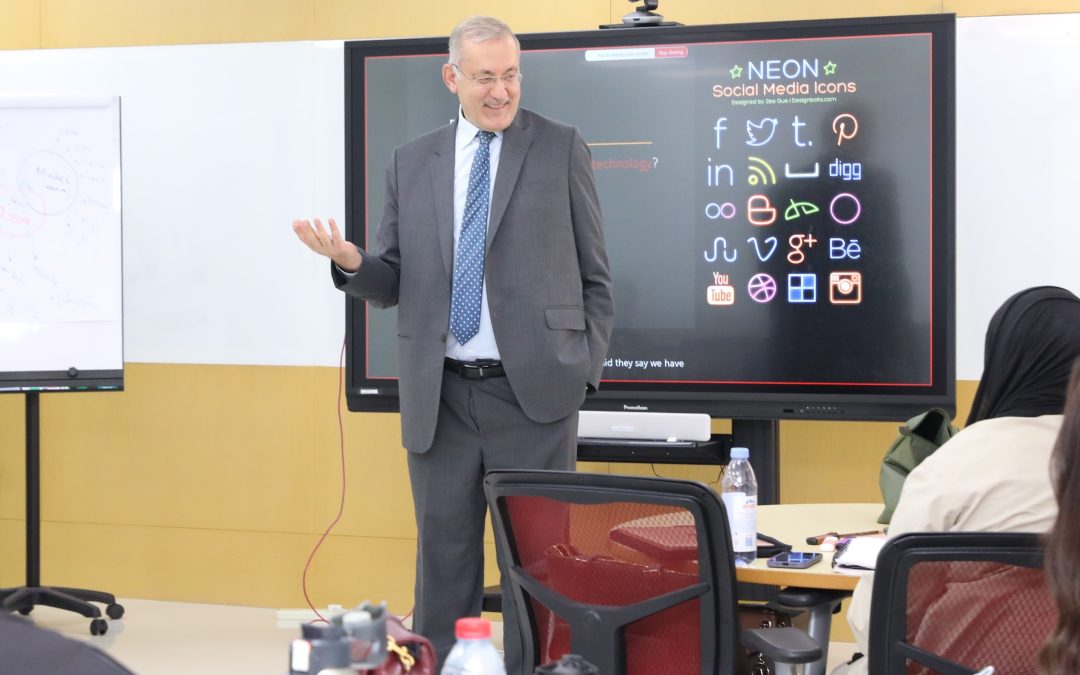
The Shaikh Isa bin Salman Al Khalifa Chair for Technology Management at the College of Education, Administrative and Technical Sciences at the Arabian Gulf University (AGU) organised a lecture on the upcoming wave represented by the proliferation of AI applications and the technical dilemmas associated with this technology concerning privacy, technology ethics, and information governance.
The lecture was presented by the Head of the Innovation and Technology Management Department, Dr Odeh Al Jayyousi, as part of the chair’s scientific activities for the current academic year. During the lecture, which took place yesterday at the university, Dr Al Jayyousi reviewed the history of technological waves since the invention of the wheel, the steam engine, the automobile, and information technology, discussing their implications on civilisation, societal structure, urban development, the economy, and the environment.
He highlighted the challenges posed by the rapid growth of AI technologies and the convergence of technology with humanity in this forthcoming wave, which presents both opportunities and challenges.
Dr Al Jayyousi stated: "The upcoming wave of technology will be based on artificial intelligence and industrial biology using quantum computing. The essence of the issue lies in how and the ability of humans to contain this wave and mitigate potential side effects. This requires a new social-technical contract to regulate the governance of technology and its ethics in a changing society."
It is worth noting that His Excellency the President of AGU, Dr Saad bin Saud Al Fuhaid, places special emphasis on activating scientific chairs within the university's colleges and adopts a strategy to encourage scientific innovation as part of the ongoing effort to enhance the university's academic and educational standing.
He particularly supports sustainable research projects that benefit Bahraini and Gulf communities and consistently highlights the importance of research chairs in developing scientific research and enhancing the role of scientists and researchers in various fields, thereby strengthening their capacity to contribute to solving global challenges.
He always stresses that investing in research chairs is an investment in the future, as they contribute to shaping a new generation of researchers who will play a prominent role in the evolution of future sciences and technologies.
He notes that the Shaikh Isa bin Salman Al Khalifa Chair for Technology Management represents an important step toward enhancing scientific research in topics relevant to the chair's field, reflecting the university’s commitment to providing a supportive environment for innovation and scientific development.
For her part, the director of the Shaikh Isa bin Salman Al Khalifa Chair for Technology Management, Dr Afaf Bugawa, confirmed that the strategic goal of the chair is to enhance academic and research excellence in technology management by developing innovative knowledge and building sustainable partnerships with local and international entities, in addition to preparing qualified human resources capable of effectively leading digital transformation and managing modern technologies to achieve sustainable development
by ashokaib | Feb 9, 2025 | Uncategorized
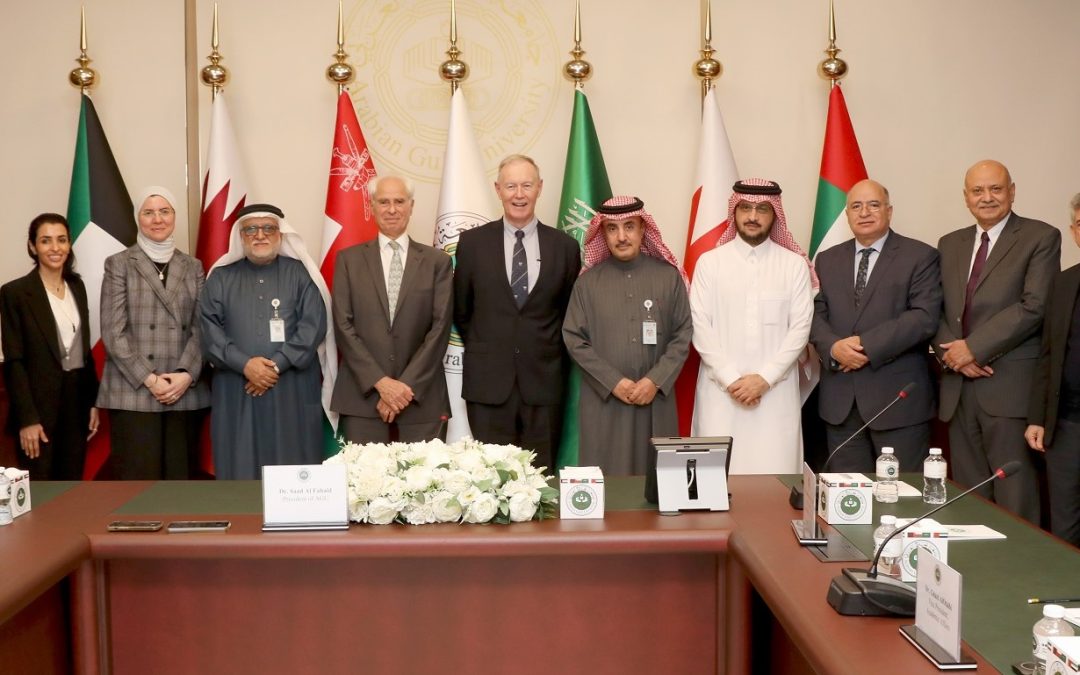
A delegation from the Republic-of-Ireland-based Accreditation Commission on Colleges of Medicine (ACCM) has concluded its visit to the College of Medicine and Health Sciences and its affiliated medical centres at the Arabian Gulf University (AGU).
The purpose of the visit was to evaluate the quality of the "Doctor of Medicine" programme and ensure compliance with international academic and health standards. This is part of the college's ongoing efforts to enhance medical education quality and align it with the highest global standards.
The evaluation involved a delegation of senior international experts in medicine and medical education, including Professor Conor O'Keane, a consultant in pathology at Mater Private Hospital and a professor of clinical pathology at University College Dublin, who has extensive experience in assessing medical education quality.
Also present was Professor Jane Dacre, a professor of medical education at University College London (UCL), former director of UCL Medical School, and past president of the Royal College of Physicians, in addition to Mr Philip Berman, former director of the European Health Management Association and a member of Ireland's National Research Ethics Committee.
This visit reflects the AGU’s commitment to global standards and academic excellence in medical education, as well as its aim to develop academic programmes and elevate the quality of training received by students through collaboration with prestigious accrediting bodies like the ACCM. This effort is part of the continuous pursuit to maintain the academic and scientific standing of the "Doctor of Medicine" programme among the best medical programmes worldwide.
During his meeting with the ACCM members, His Excellency Dr Saad bin Saud Al Fuhaid, President of AGU, welcomed the visiting delegation, stating: "AGU always strives to renew the accreditation of its academic programmes by adopting the best global practices, reflecting its commitment to advancing medical education in the Gulf and the Arab world."
He stressed the university's dedication to improving education quality, developing academic programmes, and enhancing training and continuous education to ensure that students acquire the necessary knowledge and skills through modern facilities and infrastructure that support an outstanding educational environment to meet contemporary health challenges.
He stressed his commitment to ensuring the graduation of qualified doctors capable of providing high-quality healthcare, appreciating the efforts of everyone involved in developing the College of Medicine and Health Sciences.
The committee's visit included an intensive schedule of meetings and interviews. The visiting delegation met with His Excellency the AGU President, who provided a comprehensive presentation on the university's academic vision, strategic plans, strengths, and challenges facing higher education. They also discussed the achievements of the College of Medicine and Health Sciences and its experience in improving education and medical training quality.
Moreover, the delegation met with His Excellency Prof. Omar Al Rawas, Chairman of the Board of Trustees, Bahraini Health Minister Dr Jaleela bint Sayed Jawad Hassan, and several ministry officials, as well as officials from the Bahrain Defense Force Hospital, A’ali Health Centre, and the Psychiatric Hospital, to learn about the collaboration between the college and health institutions in training students and enhancing medical research. They discussed management standards, organisational structure, strategic planning, and evaluation and continuous development policies.
Additionally, they met with the college administration and faculty members to discuss employment policies, professional development, ongoing training opportunities, and the availability of educational resources needed to support the educational process.
They also held meetings with representatives of partner health authorities and students to review teaching methods and clinical practices followed in the programme, an important step to ensure the academic sustainability of the programme and reflect the college's commitment to providing distinguished medical education that keeps pace with the latest scientific and research developments in the field of medicine.
Furthermore, the visit included an assessment of medical and educational facilities, laboratories, classrooms and lecture halls, the anatomy museum, the medical simulation centre, the library, administrative offices, and student services. There were also field visits to practical training centres in government hospitals to observe the modern equipment used by students during their clinical training.
For their part, the ACCM members praised the strengths of the college and its commitment to quality standards in medical education, as well as its focus on continuous development. They appreciated the stimulating academic environment for students, with strong support for scientific research and evidence-based learning. They also stressed the importance of enhancing partnerships with hospitals and health centres to provide comprehensive clinical training for students and expanding the use of modern technologies and clinical simulations in medical education.
The university administration aims to maintain this important international accreditation, which will enhance the standing of the College of Medicine and Health Sciences and the university, contributing to maintaining the college's position in the global guide of the best medical universities worldwide, issued by the World Federation for Medical Education (WFME).
This will positively impact attracting more distinguished medical students, thus providing a high-quality educational environment that qualifies doctors to deliver exceptional healthcare and enables the college's graduates to continue their studies at prestigious global universities.
It is noteworthy that the "Doctor of Medicine" programme has received full accreditation for six years from the ACCM, and this visit comes midway through the accreditation period to monitor compliance with accreditation requirements.