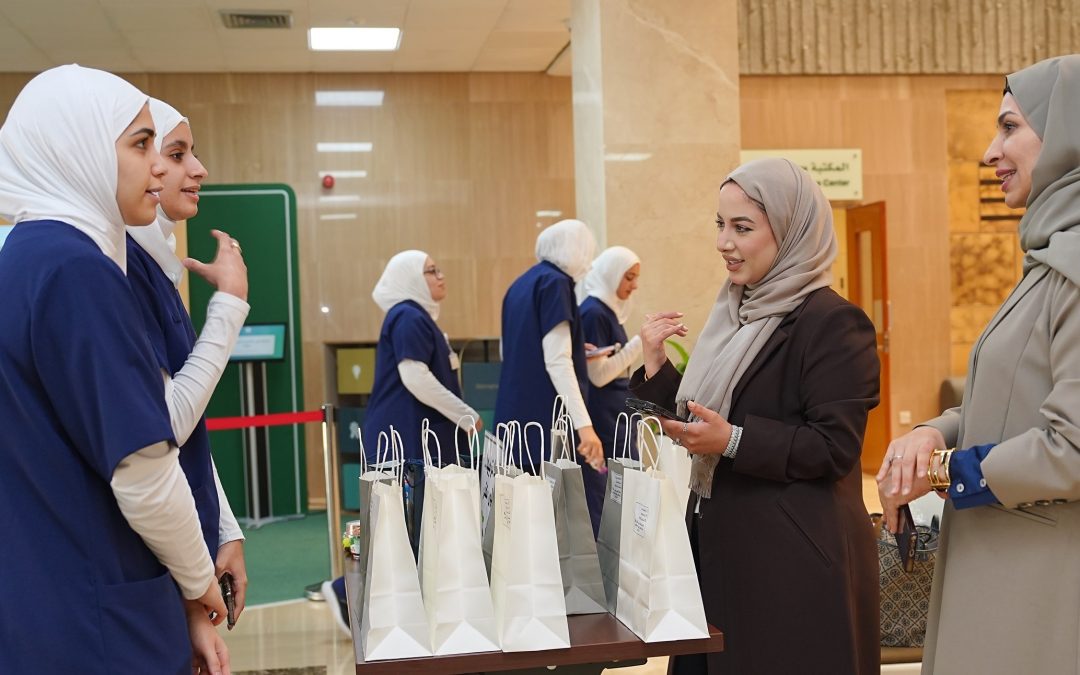
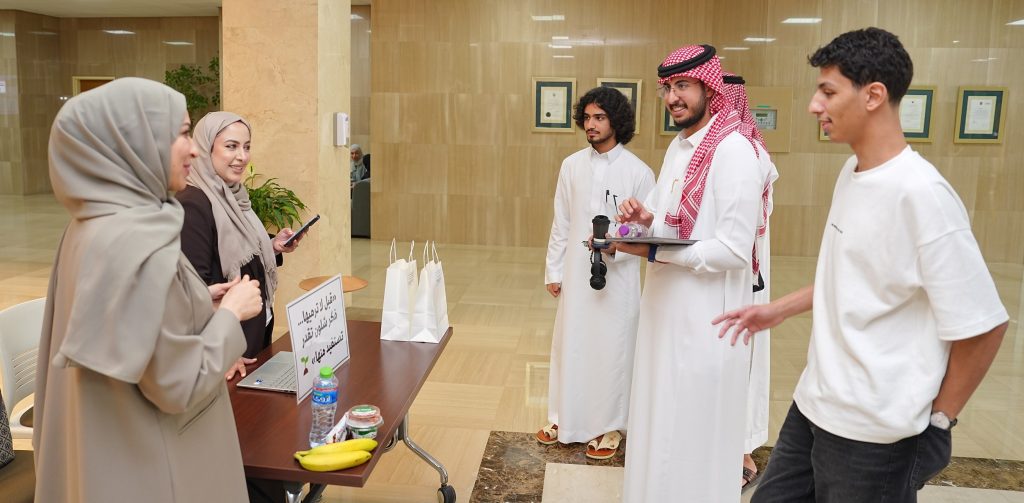
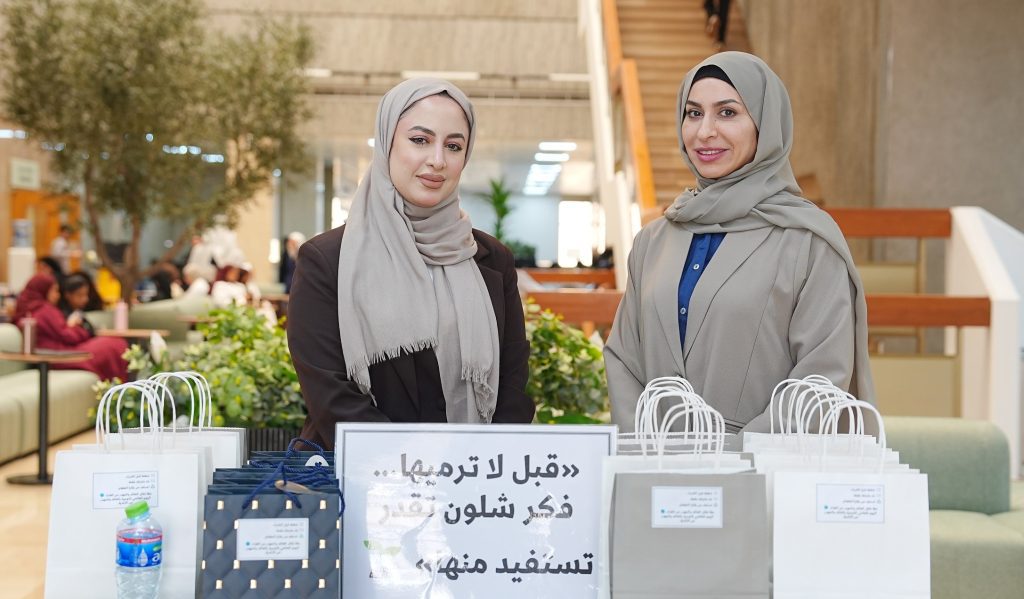
The Environmental Management Program at the Center for Environmental and Biological Studies, College of Education, Administrative and Technical Sciences, at Arabian Gulf University—represented by students enrolled in the “Laboratories, Field Studies, and Case Studies” course—launched an awareness initiative on campus to celebrate the International Day of Awareness of Food Loss and Waste, which was launched by the Food and Agriculture Organization of the United Nations (FAO) and the United Nations Environment Program (UNEP), under the supervision of Dr. Sumaya Yousif, Assistant Professor of Environmental Engineering and the Kingdom of Bahrain’s representative in the regional working groups on food loss and waste for West Asian countries.
The initiative coincides with the seventh edition of the International Day in 2026, held under the theme “The Transformative Potential of Reducing Food Loss and Waste,” with the aim of raising awareness of the environmental, economic, and social impacts of this issue and encouraging students to adopt more sustainable practices in handling food.
The initiative included an interactive quiz designed to gauge students’ awareness of food loss and waste and ways to reduce them. It was developed in collaboration with a master’s student in Natural Resources and Environment, specializing in Environmental Management, Orad Al-Enezi. It featured a series of interactive questions on the concepts of food loss and waste, their causes, and ways to reduce them in daily life, along with incentive prizes that encouraged students to participate, engage, and gain practical knowledge.
Dr. Sumaya Yousif emphasized that reducing food loss and waste goes beyond simply decreasing the amount of food discarded; it also involves conserving natural resources, reducing emissions and environmental impacts, lowering production costs, enhancing food security and nutrition, and supporting sustainable development goals.
She noted that the growing waste and depletion of resources associated with production and consumption require strengthening practices and policies that support the efficient use of resources, as well as developing integrated and sustainable strategies for waste management and recovery.
She added that raising awareness among young people and university students is a key gateway to bringing about sustainable change in daily behavior, noting that using the university environment as a platform for learning, awareness, and engagement—through interactive methods that combine knowledge and participation— enables students to transition from being recipients of knowledge to becoming initiators and change-makers, transforming academic concepts into practical solutions and practices that can be applied both on and off campus.
She emphasized that reducing food loss and waste also helps alleviate pressure on natural resources and emissions, enhances food security and nutrition, and supports productivity and economic growth.
Dr. Sumaya Youssef explained that global indicators reflect the scale of the challenge, approximately 13.2% of food is lost globally in the post-harvest stages of the supply chain before it reaches retail outlets, while another 19% is wasted at the retail, food service, and household levels, equivalent to approximately 1.05 billion metric tons annually, according to 2022 data from the United Nations Environment Program. Meanwhile, households account for about 60% of total food waste, compared to 28% for food service and 12% for the retail sector.
Food loss and waste also account for approximately 8–10% of global greenhouse gas emissions, making its reduction a food, economic, and environmental necessity, as well as an important step toward protecting natural resources, supporting climate action, and achieving more sustainable food systems.
For her part, student Orad Al-Enezi expressed her pride in participating in the preparation and implementation of the initiative, emphasizing that involving students in such events allows them to transform the academic knowledge they gain in the field of environmental management into practical initiatives that help raise awareness and promote sustainable behaviors within the university community.
This initiative is part of Arabian Gulf University’s efforts to instill sustainability and transform academic knowledge into impactful community practices and is in line with its strategy and priorities in health, the environment, and sustainability. This reinforces the university’s academic, research, and awareness-raising roles and solidifies its leading regional presence in supporting scientific and community efforts related to environmental and health challenges and the achievement of sustainable development.
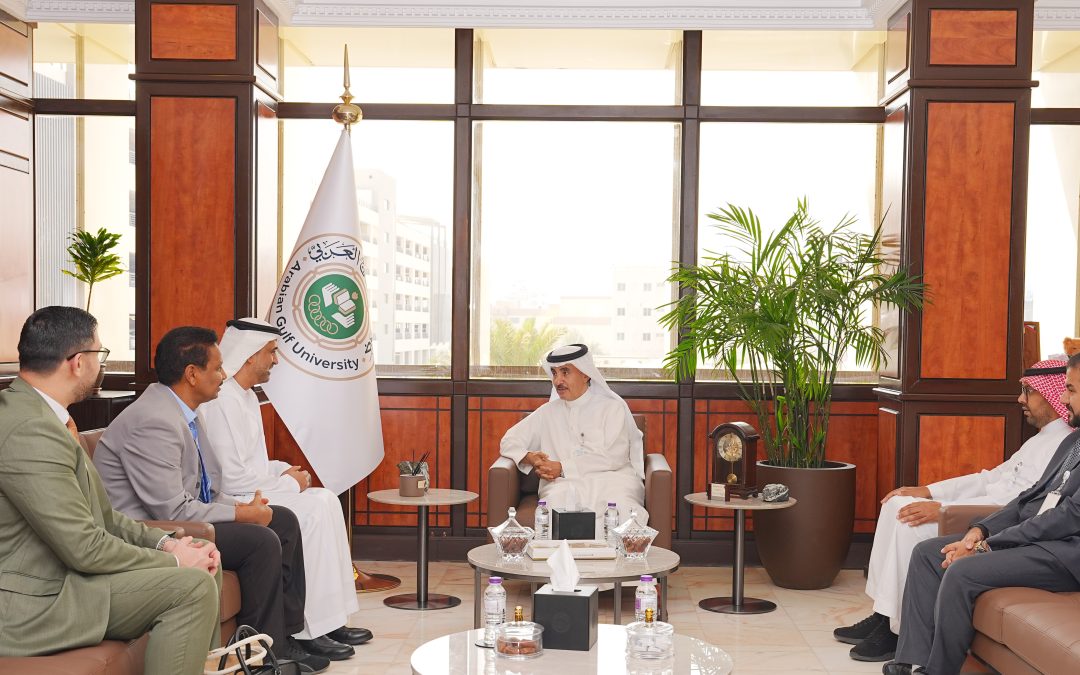
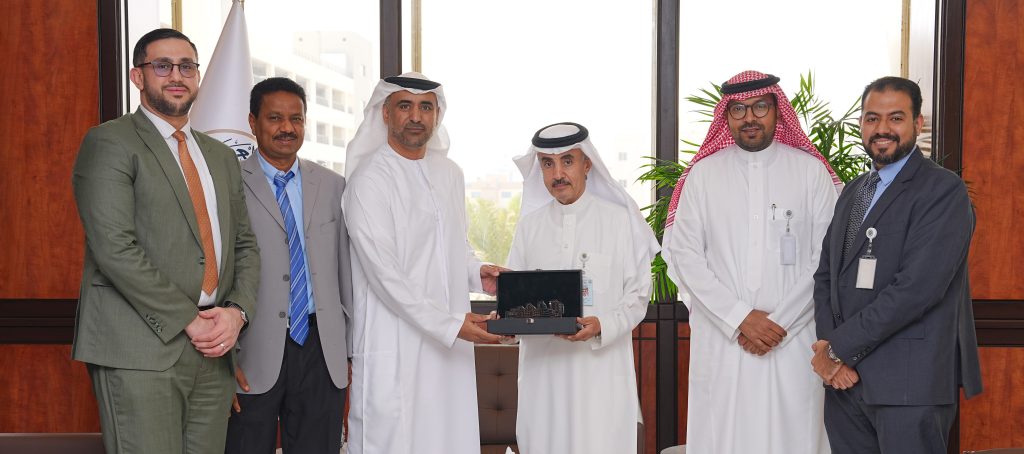
استقبل معالي رئيس جامعة الخليج العربي، الدكتور سعد بن سعود آل فهيد، وفدًا أكاديميًا وطبيًا رفيع المستوى من مدينة الشيخ شخبوط الطبية (SSMC) في أبوظبي بدولة الإمارات العربية المتحدة، بهدف بحث فرص التعاون الأكاديمي والتعليمي والبحثي المشترك بين الجانبين، وذلك في إطار التوجه الاستراتيجي لمدينة الشيخ شخبوط الطبية نحو تعزيز الشراكات الأكاديمية الإقليمية مع كبرى مؤسسات التعليم الطبي في دول مجلس التعاون الخليجي، ومناقشة مجالات الاهتمام المشترك، والتعرف عن كثب على المرافق والقدرات التعليمية والبحثية المتقدمة التي تتمتع بها جامعة الخليج العربي.
وعقد عميد كلية الطب والعلوم الصحية، الأستاذ الدكتور محمد صالح مددين، وعدد من قيادات الكلية والأقسام والمراكز المتخصصة فيها، جلسة نقاش مع الوفد الزائر، تناولت مجالات التعاون الأكاديمي والتعليمي والبحثي ذات الاهتمام المشترك، وسبل تطويرها بما يفتح آفاقًا واعدة لشراكة مستدامة.
وناقش الطرفان فرص التعاون الثنائي في عدد من المجالات الاستراتيجية، وفي مقدمتها تعزيز برامج التدريب السريري للطلبة، وتفعيل التعاون المشترك في مراكز المحاكاة الطبية ومسارات الاعتماد الأكاديمي، إلى جانب تطوير برامج الطلبة الزائرين في الطب، ودعم مجالات التعاون البحثي والمشاريع الأكاديمية المشتركة، فضلًا عن تفعيل تبادل أعضاء هيئة التدريس وتنظيم الفعاليات التعليمية المتخصصة؛ بما يسهم في تعزيز التعاون الأكاديمي والبحثي وتبادل الخبرات بين المؤسستين.
وتضمن برنامج الزيارة جولة ميدانية للوفد داخل الحرم الجامعي، شملت المرافق التعليمية المتطورة والمختبرات المتقدمة ومركز المحاكاة والمهارات الطبية، للوقوف على أحدث الوسائل والتقنيات المعتمدة في تدريب الطلبة وأطباء المستقبل في الجامعة.
ومثّل وفد مدينة الشيخ شخبوط الطبية (SSMC) في الزيارة كلٌّ من الدكتور إبراهيم أحمد الكويتي، مدير الشؤون الأكاديمية والتعليم، والدكتور عصام سيد صالح، العميد المشارك للشؤون الأكاديمية، إلى جانب السيد محمد بدران، المسؤول في الشؤون الأكاديمية والتعليم.
وتجسد هذه الزيارة عمق الروابط الأكاديمية الخليجية المشتركة، وتفتح آفاقًا واعدة لتبادل الخبرات الطبية والبحثية، بما يخدم تطوير قطاع الرعاية الصحية والتعليم الطبي في المنطقة.
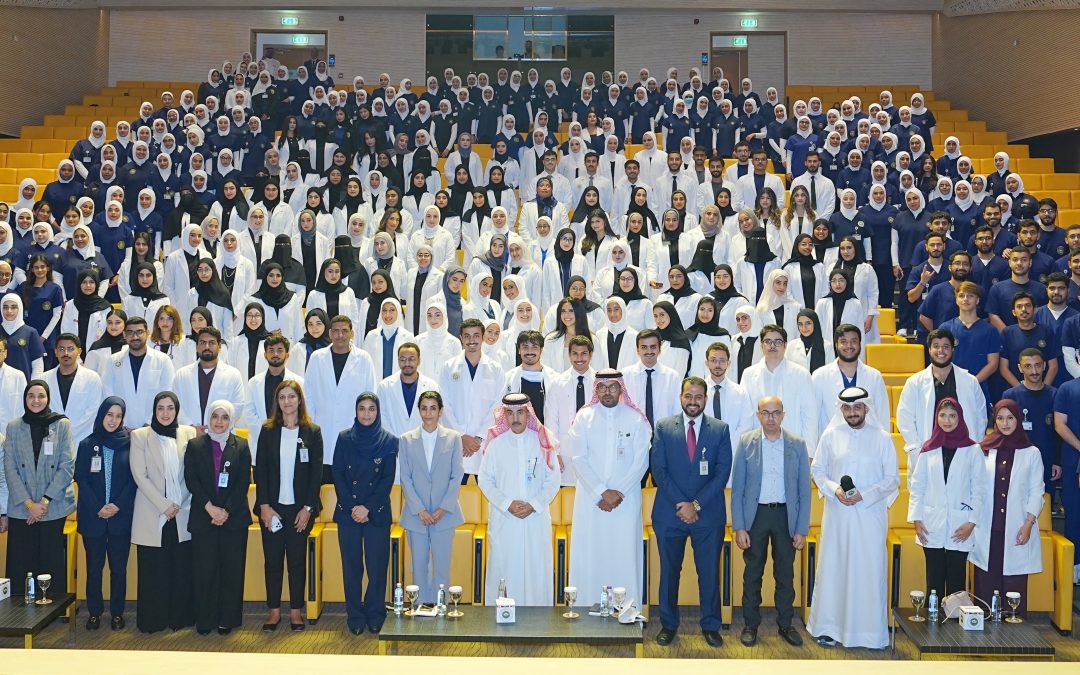
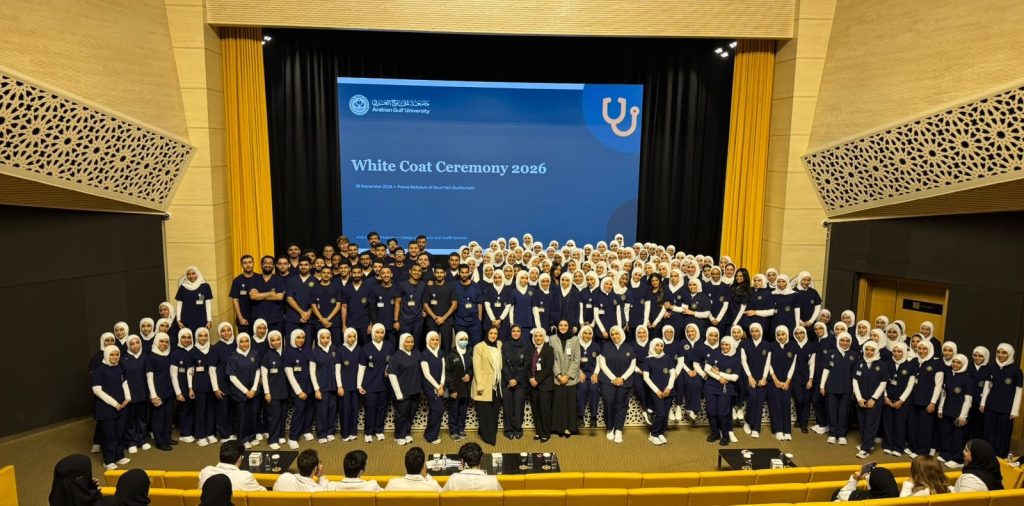
Arabian Gulf University organized a white coat ceremony for students at the College of Medicine and Health Sciences in the Prince Abdulaziz Al Saud Hall at the Princess Al-Jawhara Al-Ibrahim Center for Molecular Medicine, Genetics, and Genetic Diseases, to celebrate the students' achievement of an important milestone in their academic journey and their readiness to transition to the clinical training phase. There were 203 students in the Doctor of Medicine program and 202 students in the Bachelor of Science in Nursing program, all of whom are nationals of Gulf Cooperation Council (GCC) countries.
In a speech delivered during the ceremony, His Excellency the University President, Dr. Saad bin Saud Al-Fahaid, expressed his pride in the students of the Colleges of Medicine and Nursing reaching this exceptional milestone in their academic journey, saying: “Today you stand on the threshold of a new phase, as you transition to clinical training—where the theoretical knowledge you have acquired over the years of study meets the reality of practical application—to begin discovering the deeper meaning of the medical and nursing professions, when knowledge becomes healing, skill alleviates the patient’s suffering, and your presence brings comfort to those who need it”. He emphasized that medicine and nursing are among the noblest and most honorable professions due to their direct connection to human life and health, and the values of compassion, care, and selfless giving upon which they are founded.
His Excellency added while addressing the students: “What you have achieved is the result of sustained effort; you would not have reached this point without the knowledge and guidance provided by your professors and advisors, and without the support and encouragement of your families,” urging the students to maintain their passion for knowledge and to keep pace with the continuous developments in the fields of medicine and nursing.
For his part, the Dean of the College of Medicine and Health Sciences, Prof. Dr. Mohamed Saleh Madadin, explained in his speech during the ceremony: “The white coat worn by medical and nursing students today is not merely a symbol of the transition to clinical training; rather, it is a symbol of trust, responsibility, and humanity,” emphasizing that this stage moves students from the lecture hall to the hospital, and from textbooks to patients, and from case-based training to interacting with the patient as a person. He urged the students to learn—in addition to diagnosing and treating disease—how to care for the person living with that disease.
The dean emphasized the importance of students combining knowledge, skill, and humanity, and working as part of a unified healthcare team, noting that patients need a cohesive team that shares knowledge, respects the roles of its members, communicates effectively, and places the patient’s best interests and safety at the forefront of every decision. He also urged students not to be afraid to learn, to ask questions, to listen, to admit when they do not know something, to seek help, and to learn from patients, doctors, nurses, and all members of the healthcare team.
He also expressed his thanks and appreciation to the faculty members, clinical instructors, supervisors, and staff at hospitals and health facilities for their role in training students and contributing to the preparation of the next generation of healthcare providers. He concluded his remarks by wishing the students a clinical journey rich in learning, experience, and humanity, urging them to wear the white coat with pride and a sense of responsibility, and to be a source of healing for patients, relief from their pain, and service to their communities.
The ceremony included an oath-taking ceremony led by Dr. Abdullah Ismail Mohammed, Associate Dean for Clinical Affairs at the College of Medicine and Health Sciences, marking the beginning of a new phase in the students’ educational journey—one focused on clinical training and practice, as well as the responsibilities and ethical and humanitarian values inherent in the medical profession. Dr. Abdullah then delivered a lecture titled “Beyond the White Coat: Ethics, Professionalism, and Digital Identity,” which served as an important educational and guiding moment that shaped the true character of tomorrow’s doctors and nurses. In his lecture, he emphasized that adherence to the medical oath does not end upon leaving the ceremony hall; rather, it is an ongoing commitment that accompanies healthcare practitioners in medical wards, classrooms, and across virtual communication platforms.
Dr. Abdullah outlined the four fundamental pillars of medical ethics: autonomy, confidentiality, beneficence, and non-maleficence, and absolute fairness in treating patients. He emphasized that ethics and professionalism are not merely final exams to be passed, but rather daily practices and habits rooted in responsibility, mutual respect, collaborative teamwork, and continuous learning to keep pace with the rapid developments of the digital age. The lecture also addressed aspects that go beyond the symbolic significance of the white coat, exploring concepts of ethics and professionalism, as well as the digital presence of students and physicians, and the responsibilities imposed by the digital environment in building and maintaining professional identity.
The white coat ceremony serves as an occasion that combines celebrating the students with reminding them of the responsibilities inherent in the medical profession; the white coat is not merely a professional uniform but is associated in the medical community with the values of trust, commitment, ethics, and service to humanity.
Prof. Dr. Adel Ismail Al-Alawi, coordinator of the Master of Business Administration (MBA) program at the College of Education, Administrative and Technical Sciences at Arabian Gulf University, emphasized that this partnership with the French “ESSEC” is developing year after year, reflecting close cooperation and a continuous pursuit of academic excellence and regional impact, in line with regional and international quality assurance standards in higher education. He explained that the program aims to produce highly competent Gulf leaders who meet global standards and contribute to driving development and strengthening the Gulf economy through the knowledge and skills they possess, which motivate them to move forward and contribute to the development of their homelands and communities, while also developing their skills and ensuring their success on both professional and personal levels.
Dr. Al-Alawi expressed the university’s pride in this unique partnership, which has resulted in the graduation of many distinguished business leaders in the Gulf Cooperation Council (GCC) countries. He emphasized the university’s commitment to providing a supportive work environment that fosters innovation and encourages renewal by strengthening international partnerships with one of France’s most prestigious universities.
He also said: “What distinguishes this program most is that it offers a specialized experience in business administration—one that not only equips graduates with the skills necessary for success but also provides them with in-depth knowledge in the fields of ‘public-private partnerships’ and ‘facilities management.’” He noted that the curriculum’s design paves the way for graduates’ success and helps them tackle the challenges and capitalize on the opportunities at the forefront of modern infrastructure development—an area of particular interest in the rapidly evolving Gulf Cooperation Council (GCC) countries, while also noting that the program’s focus on digital transformation ensures that graduates are well-equipped to keep pace with the ever-evolving global technology landscape.
He added: “This program has been ranked third globally among MBA programs worldwide, and it represents the culmination of academic cooperation between the Kingdom of Bahrain and the French Republic, through the productive collaboration between the Arabian Gulf University and the French university “ESSEC. The program has been carefully designed to address the unique challenges of the Arabian Gulf region while incorporating international standards of excellence, combining theoretical knowledge with practical field experience to achieve genuine successes over the years. To date, it has graduated 268 young business leaders who have assumed leadership positions in ministries, companies, and institutions in both the public and private sectors across the Gulf Cooperation Council (GCC) countries, a testament to the Gulf states’ high confidence in this program and the strength of its outcomes.”
It is worth noting that this program is part of the university’s strategic direction to promote scientific research, support innovation, and meet the needs of the Gulf and Arab labor markets by offering high-quality programs and modern practical applications. Admission requirements stipulate that the student’s overall GPA at the bachelor’s level must be no less than “Very Good,” achieve the required score (depending on the major) on the IELTS or its equivalent on the TOEFL, pass a personal interview and any exams or academic requirements specified by the program and approved by the university, and submit a certificate of passing a health fitness test and a certificate of good conduct from the college from which they graduated.
Arabian Gulf University is organizing the “First Arabian Gulf University Academic Hackathon” from October 7 to 8, as part of an initiative aimed at fostering a culture of innovation and entrepreneurship and encouraging members of the university community to transform creative ideas into practical solutions and projects, thereby strengthening the university’s role in building an environment that stimulates creativity and shapes the future.
Dr. Ghazi bin Abdulrahman Al-Otaibi, Vice President for Academic Affairs and Scientific Research, highlighted the importance of this hackathon, which combines a competitive element with the development of a university ecosystem that encourages the transformation of knowledge and ideas into innovations and scalable projects. He explained that such events provide a practical space for discovering talent, link academic disciplines to the needs of society, and instill a culture of initiative and entrepreneurship among the university community.
The hackathon brings together various segments of the university community—including students, faculty members, and administrative staff—to work in multidisciplinary teams and develop practical, innovative solutions to real-world challenges within an intensive timeframe, thereby contributing to the development of creative thinking, problem-solving, and teamwork, and to leverage modern technologies in developing value-added ideas.
The hackathon aims to support participants in moving from the idea stage to the development of prototypes and technological and practical projects that can serve as the foundation for promising startups and initiatives with the potential for growth and competitiveness, based on global experiences where technological ideas and projects have emerged through hackathon environments and innovation challenges, later evolving into widely adopted products and services.
Throughout the event, participants will work in intensive collaborative teams to examine a set of specific challenges and problems, and develop innovative solutions for them, culminating in the creation of projects and prototypes. The event will conclude with presentations during which teams will showcase their projects and innovations to a specialized judging panel, which will evaluate the entries according to specific criteria and select the winning teams to receive awards.
The hackathon is organized by a specialized academic committee from the university, led by Dr. Shaher Dhafar Al-Shahri, with the following members: Dr. Mariam Farid Ashour, Dr. Mariam Al-Madhoub, Dr. Shaima Ali Al-Nashaba, Dr. Nour Al-Khawaja, and Ms. Shireen Murad.
The organizing committee invited all university members—whether they have ideas, talent, or an interest in innovation and entrepreneurship—to register and participate in the hackathon, taking advantage of this experience to develop their ideas, acquire new skills, and collaborate with peers from various disciplines to create innovative solutions that contribute to building a more innovative and sustainable future.
In preparation for this event, the university is organizing an interactive workshop aimed at preparing participants and introducing them to the concept of hackathons and how they work, as well as enhancing their ability to develop innovative ideas and technical solutions through a hands-on experience that combines learning, collaboration, and teamwork. The workshop will cover the various stages of hackathons, starting with identifying challenges and formulating ideas, through developing solutions and prototypes, and culminating in the professional presentation and pitching of projects.
The workshop will focus on developing a number of essential skills among participants, including creative thinking, problem-solving, and working within multidisciplinary teams, as well as leveraging modern technologies to create practical, implementable solutions. This workshop serves as one of the preparatory initiatives designed to provide a knowledge-based and hands-on experience that helps participants prepare for hackathon competitions and transform their ideas into innovative projects that address real-world challenges.