by ashokaib | Jul 2, 2026 | Uncategorized
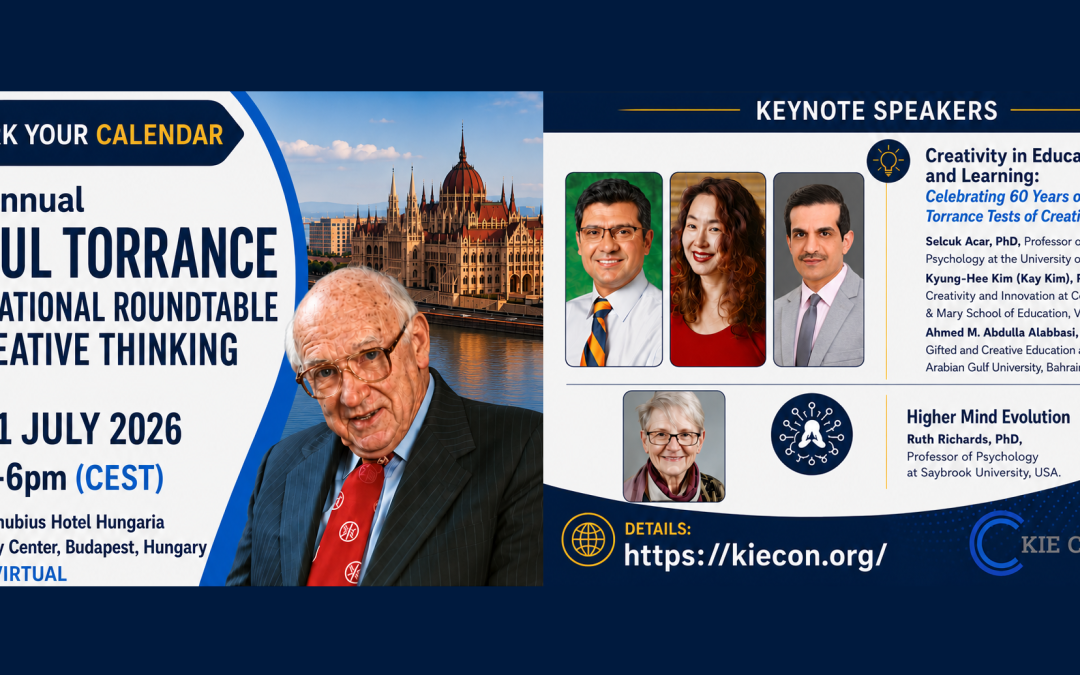
The Vice Dean of the College of Education, Administrative and Technical Sciences at Arabian Gulf University and Professor of Gifted and Creative Education, Prof. Dr. Ahmed Mohammed Al-Abbasi, will participate as a keynote speaker at the “12th International Roundtable on Creative Thinking in Honor of E. Paul Torrance,” as part of the Knowledge, Innovation, and Entrepreneurship (KIE) Conference, which will be held in Budapest, Hungary, this July, marking the 60th anniversary of the publication of the Torrance Tests of Creative Thinking (TTCT), considered one of the most influential and widely used creativity tests worldwide.
Dr. Al-Abbasi’s invitation to participate in this global scientific event comes in recognition of his outstanding research and scientific contributions in the fields of creativity, innovative thinking, and talent. He is considered one of the leading Arab and international researchers specializing in creativity studies and the psychology of creativity, and he has a growing scientific presence at international conferences and in specialized academic journals. He is also an alumnus of the University of Georgia, which is home to the Torrance Center for Creativity and Talent Development.
Dr. Al-Abbasi will participate in the keynote session titled “Creativity in Education: Celebrating 60 Years of the Torrance Tests of Creative Thinking”. The session will address the future of creativity in education and learning, the impact of the Torrance Tests on the development of our understanding of creative thinking over the past six decades, as well as a review of the latest research trends related to creativity in the age of artificial intelligence and modern educational applications for fostering innovative thinking among students.
A number of the world’s leading creativity scholars will participate in this session, including Professor Selcuk Acar from the University of North Texas, Professor Kyung-Hee Kim from the College of William & Mary, and Professor Ruth Richards from Cypress University. This session is part of a scientific event celebrating the intellectual and scientific legacy of Dr. Paul Torrance, one of the world’s leading pioneers in creativity studies, who is known in academic circles as the “Father of Creativity.” The Torrance Roundtable is considered one of the most prominent international events specializing in creativity and innovation, bringing together annually a select group of leading researchers and experts to discuss the latest scientific issues and trends in the fields of creative thinking, education, and innovation.
For his part, Dr. Al-Abbasi expressed his pride in participating in this global event, emphasizing that the Torrance tests marked a pivotal turning point in the understanding and assessment of creativity and have contributed to the development of programs for nurturing gifted students and fostering innovative capabilities in countries around the world. He also noted that this international participation reflects the advanced academic standing of the Arabian Gulf University and its growing presence in global scientific forums specializing in the fields of creativity, talent, and innovation, while also underscoring the increasing presence of Arab researchers on leading international scientific platforms.
by ashokaib | Jul 1, 2026 | Uncategorized
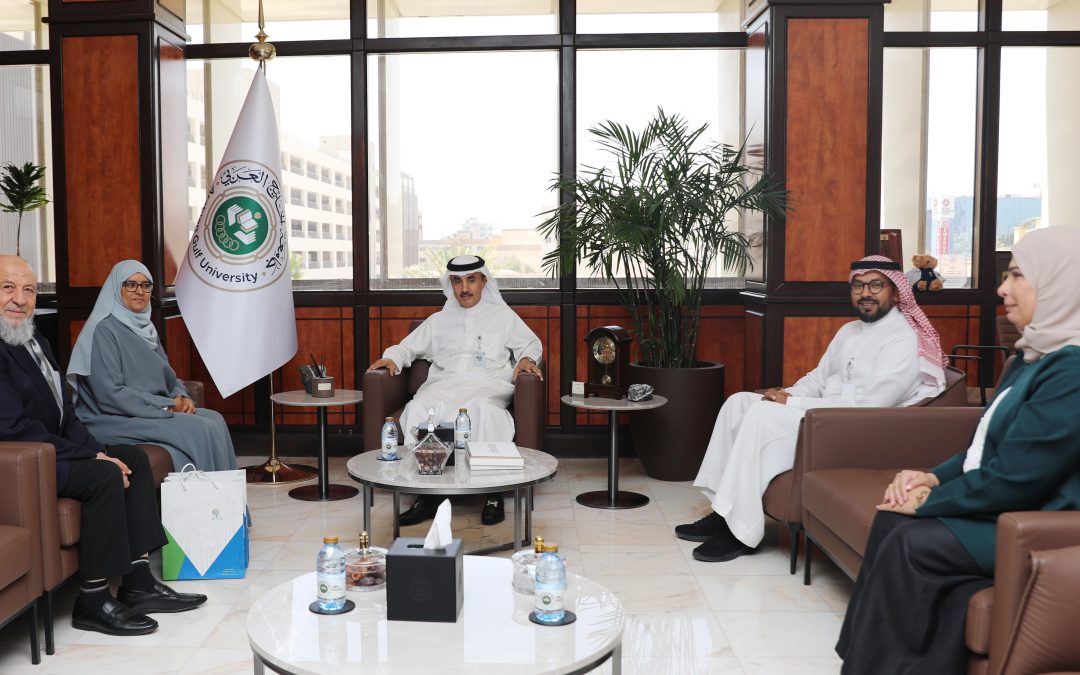
His Excellency Dr. Saad bin Saud Al-Fahaid, President of Arabian Gulf University, received an academic delegation from Dhofar University in Oman as part of efforts to strengthen academic and regional partnerships and develop medical education programs, with the aim of exploring opportunities for joint cooperation between the College of Medicine at Dhofar University and the College of Medicine and Health Sciences at Arabian Gulf University.
Dr. Al-Fahaid welcomed the visiting delegation, which included Prof. Dr. Mona Al-Saadoun, Dean of the College of Medicine at the University of Dhofar, and Prof. Dr. Musbah Tanira, Advisor to the Vice President of Dhofar University for the Doctor of Medicine Program. The delegation was briefed on the development of medical education at the university’s facilities and learned about the college’s expertise in supporting and developing digitally enhanced educational curricula, with the aim of improving the quality of medical education and training.
Dr. Al-Fahaid said: “The Arabian Gulf University takes pride in its close cooperation with Gulf universities and scientific research institutions in the Gulf Cooperation Council (GCC) countries,” explaining, at the same time, that the university places its students at the heart of its priorities and continuously strives to provide an integrated and stimulating educational environment that enhances their academic and professional capabilities.
For his part, the Dean of the College of Medicine and Health Sciences at Arabian Gulf University, Prof. Dr. Mohamed Madadin, reviewed the most important and latest innovative and creative academic programs offered by the College of Medicine and Health Sciences at the bachelor’s, master’s, and doctoral levels, as well as professional diplomas, noting that the university’s graduates, who contribute to the medical sector across all Gulf countries, are making their mark in record time and quickly joining the ranks of the finest medical professionals; this is because the university has set them on the right path from their very first year and equipped them with the confidence to handle various medical conditions without difficulty or risk.
During the visit, Prof. Dr. Mona Al Saadoun emphasized the importance of these meetings, which aim to deepen ties of cooperation with Arabian Gulf University, and to develop areas of educational partnership with it, noting that this visit represents an important step toward building a long-term strategic partnership between the two institutions, thereby enhancing the exchange of expertise, and contributing to the development of medical education across the region.
For his part, Professor Dr. Musbah Tanira expressed his admiration for the level of educational advancement and the achievements of the College of Medicine and Health Sciences, as well as the advanced facilities provided by the university at the Medical Skills and Simulation Center and the Anatomy Museum, which is rich in scientific materials related to all medical specialties. He noted that this advancement in medical education is what makes Arabian Gulf University a pioneer in medical education, with a competitive scientific reputation throughout the region.
The visiting delegation also held a number of meetings with academic leaders and faculty members, during which they learned about simulation-based teaching and assessment methodologies, and explored areas for future collaboration, including curriculum development, faculty exchanges, enhanced cooperation in scientific research, and opportunities for student exchanges.
This initiative is part of Dhofar University’s commitment to expanding its network of academic cooperation with leading educational institutions, which positively impacts the quality of its academic programs and its educational and research outcomes.
by ashokaib | Jun 30, 2026 | Uncategorized
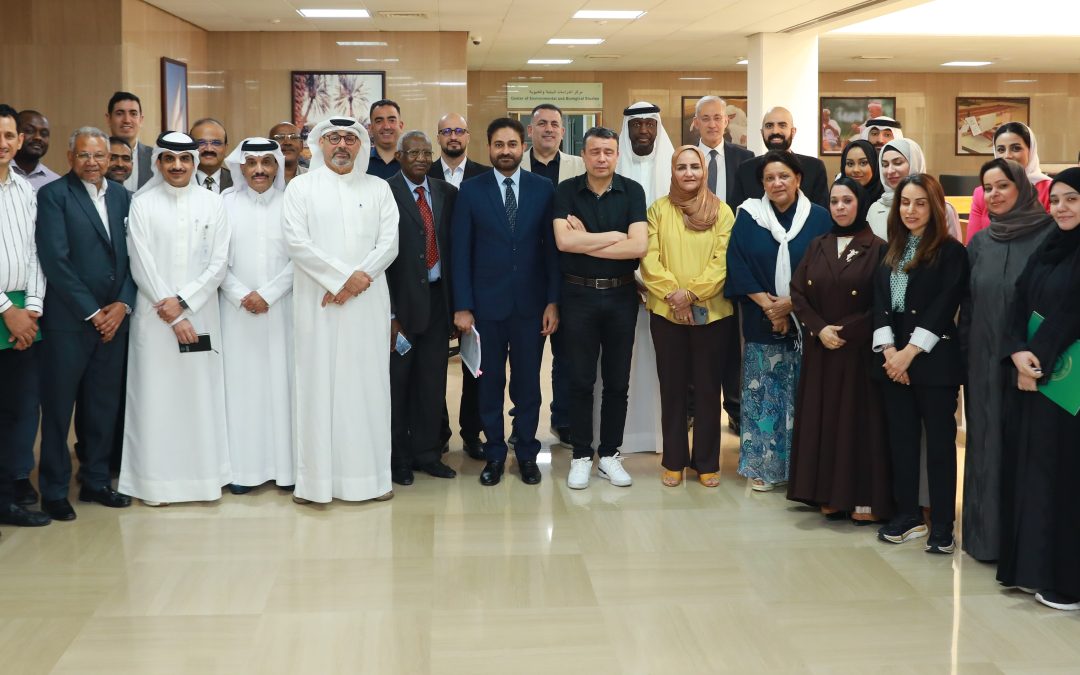
The Dean of the College of Education, Administrative and Technical Sciences at Arabian Gulf University, Prof. Dr. Walid Zubari, reviewed the college’s most notable achievements during the 2025–2026 academic year, during the closing meeting organized by the college and attended by faculty members from various departments. He emphasized that these achievements reflect the college’s commitment to implementing the university’s strategic objectives and enhancing the quality of education, scientific research, and community service.
During the meeting, Dr. Zubari presented the college’s annual report, reviewing performance indicators that showed balanced growth across various academic, research, and institutional areas. The college comprises 49 faculty and administrative staff members, in addition to 33 associate professors, while the number of students stands at 250, distributed across its various departments, led by students in the Department of Business Administration, followed by the Department of Special Education.
The report indicated that the college offers 14 academic programs comprising 167 courses, and the current academic year saw the graduation of 42 students, in addition to the holding of 69 thesis defense committees and the approval of 72 research proposals, reflecting the college’s continued commitment to supporting the quality of graduate studies and advancing its academic outcomes.
In terms of research, the college produced 69 scholarly publications, including 54 research papers, 7 book chapters, and 4 scholarly books, with an average of 2.3 publications per faculty member, in addition to carrying out 18 research projects, with the Departments of Special Education and Business Administration topping the list of the most active departments in scientific publishing. The report also highlighted a number of international research achievements, including the filing of a U.S. patent application in the field of Internet address allocation, as well as faculty members receiving prestigious international awards, most notably the Berlyne Award from the American Psychological Association, and the Emerging Scholar Award in the field of gifted education, as well as winning first place for the best dissertation proposal in the field of autism.
In the context of strengthening institutional partnerships, Dr. Zubari noted that the college organized 280 scientific events, and its members participated in 185 academic and professional committees, in addition to signing a number of strategic cooperation agreements, including collaboration with Tabuk University on research consortia and visiting scholar programs, a partnership with Al-Salam Bank to reestablish Al-Salam Digital Education Lab, cooperation with the United Nations Industrial Development Organization (UNIDO) to establish a regional center for innovation and entrepreneurship on campus, and a partnership with the OAPEC Organization in the fields of energy and the environment.
At the same time, the college continues to actively support five scientific and academic chairs, including the His Majesty King Hamad Chair for Digital Education and the Shaikh Isa bin Salman Chair for Technology Management. It has also launched five vocational and professional diploma programs, most notably the STEM Diploma and the Cybersecurity Diploma, thereby helping to meet the needs of the job market and promote continued learning.
In terms of quality and academic accreditation, the academic year saw a number of significant achievements, most notably the inclusion of the College of Education’s programs in the Times Higher Education World University Rankings in the (301–400) category, the renewal of academic accreditation for the Department of Special Education’s programs through 2026; the completion of the external review of the master’s and doctoral programs in Innovation Management; the initiation of the review of the Natural Resources and Environment programs; and the organization of three regional training workshops in collaboration with the General Secretariat of the Gulf Cooperation Council and the Saudi Water Authority.
At the conclusion of the meeting, during which administrative staff supporting the college were honored, Prof. Dr. Walid Zubari affirmed that the college is moving steadily toward strengthening its academic and research standing regionally and internationally, noting that the next phase will focus on developing academic programs and aligning them with digital transformation and labor market needs; enhancing the quality of scientific research and publication in peer-reviewed journals; and expanding strategic partnerships to transform them into initiatives with tangible impact, thereby supporting the sustainability of community service at both the Gulf and regional levels.
by ashokaib | Jun 29, 2026 | Uncategorized
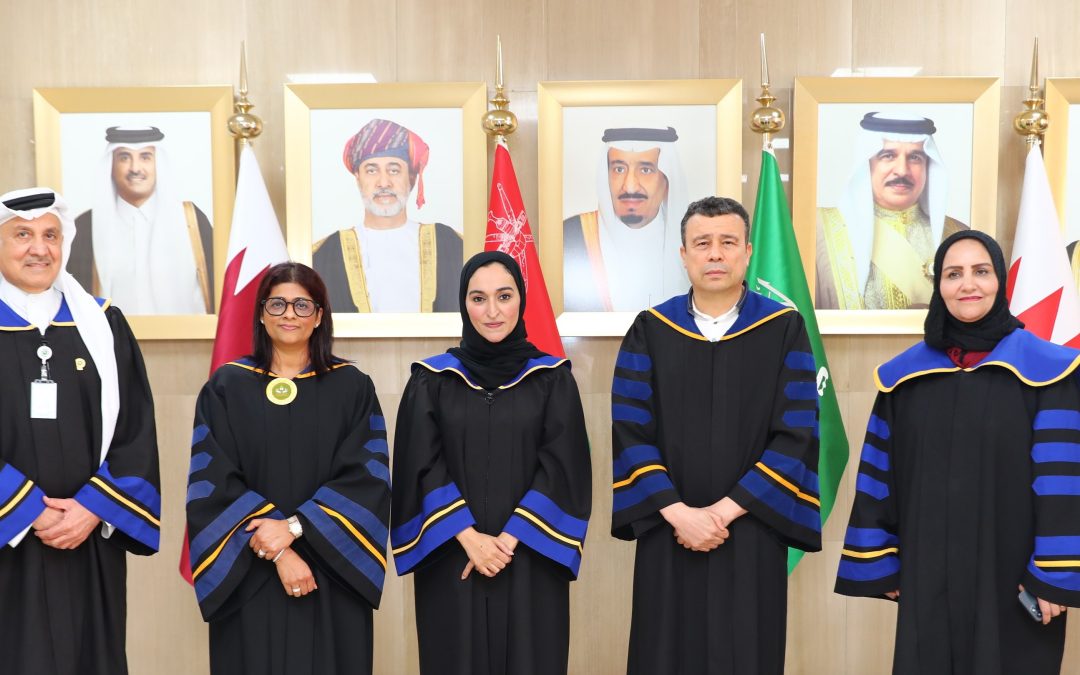
Shouq Abdulrahman Al-Ahmad, a researcher in the Department of Innovation and Technology Management at the College of Education, Administrative and Technical Sciences at Arabian Gulf University, defended her doctoral dissertation titled: “Exploring the Impact of Integrating Artificial Intelligence on the Future of Innovation in Human Resources in Public Sector Institutions in the Kingdom of Bahrain,” as part of the requirements for obtaining a Ph.D. in Innovation Management at Arabian Gulf University.
The study aimed to explore the factors influencing the integration of artificial intelligence into human resources practices in the public sector, and to analyze its impact on the future of jobs, skills, and competencies in light of digital transformation and labor market demands, using a mixed-methods research approach—combining quantitative and qualitative methods—including interviews with 14 subject-matter experts and a survey of 307 employees at various job levels in the public sector.
The results revealed a set of factors influencing the integration of artificial intelligence, including AI governance, the level of readiness among human resources staff, and organizational, technical, and human challenges, in addition to its impact on the future of work. The study also highlighted a gap between certain quantitative and qualitative indicators, particularly regarding the role of organizational culture, management support, and technical readiness—despite their importance to the success of the integration process.
The most notable outcome of the study was the development of an innovative prototype called “AI Talent Builder,” an intelligent system designed to identify required competencies, analyze competency gaps, assess training needs, and propose customized training plans for human resources staff in the public sector.
Researcher Al Ahmed noted that the model is distinguished by its ability to continuously learn from employee data and reliable sources, making it a dynamic tool that adapts to changing circumstances and evolving requirements. It also provides an interactive dashboard that visually displays performance indicators and gap analysis, helping decision-makers direct training investments toward the priorities with the greatest impact.
She added that this model adds value by automating the analysis of training needs, standardizing the human resources competency framework, and supporting data-driven decision-making in human capital management, thereby contributing to improved institutional performance and the quality of public services. It can be applied across various public sector institutions, thereby enhancing the integration of training efforts and standardizing competency criteria at the national level.
For his part, the Primary Supervisor, Head of the Computing Department and Professor of Computer Science, Cybersecurity, and Artificial Intelligence at the College of Education, Administrative and Technical Sciences, Prof. Dr. Adel Bouhoula, emphasized that this model represents a quantum leap in the application of artificial intelligence to human resources management, by transforming training needs analysis from a traditional process into a dynamic, data-driven, intelligent system that supports decision-making, in line with the objectives of Bahrain Vision 2030 aimed at promoting innovation, enhancing government performance efficiency, and developing national human capital. He added that this study is considered one of the pioneering research projects in the region that integrates artificial intelligence with human resources management in the government sector, opening up new horizons for research and development in this field.
The examination committee consisted of Prof. Dr. Fawzia Jabin, Professor of Sustainability, Innovation, and Entrepreneurship at the United Arab Emirates University, serving as an external examiner, and Prof. Dr. Adel Al-Alawi, Professor of Business Administration and Information Systems at the Arabian Gulf University, serving as an internal examiner,
while the supervisory committee consisted of Prof. Dr. Adel Bouhoula, Professor of Computer Science, Cybersecurity, and Artificial Intelligence at the College of Education, Administrative and Technical Sciences, as chief supervisor, and Prof. Dr. Fayrouz Al-Damour, Professor of Management Information Systems in the Department of Business Administration at Arabian Gulf University, as co-supervisor.
by ashokaib | Jun 24, 2026 | Uncategorized
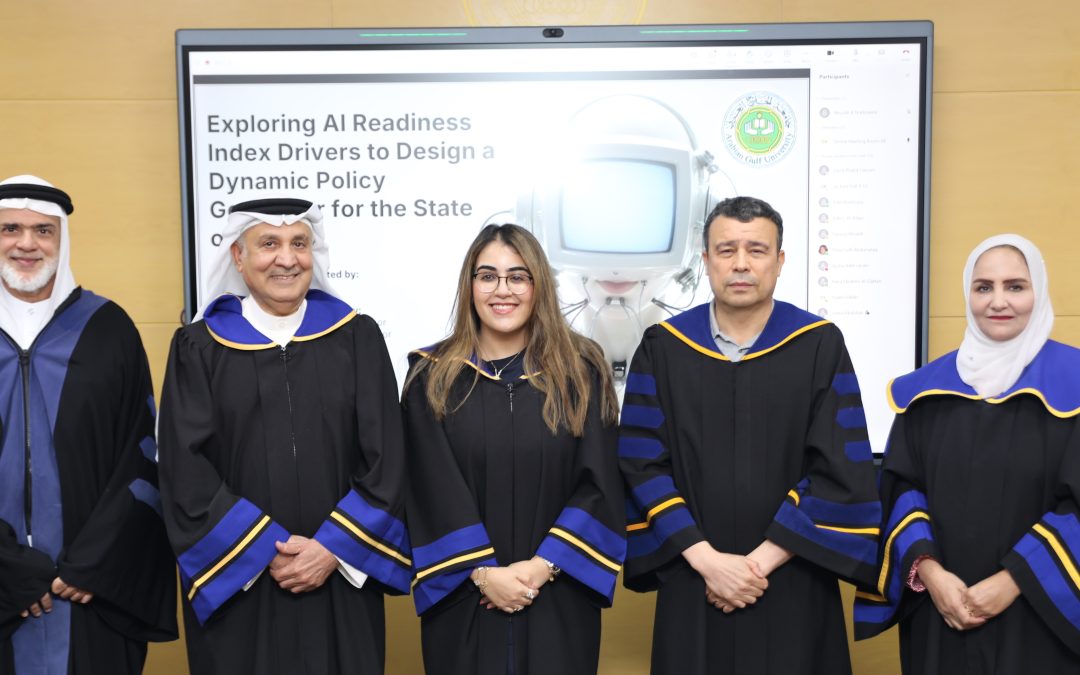
Researcher Noora Amer Al-Osaimi, from the Department of Innovation and Technology Management at the College of Education, Administrative and Technical Sciences at Arabian Gulf University, discussed the findings of her doctoral dissertation titled “Exploring the Potential of the Artificial Intelligence Readiness Indicator to Design a Dynamic Policy Generator for the State of Kuwait,” as part of the requirements for obtaining a Ph.D. in Innovation Management at Arab Gulf University.
The study aimed to develop an innovative framework that addresses one of the most prominent challenges associated with global artificial intelligence readiness indicators, which largely rely on periodic assessments based on surveys, expert opinions, and manually updated data. Given the accelerating pace of digital transformation and the evolution of artificial intelligence technologies, there is a growing need for tools that are more flexible and capable of continuously adapting to change.
One of the dissertation's most notable contributions is the development of a model called the “Dynamic AI Readiness Policy Generator,” a dynamic tool designed to automatically link readiness assessment results to policies and implementation recommendations in a way that can be continuously updated based on available data. The model relies on automatic update mechanisms via application programming interfaces, drawing on live, continuous data from reliable international and national sources, including databases from the International Telecommunication Union and relevant telecommunications and technology regulatory bodies, as well as other official digital indicators. This enables a more continuous assessment of the level of AI readiness, as well as the generation of policy recommendations that can be updated whenever changes occur in the relevant indicators and data.
During the discussion, researcher Al-Osaimi stated that the model’s future vision extends beyond local borders, as the study seeks to expand its application to include the Gulf Cooperation Council (GCC) countries and then the Arab region, by adapting the operational mechanisms and verifying their effectiveness in collaboration with local experts, while taking into account differences in regulatory frameworks, innovative capabilities, and digital infrastructure. In its advanced stage, the project aims to build a flexible framework to support AI governance and public policymaking, thereby enhancing decision-makers’ ability to respond to technological and developmental changes.
For his part, the primary supervisor, Head of the Computing Department, and Professor of Computer Science, Cybersecurity, and Artificial Intelligence at the College of Education, Administrative and Technical Sciences, Prof. Dr. Adel Bouhoula, said that this scientific achievement reflects Arabian Gulf University’s commitment to supporting innovation and applied research that contribute to the development of advanced tools for public policy-making and the use of data to enhance countries’ readiness for digital transformation and artificial intelligence. He explained: “We are currently working to protect the intellectual property of the prototype, in addition to applying for funding grants, especially since the prototype has been developed and is already operational and is ready for implementation and future expansion.”
The examination committee consisted of Prof. Dr. Yousif Al-Bastaki, Professor of Information Technology and Computer Science at Al-Ahliya University, serving as an external examiner, and Prof. Dr. Adel Alawi, Professor of Business Administration and Information Systems at Arabian Gulf University, serving as an internal examiner, while the supervisory committee consisted of Prof. Dr. Adel Bouhoula, Professor of Computer Science, Cybersecurity, and Artificial Intelligence at the College of Education, Administrative and Technical Sciences, as primary supervisor, and Prof. Dr. Fayrouz Al-Damour, Professor of Management Information Systems in the Department of Business Administration at Arabian Gulf University, as co-supervisor.