by ashokaib | May 20, 2026 | Uncategorized
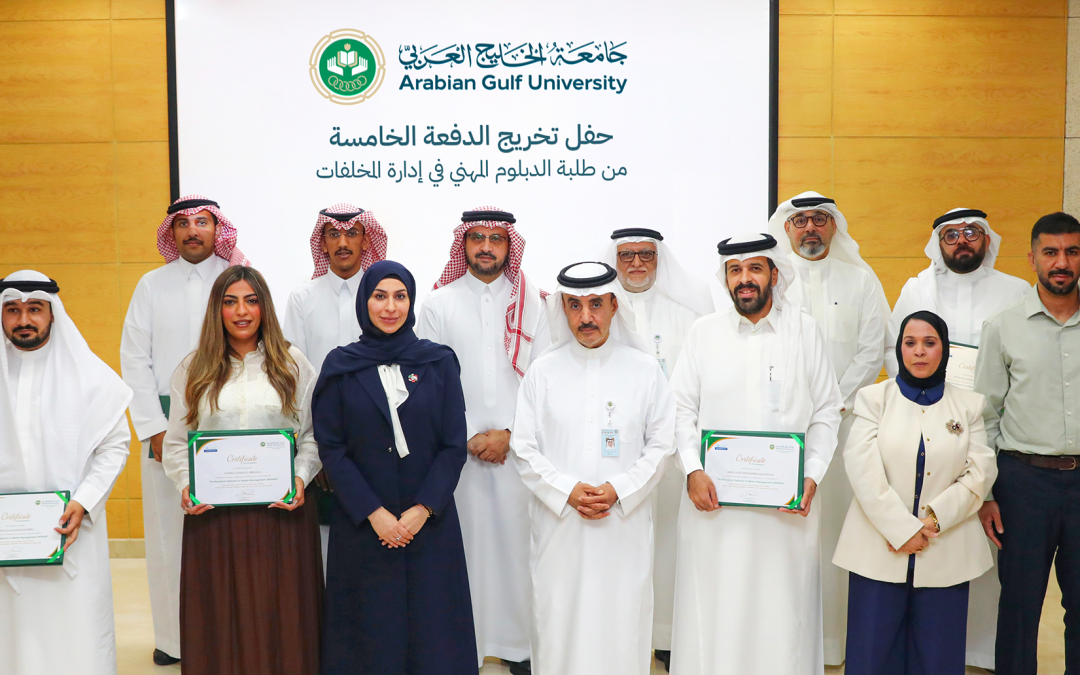
The Arabian Gulf University has graduated 15 experts from the Gulf Cooperation Council (GCC) countries as part of the fifth cohort of its Professional Diploma Program in Waste Management, bringing the total number of graduates since the program’s inception in October 2021 to 106.
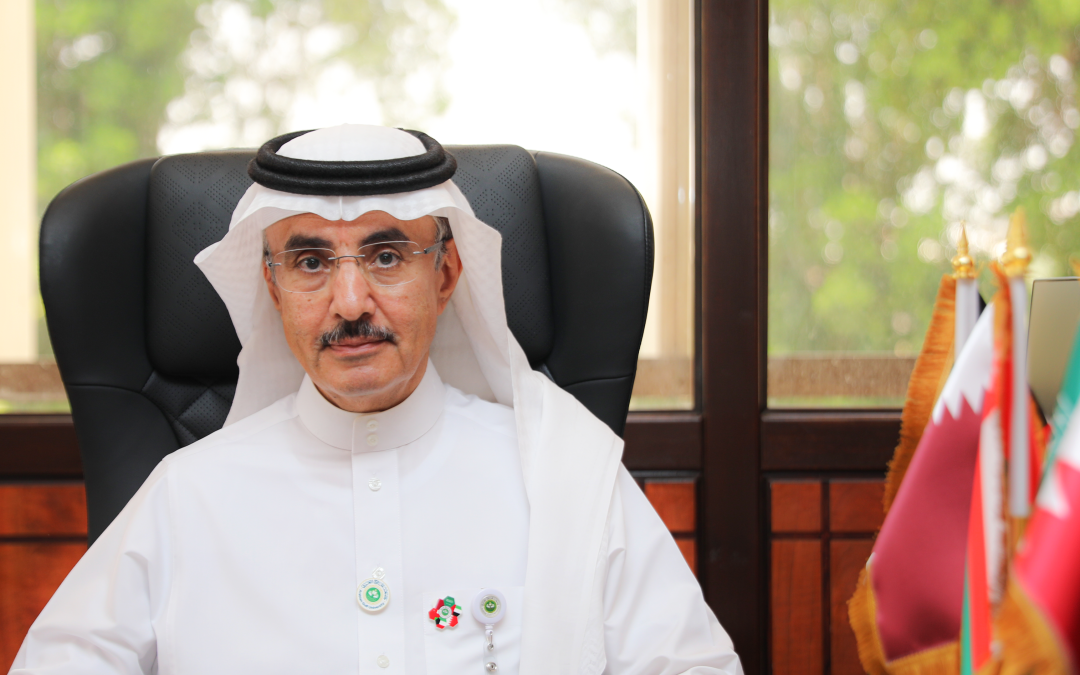
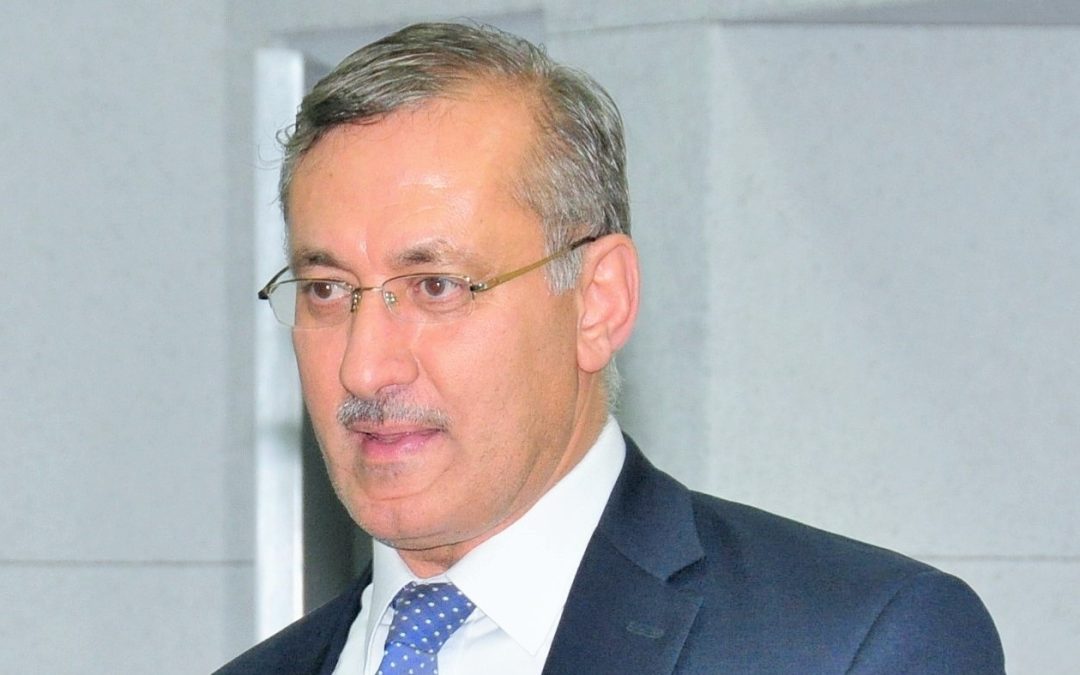
His Excellency the University President, Dr. Saad bin Saud Al-Fahaid, emphasized during his patronage of the graduation ceremony that the university continues to develop high-quality programs that meet the needs of the Gulf labor market and contribute to preparing specialized professionals capable of supporting the waste management sector, enhancing resource management efficiency, and preserving the environment.
On this occasion, His Excellency extended his deepest thanks and gratitude to Their Majesties and Highnesses, the leaders of the Gulf Cooperation Council (GCC) countries, for their continued support of education and development, and for their commitment to empowering Gulf competencies and promoting scientific initiatives that contribute to achieving sustainable development in the region. He noted that growing environmental challenges make the training of specialized competencies a development priority, emphasizing the program’s role in preparing experts capable of keeping pace with modern transformations in the fields of sustainability and the circular economy, and contributing to achieving a balance between economic development and environmental protection.
For her part, Dr. Afaf Bougui, Director of the Center for Community Service, Consultancy, Training, and Continuing Education, reaffirmed the Center’s commitment to its pivotal role in preparing and qualifying national and Gulf cadres through training programs and professional diplomas that keep pace with future transformations across various sectors, and continuing to adopt effective initiatives and partnerships with government and private entities, thereby contributing to the development of skills and the building of specialized competencies capable of supporting sustainable development pathways and serving the Gulf community. She expressed her delight at the achievements of the professional diploma programs, such as the Professional Diploma in Water Management, the Professional Diploma in Waste Management, the Innovative Development Diploma (STEM), the Innovative Development Diploma in Autism Spectrum Disorder, the Professional Diploma in Endowment Investment, and the Professional Diploma in Cybersecurity, all of which represent a qualitative addition to the university’s academic and developmental journey.
In the same context, Dr. Sumaya Yusuf, the academic coordinator of the Professional Diploma Program in Waste Management and an assistant professor of environmental engineering at the Center for Environmental and Biological Studies, noted that the program is considered one of the leading programs in the Gulf and the Arab region, as it focuses on preparing professional cadres in the sustainable management of resources and waste and the circular economy, thereby contributing to enhancing resource management efficiency and transforming environmental challenges into promising investment and development opportunities, in support of the Sustainable Development Goals.
She noted that the program has received international accreditation for the second consecutive year from the Chartered Institute of Waste Management (CIWM) in the United Kingdom, making it the first program of its kind in the Gulf and the Arab region to achieve this accreditation, in addition to receiving support from the United Nations Environment Programme – West Asia Office. She highlighted the program’s key achievements, including the organization of the first forum for graduates of the Professional Diploma in Waste Management in collaboration with the Abu Dhabi Recycling Center, the launch of the “Gulf Network of Resource Managers” initiative, and the program’s participation in a number of international and regional forums specializing in the fields of environment and sustainability.
Speaking on behalf of the graduates, Abdulelah Al-Matash said that the program provided a unique academic and professional experience that raised their awareness of the importance of sustainability and environmental protection and reinforced their understanding of waste management as a key element in building more efficient cities and more sustainable economies. He noted that the program helped broaden their perspective on their environmental and social responsibilities by focusing on the concepts of the circular economy and environmental sustainability, and by transforming environmental challenges into opportunities for development and innovation, thereby keeping pace with global changes and enhancing quality of life.
He cited examples of graduates who have made a significant impact, noting that one graduate from the previous cohort had risen to the position of Assistant Deputy Minister at the Ministry of Municipalities and Housing—an example that underscores the value of investing in national talent and the role of specialized professional programs in preparing future leaders, noting that completing the program marks the beginning of a new phase of responsibility for graduates to serve their countries and communities and contribute to building a more sustainable and conscious future, in line with their countries’ development aspirations and future visions.
by ashokaib | May 19, 2026 | Uncategorized
His Excellency Dr. Saad bin Saud Al-Fahaid, President of the Arabian Gulf University, will patronize the graduation ceremony for the fifth cohort of the Professional Diploma Program in Waste Management on May 20. The ceremony will see the graduation of 15 students from the Gulf Cooperation Council (GCC) countries, representing various sectors, including industry, commerce, education, business, and investment, from both the Kingdom of Bahrain and the Kingdom of Saudi Arabia. This brings the total number of program graduates since its establishment in October 2021 to 106.
The Dean of the College of Education, Administrative and Technical Sciences, Prof. Dr. Walid Zibari, stated that the university is constantly working to keep pace with developments and integrate its programs with the GCC countries’ visions for economic and social transformation. He explained that the waste management and recycling sectors have become vital due to the investment opportunities they offer. They also contribute to job creation for young people, environmental protection, diversification of production sources, reducing dependence on an oil-based economy, and fostering a new, more sustainable economy.
He emphasized that the Arabian Gulf University has consistently championed global environmental issues by offering innovative, internationally accredited programs that build exceptional, highly competent capabilities across the Gulf Cooperation Council (GCC) countries. This aligns with the strategic objectives for which the university was established with the blessing of the leaders of the GCC countries, to serve the Gulf community and its critical issues, thereby advancing efforts to achieve sustainable development goals and innovate effective solutions to various environmental challenges.
For her part, the program’s founder and academic coordinator, Dr. Sumaya Yousif, Assistant Professor of Environmental Engineering at the Center for Environmental and Biological Studies, noted that waste and pollution management have become top global environmental priorities, as waste is an important resource and foundation for many industries through investment in the circular economy and contribution to achieving the Sustainable Development Goals. She explained that the global waste management market reached $384 billion in 2020 and is expected to grow by 5% during the forecast period between 2021 and 2026, while the global industrial waste management market reached $125 billion in 2018, which offers significant opportunities for expansion in this market across the Gulf Cooperation Council (GCC) countries, in addition to the positive environmental impact of waste recycling, namely the conservation of non-renewable resources and pollution control.
She added, “Waste management is a key tool for investing in the circular economy, which represents a sustainable approach that helps conserve resources, protect the environment, create jobs, and diversify sources of income compared to the linear economy,” thereby helping communities transition to sustainable societies. She added that the program is one of the specialized programs in the region, accredited by the Chartered Institute of Waste Management in the United Kingdom and supported by the United Nations Environment Programme – West Asia Office, and has attracted participants from various sectors in GCC and Arab countries since its inception, including decision-makers, technicians, administrators, technical staff, academics, and investors from both the public and private sectors, all of whom have played a role in implementing sustainable practices in their respective countries.
In a related context, Dr. Afaf Bougui, Director of the Center for Community Service, Consultancy, Training, and Continuing Education, expressed her pride in the graduation of the fifth cohort of students from the professional program, noting that the center works in collaboration with all university colleges to offer innovative professional diploma programs, such as the Professional Diploma in Waste Management, which was launched by the Center for Environmental and Biological Studies and accredited by the university’s College of Education, Administrative and Technical Sciences. She added that the center is working to provide the latest professional programs that will open new markets and address the challenges faced by industrial companies, as well as the government and private sectors.
by ashokaib | May 13, 2026 | Uncategorized
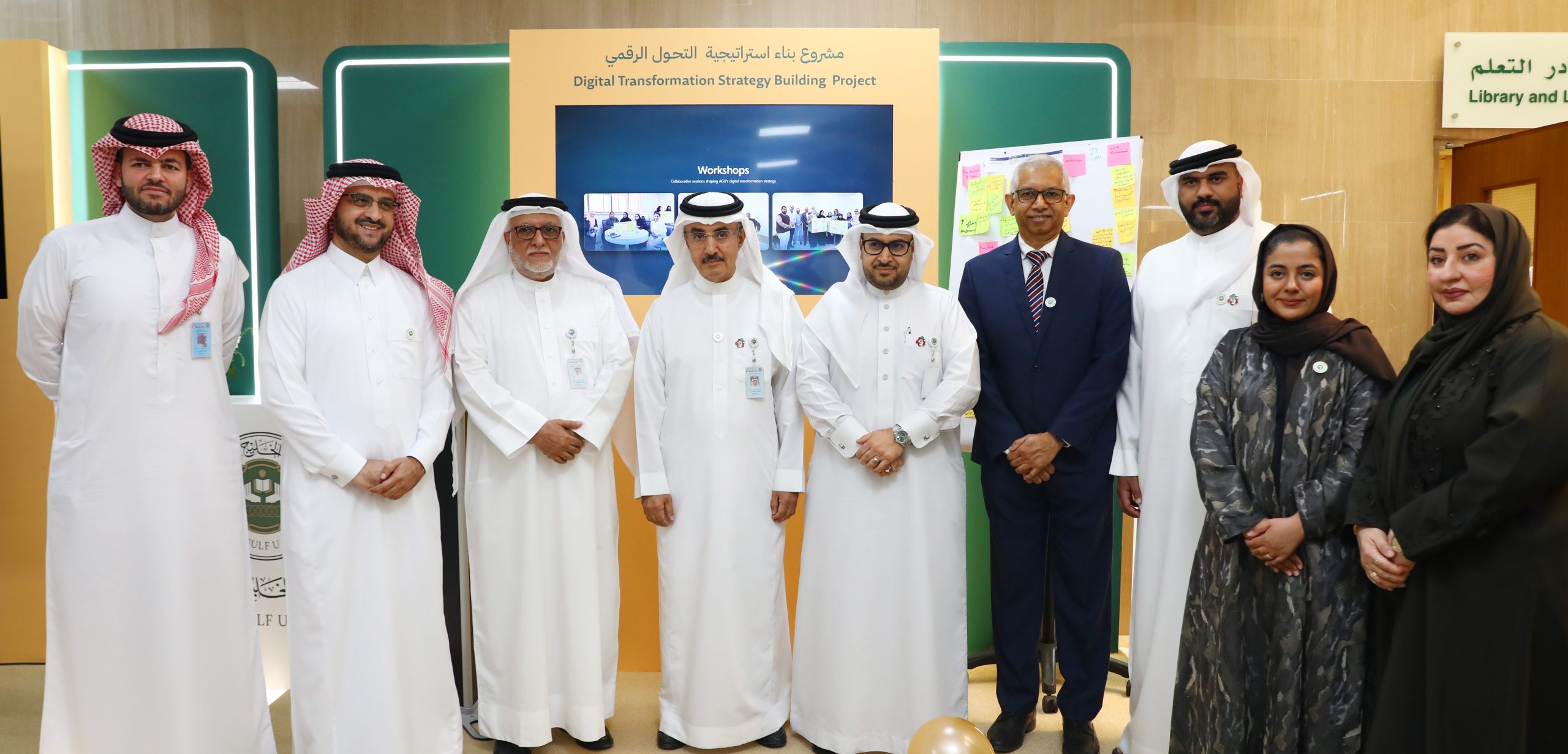
His Excellency Dr. Saad bin Saud Al-Fahaid, President of the Arabian Gulf University, affirmed that the university is steadily moving toward a new phase of institutional excellence through the launch of a package of high-quality strategic projects that embody the university’s vision for a more competitive, sustainable, and innovative future, and cementing its position as a leading Gulf academic institution in education, research, and innovation.
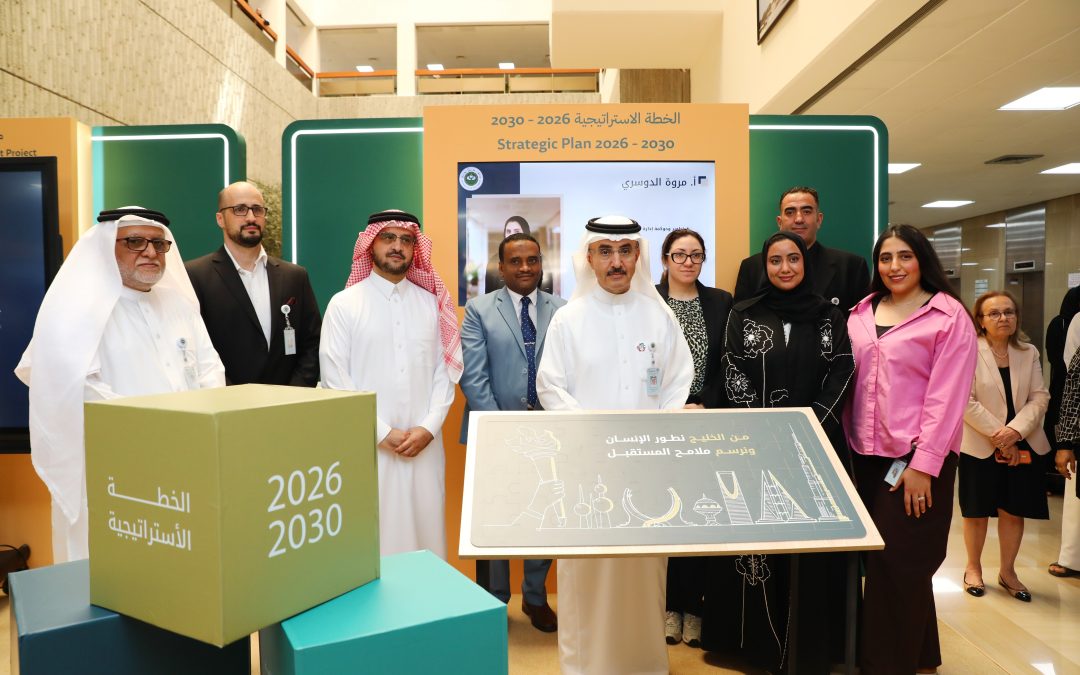
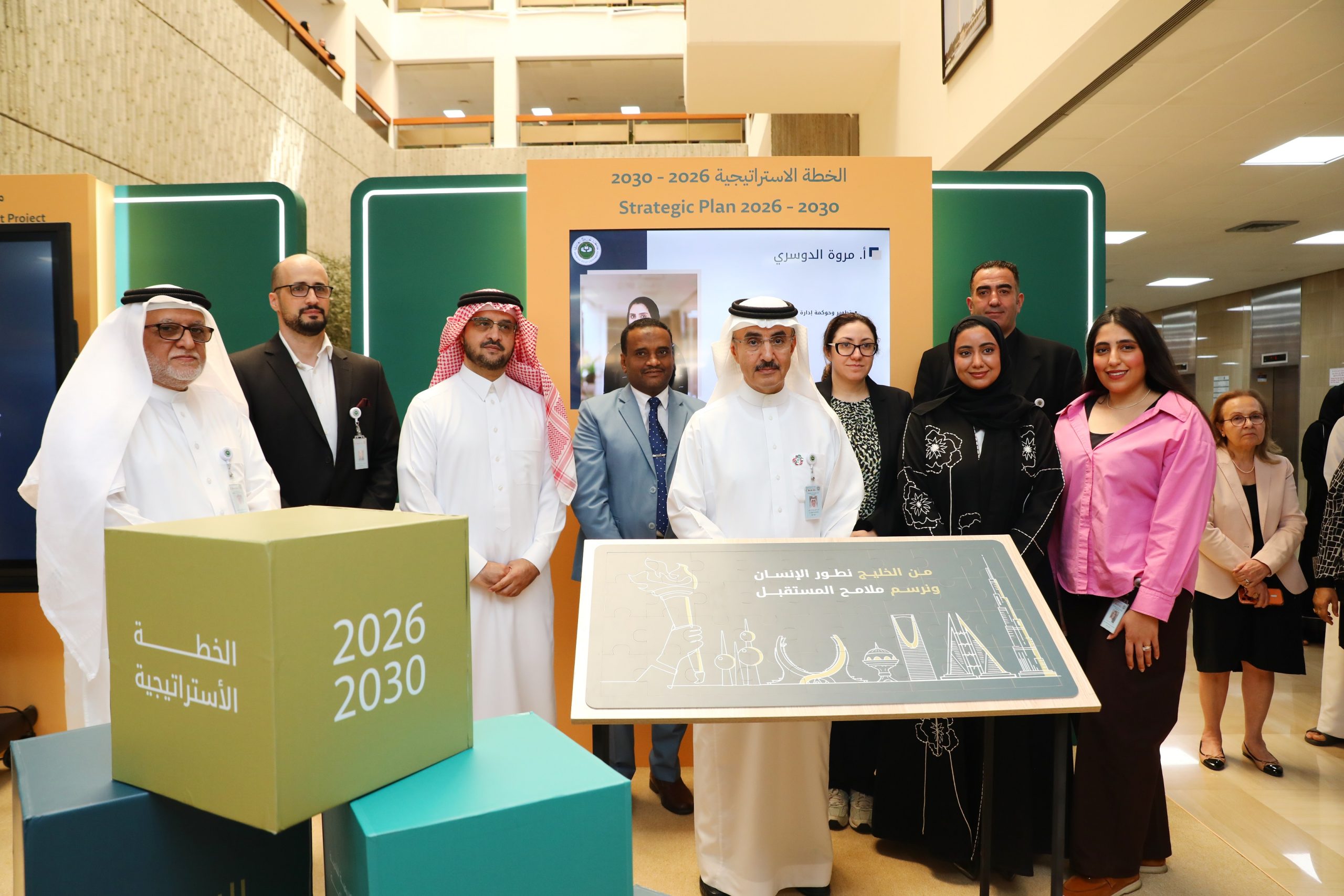
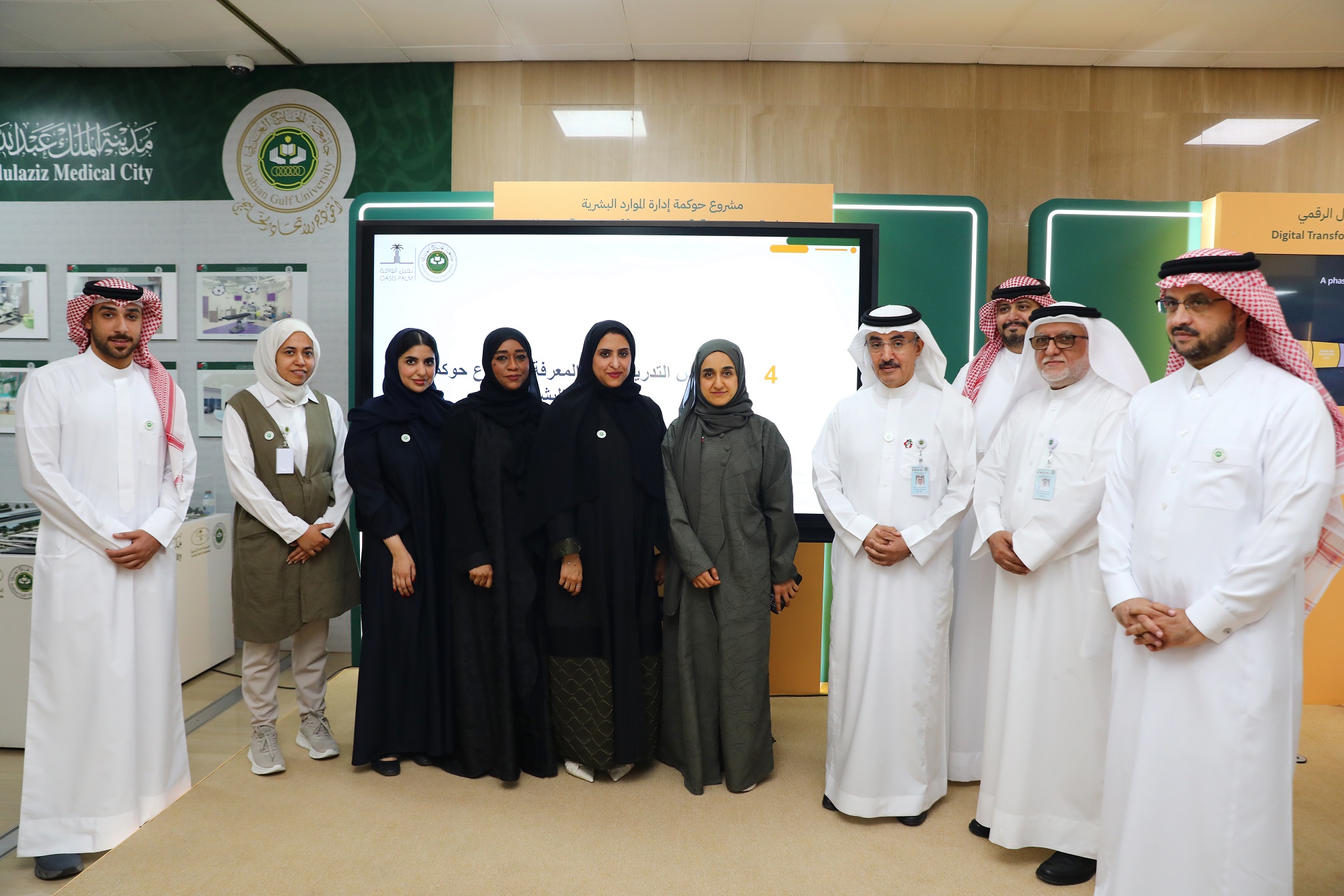
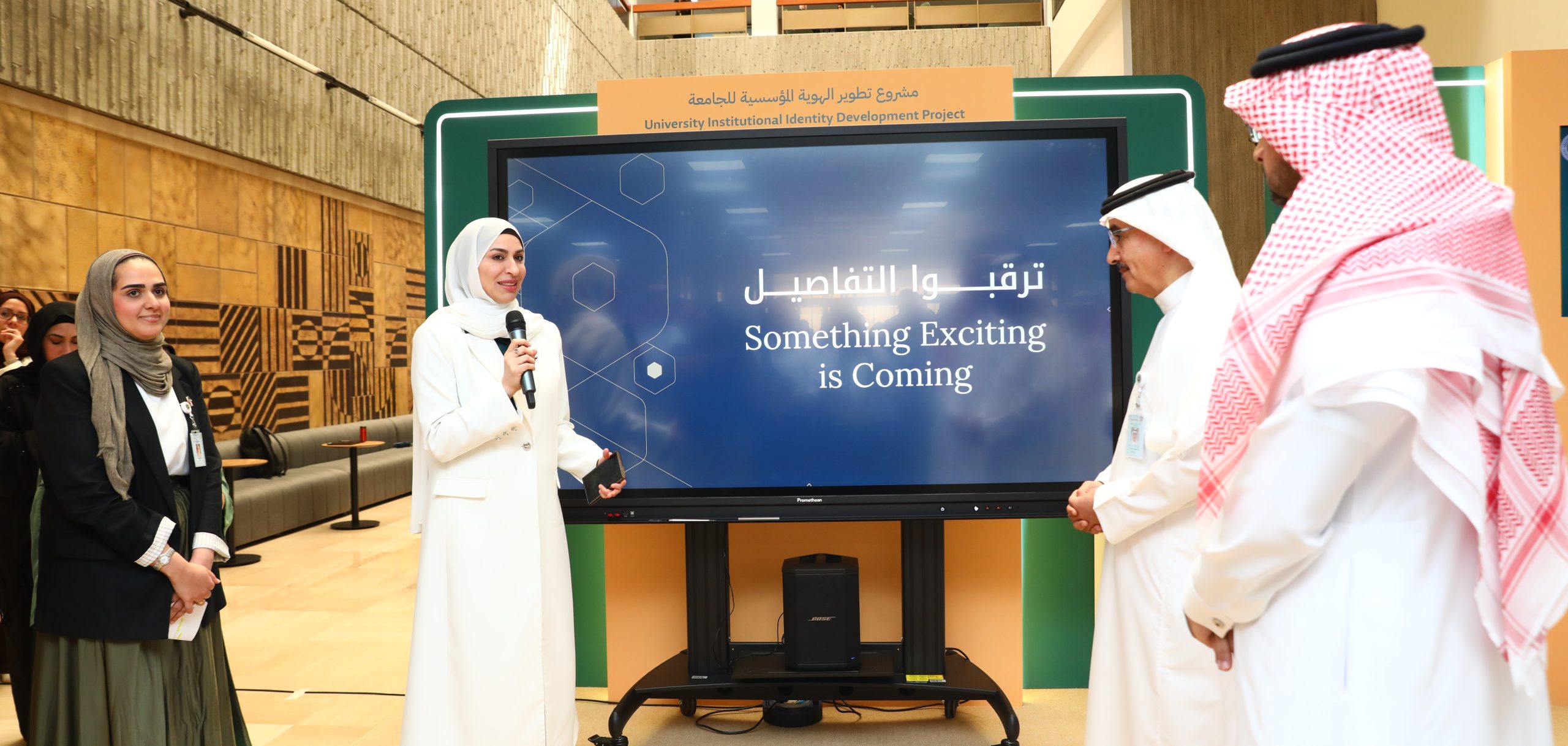
This announcement came during a ceremony to launch four strategic institutional projects, including the Strategic Plan for the years (2026–2030), the new institutional identity, the digital transformation project, and the human resources development and governance project, as part of an integrated approach aimed at reshaping the university’s operational framework and enhancing the university’s readiness for future demands and rapid transformations.
Dr. Al-Fahaid said: "The university believes that true investment begins with people, knowledge, and technology. The coming phase will witness a qualitative transformation in the academic, administrative, and research environments, thereby strengthening the university’s position as a long-standing Gulf institution capable of competing globally, and a key partner in creating a sustainable impact in the fields of education, research, and innovation within the Gulf Cooperation Council.”
He explained that the new projects are designed to foster a culture of continuous development, stating: “The universities that lead the future are those that have the courage to change and the vision to transform challenges into opportunities for growth and excellence.”
For his part, Dr. Ghazi bin Abdulrahman Al-Otaibi, Vice President for Academic Affairs and Scientific Research, emphasized that these projects represent a comprehensive institutional transformation aimed at enhancing the quality of academic and research outputs, as well as improving performance efficiency and future readiness, noting that the university views institutional transformation as an ongoing journey toward excellence, while emphasizing that investment in technical infrastructure, human resources, and modern governance will contribute to building a more flexible university model that is responsive to global changes.
He noted that the four projects form an interconnected system that promotes the modernization of strategic frameworks and establishes a contemporary institutional identity, in addition to developing services and enhancing the efficiency of human capital, thereby supporting the achievement of the university’s objectives, and strengthening its academic and research presence at the regional and international levels.
During the launch, the Quality Assurance and Strategic Planning Center team presented the highlights of the new strategic plan and the stages of its development, including its strategic objectives and a detailed breakdown of 34 initiatives, in addition to the approval of 103 projects that represent the roadmap for the next phase of the university’s journey.
Furthermore, the elements of the new identity, prepared by the university’s Institutional Communication Center team, were inspired by features that express the depth of the Gulf heritage and its cultural diversity—from the colors of the desert sands and the waters of the Gulf to symbols carrying special significance for each Gulf nation, such as the Bahraini pearl, the Saudi palm tree, the Emirati falcon, the Kuwaiti ships, the Qatari banoush, and the Omani dagger, in a visual representation that reflects the unity of the Gulf identity within its rich diversity.
The Digital Transformation Strategy project also represents a pivotal step toward institutional development by transforming disparate digital initiatives into an integrated strategic framework that supports the university’s future. The project’s significance lies in aligning digital initiatives with the priorities of education, research, and university services, thereby contributing to enhanced performance efficiency, an improved user experience, and strengthened integration between systems and data quality, while also supporting decision-making based on accurate indicators, which in turn enhances the university’s readiness, efficiency, and preparedness for future demands.
In the same context, the Human Resources Governance Project aims to enhance institutional performance efficiency and align human resources practices with the university’s new strategic plan. It involved developing policies, procedures, and job descriptions, working to improve job quality at the university, and updating strategic and operational planning mechanisms in line with the latest management methodologies, including performance indicators, objectives, and key results, thereby contributing to the creation of a more efficient, distinguished, and sustainable work environment.
by ashokaib | May 12, 2026 | Uncategorized
Dr. Hawazin Omar Al-Rawas, Head of the Nursing Department at the College of Medicine and Health Sciences at Arabian Gulf University, reaffirmed the university’s unwavering commitment to supporting the nursing profession and enhancing its status as one of the cornerstones of the healthcare system, as well as a noble humanitarian mission based on generosity, compassion, and professional competence.
On the occasion of International Nurses Day, during a ceremony organized by the department to mark the occasion, she said: “The College of Medicine and Health Sciences and the Bachelor of Science in Nursing program take this global occasion to renew their deep appreciation for the nurses who constitute the first line of human defense in the healthcare system,” emphasizing the continuation of academic plans to move toward development and strengthen strategic partnerships regionally and internationally, thereby contributing to the preparation of Gulf professionals capable of serving communities with efficiency and competence, and helping to build a healthier, more sustainable future.
The Bachelor of Science in Nursing program has recently received approval from the Accreditation Commission for Education in Nursing (ACEN), officially qualifying it to participate in the international accreditation candidacy phase. This academic achievement comes just two years after the program’s launch, reflecting the university’s commitment to applying the highest standards of quality and excellence in education. This qualification was achieved after the program met the initial requirements approved by the commission, confirming its readiness to enter the international accreditation process and reinforces its standing at both the regional and international levels.
It is worth noting that the university recently signed an academic and professional cooperation agreement with Johns Hopkins University, one of the world’s leading universities in the field of health sciences, with the aim of advancing education, training, and scientific research in nursing sciences, and opening new horizons for international cooperation in the areas of academic development, capacity building, clinical training, and continuing education.
This unique partnership marks an important milestone in the university’s journey toward preparing qualified nursing professionals in accordance with the latest international standards, through the development of academic programs, the implementation of specialized workshops and training courses, and the promotion of joint scientific research, and exchanging expertise in modern nursing practices, thereby contributing to the enhancement of the quality of health education outcomes and supporting the competence of students and faculty members.
Dr. Al-Rawas noted that the signing of these strategic agreements positively reflects on expanding the horizons of academic and research cooperation with leading global universities in the field of health sciences, with the aim of enabling nursing students to apply international best practices in nursing education and training, keeping pace with the rapid changes in the health sector.
In line with International Nurses Day, and as a practical embodiment of this vision, second-year nursing students recently completed their clinical training in a clinical setting characterized by seriousness, discipline, and continuous learning at government hospitals in the Kingdom of Bahrain. The students demonstrated a high level of professional competence and humanitarian commitment. They were able to apply their theoretical knowledge to provide safe and effective nursing care and handle various health conditions with a professional and compassionate spirit that reflects the quality of the academic preparation and practical training provided by the university.
by ashokaib | May 12, 2026 | Uncategorized
Professor Odeh Al-Jayyousi, Professor of Innovation Policy at the Arabian Gulf University, presented a specialized lecture addressing the future of AI-enhanced education and the rapid transformations in learning styles and university education, emphasizing that universities are facing a pivotal phase that requires a redefinition of their educational and knowledge-based roles in line with the current technological revolution.
He reviewed successive waves of technological development, noting that generative artificial intelligence is undergoing rapid development and qualitative leaps, which necessitates addressing it within an integrated technological and cultural context, rather than treating it merely as isolated digital tools. He explained that the real gap facing educational institutions today is not a knowledge gap, but a design gap, which requires higher education institutions to invest in technological transformation and incorporate emerging technologies into learning methods, assessment, and data analysis.
He noted that higher education is undergoing fundamental transformations, most notably the approach to artificial intelligence as a partner that enhances human intelligence and accelerates solutions, as well as the shift from the role of a data collector to that of a creator of insights and visions. He added that the value of technology lies not only in the speed of execution but also in the depth of analysis and the quality of understanding, emphasizing that the coming phase requires leading a cultural dialogue on technology and its future implications.
He noted that the applications of generative artificial intelligence have moved beyond traditional tasks toward forecasting the future and scenario planning, pointing out that partnering with technology leads to a smarter and more conscious future. He also addressed the transformations associated with the role of faculty members, explaining that educators are no longer merely transmitters of knowledge but have become designers of solutions through understanding, empathy, problem identification, idea generation, modeling, and testing.
He called for the adoption of Bloom’s taxonomy to implement AI-supported learning, thereby enhancing skills in comprehension, application, analysis, and evaluation, noting the emergence of new trends in testing, assessment methods, monitoring, and analysis within the educational process. He also emphasized that modern teaching methods are increasingly moving toward project-based learning and solving problems related to industry and the needs of the local community.
Speaking about the relationship between humans and technology, Al-Jayyousi stressed the importance of changing the way we think about artificial intelligence and its risks and shifting from a “struggle for survival” mindset to a “journey of integration,” emphasizing that machines do not replace humans but rather give them new wings for creativity and achievement. He added that humans remain responsible for contextual judgment, inspiration, and intuition, while machines provide abundance and speed, which calls for the preparation of “intellectual designers” rather than merely skilled users of technical tools.
He concluded his lecture by emphasizing that universities must treat artificial intelligence as a digital partner that contributes to thinking, creativity, and learning, explaining that the future does not mean the end of innovation, but rather a transition to a more mature and capable level in enhancing linguistic, visual, and narrative-analytical thinking. He noted that academic institutions are currently undergoing a gradual journey in adopting artificial intelligence, beginning with exploration, then adoption, and finally reaching the stage of integration.
This lecture is part of a series of specialized lectures presented by experts from the Arabian Gulf University within the framework of the Innovation Management Program at the College of Education, Administrative and Technical Sciences. This initiative stems from the university’s commitment to keeping pace with contemporary issues and topics, and to cementing its role as a Gulf hub of knowledge, research, and academic excellence that contributes to supporting sustainable development and the advancement of Gulf societies.