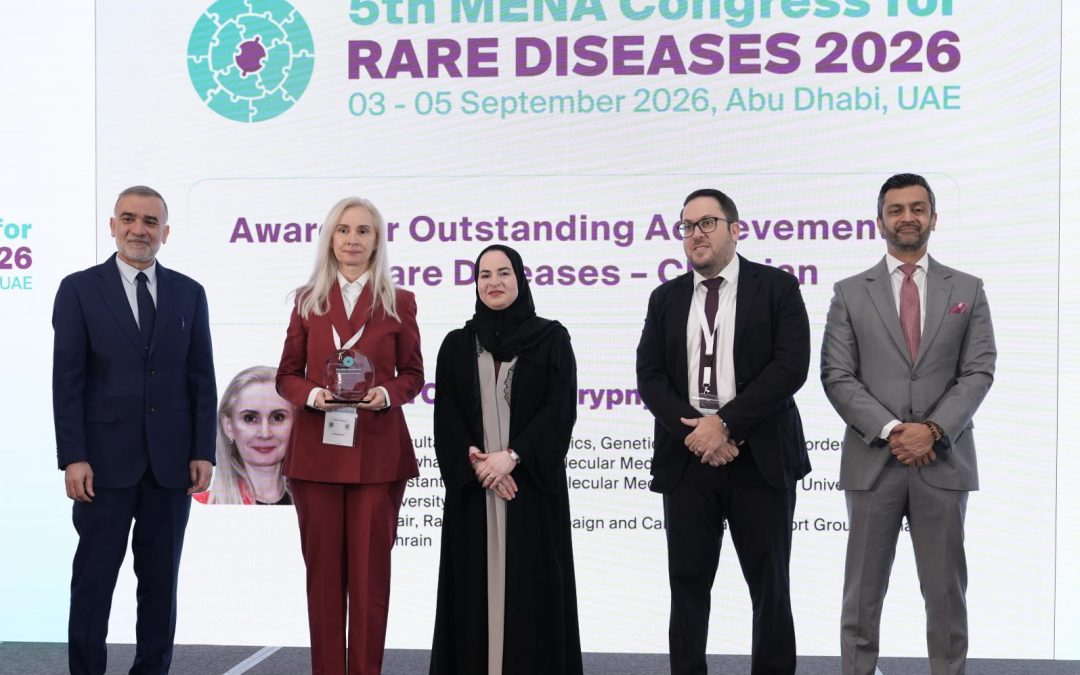
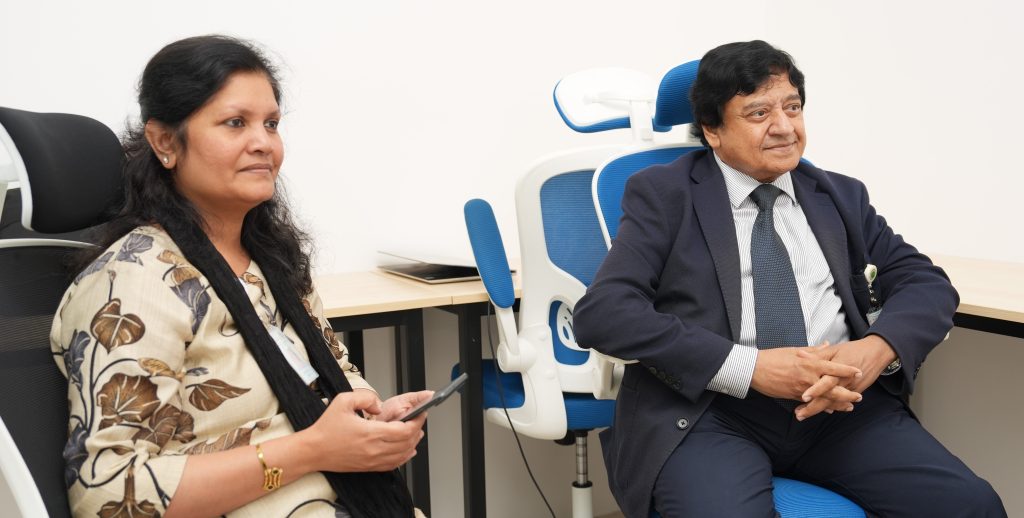
Dr. Cristina Skrypnyk, Medical Director of the Princess Al-Jawhara Al-Ibrahim Center and a consultant in medical genetics, received the Award for Outstanding Achievement in the Field of Rare Diseases —in the physicians’ category—during the Fifth Middle East and North Africa Conference on Rare Diseases, which was recently held in Abu Dhabi, United Arab Emirates. This honor recognizes Dr. Cristina’s three-decade-long contributions to the fields of medical genetics and rare diseases, as well as her significant efforts in the areas of genetic diagnosis, genomic medicine, medical education, scientific research, support for patients and their families, and raising public awareness of rare diseases. Throughout her career, Dr. Cristina has contributed to the development of the rare disease care system in the Kingdom of Bahrain and the region by promoting early diagnosis, raising awareness, and supporting multidisciplinary medical care, as well as applying rapid advances in genomics to clinical practice, thereby helping to improve the quality of care provided to patients and their families. Dr. Cristina participated in the conference’s scientific program and delivered a lecture titled: “Combining Genomics and Artificial Intelligence: A New Era for the Discovery and Care of Rare Diseases,” in which she addressed the growing role of the integration of genomics and artificial intelligence in bringing about a paradigm shift in the diagnosis and discovery of rare diseases. The lecture highlighted the potential of artificial intelligence to integrate genomic and clinical data with patients’ phenotypes, thereby helping to shorten the diagnostic journey, improve the interpretation of genetic variants, and uncover previously unknown disease mechanisms, ultimately leading to more precise and personalized healthcare tailored to meet each patient’s needs. This recognition and active scientific engagement reflect the growing presence of Arabian Gulf University and the Princess Al-Jawhara Al-Ibrahim Center in the fields of rare diseases, genomic diagnostics, and precision medicine, both regionally and internationally. It also embodies ongoing efforts to care for patients, train medical professionals, raise community awareness, and translate scientific progress into tangible improvements in the quality of life for patients and their families. This recognition underscores the role of Arabian Gulf University and Princess Al-Jawhara Al-Ibrahim Center in advancing genomic medicine and rare diseases, and in strengthening the Kingdom of Bahrain’s position as a regional center of excellence in genetic diagnostics and precision medicine.
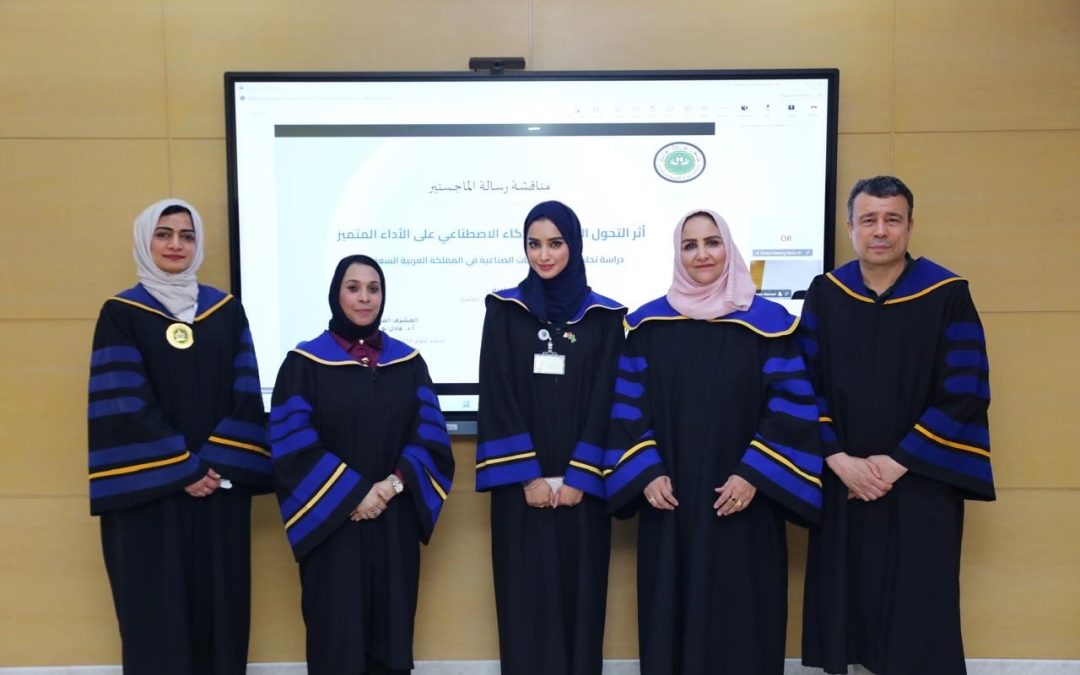
Researcher Iman Hamad Al-Omari, a student majoring in Innovation and Technology Management at Arabian Gulf University, defended her master’s thesis, titled: “The Impact of Digital Transformation and Artificial Intelligence on Excellence in Performance Using Green Innovation as a Mediating Variable: An Analytical Study of Industrial Companies in the Eastern Province of the Kingdom of Saudi Arabia.” The study comes amid the rapid transformations the Saudi industrial sector is undergoing in the adoption of digital technologies and artificial intelligence solutions, and the growing importance these technologies play in enhancing organizational efficiency, strengthening their competitiveness, and supporting their drive toward innovation and sustainability. Through her study, the researcher aimed to analyze and measure the impact of digital transformation and artificial intelligence technologies on enhancing outstanding performance within Saudi industrial companies, as well as to explore the role that green innovation plays as a link between technological development and the achievement of higher levels of sustainable organizational performance. The study adopted a descriptive-analytical approach and was based on field data collected from a sample of employees at industrial companies in the Eastern Province, which made it possible to examine the relationship between digital transformation, artificial intelligence, green innovation, and high performance in a real-world industrial setting. The results showed a statistically significant effect of digital transformation and artificial intelligence on enhancing excellence in performance. They also revealed the partial mediating role of green innovation in this relationship, confirming that achieving organizational excellence in modern business environments is no longer based solely on the adoption of technology, but rather on organizations’ ability to integrate it into a comprehensive system that combines innovation, technology, and sustainability. The study derives its significance from its comprehensive examination of four key areas that top the priorities of modern organizations: digital transformation, artificial intelligence, green innovation, and excellence in performance. It offers a scientific contribution that can be leveraged to support institutional decisions and practices, and to enhance the competitiveness and sustainability of the Saudi industrial sector, while the study’s findings align with national initiatives aimed at building an economy based on technology and innovation and developing a more efficient and competitive industrial sector, thereby supporting the objectives of Saudi Arabia’s Vision 2030. The thesis supervisory committee consisted of Prof. Fairouz Al-Dhamour, Professor of Management Information Systems, and Prof. Adel Bouhoulah, Professor of Computer Science. The thesis defense committee included Dr. Fatima Abdulqadir Al-Balushi, Associate Professor of Electrical Engineering at the University of Bahrain, as the external examiner, and Dr. Afaf Bougui, Associate Professor of Information and Communication Technology at the Arabian Gulf University, as the internal examiner.
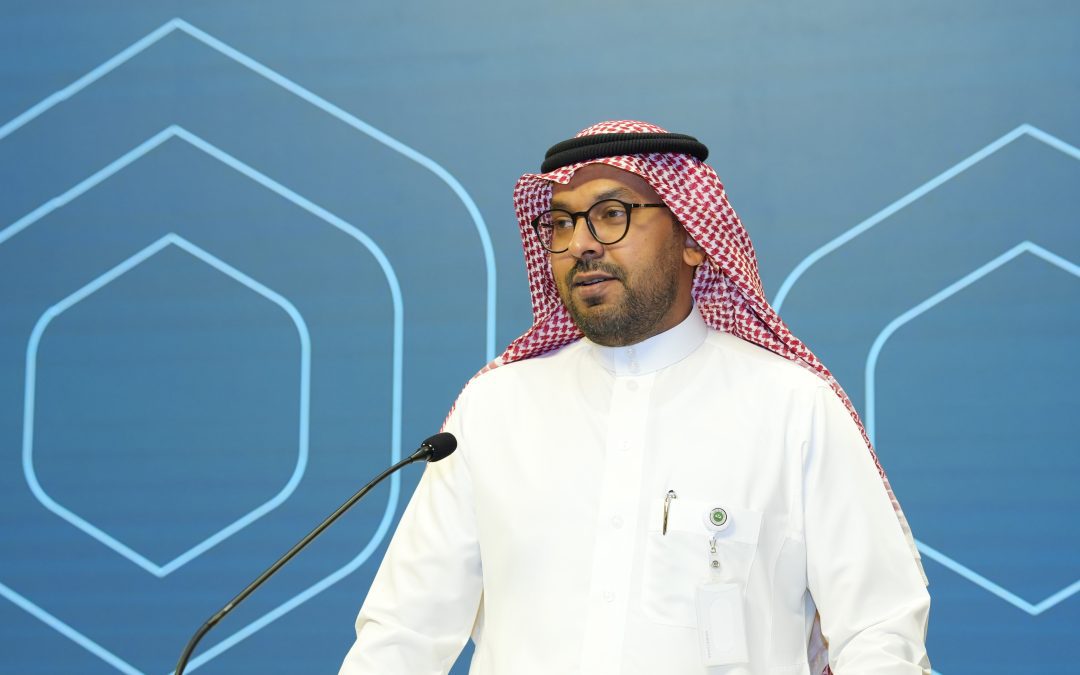
The Dean of the College of Medicine and Health Sciences at Arabian Gulf University, Prof. Dr. Mohamed Madadin, emphasized that the medical landscape in the Arab world is undergoing a pivotal phase that requires rapid adaptation to technological advancements and modern scientific research, noting that rapid changes in healthcare have necessitated a shift from traditional teaching methods to dynamic educational models focused on innovation and evidence-based medical decision-making. He explained that, coinciding with the Arab world’s celebration of “Arab Doctors’ Day,” the health sector in the region is undergoing a qualitative leap, praising the exceptional contributions of Arab medical professionals who have demonstrated high competence in addressing various health challenges and adhering to international standards. He said: “Celebrating the Arab doctor is a celebration of a noble humanitarian and scientific mission, and of generations of doctors who have contributed to the establishment and development of Arab healthcare institutions,” emphasizing that the current phase places greater responsibilities on medical education institutions to prepare physicians who possess scientific knowledge, clinical skills, the ability to think critically, and the capacity to keep pace with rapid developments in medical science and health technology. He noted that the Arab world possesses significant human and scientific potential, and that strengthening integration and cooperation among Arab academic and health institutions can contribute to building systems better equipped to respond to current and future health challenges. He highlighted the importance of exchanging expertise and experiences, and of developing medical education and training programs in line with local and regional needs as well as international standards. The Dean of the College of Medicine and Health Sciences added: “Arabian Gulf University continues to play a leading role as a joint Gulf initiative in supporting the health sectors of the Gulf Cooperation Council (GCC) countries by providing qualified medical professionals and leaders capable of driving positive change. The college adopts advanced scientific curricula focused on innovative solutions and the development of students’ critical thinking skills.” He noted that the college’s educational system relies primarily on the integration of advanced theoretical curricula with early clinical training in hospitals and health centers, along with direct investment in simulation-based training through specialized centers that allow students and medical trainees to practice complex medical procedures in a safe, fully realistic environment, thereby ensuring the highest levels of patient safety and enhancing graduates’ readiness for clinical practice. He explained that the university is working to fulfill this mission through an integrated educational system that combines advanced scientific curricula, clinical and field training, and simulation-based learning. This enables students to make a gradual and well-planned transition from theoretical knowledge to clinical practice and to acquire the skills necessary to handle various medical cases in a safe, realistic educational environment. He explained that the College of Medicine and Health Sciences does not view the graduation of a physician as the ultimate goal of the educational process, but rather seeks to prepare physicians who are capable of continuous learning, conducting scientific research, working within multidisciplinary teams, leveraging technology and artificial intelligence, and leading development in healthcare institutions. He concluded his remarks by extending his appreciation and respect to all doctors and healthcare professionals in the Gulf states and the Arab world for their noble humanitarian efforts, affirming that the College of Medicine and Health Sciences at Arabian Gulf University will continue to develop its academic and research programs, so that it remains a center of scientific excellence that graduates healthcare leaders who actively participate in the development of the Arab healthcare system and serve their communities.
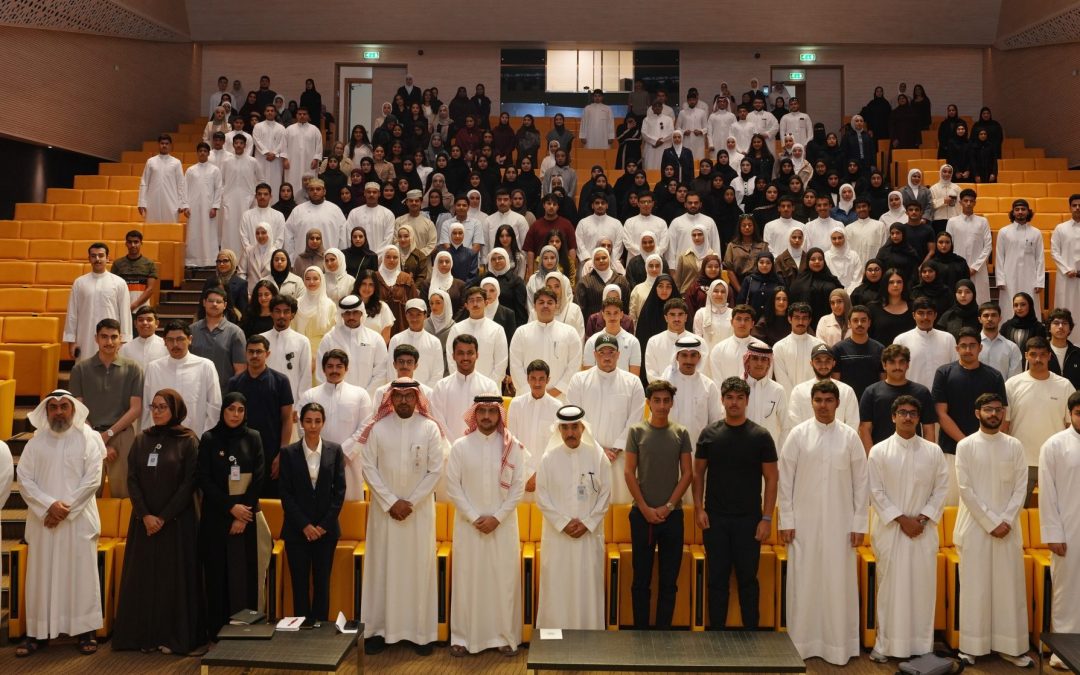
Orientation and guidance days for new students at Arabian Gulf University for the 2026-2027 academic year have begun, as part of the university’s efforts to enable new students to begin their academic journey with confidence and familiarize them with the available educational and counseling systems and services, thereby fostering their integration into the academic environment from their very first days.
This follows the university’s admission of 588 students into medical and health-related programs for the new academic year, distributed across the first year and the foundation year of the “Doctor of Medicine,” “Bachelor of Science in Nursing,” and “Bachelor of Science in Emergency Medical Services,” as part of its ongoing efforts to prepare specialized professionals to support the health sector.
A total of 271 students were admitted to the Doctor of Medicine program, while 275 students were admitted to the Bachelor of Science in Nursing program, and 42 students were admitted to the Bachelor of Science in Emergency Medical Services program.
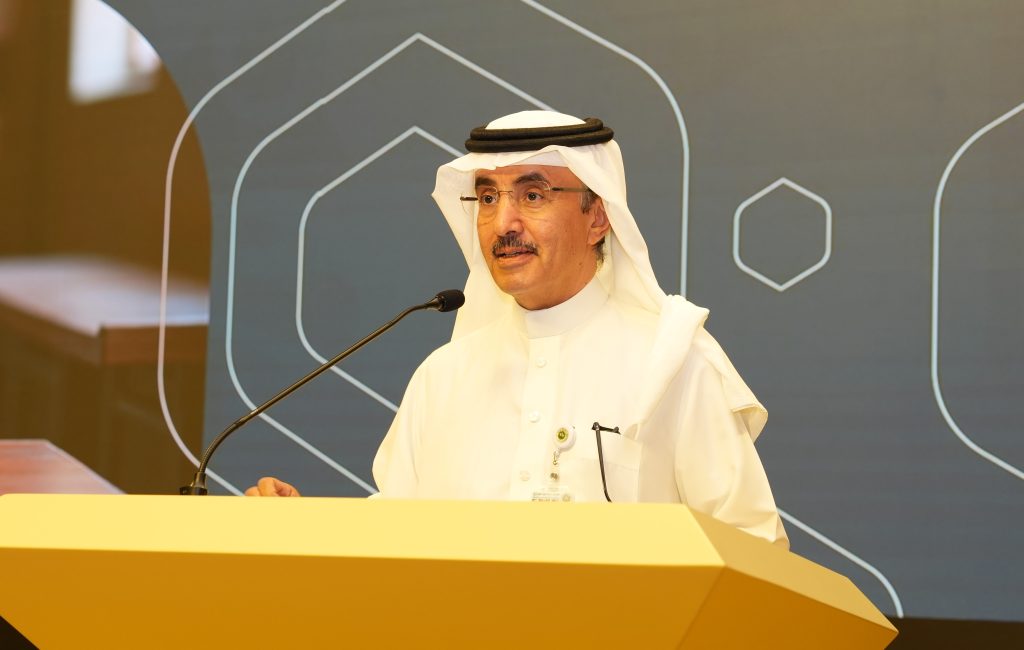
In this context, His Excellency Dr. Saad bin Saud Al-Fahaid, President of the Arabian Gulf University, extended his deepest gratitude and appreciation to Their Majesties and Highnesses, the leaders of the Gulf Cooperation Council (GCC) countries, for the support extended to the Arabian Gulf University, emphasizing that this support has contributed to enhancing the quality of education and scientific research at the university and cementing its position as one of the leading academic institutions in the Gulf.
His Excellency expressed the university’s pride in the students admitted from various GCC countries, who represent a new generation of qualified Gulf talent, and looked forward to their future contributions to raising the standard of services in the GCC countries and continuing the legacy of excellence established by the university’s graduates in various fields.
His Excellency emphasized that the Orientation and Guidance Program is one of the key initiatives that helps incoming students overcome the challenges of transitioning to university life and alleviate the psychological barriers associated with the start of their academic journey. He noted that the program familiarizes them with various aspects of university life, from academic procedures and formalities to educational and counseling services, housing services, and student activities, thereby enabling them to make the most of the opportunities the university offers.
Dr. Al-Fahaid noted that the university continues to develop its educational system in line with the latest developments in the fields of medical education, while enhancing the capabilities of its students in various medical, educational, administrative, and technical majors. He emphasized that the high demand for the university’s programs underscores its prestigious academic standing and reliable scientific reputation, as well as its proven track record in the quality of its academic programs and its professional and institutional accreditations. He noted that the new students represent a fresh addition to the legacy of achievements made by graduates of the Arabian Gulf University, who have demonstrated outstanding performance in various institutions across the Gulf Cooperation Council (GCC) countries, with many of them assuming prominent leadership and specialized roles, reflecting the university’s positive impact on preparing Gulf talent.
The Orientation and Guidance Program embodies the Arabian Gulf University’s commitment to fostering an integrated academic environment based on support and empowerment, providing new students with the tools to adapt and integrate into university life, in line with the university’s mission to prepare qualified Gulf professionals capable of contributing to the development and progress of the GCC countries.
Orientation Days include a series of introductory sessions and guidance workshops designed for incoming students, beginning with sessions dedicated to undergraduate programs that bring together Gulf students and representatives from the relevant cultural attaché offices and embassies, including the Saudi Cultural Attaché’s Office, the Embassy of the Sultanate of Oman, and the Kuwaiti Cultural Office, in addition to an orientation session for students in the preparatory program with the program’s administration. The Orientation Days continue with a speech by the Dean of the College of Medicine and Health Sciences and a speech by the Dean of Student Affairs.
The program includes a comprehensive overview of student and academic advising services, student rights and responsibilities, and the nature of student activities, along with an awareness lecture titled “Challenges Facing New Students and the Role of Guidance in Addressing Them,” as well as an opportunity for students to learn about key support services and systems, such as those provided by the Information Technology and Cybersecurity Center, the library and learning resource Center, the General Services Department, and campus safety and security guidelines.
On the academic and digital front, the program included a hands-on explanation of the learning management system, a meeting with the Admissions and Registration Department, and a meeting with the Dean and Vice Dean of the College of Medicine and Health Sciences. The orientation days will conclude with a program specifically designed for students in the Bachelor of Science in Nursing and Bachelor of Science in Emergency Medical Services programs, held in Prince Abdulaziz bin Fahd Hall at the Princess Al-Jawhara Center. This program will include the same introductory and service-oriented sessions, as well as a special meeting with the head of the Department of Nursing, providing new students with a clear understanding of the requirements of university-level studies and how to make the most of the available services.
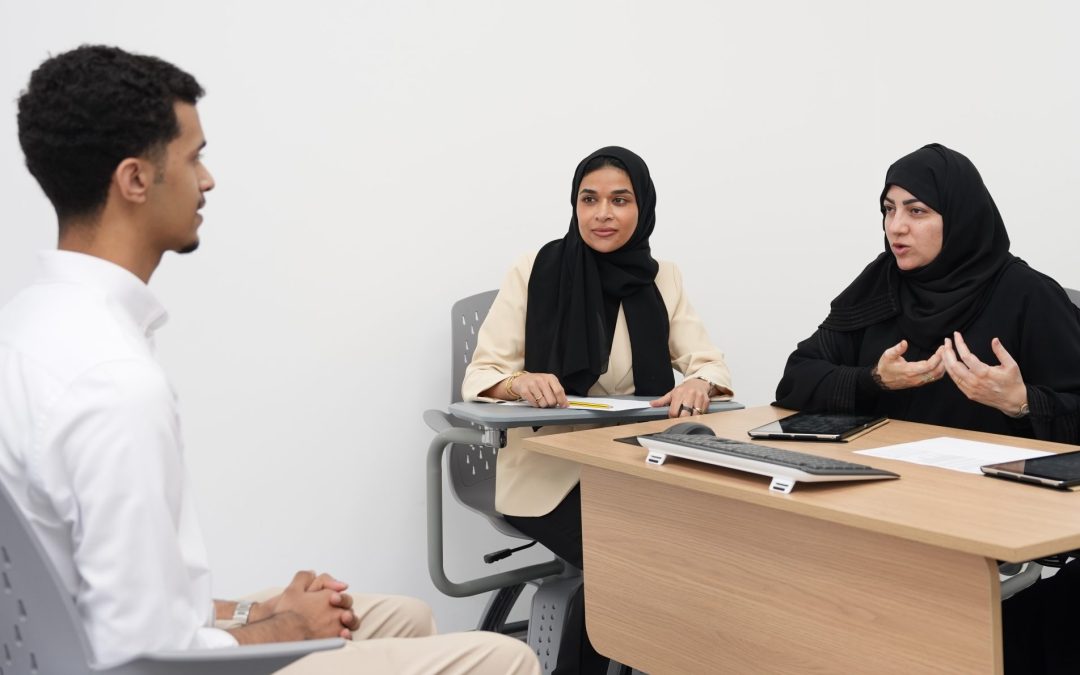
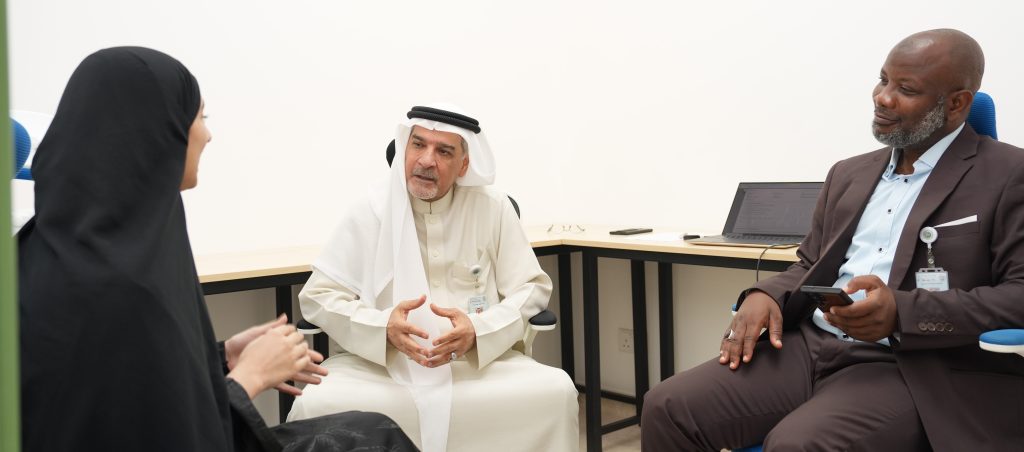
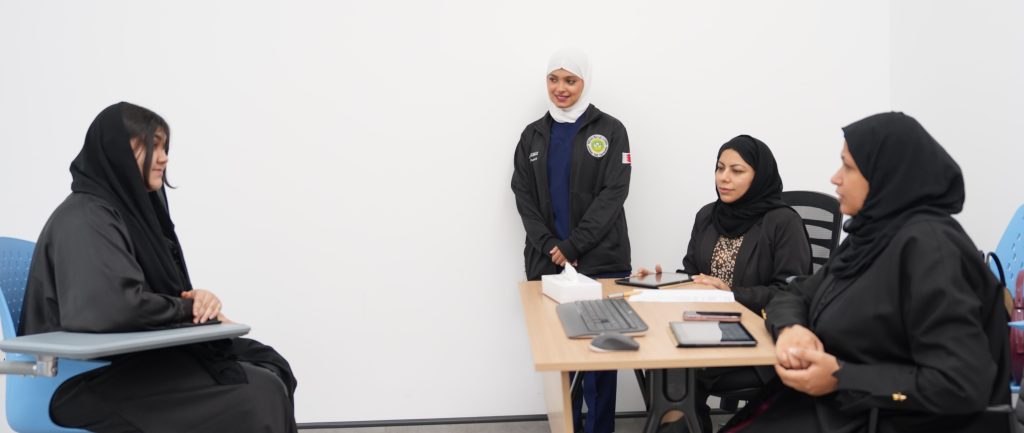
The College of Medicine and Health Sciences at Arabian Gulf University is conducting personal interviews with applicants from Gulf Cooperation Council (GCC) countries seeking admission to its academic programs, which include the Doctor of Medicine (M.D.), the Bachelor of Science in Nursing, and a Bachelor of Science in Emergency Medical Services. These interviews are part of the admissions process designed to select students best prepared to pursue medical studies and to meet the profession’s future demands and challenges.
The interviews are conducted by specialized evaluation committees comprising university professors and a number of medical students in their final years, which helps enrich the interview experience and convey a realistic picture of the nature of study and academic life at the college. The interview provides an opportunity to get to know the applicant’s personality, abilities, and motivations, as well as to assess their suitability for the medical profession and its requirements—including commitment, responsibility, and the ability to handle various academic and medical challenges.
Dr. Aseel Al-Saleh, Dean of Student Affairs at Arabian Gulf University, said that the distinguished academic track record established by Arabian Gulf University throughout its history is clearly reflected in the level of trust that parents in the Gulf countries place in the university, as well as in their eagerness to enroll their children in the various medical programs offered by the college. She emphasized that admission interviews serve as a crucial step in getting to know the student’s personality and assessing their psychological and intellectual readiness to undertake the medical education experience.
She added: “We clearly saw the extent of this trust during our meetings with students and their parents while the English proficiency exam for admission was being administered; their participation and eagerness to enroll at the university demonstrated its academic standing and trust it enjoys in the Gulf countries.” She added: “The Arabian Gulf University has taken steady and determined steps toward improving education and enhancing its outcomes by adopting innovative approaches, and by introducing modern and unique majors that meet the needs of the Gulf job market, based on an ambitious strategic vision formulated by an integrated team, with the goal of establishing the university as a leading academic institution in innovation and medical education.”
Dr. Al-Saleh explained that the interviews aim to assess the student’s personality, their ability to communicate, think critically, and take responsibility, as well as their awareness of the nature of health professions and the humanitarian and professional challenges and responsibilities they entail. This enhances the university’s ability to select students who possess the qualities necessary for success in their future medical careers.
In this context, the assessment committees focus during the interviews on a set of fundamental criteria, foremost among which are intrinsic motivation and awareness, leadership qualities and a sense of responsibility, self-confidence and emotional stability, sound judgment in handling various questions and situations, as well as communication skills, active listening, and positive interaction with committee members.
These interviews serve as a crucial stage in the student selection process, in line with Arabian Gulf University’s commitment to attracting students who possess academic excellence, a well-rounded personality, a genuine motivation to learn, and the ability to communicate, work, and take on responsibility, which are qualities that will prepare them to continue their medical education and contribute to serving their communities in the future.