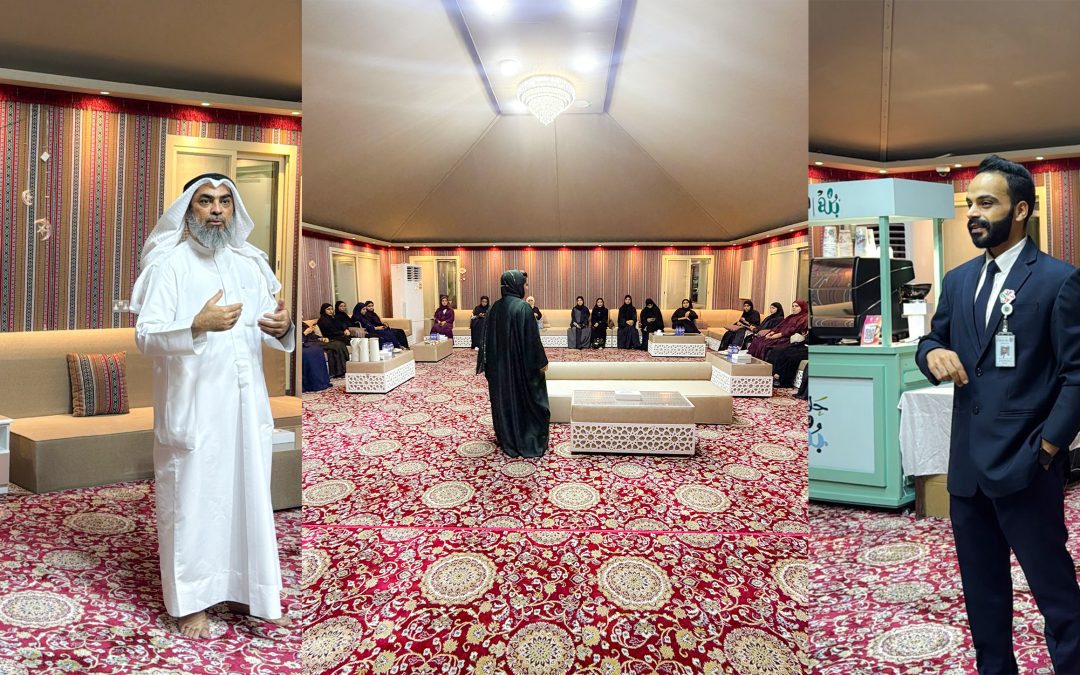
The University Housing Unit at the Deanship of Student Affairs at Arabian Gulf University organized an orientation day for incoming students, with the aim of familiarizing them with the applicable rules and regulations, informing them of the available services, and preparing them to engage in university and residential life within a safe, organized, and supportive environment for their academic journey.
The Dean of Student Affairs, Dr. Aseel Al-Saleh, emphasized that organizing the orientation day at the university housing complex is part of the university’s ongoing efforts to support incoming students from the Gulf Cooperation Council (GCC) countries and help them make a smooth transition to university life. She said: “Through orientation programs and support activities, we strive to ensure that our new students, from their very first steps, that they are part of a university community that embraces and supports them, and that they find an environment that helps them overcome the challenges of living away from home and adapt to their new surroundings—which positively impacts their psychological and social well-being, as well as their ability to focus and succeed academically. We continue to work on enriching their university experience and strengthening their engagement with the various departments and services provided by the university, enabling them to have a well-rounded and enriching academic experience.”
The program began with a welcome address delivered by the Director of University Housing, Abdullah Al-Khaldi, in which he welcomed the incoming students, emphasizing that their admission to the university is a testament to their excellence and distinction, and urging them to continue on the path to success and adhere to university regulations and guidelines, thereby maximizing the benefits of their academic experience.
The program included an overview of the most important security and safety laws and guidelines, as well as evacuation procedures and emergency exit, presented by security officer Mohammed Al-Owainati. He explained the proper procedures to follow in various emergency situations, thereby raising students’ awareness and ensuring their safety within the university housing facilities.
In addition, the housing supervisors, Mariam Falamerzi and Mariam Al-Bash, explained the most important rules and regulations governing life in university housing, clarifying students’ rights and responsibilities to help create a safe, stable, and orderly living environment and support students’ ability to adapt to university life.
The program concluded with an open Q&A session led by the housing supervisors, which gave students the opportunity to ask questions and learn firsthand about the various services and procedures related to student housing. The program also included the distribution of gifts to both male and female students.
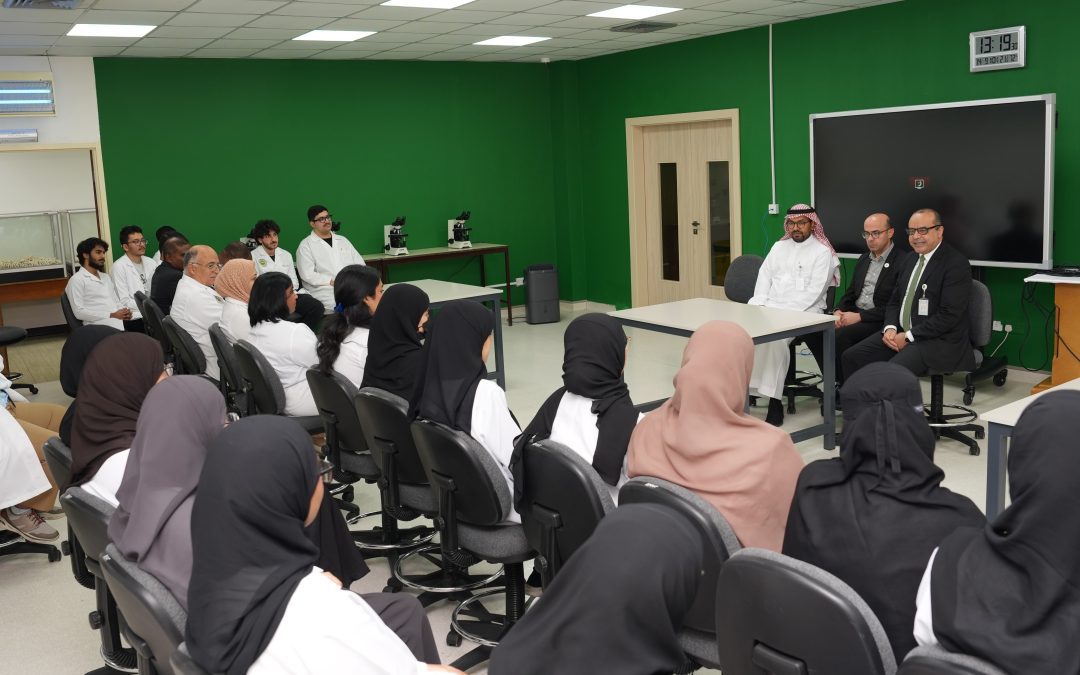
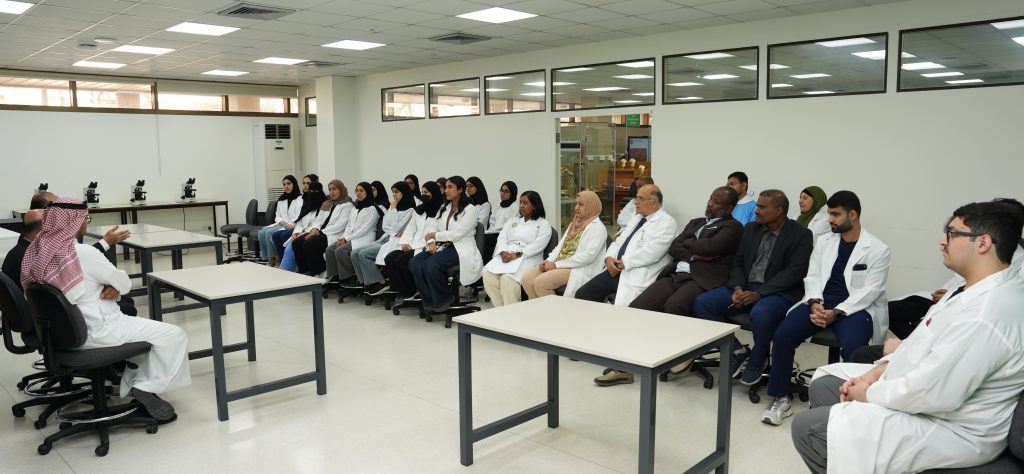
The fourth training session organized by the “Surgical Anatomy Club”—affiliated with the Department of Anatomy at the College of Medicine and Health Sciences—has commenced at Arabian Gulf University, in the presence of the Dean of the College of Medicine and Health Sciences Prof. Dr. Mohamed Madadin and his Vice Dean Yaseen Taim. 20 fourth-year students in the Doctor of Medicine program, who are interested in surgical and anatomical specialties, are participating in this four-week hands-on training program and concludes on October 8. The course, titled “Lower Limb Anatomy Course,” aims to enhance students’ practical experience in the field of anatomy by providing them with the opportunity to gain hands-on training in anatomical tools, techniques, and skills, and to link theoretical anatomical knowledge with practical application, thereby deepening their understanding of the human body’s structure and its relationship to surgical practice. The course is taught by Dr. Naji Mahmoud Ahmed Bakheet, a specialist in anatomy, and Dr. Mohamed Ali Younis Khan, a specialist in anatomy, under the supervision of the head of the Department of Anatomy, Prof. Dr. Wael Amin Nasr al-Din, with the participation of a select group of faculty members from the department. Students receive specialized practical training in lower limb anatomy within an academic learning environment that focuses on skill development and the enhancement of anatomical and surgical reasoning.
Prof. Dr. Wael Amin Nasr al-Din expressed his sincere thanks and gratitude to the Dean of the College of Medicine and Health Sciences, Prof. Dr. Mohamed Saleh Madadin, for his ongoing support and assistance, which played a significant role in organizing and hosting the course. He emphasized that “the Surgical Anatomy Club represents an important educational experience that goes beyond the boundaries of theoretical knowledge, as it gives students the opportunity to engage directly with anatomy and acquire practical skills that help them understand anatomical and surgical details with greater depth and precision,” noting that this experience helps better prepare students for clinical stages and their professional future, particularly those interested in surgical fields. He added that “hands-on training in anatomy enhances students’ ability to connect anatomical structure with function and medical practice and provides them with a more solid foundation for understanding surgical procedures and managing clinical cases,” expressing his hope that the “Surgical Anatomy Club” will continue to play its role in providing high-quality educational opportunities for students and fostering their passion for anatomy and surgical sciences.
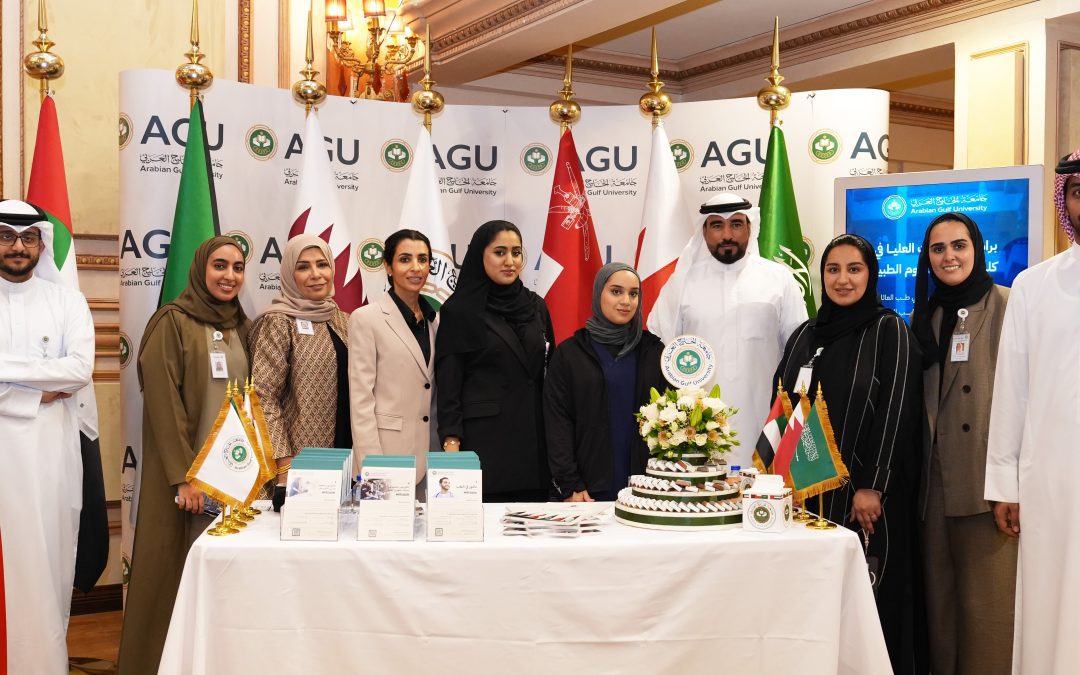
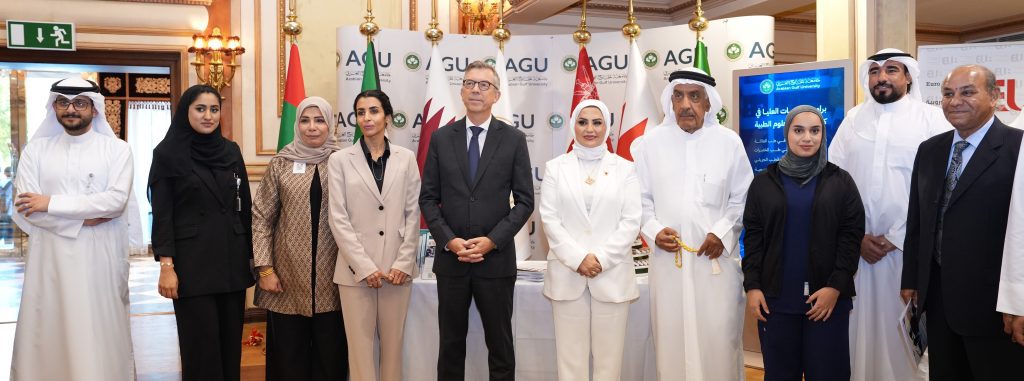
Arabian Gulf University is participating in the third edition of the Higher Education Institutions Exhibition, organized by the Alumni Club, which was inaugurated on Sunday by Her Excellency Dr. Diana Abdulkarim Al-Jaharmi, Secretary-General of the Higher Education Council. The event aims to familiarize students and interested parties with the available academic programs, majors, and university study options, amid broad participation from academics, teachers, researchers, and guardians, as well as representatives from various higher education institutions and government agencies.
Arabian Gulf University’s participation in the exhibition comes as part of its commitment to engaging directly with students and introducing them to the academic programs it offers, while also providing students and parents with the opportunity to learn about the nature of studying at the university, admission requirements, and the tracks and majors that meet the needs of the job market and students’ future aspirations.
Dr. Aseel Al-Saleh, Dean of Student Affairs at Arabian Gulf University, emphasized the importance of participating in such large-scale educational events, explaining that the university’s participation, along with its students, in higher education exhibitions is part of the university’s strategy to engage directly with students and guardians in the Kingdom of Bahrain and the Gulf Cooperation Council (GCC) countries; to introduce them to the latest innovative academic programs and educational initiatives launched by the university, such as the “Doctor of Medicine” program, the “Bachelor of Science in Nursing,” and the “Bachelor of Science in Emergency Medical Services,” in addition to a number of educational, administrative, and technical specializations offered by the university at the master’s and doctoral levels. She added that this participation serves as an opportunity to exchange experiences and discuss new horizons for higher education, while also contributing to national development goals by preparing a distinguished generation capable of meeting future challenges and possessing sufficient expertise in the specializations that the Gulf job market will require in the coming years. She further noted that the university’s participation reflects its commitment to supporting students as they choose their academic majors and to raising their awareness of available educational opportunities, thereby helping them build successful academic and professional paths.
In addition, the institutional communications center team at Arabian Gulf University participated in the exhibition’s activities as part of the university’s institutional engagement and to support its media and communications presence, by highlighting the university’s participation, its academic programs, and its educational initiatives, thereby contributing to strengthening the university’s presence and institutional identity, and expanding its reach to students, parents, and those interested in higher education.
University exhibitions are platforms that provide students and guardians with the opportunity to gain insight into higher education options available locally, regionally, and internationally, and enable them to learn about academic programs, diverse educational opportunities, and modern specializations that easily meet the demands of the evolving labor market, all in one place that brings together representatives from universities and higher education institutions.
The exhibition runs through September 17, 2026, and offers visitors the opportunity to meet with representatives from participating universities and educational institutions and inquire about academic programs, admission requirements, and various academic opportunities.
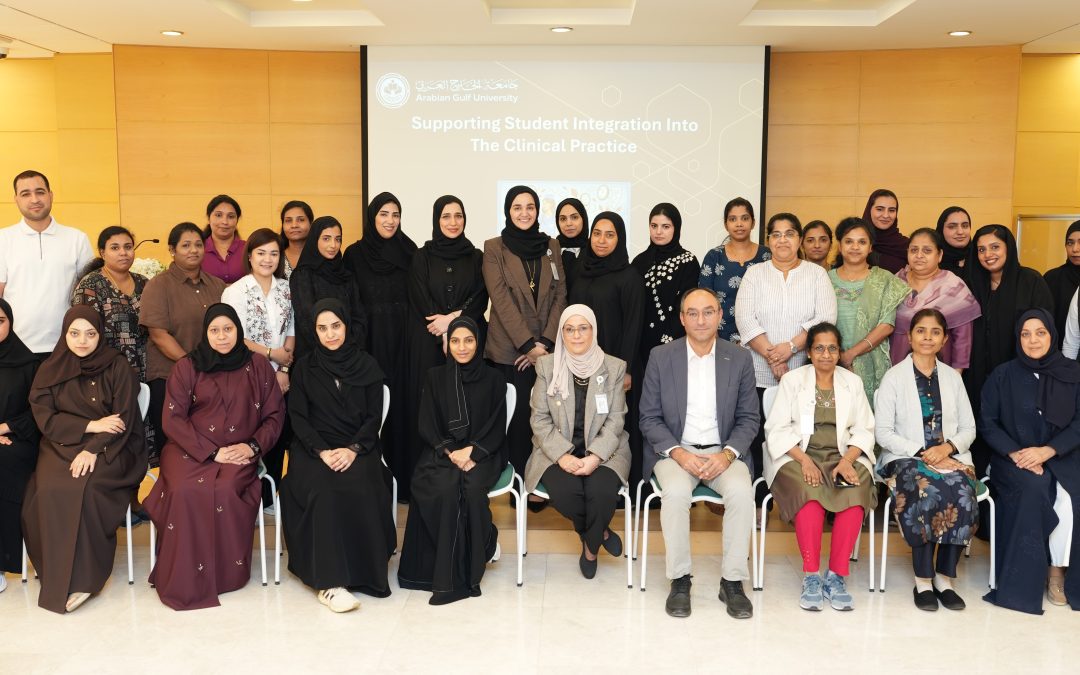
The Nursing Department at the College of Medicine and Health Sciences at Arabian Gulf University organized a workshop titled “Preparing Clinical Supervisors for Nursing Students” in the Prince Sultan bin Abdulaziz Auditorium at the university. The workshop was attended by 73 nurses and clinical supervisors, along with faculty members from the Nursing Department. The workshop is part of the Nursing Department’s efforts to strengthen the partnership and communication between the academic and clinical practice sectors, and to enhance the readiness of clinical supervisors to work with nursing students during their hospital training periods, thereby contributing to the provision of an effective and safe clinical learning environment, and to strengthen the integration between the requirements of the academic curriculum and the needs of professional practice. The workshop included a number of training sessions that focused on the fundamental aspects of clinical supervision, including the role and responsibilities of the clinical supervisor and the requirements for the clinical training portfolio, covering medical, surgical, and geriatric care. The workshop also addressed mechanisms for helping students integrate into the clinical environment, understanding learner needs, and applying effective teaching strategies, as well as methods and procedures for evaluating students—all of which enhance students’ ability to benefit from their practical experiences and develop their clinical skills in a gradual and systematic manner. The sessions also addressed ways to deal with students facing learning difficulties or low performance, emphasizing the importance of identifying their educational needs early on and providing appropriate support and guidance to help them meet clinical training requirements and reach the desired professional level. The head of the Nursing Department at the College of Medicine and Health Sciences, Dr. Hawazin Omar Al-Rawas, noted that the workshop served as an important platform for faculty members and clinical supervisors to exchange experiences and perspectives, and to discuss the most significant challenges related to clinical training, monitoring mechanisms, and student performance evaluation, thereby contributing to the standardization of practices and expectations between the academic and clinical sectors. She explained that organizing this workshop is part of the department’s ongoing commitment to maintaining the quality of clinical training and enhancing students’ educational and professional experiences, based on its belief in the importance of the clinical supervisor as a key partner in the educational process and an effective link between academic knowledge and practical application in the healthcare field. This workshop is an annual initiative organized by the Nursing Department to develop the capabilities of clinical supervisors and strengthen collaboration with healthcare institutions, thereby contributing to the advancement of clinical training and preparing nursing students for competent and safe professional practice. It reflects the department’s commitment to the continuous improvement of the quality of education and training in the field of nursing. The department also plans to hold the same workshop three times in the coming periods to maximize the benefits of its objectives, make its training content available to the largest possible number of clinical supervisors, and support the ongoing development of their competencies and the enhancement of clinical training quality.
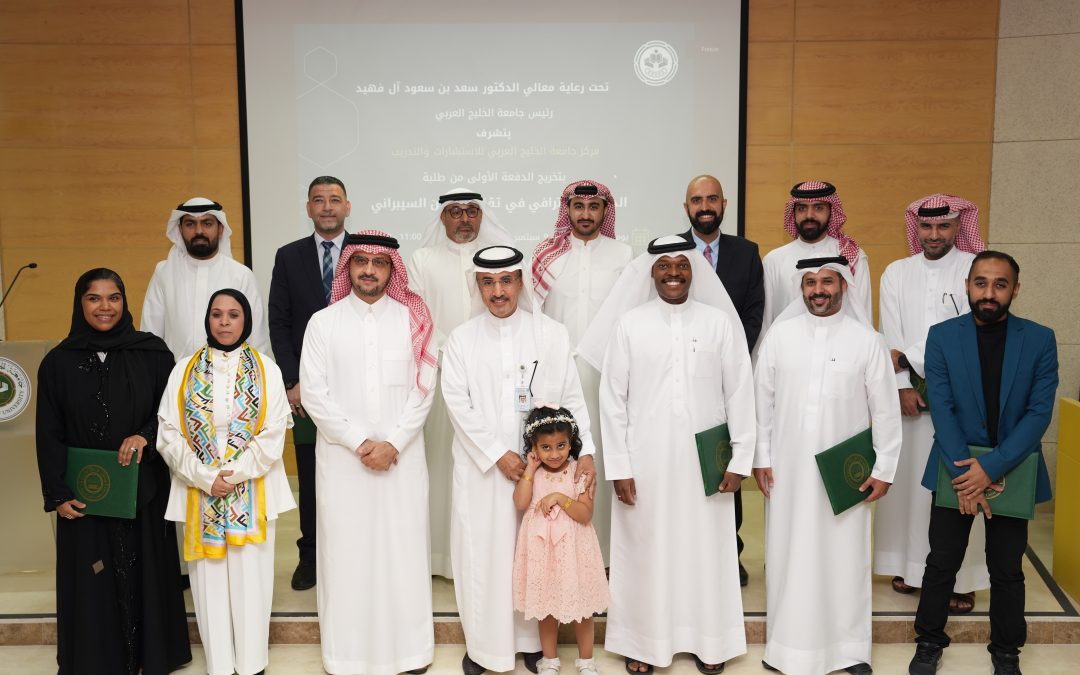
Arabian Gulf University celebrated the graduation of the first cohort of the Professional Diploma in Cybersecurity, offered by the Department of Computing in the College of Education, Administrative and Technical Sciences, in collaboration with the University’s Center for Community Service, Consultancy, Training, and Continuing Education. The ceremony was attended by His Excellency the University President, Dr. Saad bin Saud Al-Fahaid, as well as a number of faculty and administrative staff members and the graduates’ guardians.
The program is part of the university’s initiative to offer specialized professional programs that keep pace with rapid developments in the technology sector and meet the needs of government and private institutions in the Gulf Cooperation Council (GCC) countries by training professionals capable of addressing the growing challenges in the field of cybersecurity, proactively detect threats and vulnerabilities, and contribute to the protection of digital systems and information.
His Excellency the President of the Arabian Gulf University emphasized that the graduation of the first cohort represents a significant achievement for the university and reflects its commitment to developing educational programs that meet the needs of the future.
He said: “Cybersecurity is one of the most critical fields requiring qualified and specialized professionals, and we at Arabian Gulf University are committed to supporting programs that help prepare professionals capable of addressing digital challenges and protecting information and systems. We congratulate the graduates on this achievement and wish them every success in their professional careers.”
For his part, Prof. Dr. Walid Zubari, Dean of the College of Education, Administrative and Technical Sciences, explained that the program was designed to combine scientific knowledge with practical skills, emphasizing that it is based on a vision aimed at developing the skills of cybersecurity professionals and equipping them with the latest technologies.
He said that the program combines academic education with practical application and incorporates advanced topics, including artificial intelligence, blockchain technologies, and quantum computing, in addition to fostering critical thinking and the ability to address future challenges in the field of cybersecurity.
He added that the graduation of the first cohort comes in response to the rapid developments in this field and contributes to preparing national and Gulf talent capable of addressing future cyber threats and meeting the needs of government and private institutions in the Gulf Cooperation Council (GCC) countries.
Meanwhile, the program coordinator, Prof. Dr. Adel Bouhoula, emphasized that the diploma program focused on modern aspects of cybersecurity, while providing students with the opportunity to apply their knowledge through practical projects.
He said, “We are proud to graduate the program’s first cohort, and we hope that the knowledge and skills the graduates have acquired will be an important step in their professional careers.” The program focused on modern technologies, such as artificial intelligence, blockchain, and quantum computing, as well as ethical hacking, with the aim of preparing specialists capable of understanding and effectively addressing cyber threats.”
For her part, Dr. Afaf Mubarak Bugawa, Director of the University Center for Community Service, Consultancy, Training, and Continuing Education, emphasized the Center’s commitment to offering high-quality training and professional development programs that keep pace with scientific and technological advancements and meet the demands of the Gulf labor market.
She noted that the Cybersecurity Diploma program embodies this approach by combining advanced academic knowledge with practical application and leveraging the latest technologies and global trends in the field of cybersecurity, thereby enhancing the readiness of national talent, and supporting their ability to keep pace with rapid transformations in critical sectors.
For his part, graduate Saad Sinan, speaking on behalf of the program participants, expressed his gratitude for having been accepted into the program, emphasizing that the participants received the finest educational outcomes, rich in knowledge and learning, which broadened the horizons of their skills and expertise, thereby contributing to the development of the organizations they represent and aligning with the vision of the Kingdom of Bahrain and its brotherly countries in the Gulf Cooperation Council.
Sinan praised the teaching staff, supervisors, and administrators, acknowledging their efforts and the diverse educational resources they provided, which helped solidify the students’ theoretical and practical knowledge, as well as their continuous support, which enriched the educational experience.
The graduation of the first cohort of the Professional Diploma in Cybersecurity reaffirms the Arabian Gulf University’s commitment to developing specialized programs that meet the demands of the labor market and the rapid pace of digital transformation, and to strengthening its role in training academic and professional talent capable of supporting the digital transformation and development of the Gulf Cooperation Council (GCC) countries.