by ashokaib | Dec 30, 2025 | Uncategorized
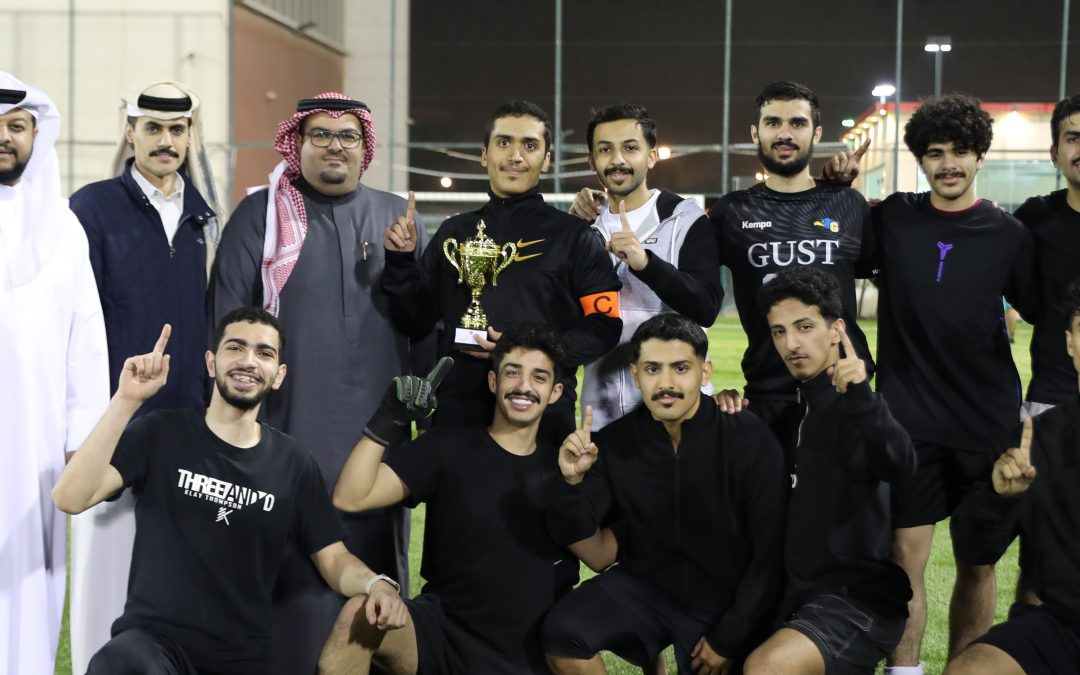
Dark Arts FC has emerged as the champion of the University Housing Football League, organised by the University Housing Unit at the Deanship of Student Affairs. The tournament took place at the Riffa Views Stadium and featured 77 students representing six teams competing for the title.
The final match was highly competitive, with teams demonstrating outstanding sportsmanship and discipline throughout the league. Players showcased impressive skills and enthusiasm, drawing cheers from fellow students within the university housing.
Mr. Abdulrahman Alresais, Head of the University Housing Unit, who presented the trophy on behalf of His Excellency Dr Saad bin Saud Al Fuhaid, President of Arabian Gulf University, emphasised the importance of sports and recreational activities as fundamental components of university life. Such activities are essential for promoting students’ physical and mental well-being, fostering teamwork and leadership skills, and maintaining a healthy balance between academics and extracurricular pursuits. These efforts help cultivate a positive environment that encourages creativity and excellence.
This tournament reflects the university’s dedication to supporting extracurricular activities and nurturing a spirit of healthy competition and camaraderie among students.
The league serves as a sporting initiative that hones students’ athletic skills, enhances social interaction, and instils sporting values, all of which positively impact university life.
by ashokaib | Dec 28, 2025 | Uncategorized
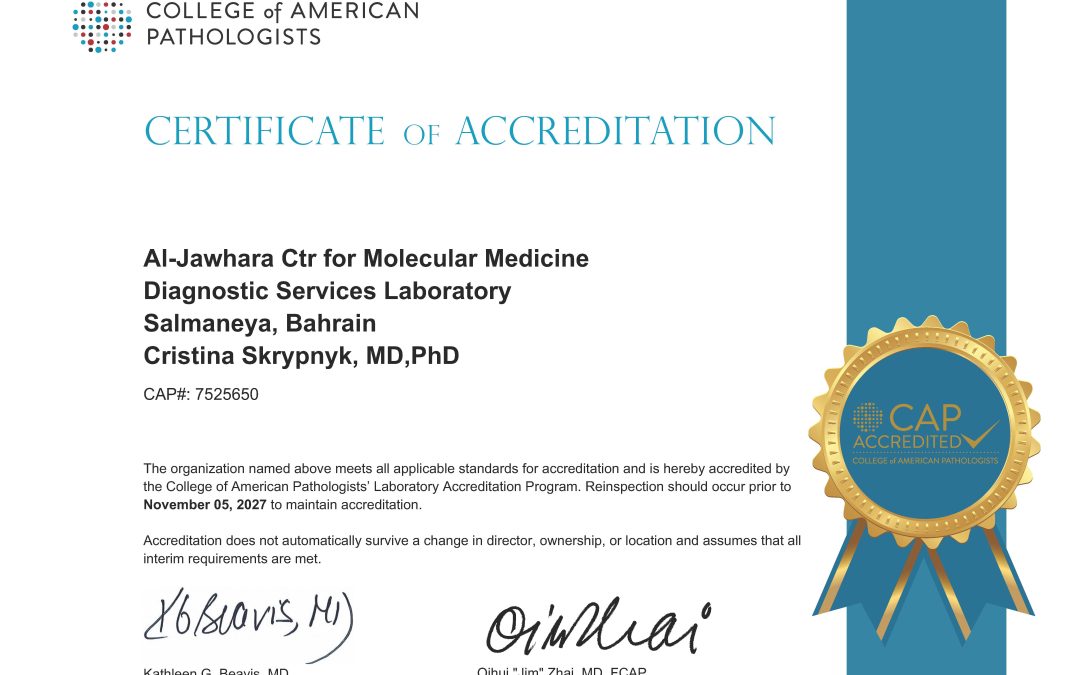
The Princess Al Jawhara Centre for Molecular Medicine, Genetics, and Inherited Disorders at the Arabian Gulf University (AGU) has announced the renewal of its accreditation by the College of American Pathologists (CAP) for the sixth consecutive time, an achievement that underscores the centre’s continued commitment to excellence and quality in advanced laboratory and diagnostic services.
Since obtaining CAP accreditation in 2015, the Princess Al Jawhara Centre has been among the first laboratories in the Kingdom of Bahrain to receive this prestigious recognition, reaffirming its regional leadership in molecular medicine and genetics and its unwavering dedication to applying the highest international standards to ensure laboratory quality and patient safety.
Dr. Amani Owaidah, Director of the Centre, affirmed that this achievement extends the centre’s long-standing record of excellence and international accreditation, stating, “We take great pride in this international accreditation, which reflects the Princess Al Jawhara Centre’s commitment to AGU’s vision of research and medical leadership. It highlights our ongoing efforts to enhance our diagnostic services in line with the latest global practices and contribute to the health and well-being of our community.”
Meanwhile, Dr. Cristina Skrypnyk, Medical Director of the Centre, explained that the renewed accreditation is the result of continuous collective efforts aimed at improving laboratory processes and ensuring the accuracy of test results. She noted, “CAP accreditation represents one of the highest international standards of quality, and its renewal demonstrates the centre’s dedication to continuous development and excellence in serving patients and the community with high quality genetic testing.”
Professor Dalia Al-Amoudi, Chief Technologist and Quality Officer, added that the evaluation process covered all diagnostic laboratory departments in accordance with more than one thousand international criteria, stating, “We are proud to be among the first laboratories in the region to achieve this prestigious accreditation, which confirms that our systems and operational procedures are fully aligned with global best practices. This success would not have been possible without the teamwork, dedication, and the administration’s strong support for ongoing quality initiatives and continuous training.”
by ashokaib | Dec 28, 2025 | Uncategorized
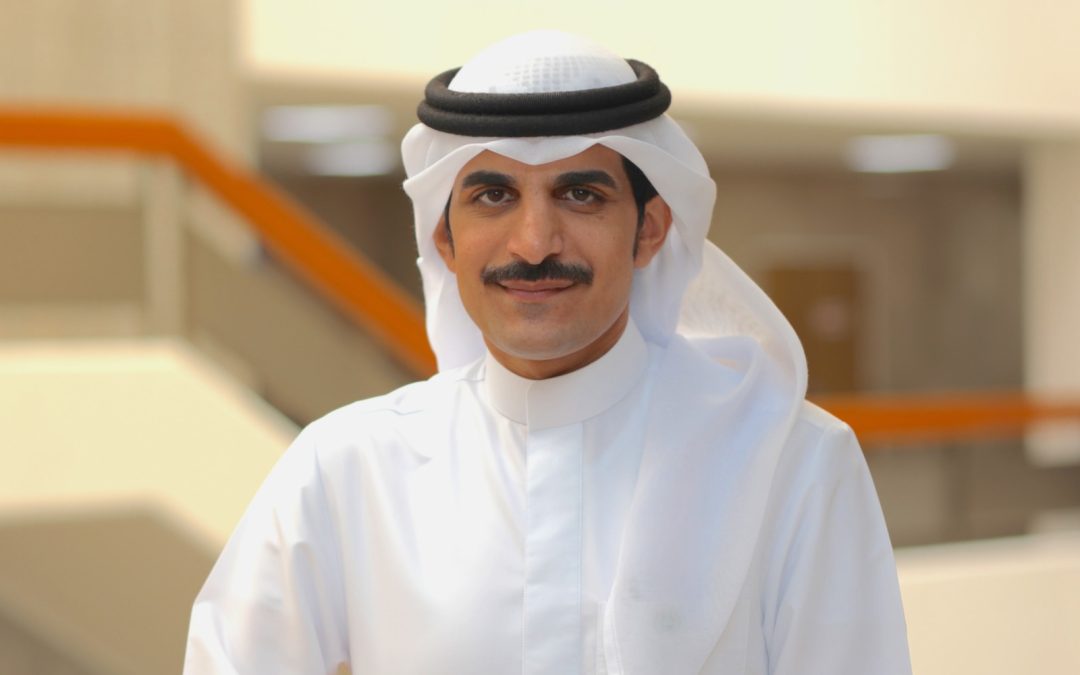
Dr Ahmed Al Abbasi, Associate Professor of Gifted Education and Vice-Dean of the College of Education and Administrative and Technical Sciences at the Arabian Gulf University (AGU), has been awarded the prestigious Berlyne Award for Distinguished Researcher by the American Psychological Association (APA), becoming the first Arab scholar to ever receive this honour since the establishment of the Association in 1892.
The Berlyne Award is considered among the highest accolades in the field of psychology, granted in recognition of exceptional academic contributions within the first ten years following receipt of a doctoral degree. It specifically honours pioneering research that advances scientific understanding of creativity and its cognitive processes, a central pillar in both theoretical and applied psychology.
The award is named after Professor Daniel Berlyne, one of the most influential figures in the psychology of creativity and aesthetics and former President of the Creativity and Arts Division within the APA.
This achievement crowns a distinguished research career for Dr Al Abbasi, characterised by a combination of theoretical depth, rigorous empirical work, and scientific precision. He has authored approximately 70 research papers published in leading international journals, significantly contributing to modern understanding of creativity and gaining wide recognition among global academic communities. This accolade places Dr Al Abbasi among the most prominent early-career psychologists internationally.
On the occasion, His Excellency Dr Saad bin Saud Al Fuhaid, President of the Arabian Gulf University, expressed great pride in this milestone, affirming that the award reflects the University’s advanced standing in supporting scientific research and academic excellence – a progress also mirrored in the University’s improved global ranking in 2025. He added that Dr Al Abbasi’s success serves as evidence of the capability of Gulf and Arab researchers to compete and lead across the highest scientific platforms worldwide.
Dr Al Fuhaid further noted that the University’s new strategic plan places research at the forefront of its priorities, including supporting publication in top-tier international journals (Q1), covering publication costs, and preparing to announce a new suite of excellence awards in research, teaching, administration, and community engagement.
This achievement marks a significant milestone for Arab scientific contribution in psychology, reflecting the growing presence of Arab scholars in the international academic landscape and underscoring the importance of diverse knowledge in enriching and advancing psychological research.
by ashokaib | Dec 23, 2025 | Uncategorized
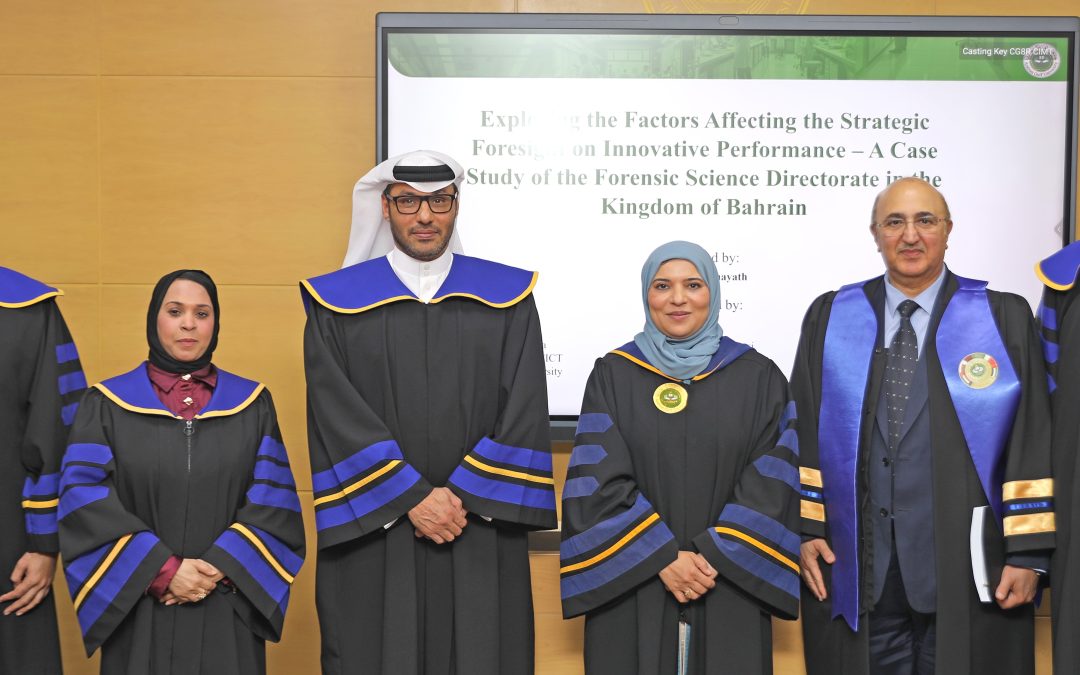
Researcher Mohammed Abdullah Ghiath from the College of Education, Administrative, and Technical Sciences at Arabian Gulf University (AGU) has defended his doctoral dissertation, which explores the factors influencing strategic foresight and its role in enhancing innovative performance. The study centres on a case study of the Forensic Evidence Department in the Kingdom of Bahrain, fulfilling the requirements for a PhD in Innovation and Technology Management.
The dissertation offers an integrated examination of how strategic foresight fosters innovative performance within security institutions, analysing the effects of internal and external organisational factors on both strategic foresight practices and innovation performance. This study is among the first of its kind in the field of forensic science, making it a valuable addition to security literature while enhancing the scientific and applied understanding of institutional work in this vital sector.
Employing a mixed-methods approach, the study combines quantitative analysis through Structural Equation Modelling (SEM) with qualitative insights from expert interviews, alongside the application of systematic triangulation to enhance the reliability and depth of findings.
The theoretical framework underpinning the research draws on resource theory, knowledge theory, and dynamic capability theory. These theories explain strategic foresight as an organisational capability emerging from effective resource utilisation, knowledge integration, and adaptive capacity.
Findings revealed direct and statistically significant relationships between internal and external organisational factors, strategic foresight, and innovative performance, consistent with the theoretical frameworks. Researcher Ghiath stated, “Internal factors, especially organisational culture, emerged as primary drivers of both strategic foresight and innovative performance. This aligns with resource and knowledge theories, which highlight the importance of culture in facilitating knowledge flows and organisational learning.”
External factors played a supportive role by providing environmental knowledge to inform innovation, consistent with the needs of stakeholders. This reflects the logic of dynamic capabilities theory, which links innovation to an organisation's ability to sense and adapt to environmental changes.
The results affirm that strategic foresight functions as an independent organisational capability that directly enhances innovative performance by fostering organisational readiness, guiding future-oriented thinking, and facilitating the integration of resources, knowledge, and adaptive skills within security agencies.
Qualitative analysis underscored the pivotal role of leadership, particularly transformational and delegative styles, as enablers that cultivate an environment conducive to strategic foresight and innovation. These leadership approaches promote participation, empower units, and encourage knowledge sharing.
Conversely, the study identified barriers such as limited institutional integration, resistance to change, and financial constraints, which can hinder the full realisation of strategic foresight and innovation. These findings highlight the need for a cohesive institutional framework that balances capabilities with existing challenges to sustain these practices.
Concluding with practical recommendations, the researcher emphasised the importance of strengthening organisational culture, enhancing work integration among units, maximising organisational knowledge and stakeholder engagement, and adopting advanced analytical and data tools. These recommendations activate strategic foresight, boost innovative performance, and enhancing institutional readiness to face future challenges.
The research was supervised by Dr Afaf Bugawa, Associate Professor of Information and Communication Technology as Principal Supervisor, alongside Prof Odeh Al Jayyousi, Professor of Innovation Policies, and Prof Waheeb Al Nasser, Professor of Applied Physics.
by ashokaib | Dec 23, 2025 | Uncategorized
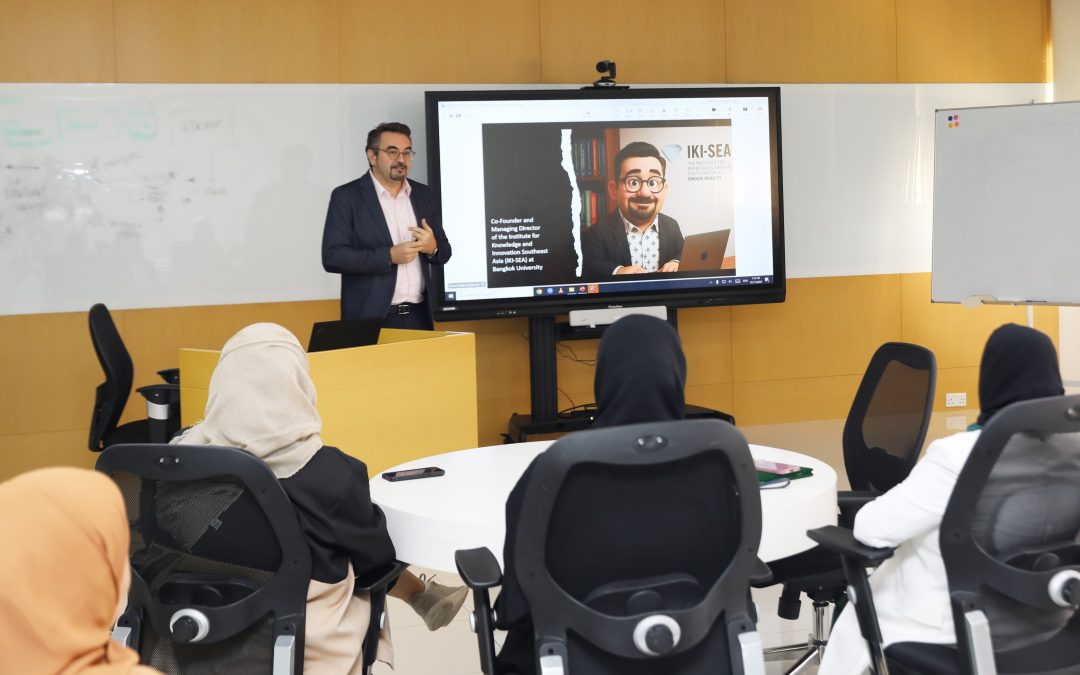
The Shaikh Isa bin Salman Al Khalifa Academic Chair for Technology Management, hosted by the College of Education, Technical and Administrative Sciences at Arabian Gulf University (AGU), welcomed Dr Vincent Ribiere, Associate Professor and Managing Director of the Institute for Knowledge and Innovation Southeast Asia (IKI-SEA) at Bangkok University. Dr Ribiere delivered a lecture titled "Practical Lessons from Global Most Innovative Knowledge Enterprise (MIKE) Award Winners: Turning Knowledge into Innovation" showcasing leading global experiences in knowledge management and its transformation into effective innovation practices within organisations. This lecture is part of the Chair's ongoing activities, which have been hosted by the university since 1995.
During his presentation at the university's Innovation Lab, Dr Ribiere summarised global experiences and best practices in knowledge management and its transformation into impactful innovation. He presented successful strategies adopted by MIKE Award-winning organisations and the vital role of knowledge management in fostering innovation, institutional development, enhancing competitiveness, and supporting knowledge-based decision-making.
During the lecture, he stated, "There are best practices in digital transformation, sustainability, institutional innovation, entrepreneurship, and small and medium-sized enterprises (SMEs)." He added that artificial intelligence companies are promising and will change the structure and model of business.
Dr Afaf Bugawa, supervisor of the Shaikh Isa bin Salman Al Khalifa Chair in Technology Management, stated that this lecture reflects AGU’s commitment to strengthening the innovation ecosystem, promoting a culture of knowledge management, and transferring global expertise to students, faculty members, and professionals interested in these fields.
It is noteworthy that the Shaikh Isa bin Salman Al Khalifa Chair in Technology Management aims to promote a culture of innovation and support sustainable development across the Gulf by advancing research, generating knowledge, and developing technologies to address regional challenges. The Chair cultivates creativity among students and researchers, encourages initiatives within the university, and conducts high-quality research. It also strives to build strategic partnerships with industrial, governmental, and international institutions to develop innovative solutions that advance regional progress.
Additionally, the Chair supports technology transfer and entrepreneurship by incubating startups and facilitating collaboration with the industrial sector. It also contributes to policy development that promotes innovation and development, aiming to create a lasting impact that diversifies Gulf economies and boosts their global competitiveness.