by ashokaib | Dec 23, 2025 | Uncategorized
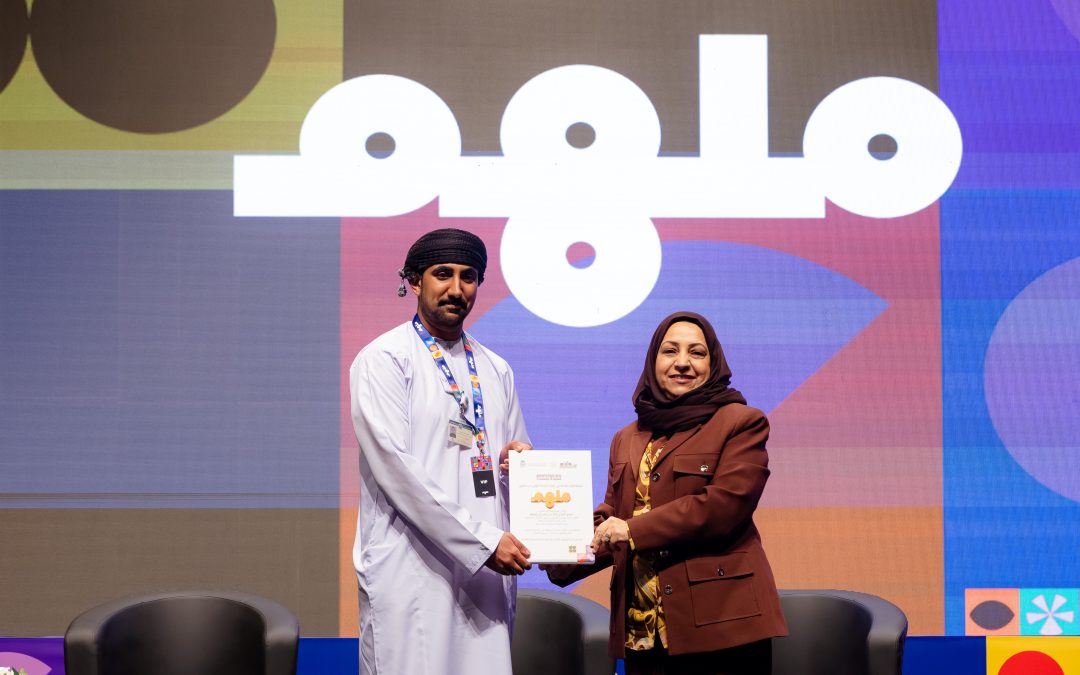
Mohammed Abdullah Al-Balushi, a fifth-year student at the College of Medicine and Health Sciences at Arabian Gulf University (AGU), participated in the Molhem (Inspiring) Forum organised by the University of Bahrain this December. Representing the youth category as a speaker, he shared his experience in creating and managing his medical Instagram account. Through this platform, he documented rare medical cases in an accessible and engaging manner, supported by real-life, scientifically verified stories. His goal was to raise awareness about medical conditions and connect medicine with human stories in a creative and understandable way for the general public.
The forum was held under the patronage of His Highness Shaikh Khalid bin Hamad Al Khalifa, First Deputy Chairman of the Supreme Council for Youth and Sports. It aimed to enhance young people's skills in digital media and content creation, which are now central to modern communication. The forum also fostered innovation and creative talents among youth, creating a stimulating environment for excellence.
Through his Instagram account, Al-Balushi highlighted several syndromes, including two rare delusional disorders: Capgras syndrome and Cotard syndrome. He explained their significant impact on sufferers’ perception of reality, identity, and the world around them. Capgras syndrome is a psychological disorder where the patient believes that a close relative has been replaced by an identical imposter. This condition is often associated with neurological or psychiatric disorders such as schizophrenia, dementia, or brain injuries.
He also discussed Cotard syndrome, one of the rarest psychological disorders. Those affected experience nihilistic delusions, believing they are dead, non-existent, or that their internal organs have ceased to function. This syndrome frequently occurs in individuals with severe depression or psychosis and can lead to self-neglect and refusal of food and treatment. During his presentation, Al-Balushi emphasised that early diagnosis and appropriate psychological and pharmacological treatment can significantly reduce symptoms. He underscored the importance of raising awareness about these rare conditions to promote understanding and compassionate medical care.
Furthermore, he explained that successful management of Instagram accounts plays a vital role in enhancing digital presence and achieving communication objectives. He advised on developing a clear strategy that defines goals and target audiences, delivering valuable content in a straightforward manner to foster engagement, along with smart usage of text features to ensure sustainable long-term account growth.
by ashokaib | Dec 22, 2025 | Uncategorized
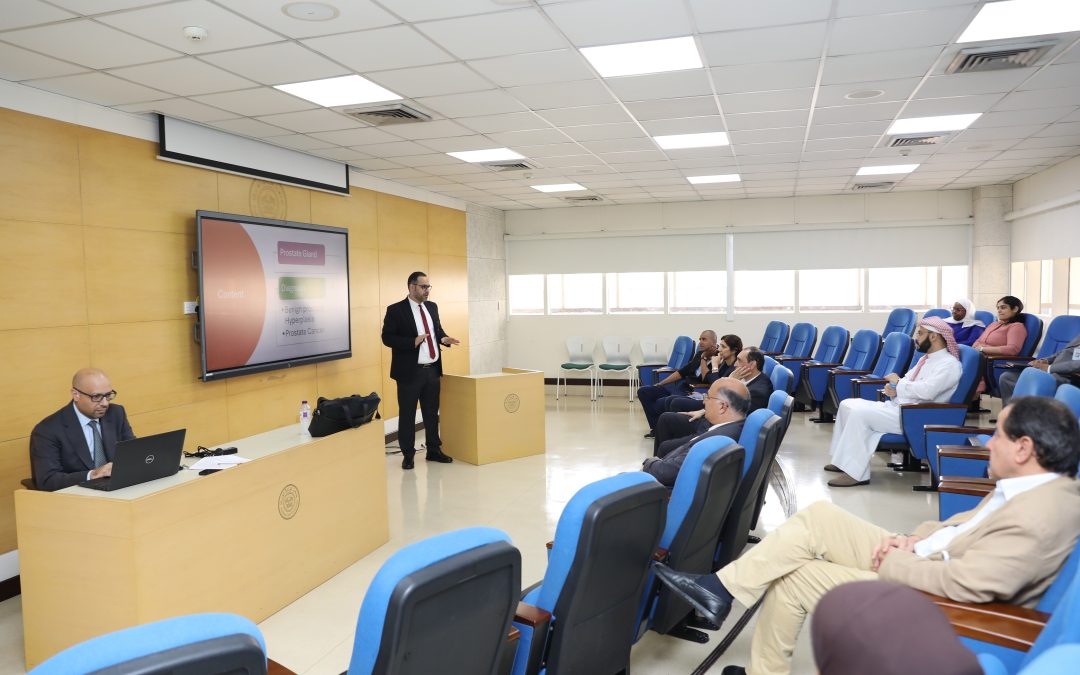
As part of the activities of the King Fahd bin Abdulaziz Al Saud Academic Chair for Medical Biotechnology at Arabian Gulf University, the College of Medicine and Health Sciences recently organized a specialized scientific symposium entitled “Scientific Insights into Prostate Cancer”, with the participation of a distinguished group of academics and researchers specialized in this field.
The symposium included three scientific papers that addressed the latest research, diagnostic, and therapeutic developments related to prostate cancer. Consultant urologist at Salmaniya Medical Center, Dr. Qasim Al Faraj, presented a paper entitled “Diagnostic Insights into Prostate Diseases: Differentiating Benign Enlargement from Cancer”, in which he reviewed the clinical and diagnostic differences between benign and malignant cases, highlighting current and future diagnostic methods, the latest risk classification techniques, and the use of advanced MRI imaging to enhance diagnostic accuracy.
Additionally, Associate Professor of Biochemistry at Arabian Gulf University, Dr. Mahmoud AlFaqih, presented a paper entitled “Molecular Mechanisms of Resistance to Androgen Deprivation Therapy”, in which he discussed the challenges related to the development of tumor resistance to hormonal therapy—a cornerstone in the treatment of advanced prostate cancer—explaining how a deep understanding of these molecular mechanisms can lead to the development of next-generation treatments for castration-resistant prostate cancer.
The symposium concluded with a paper presented by the Director of the Clinical Research Center at Arabian Gulf University, Professor Dr. Khalid Greish, entitled “Enhancing Prostate Cancer Treatment through Rational Design of Nanocarriers”. He reviewed promising research results in the field of nanomedicine aimed at overcoming drug resistance and minimizing side effects, through the development of advanced nanodrug formulations that improve drug solubility, accurately target cancer cells, inhibit tumor growth, prevent the formation of tumor-feeding blood vessels, while preserving the integrity of healthy tissues.
This symposium reflects Arabian Gulf University’s commitment to supporting advanced scientific research, strengthening the integration between academic research and clinical applications, and promoting the exchange of scientific expertise among researchers and faculty members, contributing to the development of
by ashokaib | Dec 22, 2025 | Uncategorized
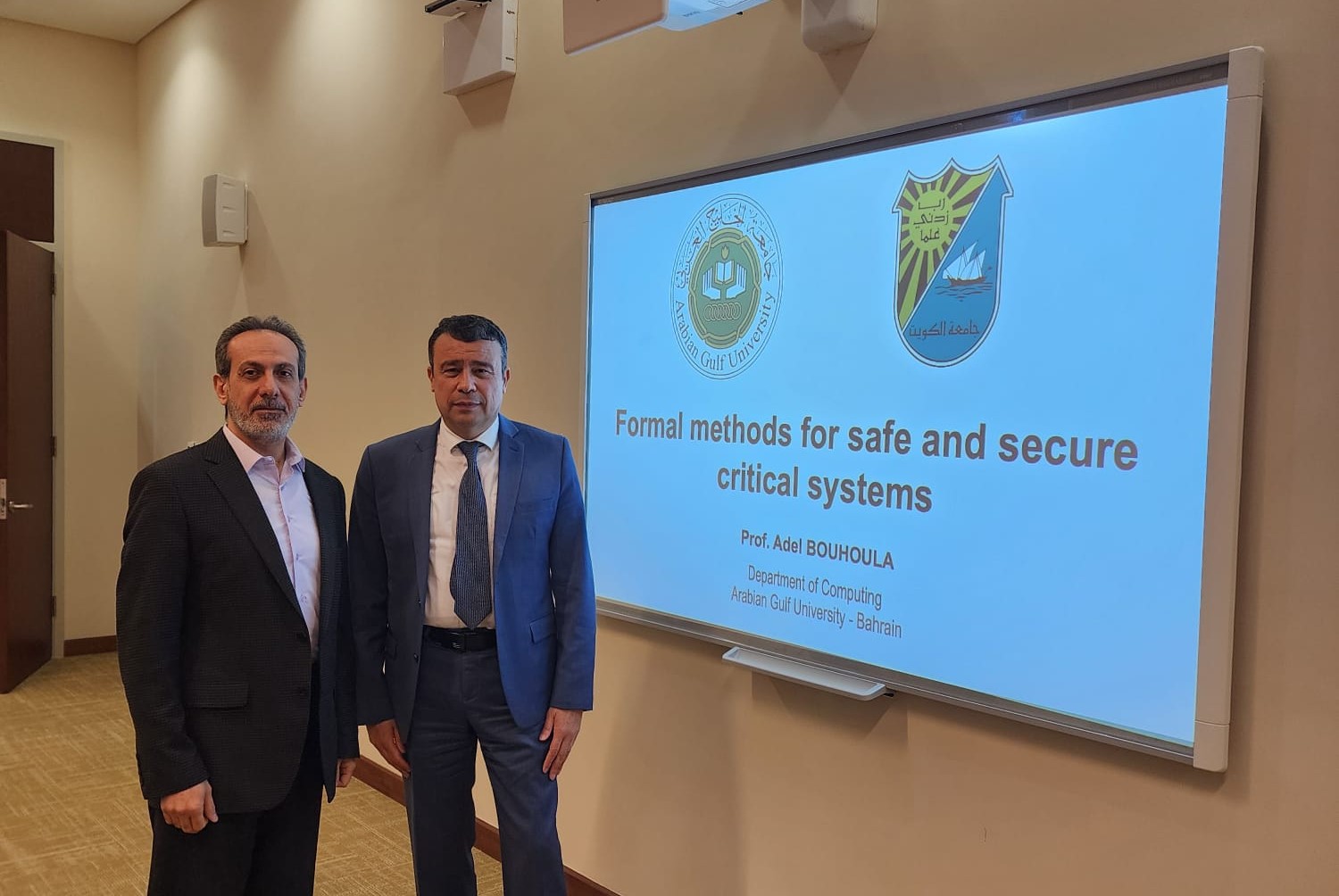
The College of Engineering and Petroleum at Kuwait University hosted Professor Adel Bouhoula, Head of the Computing Department at Arabian Gulf University (AGU), for a scientific seminar. During the event, he presented his research on developing innovative technologies for designing safe and secure digital systems. These technologies aim to address software errors and technical vulnerabilities that could lead to serious consequences in critical sectors such as health, finance, aviation, space, and defence.
The main challenge, he pointed out, lies in verifying the integrity of critical systems amid an infinite number of possible scenarios. This challenge is tackled through the application of advanced mathematical methods, which enable precise logical verification of system integrity, highlighting the integration of theoretical and applied sciences in developing secure systems.
The primary goal of his research is to identify errors and security vulnerabilities early in the design phase, before systems move from development to operational deployment. This proactive strategy helps mitigate future operational and financial risks associated with errors or security breaches, thereby enhancing overall system reliability.
In a separate event, Prof Bouhoula spoke at a specialised scientific seminar organised by Kuwait Technical College. He discussed the latest developments in cybersecurity and the emerging challenges in safeguarding digital systems amid rapid technological change. He underscored a fundamental shift in cybersecurity philosophy, stressing that security measures must be incorporated from the initial design stage. He stated, "Cybersecurity is no longer an academic option but an essential component of digital transformation. Our mission is to cultivate a new generation of professionals who not only understand cybersecurity threats but also anticipate them and design intelligent, resilient systems to counteract potential risks."
Prof Bouhoula elaborated on the role of formal methodologies in pre-emptively addressing security vulnerabilities during system design. He highlighted the increasing importance of artificial intelligence in proactively detecting threats, as well as the role of blockchain technology in ensuring data integrity and preventing tampering. He further stressed the significance of ethical hacking in identifying weaknesses and strengthening system readiness.
Looking toward future challenges, Prof Bouhoula warned of the rapid progress in quantum computing, noting that quantum computers could potentially break most current encryption systems. He remarked, "This development necessitates that academic and research institutions prepare for the post-quantum era by developing quantum-resistant security solutions."
He concluded the seminar by emphasising the vital role of human capital in tackling digital challenges, stating, "True investment lies not only in technology, but in minds capable of critical thinking, continuous learning, and transforming cybersecurity challenges into opportunities for innovation."
The seminar featured interactive exercises that enhanced practical understanding, such as analysing vulnerabilities in virtual systems. These activities bridged theoretical concepts with real-world applications, adding a modern and engaging educational dimension to the event.
by ashokaib | Dec 21, 2025 | Uncategorized
The Department of Business Administration at the College of Education, Administrative and Technical Sciences at Arabian Gulf University (AGU) has announced the launch of a professional diploma in investment management tailored for the non-profit and endowment sectors. This initiative is developed in collaboration with the AGU Consultation and Training Centre. The diploma aims to provide professionals working within endowment and non-profit organisations across the Gulf with specialised knowledge and practical skills essential for effective investment management.
Professor Waleed Zubari, Dean of the College of Education, Administrative and Technical Sciences, stated, “This programme exemplifies the university’s commitment to developing sustainable education and enhancing practical expertise to meet the needs of Gulf and Arab communities in the field of investment. It equips diploma students with modern concepts and tools to address current sector challenges, thereby amplifying their positive societal impact.”
Programme coordinator Professor Adel Ismail Al-Alawi indicated that the programme, starting next January, focuses on financial sustainability, employing advanced technology and innovative investment strategies. This contributes to raising performance efficiency and achieving a sustainable developmental impact in non-profit organisations. The diploma includes a set of educational objectives, most notably investment analysis, strategy development, risk management, informed decision-making, and the development of practical skills through a comprehensive learning experience.
The programme targets professionals currently working in endowments, charities, and non-profit organisations. It also caters to individuals interested in financial and investment sectors, entrepreneurs in the field of social investments, and individuals wishing to develop their skills in investment management and community development.
Spanning 20 weeks, the programme comprises 180 training hours delivered through a blended learning model that combines in-person and online sessions. Evaluation methods include interactive lectures, practical applications, and a graduation project. Admission requirements include a bachelor’s degree or its equivalent from a recognised university, successful completion of a personal interview, and submission of a CV and official application form. Preference will be given to applicants with relevant experience in the administrative field.
It is noteworthy that AGU signed a cooperation agreement last July with Maaref Business Services. This agreement aims to develop a professional diploma programme in investment tailored for non-profit and endowment organisations, reinforcing strategic partnership between academic and business sectors to serve sustainable development.
by ashokaib | Dec 21, 2025 | Uncategorized
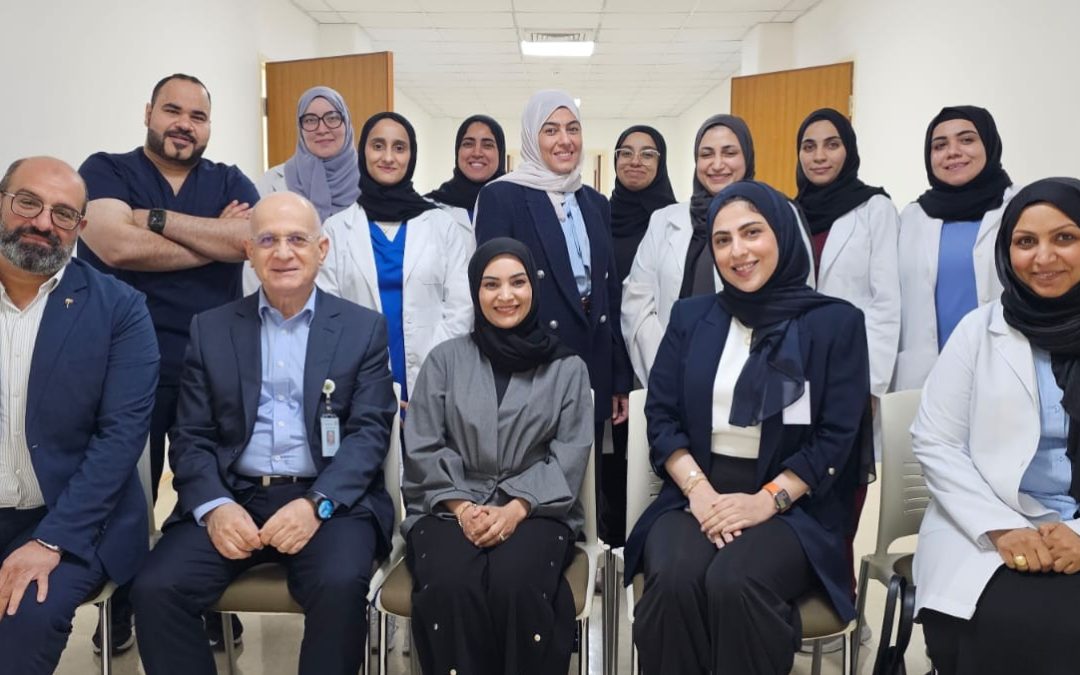
The fourth cohort of physicians in the Family Medicine Clinical Master's Programme at the College of Medicine and Health Sciences, Arabian Gulf University, have successfully completed their final examinations. This achievement reflects the programme’s commitment to cultivating qualified physicians in primary healthcare across the Kingdom of Bahrain and the Gulf.
The programme prioritises comprehensive training designed to enhance clinical competencies, improve medical communication skills, foster critical thinking and decision-making abilities, and promote scientific research. It also aims to prepare professionals capable of functioning within multidisciplinary healthcare teams.
Professor Mohamed Hany, Head of the Department of Family and Community Medicine, noted that the Family Medicine Clinical Master's Programme is distinguished by its student-centred approach and responsiveness to the professional and educational needs of its participants. The programme offers continuous academic and practical support, ensuring a training experience that is both effective and aligned with the primary healthcare requirements of the Gulf region. Over past years, graduates have demonstrated their ability to swiftly integrate into Bahrain’s healthcare system. Many continue to practice family medicine in both public and private sectors, underscoring the high quality of the programme’s academic and practical offerings and affirming their readiness to enhance primary care services and advance this vital specialty within the Kingdom.
The programme is currently accepting applications for its sixth cohort, inviting physicians seeking to develop their professional and clinical expertise to yield proficient and professional family medicine practice.