by ashokaib | Dec 21, 2025 | Uncategorized
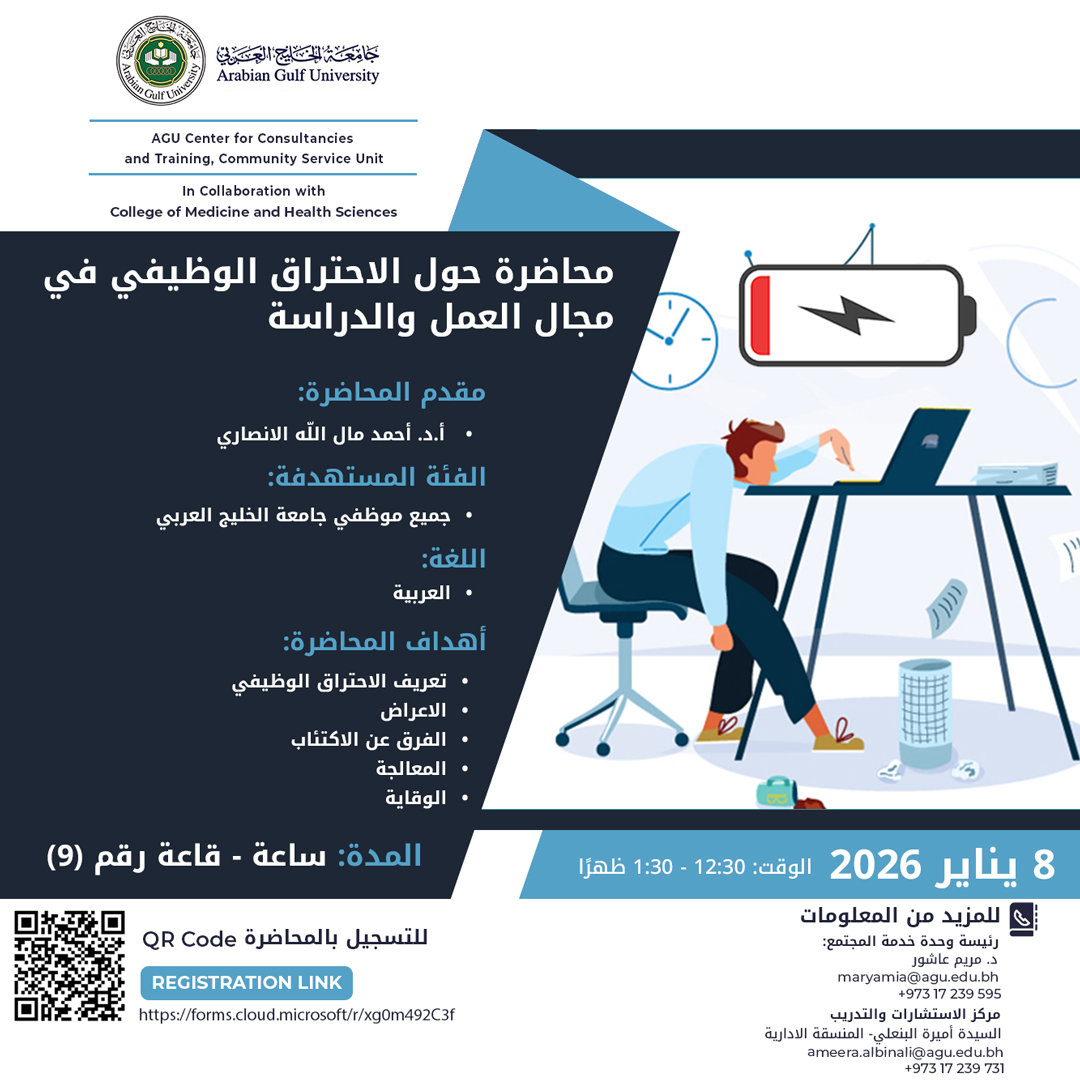
The Arabian Gulf University (AGU) Consultation and Training Centre, in collaboration with the College of Medicine and Health Sciences, is organising an awareness lecture titled "Burnout in Work and Study Environments" scheduled for 8 January 2026. The session will be delivered by Dr Ahmed Malallah Al Ansari, Professor of Psychiatry at AGU and Consultant in Child and Adolescent Psychiatry.
The lecture aims to explore the concept of burnout, its key symptoms, and distinguish it from depression. It will also cover effective treatment methods and preventive strategies, contributing to the promotion of mental health and enhancing performance within work and study settings. The event is open to all academic and administrative staff at AGU, reflecting the university’s dedication to raising community awareness, fostering a healthy and sustainable work environment, and cultivating dedicated, innovative, and capable teams to meet the challenges of both academic and professional spheres.
Dr Al Ansari explained that raising awareness about burnout is vital for creating healthy environments. Early and conscious stress management not only protects individuals from exhaustion but also ensures long-term success and performance.
He noted that burnout has become a societal issue that requires collective awareness and an institutional culture that supports mental health. Dr Afaf Bugawa, Director of the AGU Consultation and Training Centre, stated, "Raising awareness about effective strategies for managing burnout in work and study environments enhances productivity, improves quality of life, and builds resilient generations capable of contributing without depletion or exhaustion." She noted that true success is not measured by achievements alone but by the ability to persevere without losing passion or mental well-being.
She added that neglecting burnout among students and employees negatively impacts both learning quality and performance, whereas awareness and management create more balanced and creative educational environments.
by ashokaib | Dec 15, 2025 | Uncategorized
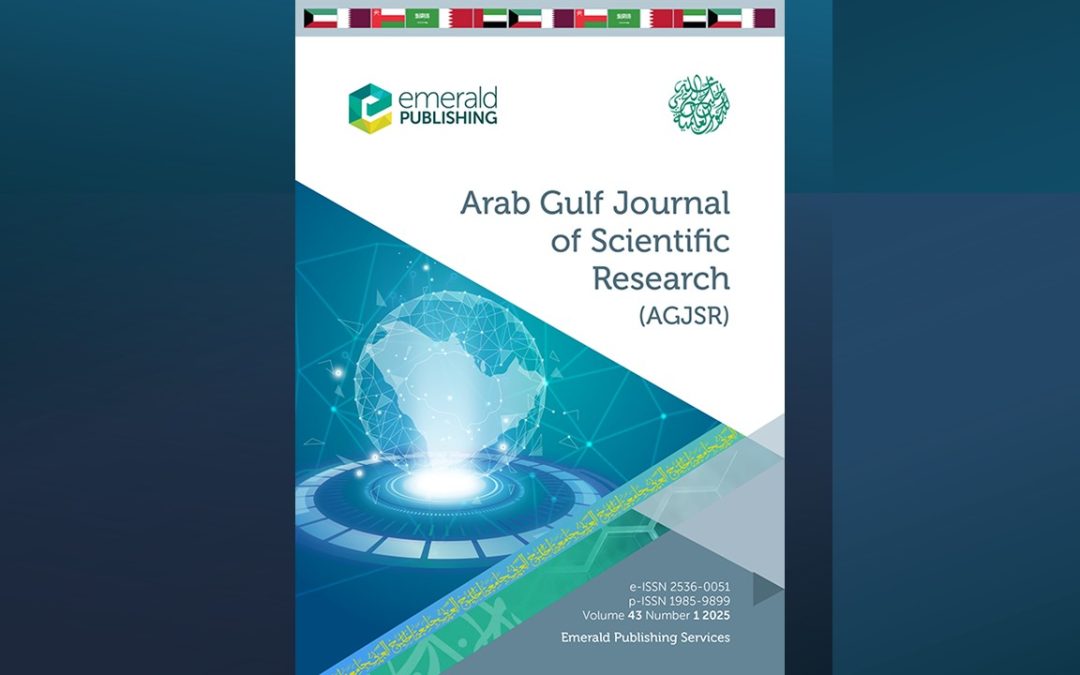
The Arabian Gulf Journal of Scientific Research: Water, Energy, Food, and Environment (AGJSR-WEFE) has announced the publication of its latest issue, Volume 43, marking the first edition under its new focus and title.
In January, the journal adopted its new name following consultations with the publisher Emerald, to better highlight the Water, Energy, Food, and Environment (WEFE) nexus. This shift underscores its dedication to promoting multidisciplinary sustainable research that explores the complex interconnections among these critical sectors. The journal further achieved a milestone this year by advancing from the fourth quartile (Q4) to the second quartile (Q2) in international rankings, reflecting its rising academic prominence and regional leadership in sustainability research.
Since opening its submissions under the WEFE framework in February 2025, AGJSR-WEFE has continued to serve as an international platform for pioneering scientific research aimed at sustainable resource management, technological innovation, and environmental resilience.
Highlights of Volume 43 include an inaugural article outlining the journal’s new vision and expanded focus within the WEFE framework. The issue features research on groundwater quality for agriculture in Saudi Arabia’s arid regions, studies on effective leadership in achieving carbon neutrality, and predictive analyses on renewable energy adoption and green innovation in Oman. Additionally, the issue features an article discussing organisational innovation to balance technological advances with climate and geopolitical challenges, exemplifying the journal’s commitment to promoting sustainable practices and integrated resource management across WEFE sectors.
AGJSR covers topics such as sustainable resource management, renewable energy technologies, conservation strategies, regional and global food, water, and energy security; climate change impacts on WEFE including modelling, mitigation, adaptation, and carbon neutrality, particularly within the Arabian Gulf; space technology and geographic information systems (GIS) applications in WEFE, including earth observation, satellite technologies for climate monitoring, disaster reduction, and renewable energy planning.
Moreover, the journal includes a report on the role of circular waste management in WEFE, focusing on recycling, resource recovery, clean technologies, and the circular economy. Further topics encompass bio-applications such as bioremediation, bioenergy, sustainable agriculture, biofertilizers, and pollution mitigation as well as innovation for sustainability, highlighting green startups, sustainable urban development, green business models, and corporate social responsibility efforts aimed at enhancing WEFE resilience.
For more information and to access the full issue, please visit:
www.emerald.com/agjsr
by ashokaib | Dec 15, 2025 | Uncategorized
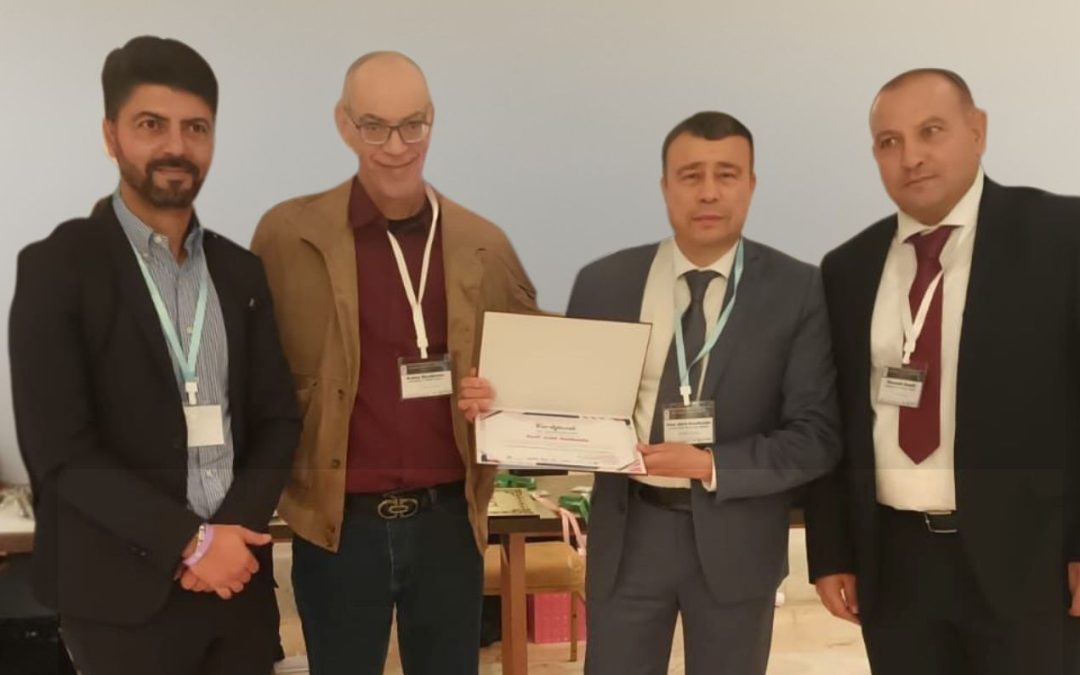
Professor Adel Bouhoula, Head of the Computing Department at Arabian Gulf University (AGU), represented the university at the International Conference on Recent Advances in Mathematics and Informatics (ICRAMI 2025), recently held in Tunisia. He was the keynote speaker from the Arab world, among four distinguished keynote speakers representing leading researchers from the United States, Spain, and France.
In his keynote address, titled "Developing Automated Verification Techniques for Designing Secure and Reliable Systems in Critical Fields" Prof Bouhoula reviewed over three decades of intensive research in the development of secure and reliable digital systems. He also showcased his pioneering research project aimed at creating an advanced computing system capable of automatically verifying the integrity of critical industrial systems. This will minimise reliance on human intervention and enhance digital security standards globally.
During his presentation, Prof Bouhoula explained the primary challenge of verifying the integrity of critical systems amidst an infinite number of possible scenarios. This challenge is addressed through mathematical methods, which enable precise and comprehensive verification of system integrity, highlighting the integration of theoretical and applied sciences in developing secure systems. He stated, "Our research has led to the development of advanced technologies, resulting in international patents and numerous publications in leading scientific journals. These efforts contribute to building a safer digital society by enhancing safety and security in vital sectors such as healthcare, aviation, space, and defence."
The conference featured 117 research papers covering artificial intelligence, intelligent systems, and applied mathematics, demonstrating significant international participation and research diversity. This international engagement highlights the valuable contributions of Arab researchers to technological innovation and underscores the leadership of AGU in supporting the transition toward a safer digital society.
by ashokaib | Dec 14, 2025 | Uncategorized
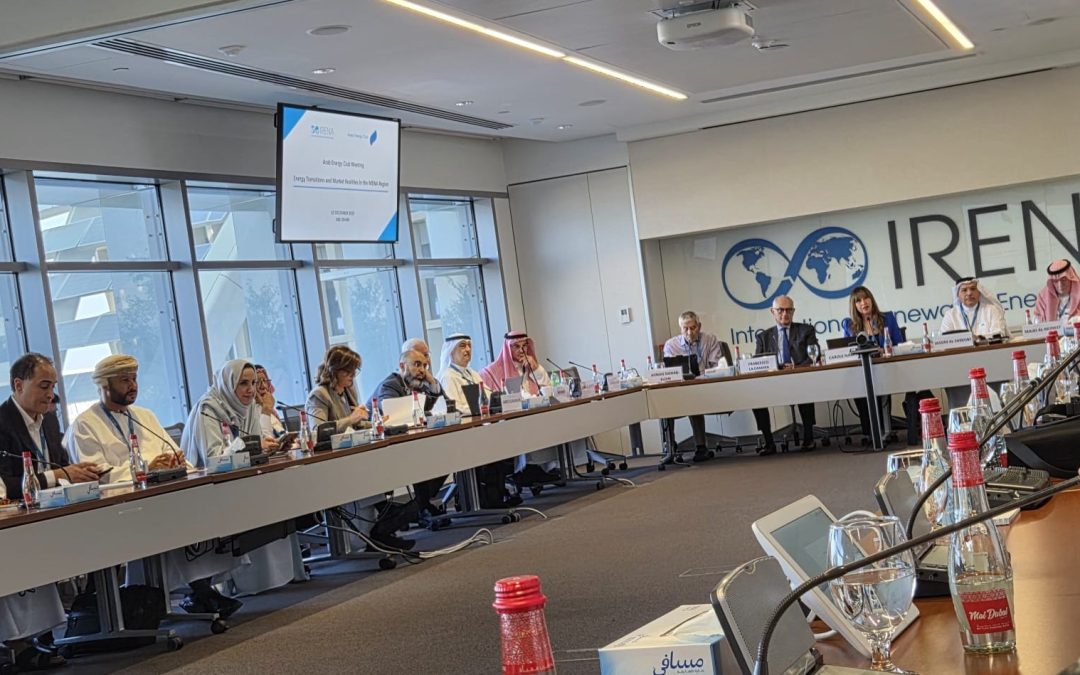
Prof Waheeb Alnaser, Professor of Applied Physics at Arabian Gulf University (AGU), participated in the Arab Energy Forum held at the headquarters of the International Renewable Energy Agency (IRENA) in Abu Dhabi. The forum brought together approximately 70 prominent leaders, decision-makers, and experts from around 18 Arab and foreign countries.
This biennial event serves as a high-level platform for dialogue and strategic discussions on the future of energy. Its sessions addressed the integration of various energy sources including fossil fuels, renewables, and nuclear energy. Discussions explored whether Arab countries can realistically achieve net-zero carbon emissions by 2060, and examined the United Arab Emirates' experience in developing four nuclear power plants, each with a capacity of 1,400 megawatts, utilising the APR-1400 pressurised water reactor system. The forum addressed the demand for oil and natural gas for energy production as well as petrochemical industries, highlighting the transition to renewable energy, which has seen a decrease in prices by over 1,000% since the 1970s, when Kuwait pioneered its usage. Discussions further covered the depletion of minerals and materials essential for green industries, the trading of carbon credits across the MENA region, and strategies to ensure energy security, sustainability, and comprehensive development in Arab nations.
The forum witnessed a rich exchange of views and experiences on the current challenges and future opportunities facing the energy sector. Emphasis was placed on adopting balanced policies that align with the global energy transition and promote integration among diverse energy sources to meet societal needs while enhancing economic and environmental stability.
Prof Waheeb Alnaser’s participation underscores the active scientific and intellectual engagement of AGU in specialised regional forums and its contributions to supporting constructive dialogue on Arab energy issues. It is worth noting that the university signed a memorandum of understanding with the forum and presented a significant lecture on the role of minerals in energy production. Bapco Energies and several institutes also participated in the event.
by ashokaib | Dec 14, 2025 | Uncategorized
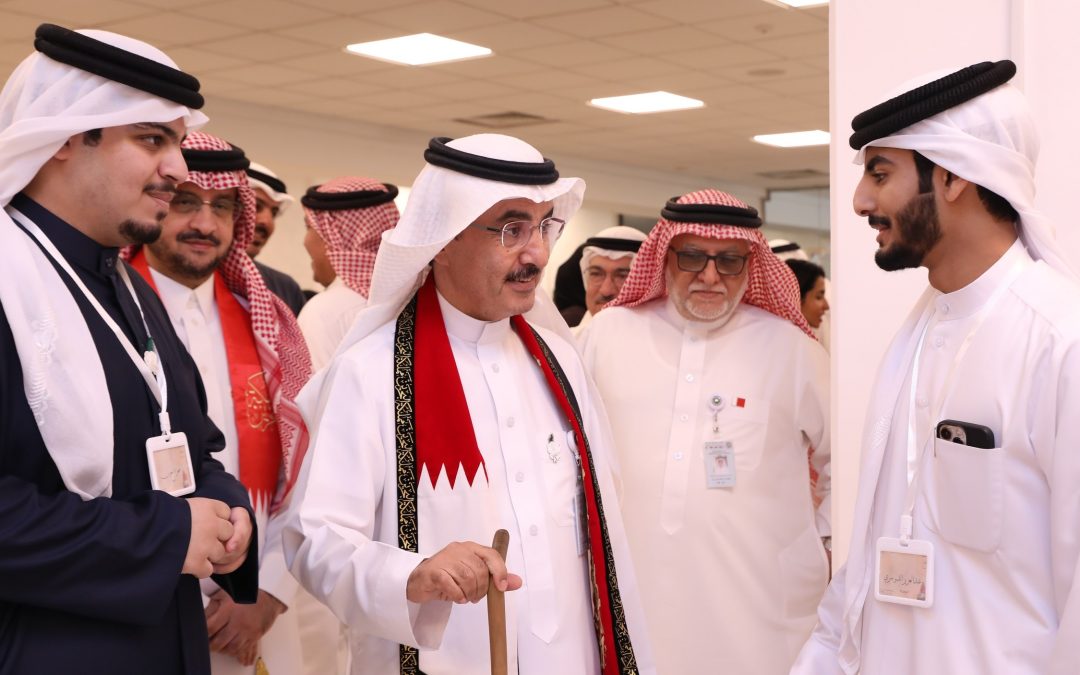
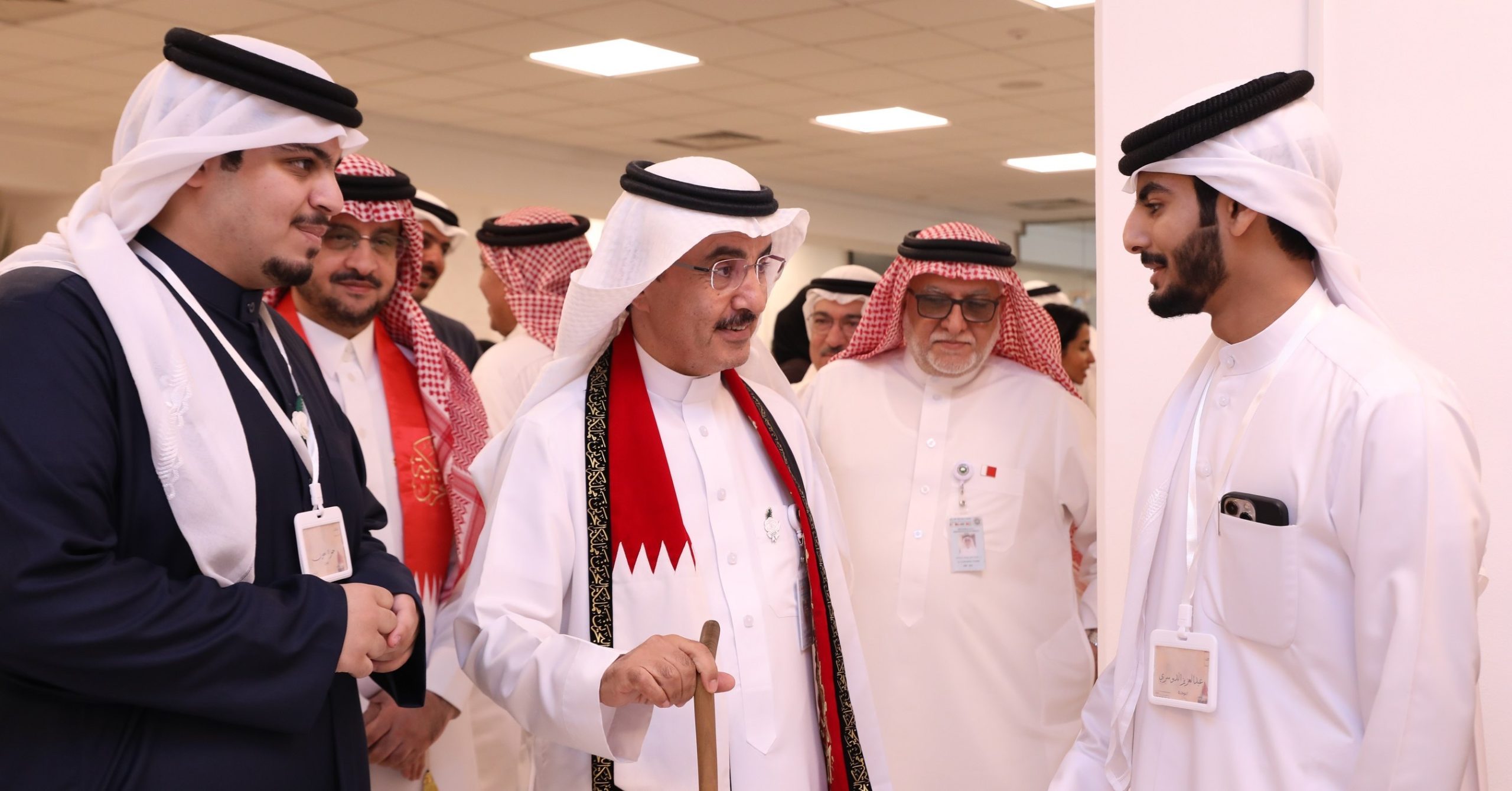
The Arabian Gulf University (AGU) observed the National Day of the Kingdom of Bahrain with a vibrant celebration that witnessed wide participation from university leaders, faculty, administrative staff, Bahraini students, and their Gulf peers. Held at the university's Salmaniya campus, the event evoked a patriotic atmosphere reflecting pride in Bahrain’s rich history and ongoing development.
His Excellency Dr Saad bin Saud Al Fuhaid, President of AGU, delivered a speech expressing pride in Bahrain’s standing and its developmental journey, stating, “On this National Day, I proudly salute a nation with a visionary outlook and significant impact that has shaped its development through wise leadership and dedicated citizens, becoming a beacon of progress in healthcare, education, and innovation.”
On behalf of the university community, Dr Al Fuhaid extended heartfelt congratulations to His Majesty King Hamad bin Isa Al Khalifa and His Royal Highness Prince Salman bin Hamad Al Khalifa, Crown Prince and Prime Minister. He prayed for continued security and prosperity under Bahrain’s wise leadership and noted that the Kingdom’s support of the university embodies a clear vision that investing in human capital is fundamental for sustainable development while simultaneously strengthening Gulf unity.
In his remarks, the university president commended Bahraini graduates who have contributed to national advancement across diverse sectors. He also praised Bahraini students for their excellence and encouraged them to strive for continued achievement in shaping a bright future. He pointed out that National Day reflects the Bahraini people spirit of loyalty and determination to build and develop their homeland. He also congratulated the Bahraini leadership on the successful hosting of the 46th Gulf Summit.
The celebration featured speeches from Bahraini students, highlighting the role of youth in fostering national belonging and loyalty. The event showcased eight main sections celebrating Bahrain's history, cultural heritage, prosperous present, and promising future. These displays used interactive formats to depict Bahrain’s authentic identity and its transformations over time.
The festivities also featured food stalls highlighting Bahrain’s culinary diversity, alongside traditional dance performances by heritage troupes, which added a festive tone and showcased Bahraini folk arts in celebration of the cherished occasion.