by ashokaib | Nov 6, 2025 | Uncategorized
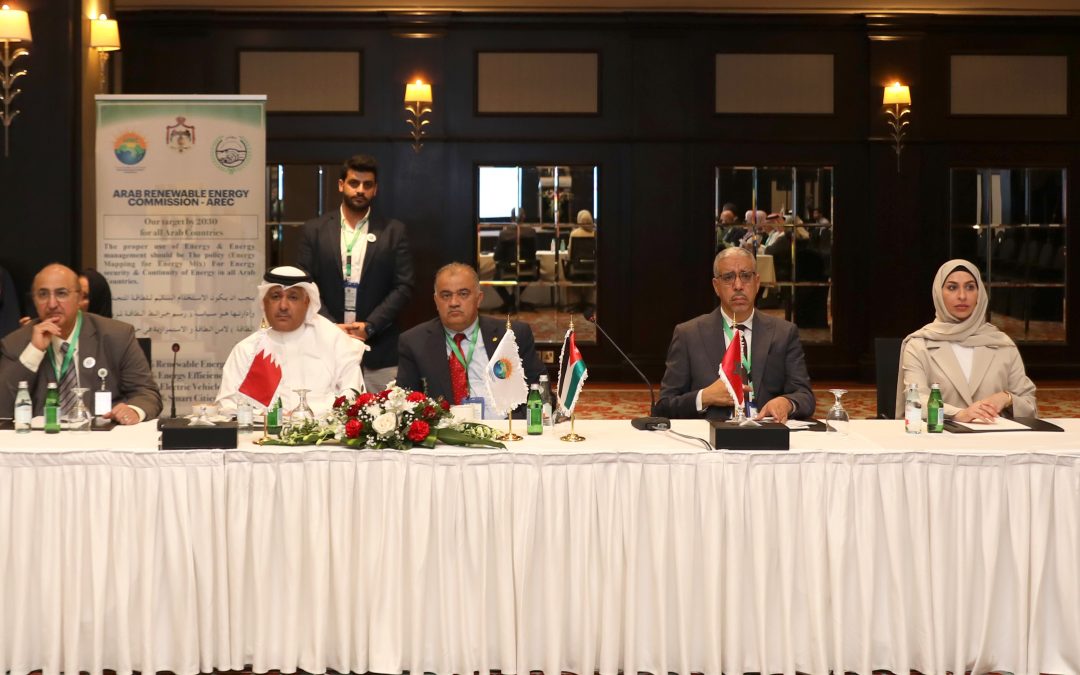
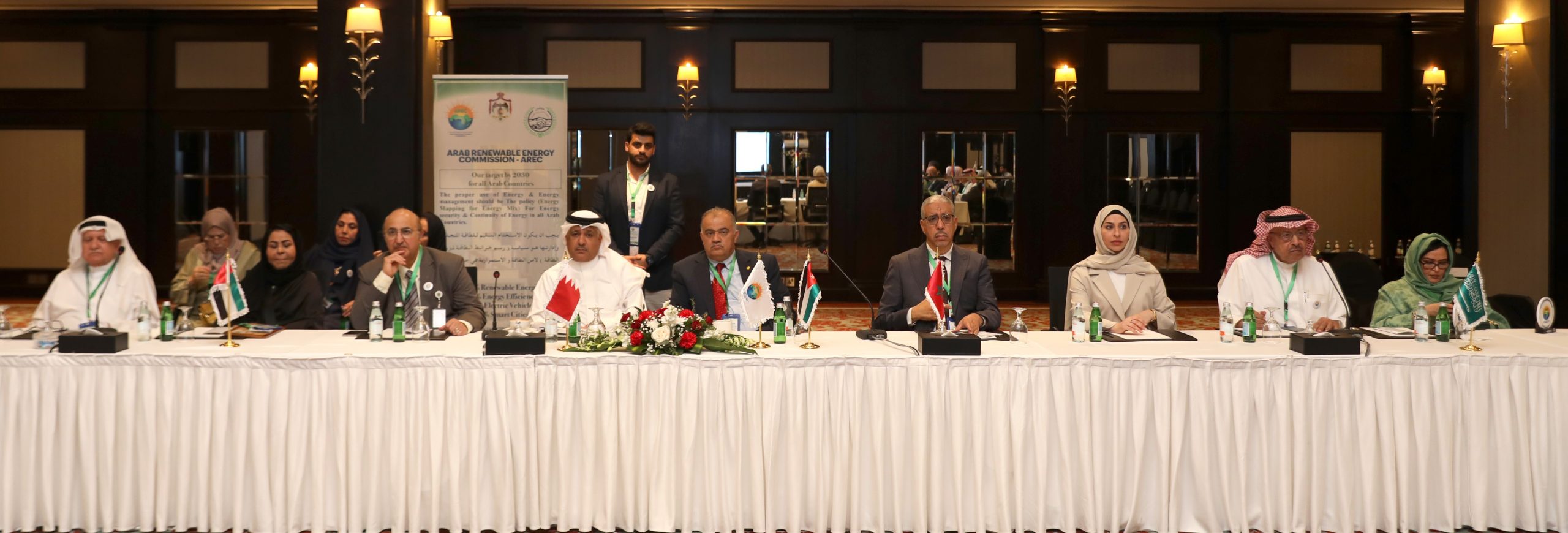
The 10th Arab Renewable Energy Forum concluded today in Manama. The three-day event was organised by the Arab Renewable Energy Commission (AREC) in collaboration with Arabian Gulf University (AGU), represented by the Shaikh Zayed bin Sultan Al Nahyan Chair for Environmental Sciences. The forum’s theme was: Towards the Launch of the Comprehensive Guide to Renewable Energy in the Arab World. It brought together distinguished officials, experts, and representatives from regional and international organisations, including the International Renewable Energy Agency (IRENA) and the World Energy Council.
During the opening session, His Excellency Eng. Kamal bin Ahmed Mohamed, President of the Electricity and Water Authority of Bahrain (EWA), underscored the forum’s significance as a leading Arab scientific platform that unites specialists and decision-makers. The event serves as a launching point for the development of a comprehensive Arab guide to renewable energy, which will act as a unified reference to support the transition to clean energy across Arab countries. He noted that the Arab region has attracted over $350 billion in investments in over 360 clean energy projects. Furthermore, EWA is working on establishing the first solar power plant in Bahrain, with a capacity of approximately 150 megawatts, as part of a strategic partnership with the private sector.
His Excellency Dr. Saad bin Saud Al Fuhaid, President of AGU, expressed pride in hosting and organising the forum, which witnessed representatives from 18 Arab countries, reflecting the spirit of Arab cooperation for a sustainable future. He highlighted the university’s ongoing support for scientific research and specialised education in clean energy, in line with Sustainable Development Goals. He also called for continued Arab collaboration to promote innovation and adoption of modern technologies in the energy sector.
In the same vein, Eng. Mohammed Al Taani, Secretary-General of AREC, affirmed Bahrain’s pivotal role in strengthening Arab cooperation in energy. He noted that Arab nations plan to invest approximately $1 trillion by 2040 in clean energy projects, smart cities, and electric vehicles. The forum reviewed several leading Arab initiatives in this field.
Over the course of three days, the forum included scientific dialogue sessions, technical presentations, and workshops focused on the latest innovations in renewable energy. Documentaries were also screened, showcasing the journey of AREC and the vision of AGU. The second day was dedicated to presenting national reports on the renewable energy status in Arab countries. The event concluded with an extensive session dedicated to the Arab guide for renewable energy, which aims to serve as a comprehensive scientific and institutional reference to foster Arab cooperation and support the region’s sustainable energy future.
by ashokaib | Nov 5, 2025 | Uncategorized
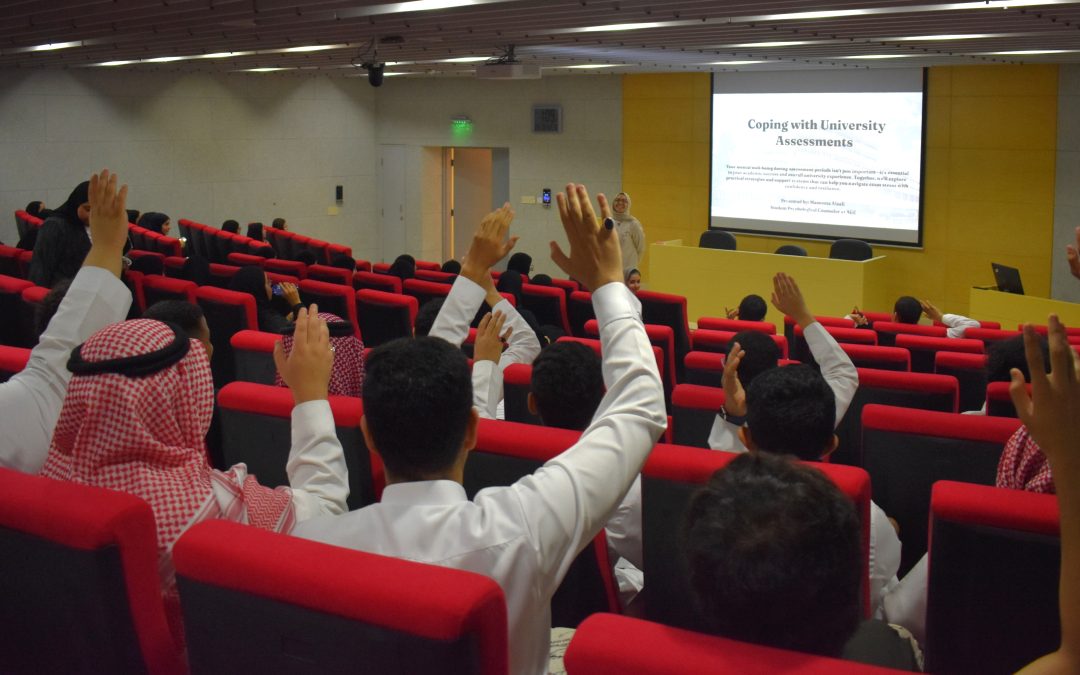
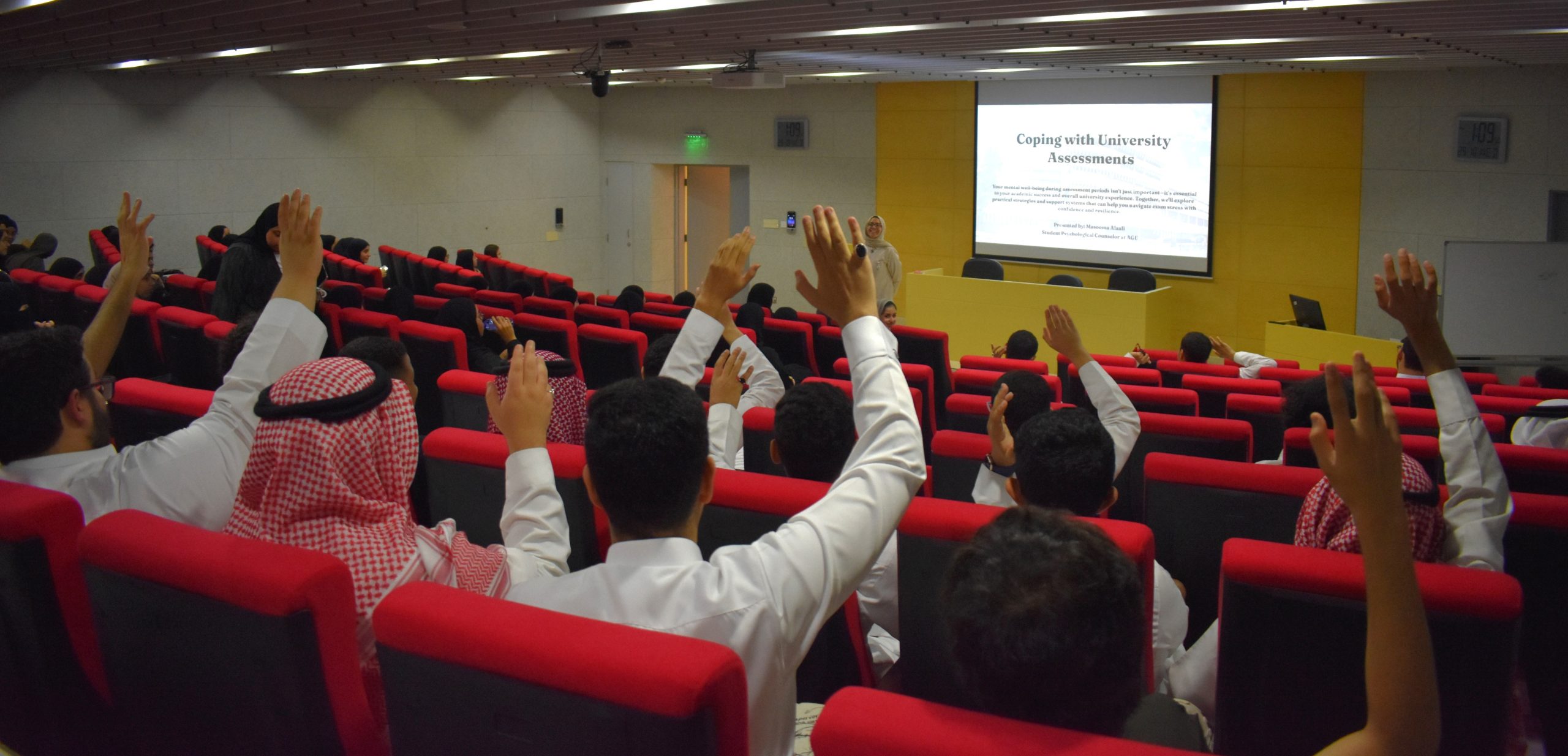
The Student Counselling Unit at the Deanship of Student Affairs at Arabian Gulf University (AGU), in collaboration with the English Language Unit, organised an interactive workshop for preparatory year students titled 'Coping with University Assessments'. The event aimed to equip students with essential tools and strategies to confidently navigate academic challenges.
The workshop focused on improving students' time management, fostering critical thinking skills, and boosting self-confidence in handling various university tests and assessments. It featured dynamic discussions and practical exercises that clarified positive and constructive approaches to handling assessments. Participants engaged actively throughout the session, achieving the workshop's objectives of enhancing academic awareness and developing personal skills.
For her part, Ms Masooma Al A'ali, Head of the Counselling Unit, highlighted the significance of such workshops in providing academic support to students. These events play a vital role in preparing students for future academic endeavours with greater success and confidence. She expressed hope that the workshop will tangibly advance students' academic performance while strengthening their ability to confront academic challenges with effectiveness.
by ashokaib | Nov 5, 2025 | Uncategorized
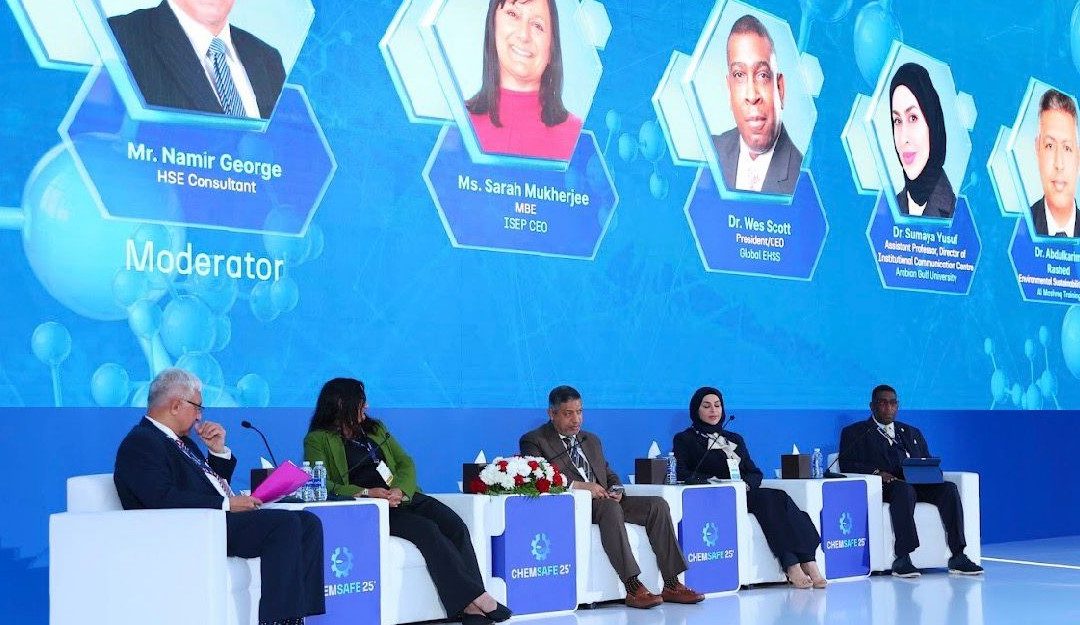
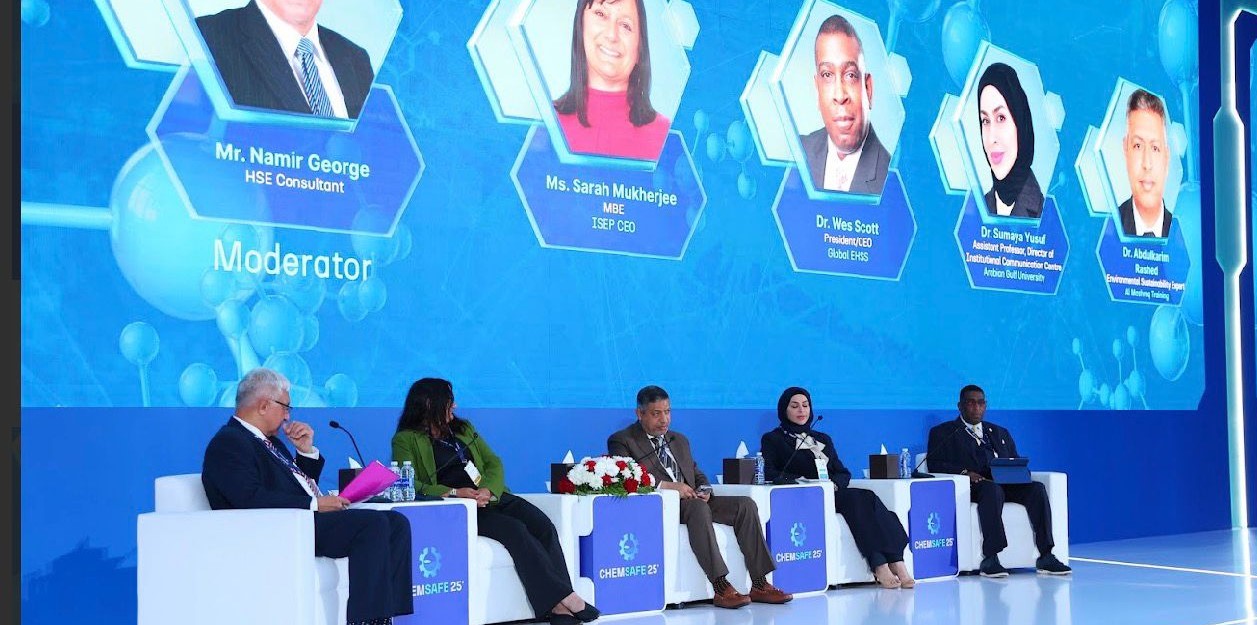
Dr Sumaya Yousif, Assistant Professor of Environmental Engineering and Director of the Institutional Communication Centre at the Arabian Gulf University (AGU), participated in the first edition of the International Conference and Exhibition on Chemical Safety (ChemSafe 2025), recently hosted in the Kingdom of Bahrain at the Gulf Convention Centre under the theme “Industrial Chemistry for a Safe and Sustainable Future”.
The event was organised by the Bahrain Chemists Society and Al Mashreq Training, in collaboration with the Ministry of Oil and Environment, and featured leading experts, decision-makers and specialists from across the world.
Dr Yousif took part as a keynote speaker in a session focused on chemistry and environmental sustainability, where she discussed the role of sustainable integrated management of resources and wastes, particularly toxic and hazardous chemicals, in ensuring and enhancing safety and security in workplace environments, especially in industrial settings.
She underscored the importance of well-defined and precise emergency response plans to address potential pollution incidents and chemical or hazardous spills, highlighting the need for effective crisis management to minimise harm to people, property, and the environment.
Moreover, Dr Yousif further emphasised the pivotal role that academic, research, and educational institutions play in supporting development, capacity-building, and progress within the industrial sector, particularly in the management of resources and hazardous materials and wastes. She also pointed out the importance of establishing scientifically grounded plans for crisis management and emergency response in this critical field.
Dr Yousif stressed the need to adopt sustainable consumption patterns across all sectors and to embrace a sustainable lifestyle based on prevention and reduction of waste generation and its harmful impacts. She also underlined the significance of applying the principles of the circular economy, shifting away from resource-depleting linear production systems by using outputs as inputs for new production processes, thereby conserving natural resources, reducing production costs, and minimising waste and related risks from unsafe disposal.
The Arabian Gulf University continues to serve as a strategic partner to numerous leading industrial enterprises in the region, being recognised as a centre of expertise in management, environmental sciences, and sustainability studies. It is also regarded as a regional hub for research, education, and capacity-building across diverse environmental fields, including water resources management, waste and resource management, renewable energy, environmental sciences, and environmental biotechnology, while increasingly integrating artificial intelligence technologies to support these vital sectors.
The conference aimed to highlight the latest international standards and practices in the field of chemical safety and to promote a culture of prevention and protection in handling hazardous materials. Its programme included a series of scientific sessions and specialised workshops with the participation of more than 60 international experts representing global organisations and leading companies in the field.
The event addressed key themes relevant to industry and safety in the region, such as safety leadership, chemical and process safety, risk management, emergency and major incident response, human and behavioural factors in safety management, environmental sustainability and resource protection in the chemical industries, as well as laboratory and facility security and safe handling of hazardous materials.
The accompanying exhibition featured participation from over 15 countries, represented by specialised institutions and companies showcasing the latest solutions, technologies, and services in chemical and industrial safety. The exhibition sought to highlight new innovations and foster collaboration between the public and private sectors to promote a culture of safety and the implementation of best global practices in this vital field..
by ashokaib | Nov 5, 2025 | Uncategorized
Dr Reem Al Ansari, Director of the Medical Skills and Simulation Centre and Assistant Professor of Medical Education at the College of Medicine and Health Sciences at the Arabian Gulf University (AGU), participated as a keynote speaker in the closing session of the first Innovation and Entrepreneurship Conference organised by King Abdulaziz University, recently held at the King Faisal Conference Centre in Jeddah.
The closing session brought together a distinguished group of leaders and thinkers in higher education, health innovation and public–private sector collaboration, to exchange insights on the future of education and innovation in the Arab world.
During her address, Dr Al Ansari discussed how simulation-based education has become a transformative platform for innovation, leadership development and system advancement. She highlighted that the essence of real transformation lies not only in technology, but also in the solid scientific foundations and well-established principles of medical education that move learners from the stage of knowledge acquisition to that of experiential learning, through reflection, feedback and repeated practice.
Dr Al Ansari further emphasised the importance of aligning the goals of educational institutions with national healthcare systems, both public and private, and with community needs, to ensure a comprehensive vision for development and sustainable impact. She explained that when simulation is integrated within such a holistic framework, it evolves from a mere training tool into a strategic leadership approach capable of driving real and lasting institutional change.
She concluded by affirming that AGU’s participation in this event reflects its strategic direction towards experiential learning and interdisciplinary integration, reinforcing its position as a regional centre of excellence in education, innovation, and leadership within the healthcare field.
by ashokaib | Nov 5, 2025 | Uncategorized
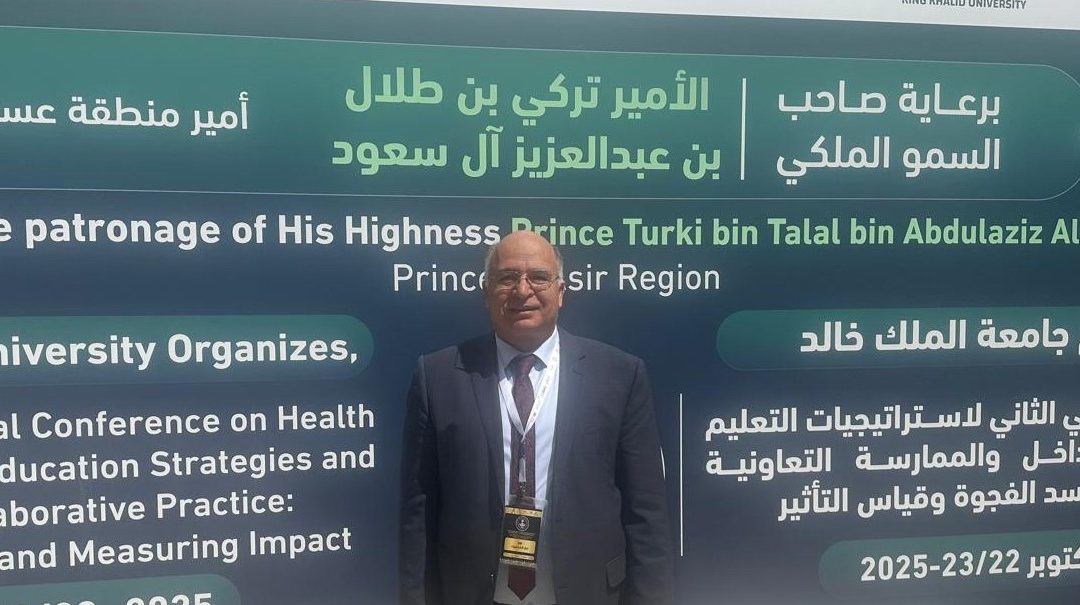
Professor Abdelhalim Deifalla, Dean of the College of Medicine and Health Sciences at Arabian Gulf University (AGU), participated in the Second International Conference on Interprofessional Health Education Strategies and Effective Collaborative Practice, recently held under the theme: “Bridging the Gap and Measuring the Impact.” The conference was organised by the College of Medicine at King Khalid University in the Kingdom of Saudi Arabia, in collaboration with the Arab Network for Interprofessional Collaboration and the Saudi Society for Medical Education.
The event gathered deans of medical colleges from GCC countries and Saudi universities, besides international medical education experts and leading clinical practitioners. Its goal was to promote interprofessional health education, strengthen collaborative practice, and improve health and academic system outcomes. The conference featured 30 lectures and four training workshops. Key themes included modern trends in interprofessional health education, governance and accreditation, establishing health excellence institutes, regional integration for healthcare team training, the role of AI in enhancing professional collaboration, and approaches to designing healthcare team-based educational systems.
Participating deans and medical education specialists concluded with several scientific recommendations, notably: the establishment of a Centre of Excellence for Interprofessional Health Education; raising awareness about the importance of integrated health education and collaboration among health colleges; developing integrated curricula stressing practical skills and communication among medical teams; employing modern technology and AI in virtual simulation to enhance interactive learning and provide realistic training environments for students. They also highlighted the importance of supporting research and innovation in health education.
Moreover, they called for the encouragement of joint research and development projects that enhance healthcare quality, training medical personnel in teamwork, in addition to continuous evaluation and updating of curricula to align with scientific advancements and community needs.