by ashokaib | Sep 29, 2025 | Uncategorized
Arabian Gulf University (AGU) is set to host the "International Forum for the Development of University Education Programs in Arab States in Light of Future Skills and Professions," organised in collaboration with the UNESCO Regional Centre for Quality and Excellence in Education. The event scheduled for 2-3 December aims to explore mechanisms and visions for advancing university education to align with future transformations in the Gulf region and the Arab world.
The forum will feature a comprehensive agenda of scientific sessions and workshops, engaging a distinguished group of regional and international officials and experts. The first day will commence with an opening session, including official remarks and an introductory film, followed by a key session presenting the reference framework for developing university education programmes.
High-level discussions will include participation from Arab higher education ministers, who will address the future of university education amid contemporary challenges and evolving trends. Representatives from prominent regional and international organisations such as UNESCO, ISESCO, ALECSO, and the Association of Arab Universities are also expected to contribute.
The forum will discuss vital topics related to digital transformation and artificial intelligence in education, the future of academic specialisations, and academic accreditation in light of technological changes. International speakers from the World Bank, Harvard University, and other esteemed institutions will participate.
The first day will showcase presentations of Arab and international initiatives in modernising university education covering applied universities, competency-based learning, and the integration of education with innovation and the knowledge economy. The second day sessions will focus on the role of universities in achieving sustainable development goals, fostering partnerships with the labour market, exploring innovative financing models, and activating the Arab reference framework for university development. Discussions will also highlight the role of community partnerships between higher education institutions and various sectors in supporting sustainable development and the 2030-2060 visions of Arab states.
Practical workshops will run concurrently with the forum on anticipating future professions, employing AI in academic program design, and integrating future skills into curricula.
by ashokaib | Sep 29, 2025 | Uncategorized
The College of Education, Administrative and Technical Sciences, in collaboration with the AGU Centre for Consultancy and Training, has launched the Professional Diploma in Cybersecurity Technologies, the first academic programme in the region to integrate Artificial Intelligence (AI) with cybersecurity.
The programme aims to bridge the skills gap in the field of information and digital systems protection, in response to the accelerating digital transformation across GCC countries. It reflects AGU’s commitment to supporting the GCC’s vision to enhance digital infrastructure and safeguard information assets against the rising tide of cyber threats.
Prof. Adel Bouhoula, Head of the Computing Department and Professor of Computer Science, Cybersecurity and AI at AGU, stated that the launch of this diploma seeks to equip participants with the skills to apply the latest AI technologies, enabling them to understand and learn the mechanisms used by hackers to proactively detect cyber threats.
He added: “The programme will explore cutting-edge blockchain technologies and their applications in strengthening digital security infrastructures. It will also cover ethical hacking practices and their vital role in proactively identifying vulnerabilities before they are exploited by malicious actors. Furthermore, the programme will address the transformative impact of quantum computing on cybersecurity, focusing on the risks posed by quantum computers to existing encryption systems, post-quantum resistant algorithms, and strategies for readiness in the post-quantum era.”
Prof. Bouhoula noted that launching this programme responds to the labour market’s demand for up-to-date and specialised skills in the field of cybersecurity.
The diploma targets graduates in cybersecurity, information technology, and computer science, as well as professionals in digital security across the public and private sectors. It also caters to specialists in IT, telecommunications, banking, and government services, alongside recent graduates seeking to specialise in cybersecurity.
Delivered through a blended learning model combining in-person attendance and online learning, the programme will run for six months, totalling 180 training hours.
Admission requirements include holding a bachelor’s degree in computing or related disciplines, in addition to successfully passing an interview. The programme is scheduled to commence in December, under the supervision of a distinguished group of local and international professors.
It is worth noting that the Arabian Gulf University is a regional institution dedicated to developing high-calibre skills and competencies that serve GCC societies across various fields. The University contributes to sustainable development and the realisation of GCC visions through a wide range of innovative and unique professional diploma programmes, characterised by flexibility, quality, and international accreditation from globally recognised organisations and institutes.
by ashokaib | Sep 29, 2025 | Uncategorized
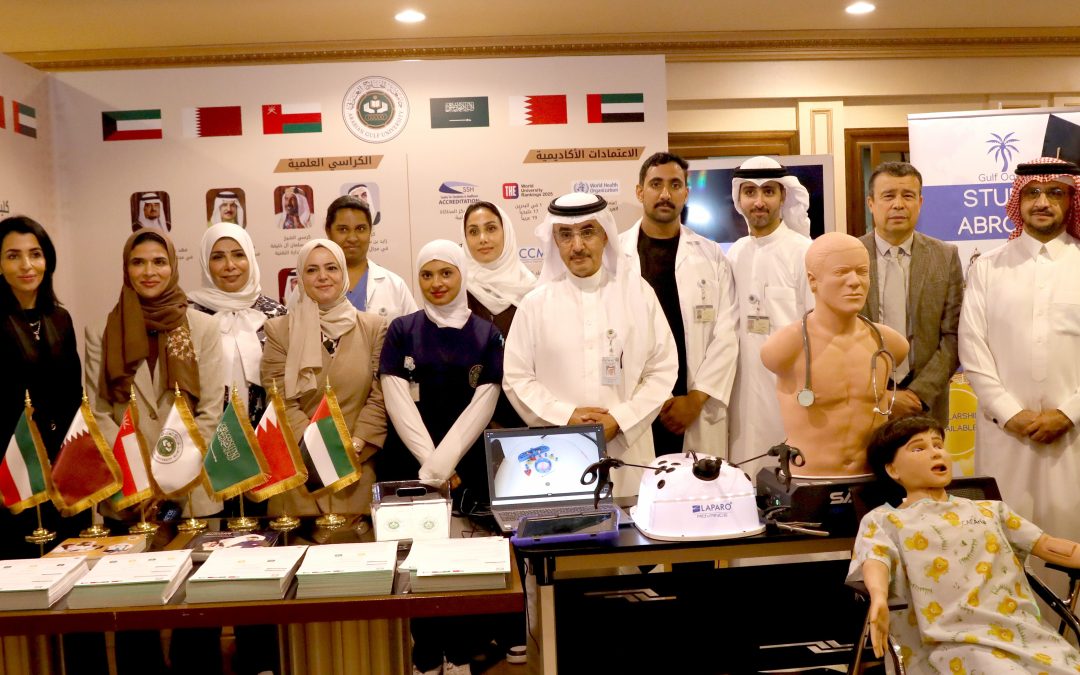
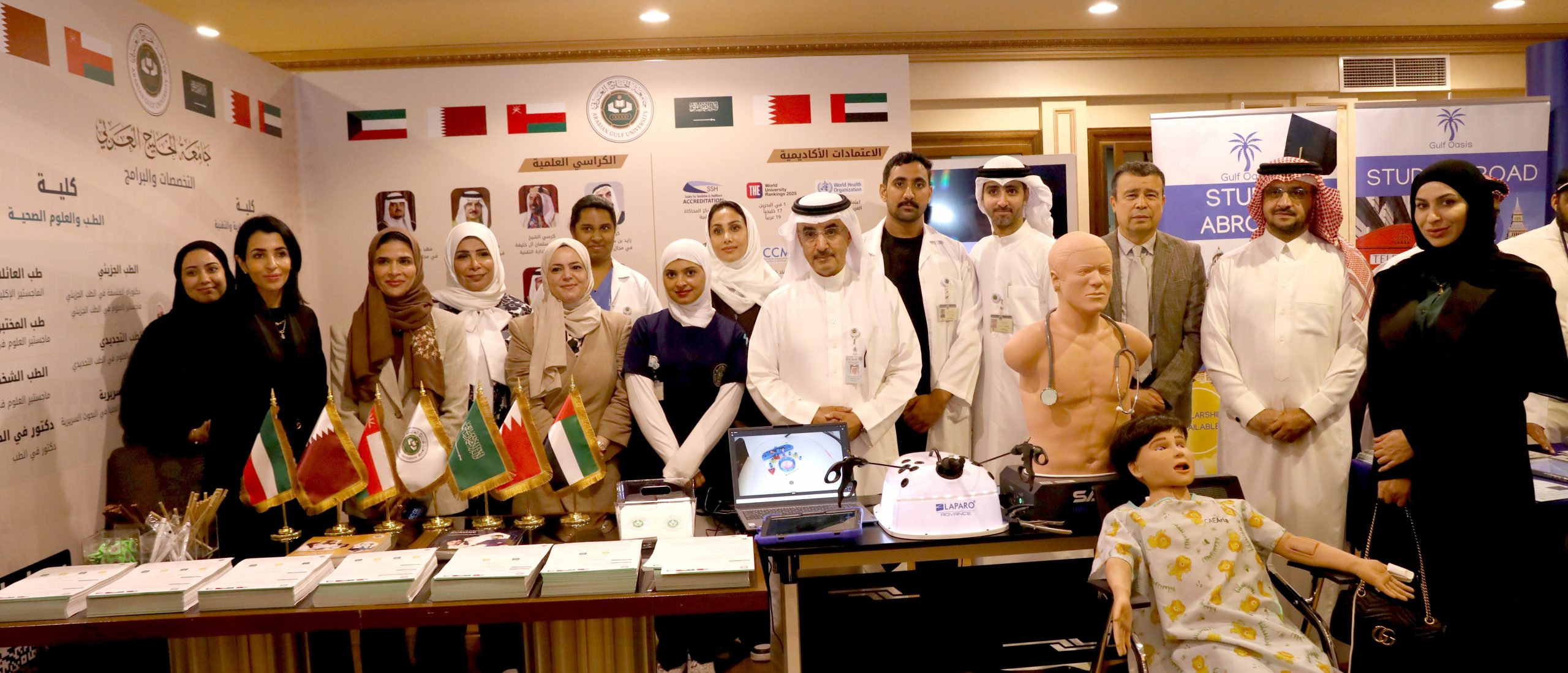
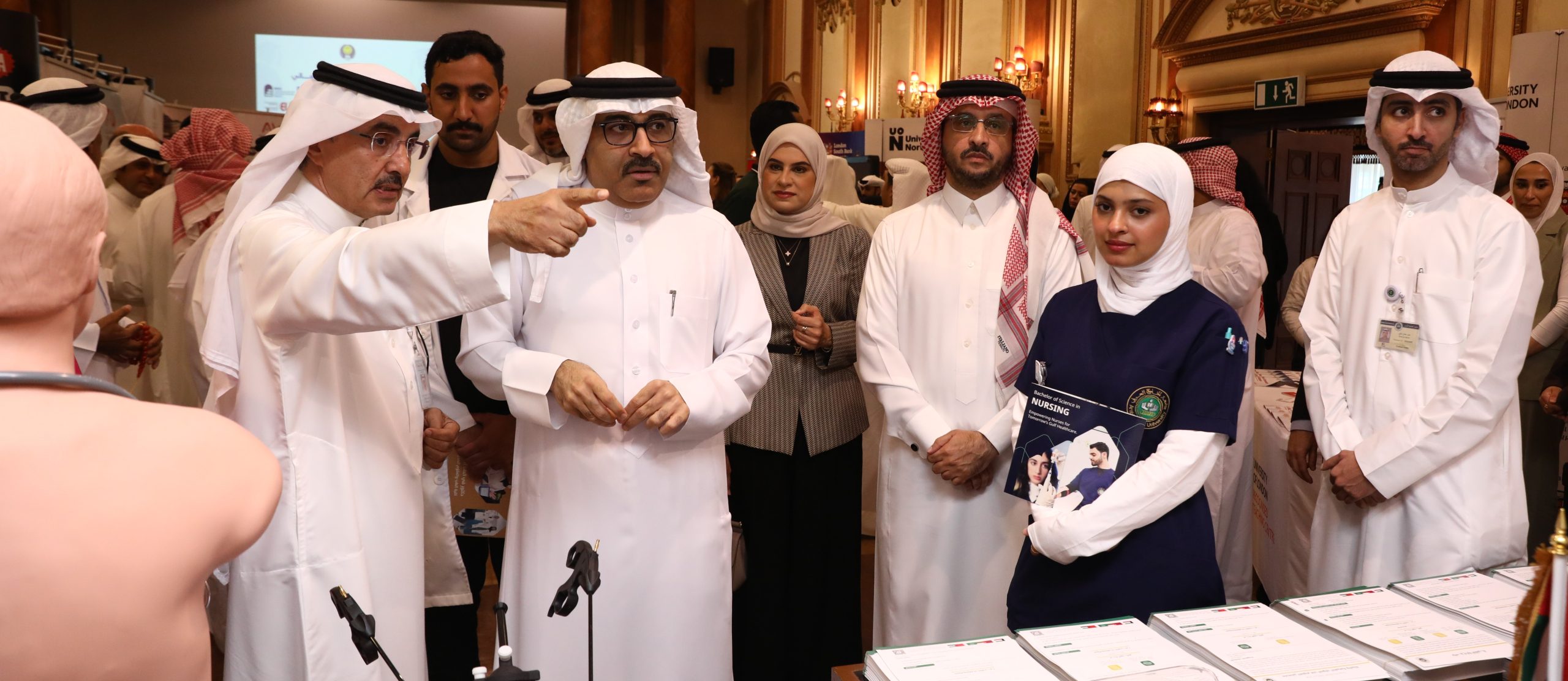
The Arabian Gulf University (AGU) participated in the Higher Education Exhibition 2025, inaugurated this morning (Sunday) by His Excellency Dr Mohammed bin Mubarak Juma, Minister of Education and Chairman of the Higher Education Council Board of Trustees, at the Alumni Club in Adliya. The exhibition witnessed the participation of a distinguished group of universities and educational institutions from across the Kingdom of Bahrain.
On this occasion, His Excellency Dr Saad bin Saud Al Fuhaid, President of the Arabian Gulf University, stated: “Our participation in higher education exhibitions forms part of the University’s strategy to directly engage with students and parents in the Kingdom of Bahrain and across the GCC countries. It serves to introduce them to our latest innovative academic programmes and educational initiatives. Such events offer an excellent opportunity to exchange expertise and explore new horizons for higher education.”
“They also contribute to supporting national development goals by preparing a distinguished generation capable of facing future challenges, with a solid understanding of the specialisations that will be in demand in the Gulf labour market over the coming years,” he added.
University fairs serve as a platform enabling students and parents to gain direct access to higher education options available locally, regionally, and internationally. They also allow them to learn about academic programmes, diverse educational opportunities, and emerging disciplines that meet the evolving needs of the labour market, all in one venue that brings together representatives from universities and higher education institutions.
by ashokaib | Sep 22, 2025 | Uncategorized
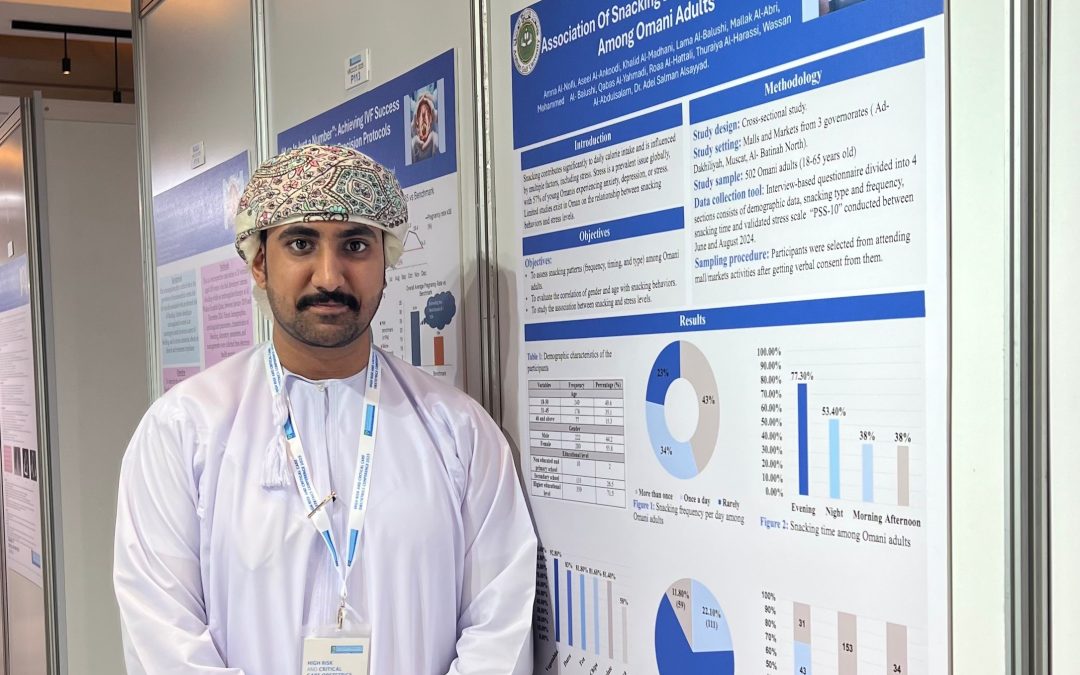
Mr Mohammed Abdullah Al Balooshi, a fifth-year medical student at the College of Medicine and Health Sciences at the Arabian Gulf University (AGU), took part in a student research team at the 2025 High Risk and Critical Care Obstetrics Conference. The event was recently held at Le Royal Méridien Place Vendôme, Lusail, in the Qatari capital Doha, with the participation of experts, researchers and specialists in healthcare from across the globe to explore the latest advances in obstetrics, gynaecology and the management of high-risk pregnancies and childbirth.
During his participation, Mr Al Balooshi presented the findings of a study in a research poster entitled: “The Association between Snacking Behaviours and Stress among Adults”. The study revealed that snacking is a common behaviour among Omani adults, with 43.4% of participants reporting consuming snacks more than once daily, particularly in the evening (77.3%) and at night (53.4%).
The findings indicated that fruits and vegetables were among the most preferred healthy options, while Omani sweets were among the most popular traditional snacks. The study also showed high levels of stress among participants, with 66.1% reporting moderate stress and 11.8% reporting high stress. Financial pressures were identified as the most common cause of stress (58.6%).
The study found a clear association between higher stress levels and increased frequency of snacking. Individuals who consumed snacks more than once a day were 57.6% more likely to report high stress. These findings highlight the importance of raising health awareness, encouraging the adoption of effective stress management strategies and committing to healthy dietary choices.
The study was supervised by Dr Adel Al Sayyad, Consultant in Epidemiology and Public Health and Head of Disease Control at the Public Health Directorate, Ministry of Health. The research team was led by student Ms Lama Khalid Al Balooshi, and included Ms Amina Al Nofli, Ms Malak Al Abri, Ms Qabas Al Yahmadi, Ms Thuraya Al Harrasi, Ms Aseel Al Anqoody, Ms Wasan Al Abdulsalam, Ms Roaa Al Hatali, and Mr Khalid Al Madhani.
by ashokaib | Sep 22, 2025 | Uncategorized
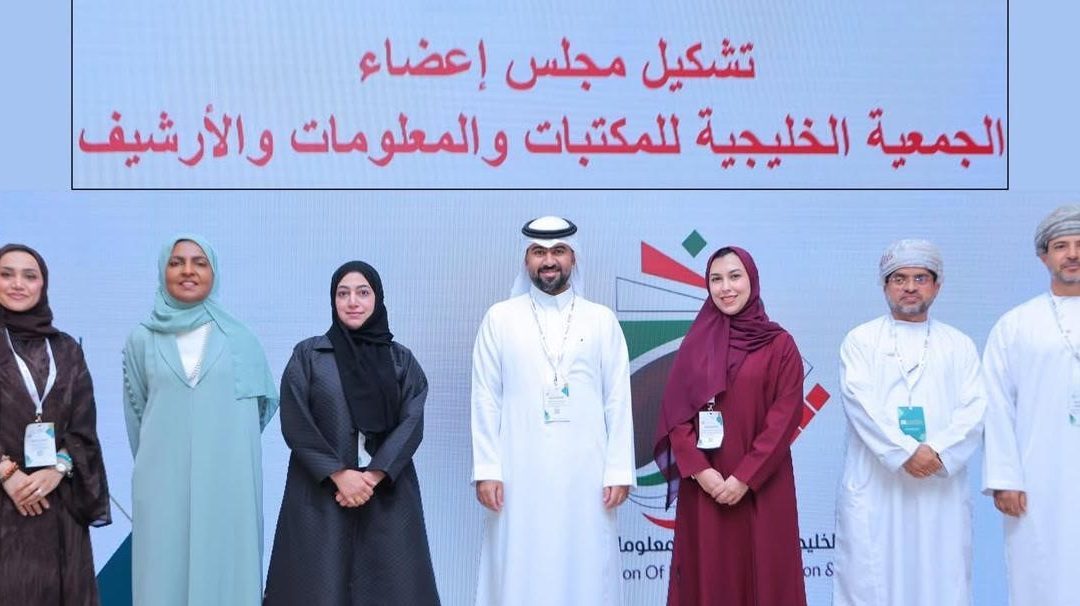
Ms Athraa Al Alawi, Library Director of Arabian Gulf University (AGU), has been elected as a representative of the Kingdom of Bahrain to the Board of Directors of the Gulf Association for Libraries, Information, and Archives (GALIA). This milestone was announced during the 28th Conference of the Special Libraries Association – Arabian Gulf Chapter (SLA-AGC), held in Jeddah in collaboration with the Libraries Commission of the Saudi Ministry of Culture. The theme of the conference was “Towards the sustainability of knowledge and the preservation of culture and heritage: Managing rare documents, manuscripts and heritage materials in the era of emerging technologies and artificial intelligence.”
Al Alawi expressed her dedication to supporting GALIA's initiatives and the advancement of professional practices and academic standards. She affirmed that libraries, information, and archives are vital pillars of the knowledge industry, fostering scientific research and innovation in alignment with the requirements of sustainable development.
GALIA is a specialised professional platform, established following the approval of the General Assembly to dissolve the SLA-AGC with the goal of unifying scientific efforts while strengthening the sector's presence at regional and international levels.
The three-day conference reviewed over 80 scientific and research papers across 19 sessions. The event concluded with key recommendations, including: integrating AI applications in the management of rare documents and analysis of historical texts; encouraging investment in emerging technologies to support libraries and heritage preservation; promoting sustainability initiatives and digital transformation in information institutions; and establishing governance frameworks and policies for the sector.