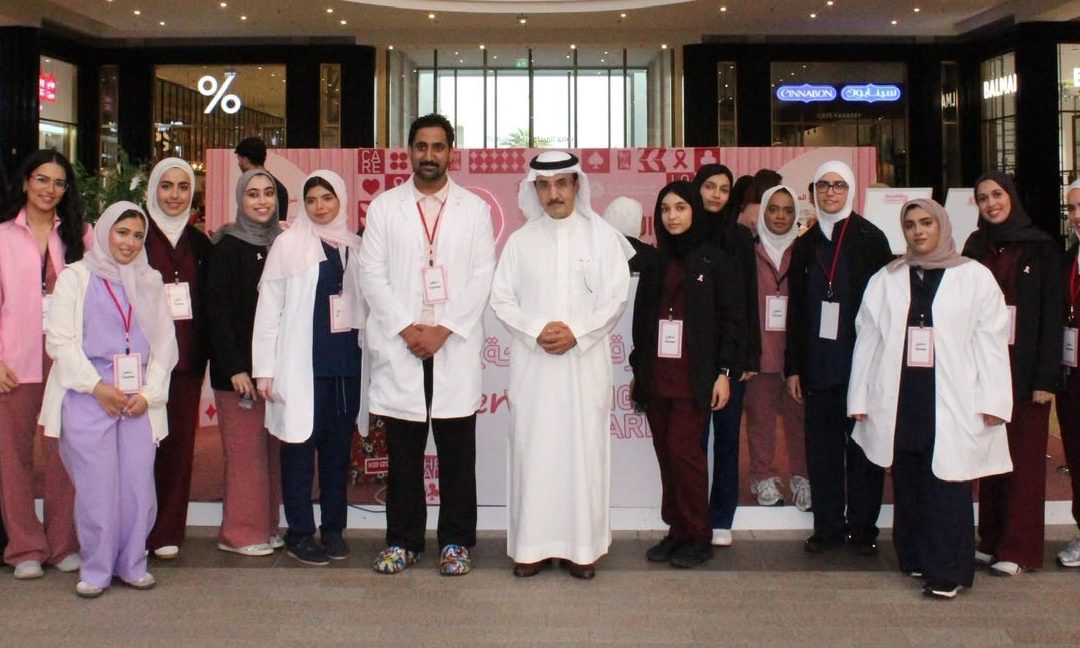
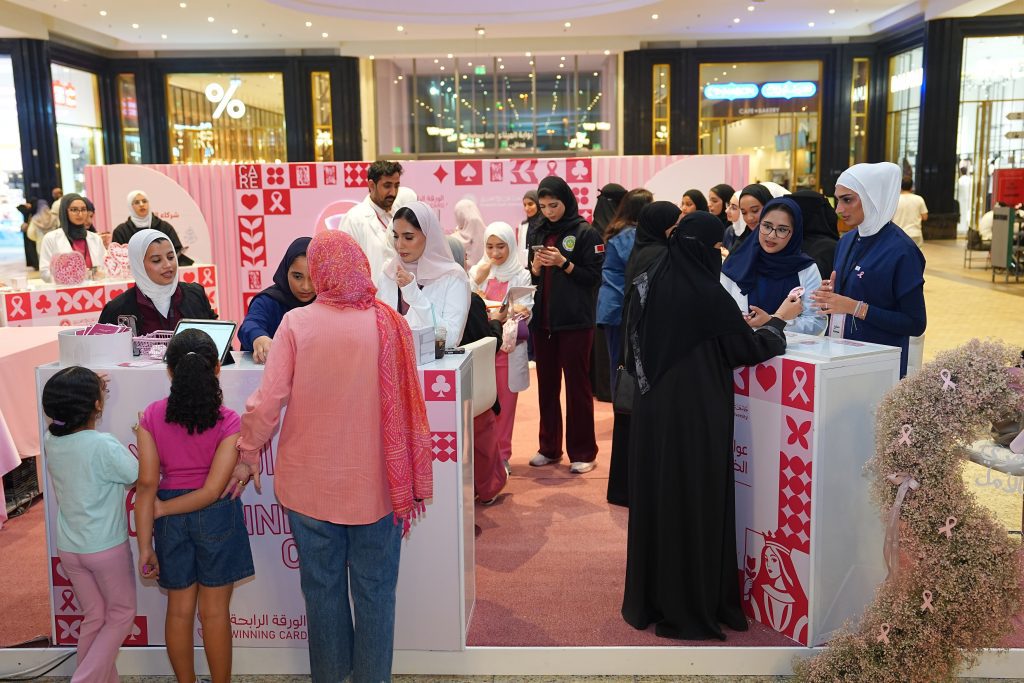
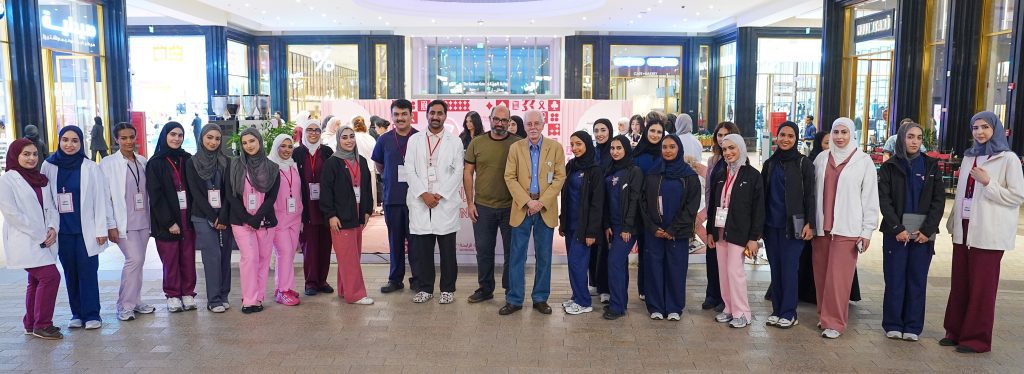
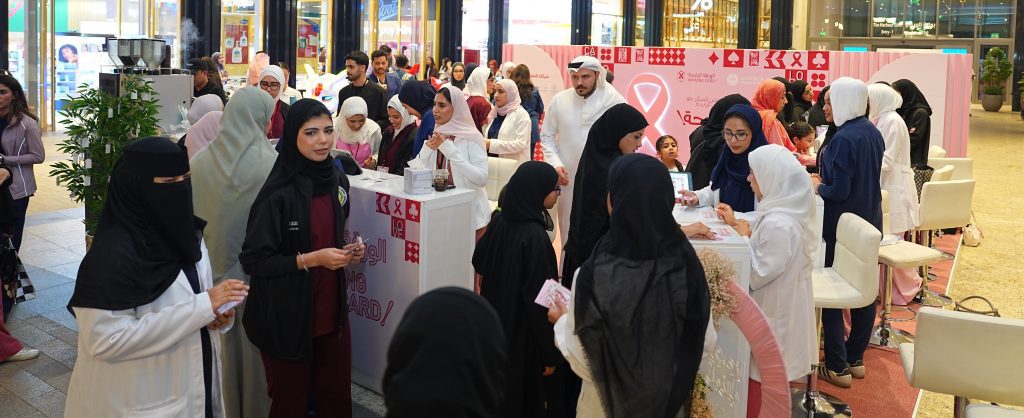
Students from the College of Medicine and Health Sciences at Arabian Gulf University launched a breast cancer awareness campaign at The Avenues Mall in the Kingdom of Bahrain under the slogan “The Winning Card: Early Screening Is Your Winning Card,” coinciding with October, Breast Cancer Awareness Month.
The campaign, attended by the University President Dr. Saad bin Saud Al Fahaid, was carried out under the administrative supervision of the Activities Unit and the Student Council at the Deanship of Student Affairs, while Dr. Ashraf Al-Shayeb from the Department of Surgery at the College of Medicine and Health Sciences oversaw the scientific content, which focused on raising awareness about breast cancer, explaining its associated risk factors, emphasizing the importance of early detection, and providing simplified and interactive educational messages to help enhance students’ health awareness. The initiative reflects the university’s commitment to strengthening its role in the community and leveraging its students’ knowledge and skills to promote a culture of health, with a focus on the importance of early detection in improving treatment and recovery outcomes.
The campaign welcomes the public at an awareness booth located at Gate 1 of the mall, where visitors can learn about breast cancer, its risk factors, and the importance of early detection through direct interaction and simplified, interactive educational messages.
The initiative reflects the university’s commitment to strengthening its role in the community and leveraging its students’ knowledge and skills to promote a culture of health, with a focus on the importance of early detection in improving treatment and recovery outcomes.
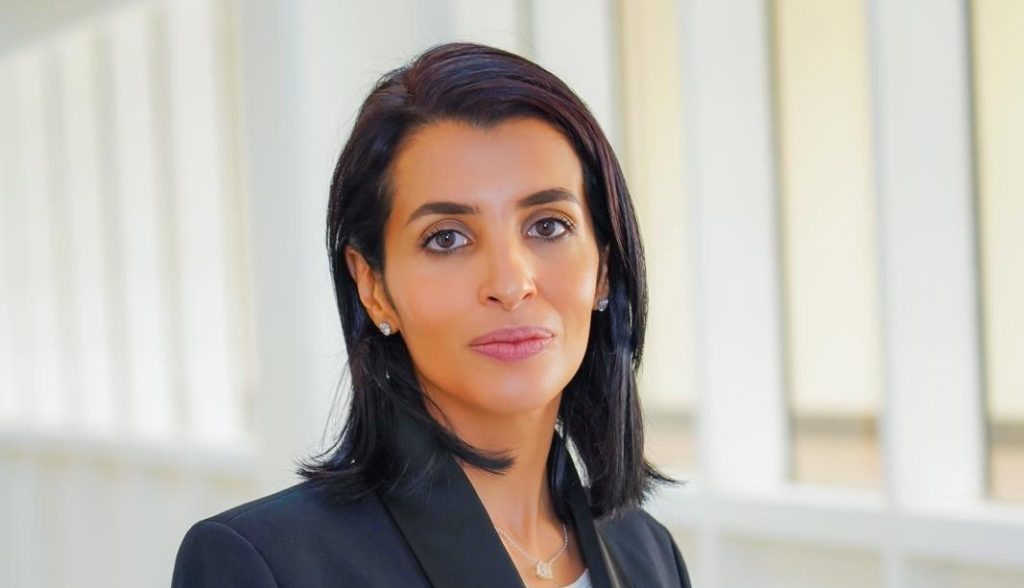
Dr. Aseel Al-Saleh, Dean of Student Affairs at Arabian Gulf University, emphasized that student participation in these initiatives reflects young people’s role in serving the community and their ability to apply their knowledge and skills to issues affecting human health and quality of life. She noted that responsibility for health is not limited to medical institutions but requires the concerted efforts of educational institutions, families, and various segments of society.
For her part, Fatima Al-Sanawi, a student representing the organizing team, said: “We chose the slogan ‘The Winning Card’ because we believe that awareness is the first step toward protecting life, and that early screening is not merely a medical procedure, but a conscious decision that can give a person a better chance for peace of mind and early intervention in the face of illness. Through this initiative, we hope to convey a clear message to every woman: that her health deserves attention, and that taking the time for a screening can make a huge difference.”
She added: “As students, through our presence at the Avenues Mall, we seek to reach the widest possible segment of the community and transform awareness from mere information into a culture and part of daily behavior. We also hope this campaign will serve as a space for dialogue and the exchange of knowledge, breaking down barriers associated with fear or hesitation about getting screened.”
The student team aims to create an impact that extends beyond the days of the campaign by fostering health awareness and encouraging community members to take practical steps to care for their health.
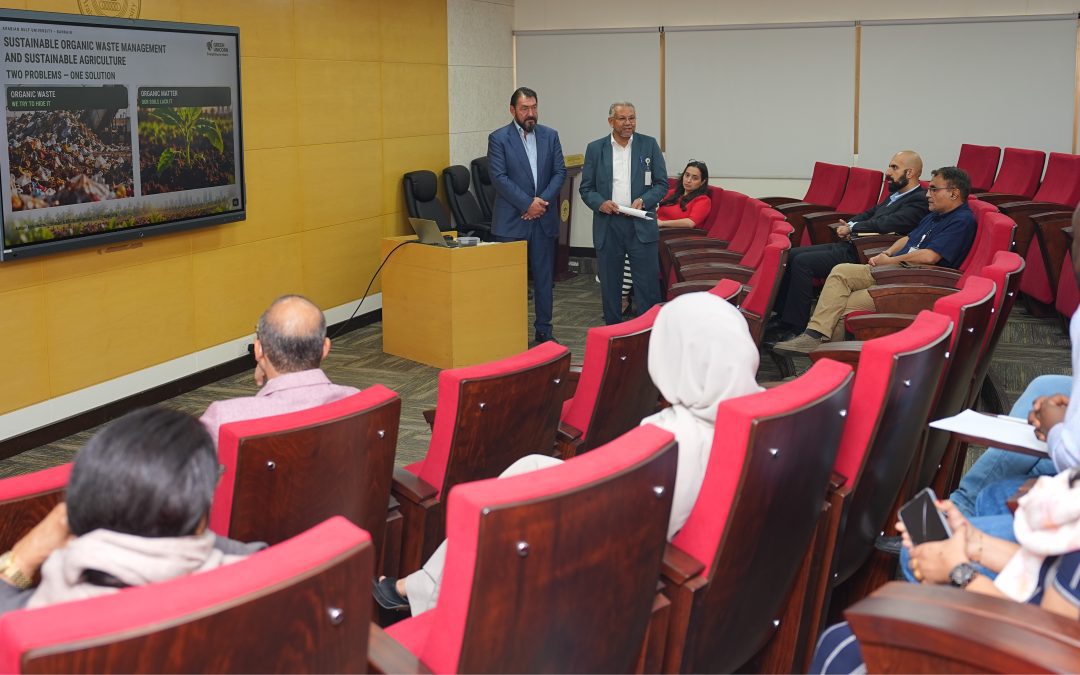
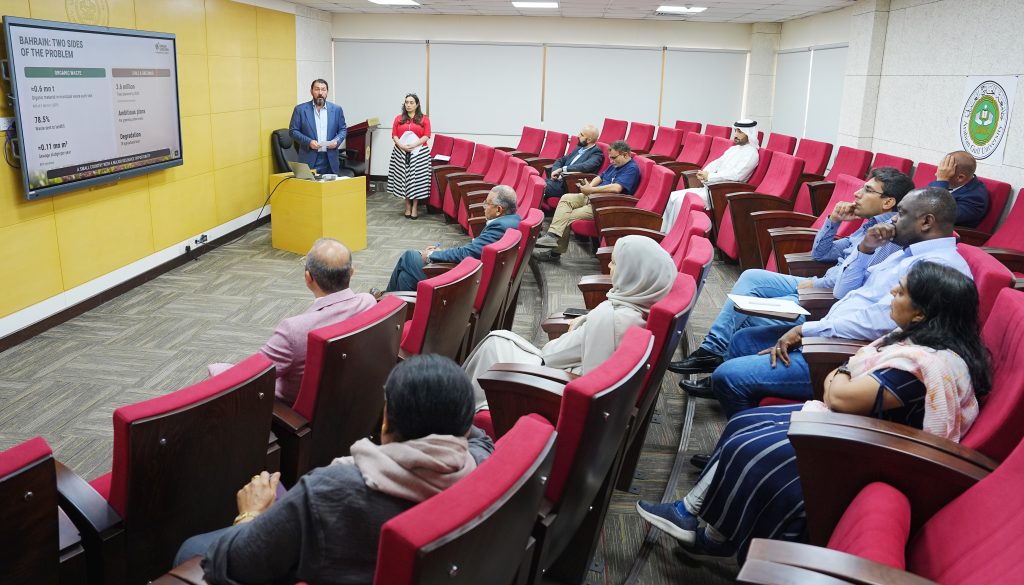
The Center for Environmental and Biological Studies at Arabian Gulf University, as part of the activities of the Sultan Qaboos Chair in Desert Agriculture and the Shaikh Zayed bin Sultan Chair in Environmental Sciences, organized a lecture on the treatment of sewage sludge and its conversion into soil suitable for agriculture. The lecture was presented by Alexandrov, founder and CEO of Green Unicorn in the Kingdom of Bahrain, who shared the company’s experience in this field. The lecture addressed the economic, environmental, and health dimensions of sludge management in the Gulf Cooperation Council (GCC) countries, in line with the Center’s focus on interdisciplinary research that integrates environmental management, water management, agriculture, food security, and waste management. This approach aims to support the sustainable management of natural resources, contribute to national plans to reduce pollution and emissions, increase green spaces, and enhance food security. The lecture reviewed the challenges facing countries worldwide—particularly GCC member states—in managing sewage sludge, given population growth and the expansion of wastewater treatment plants. It addressed four methods of sludge management: landfilling, composting, drying, and the “Green Unicorn” technology. According to the presentation, landfilling is low-cost but carries environmental risks, while composting involves moderate costs and environmental risks—the latter associated with the presence of heavy metals. Drying, on the other hand, was described as high-cost and medium-risk. The presentation also addressed complete incineration and the resulting ash rich in heavy metals, as well as carbon dioxide emissions and high energy requirements. The presenter introduced the “Green Unicorn” technology as a Soviet-origin technique that relies on adding a substance composed of organic amino acids to sludge; this substance can be produced locally from organic waste. He explained that, according to the company’s presentation, the technology aims to eliminate harmful microbes and convert heavy metals into non-toxic compounds, and organic matter into odorless compost that is mixed with sand to produce fertile soil with improved physical and chemical properties. He noted that, according to the presentation, the technology can be implemented at wastewater treatment plants at a moderate cost, without the need for additional infrastructure.
The lecture featured a scientific discussion on the nature of the material used in the treatment, the fate of microorganisms, the impact of climatic conditions, and the stability and fate in the soil of the compounds resulting from the treatment of heavy metals. The discussion also addressed the characteristics of the resulting soil and its organic matter content, as well as its role in improving the texture of sandy soil, increasing its water-holding capacity, and reducing the need for irrigation water. Participants in the discussion emphasized the need for further independent research to comprehensively evaluate the technology, verify its suitability for the climatic and natural conditions in the Kingdom of Bahrain, and study its effects on soil, crop production, and afforestation.
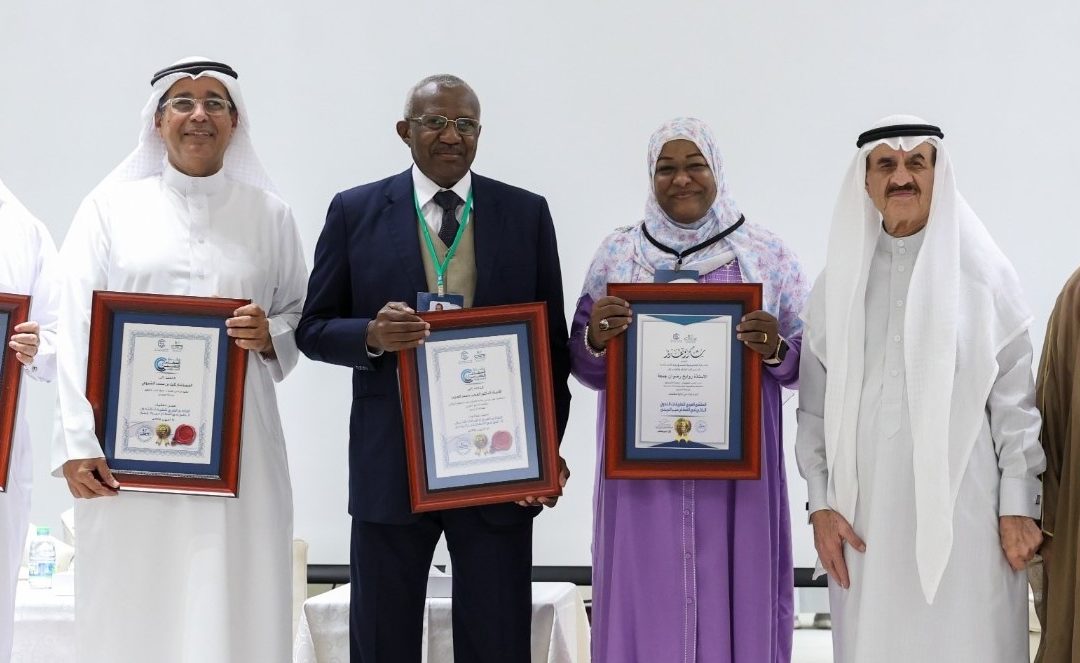
The His Majesty King Hamad Academic Chair in Digital Education at Arabian Gulf University participated in the Second Arab Forum on Smart Transformation Applications in the Nonprofit Sector for 2026, which kicked off in Manama under the patronage and in the presence of His Excellency Osama bin Saleh Al-Alawi, Minister of Social Development of the Kingdom of Bahrain.
The Chair was represented by Prof. Dr. Al-Ajab Mohamed Al-Ajab, Professor of Digital Education and Learning Technology and Supervisor of the Chair, who presented a paper titled “The Role of Smart Transformation in Achieving the Sustainable Development Goals: Toward a Digitally Enabled Arab Nonprofit Sector” as part of the scientific sessions accompanying the forum.
The paper addressed the role of smart transformation in enabling the Arab nonprofit sector to contribute to achieving the Sustainable Development Goals and reviewed the most prominent challenges it faces, including limited resources, weak digital infrastructure, a shortage of human capital, the absence of impact measurement systems, and weak legislative frameworks governing digital operations.
The paper employed a descriptive, analytical, and comparative approach, analyzing the content of peer-reviewed scientific literature and comparing eight Arab and international case studies of smart transformation in the nonprofit sector.
It concluded that smart transformation contributes to achieving sustainable development through five key mechanisms: precise targeting, improved efficiency, impact measurement, enhanced transparency, and expanded inclusivity. It presented a proposed framework for digital empowerment based on six integrated dimensions: strategy, data, technology, competencies, governance, and partnerships, with specific quantitative indicators for each dimension.
It recommended adopting phased strategies for smart transformation, developing standardized indicators to measure impact, and strengthening partnerships between the public, private, and nonprofit sectors to support the transition from partial digital transformation to comprehensive smart transformation based on impact and sustainability.
This participation is part of the contribution of the His Majesty King Hamad Chair in Digital Education to enriching the scientific discourse on smart transformation and exchanging Arab expertise and experiences in leveraging modern technologies to serve the nonprofit sector and achieve sustainable development.
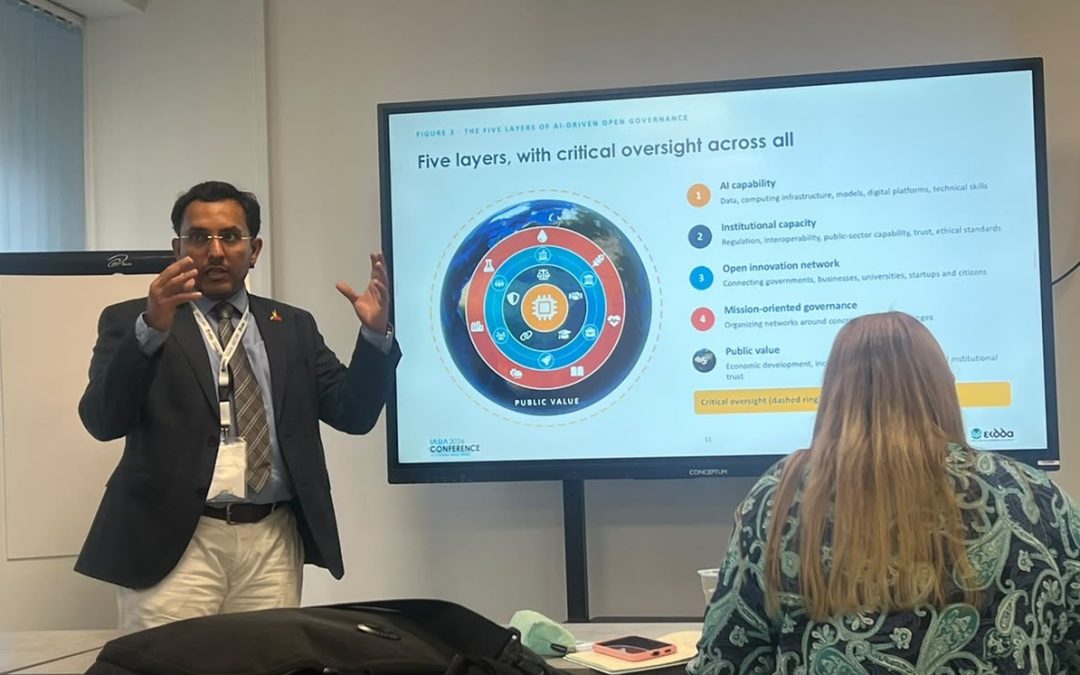
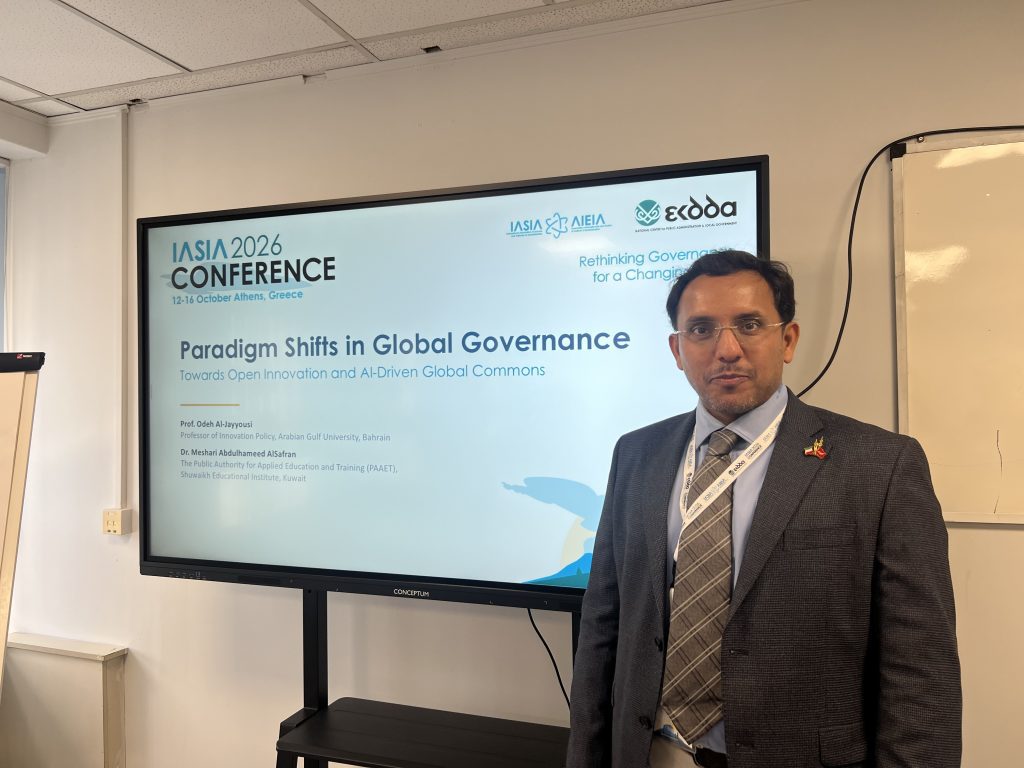
Dr. Meshari Abdulhamid Al-Saffran, a graduate of the Innovation Management program at Arabian Gulf University, presented a peer-reviewed research paper proposing an open network model for artificial intelligence governance in the 57 member states of the Organization of Islamic Cooperation (OIC). This was during his participation in the 2026 Annual Conference of the International Association of Schools and Institutes of Administration (IASIA) in 2026, held in the Greek capital of Athens under the theme “Rethinking Governance for a Changing World,” in collaboration with the National Center for Public Administration and Local Governance in Greece. Al-Saffran, who works at the Public Authority for Applied Education and Training in the State of Kuwait, prepared the paper in collaboration with Prof. Dr. Ouda Al-Jayousi, Professor of Innovation Policy at Arabian Gulf University in the Kingdom of Bahrain. The paper was titled “Paradigm Shifts in Global Governance: Toward Open Innovation and AI-Based Global Commons” and was presented during the 12th Working Group session, “Artificial Intelligence and Digital Technologies in the Public Sector,” after being selected for the conference program following review by the working group heads. The study emphasizes that the most profound impact of artificial intelligence on government work goes beyond the technical dimension to bring about institutional transformation. It argues that the role of governments should not be limited to automating existing procedures but can extend to coordinating networks that bring together public institutions, universities, the business sector, startups, and citizens to generate knowledge and create public value. The paper used the Organization of Islamic Cooperation (OIC) as a case study and proposed the establishment of the “Open Network for Artificial Intelligence Governance and Innovation in the Organization of Islamic Cooperation” (OIC-AOGIN). The proposal is based on linking existing national and regional institutions—rather than creating a new centralized bureaucratic body—through four mechanisms: an AI Governance Council, an AI Observatory, a Public AI Commons, and an Innovation Network. Furthermore, the study proposed a five-stage model for AI governance maturity and concluded that the decisive shift lies in governments moving from merely adopting AI tools to open, networked governance. It proposed seven joint tasks for OIC member states, including water security, food security, health, education, climate change adaptation, inclusive cities, and scientific capacity. In establishing the ethics of AI, the paper drew upon the principles of integrity, justice, consultation, and the public interest, as well as international frameworks issued by UNESCO and the Organization for Economic Cooperation and Development (OECD).
Dr. Al-Saffran said: “The real question is not the extent to which the government acquires artificial intelligence technologies, but rather the extent to which its institutions are capable of changing to utilize them properly. Our proposal to the Organization of Islamic Cooperation is that it become an AI-enabled innovation ecosystem, whose strength stems from connecting people, institutions, and technology around shared missions.” The paper concluded by presenting seven research hypotheses for comparative studies among OIC member states, paving the way for further collaboration among public administration colleges and institutes in the region and beyond.
The Deanship of Student Affairs at Arabian Gulf University is organizing its annual seasonal flu vaccination campaign for the 2026–2027 academic year, under the slogan “ Boost Your Immunity by Getting Vaccinated,” in collaboration with the Salmaniya Medical Complex, affiliated with the Ministry of Health of the Kingdom of Bahrain. The campaign will run until the end of the vaccination season, with the aim of boosting immunity, preventing seasonal flu and its complications, and contributing to the health of students and the safety of the university community.
The campaign is part of the university’s commitment to providing a healthy and safe campus environment and supporting preventive measures that help reduce the risk of infectious diseases, thereby promoting public health and safeguarding the university community.
Dr. Aseel Al-Saleh, Dean of Student Affairs, emphasized that organizing the campaign reflects the university’s commitment to the health and safety of its students and its dedication to supporting preventive health initiatives in collaboration with national health institutions. She noted the importance of seasonal flu vaccination in reducing the risk of contracting the disease and its complications, thereby contributing to the health and safety of the university community.
Meanwhile, the Deanship of Student Affairs plans to organize a parallel campaign targeting male and female students residing in university housing in Al-Sukhir area, with the aim of expanding the initiative’s reach and making the vaccine available to the largest possible segment of the student body.
Arabian Gulf University continues to support health initiatives that contribute to promoting the health of its students and establishing preventive practices, driven by its commitment to providing a healthy and safe university environment. The Deanship of Student Affairs has invited all students to take advantage of the campaign and register by filling out the online form via the following link: