by ashokaib | Aug 4, 2026 | Uncategorized
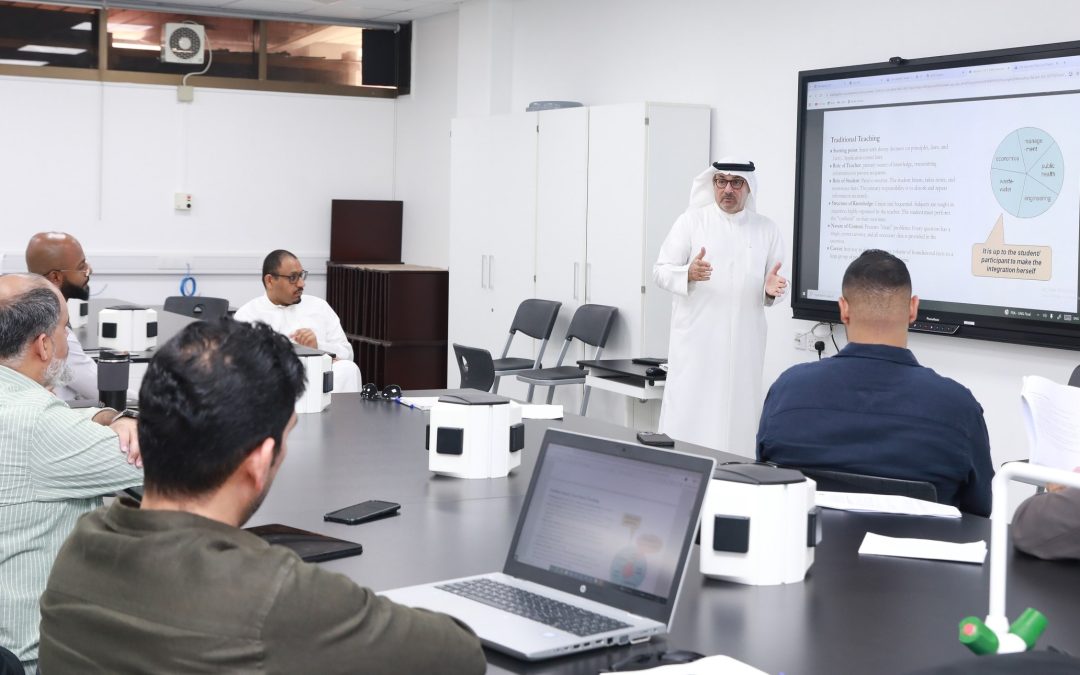
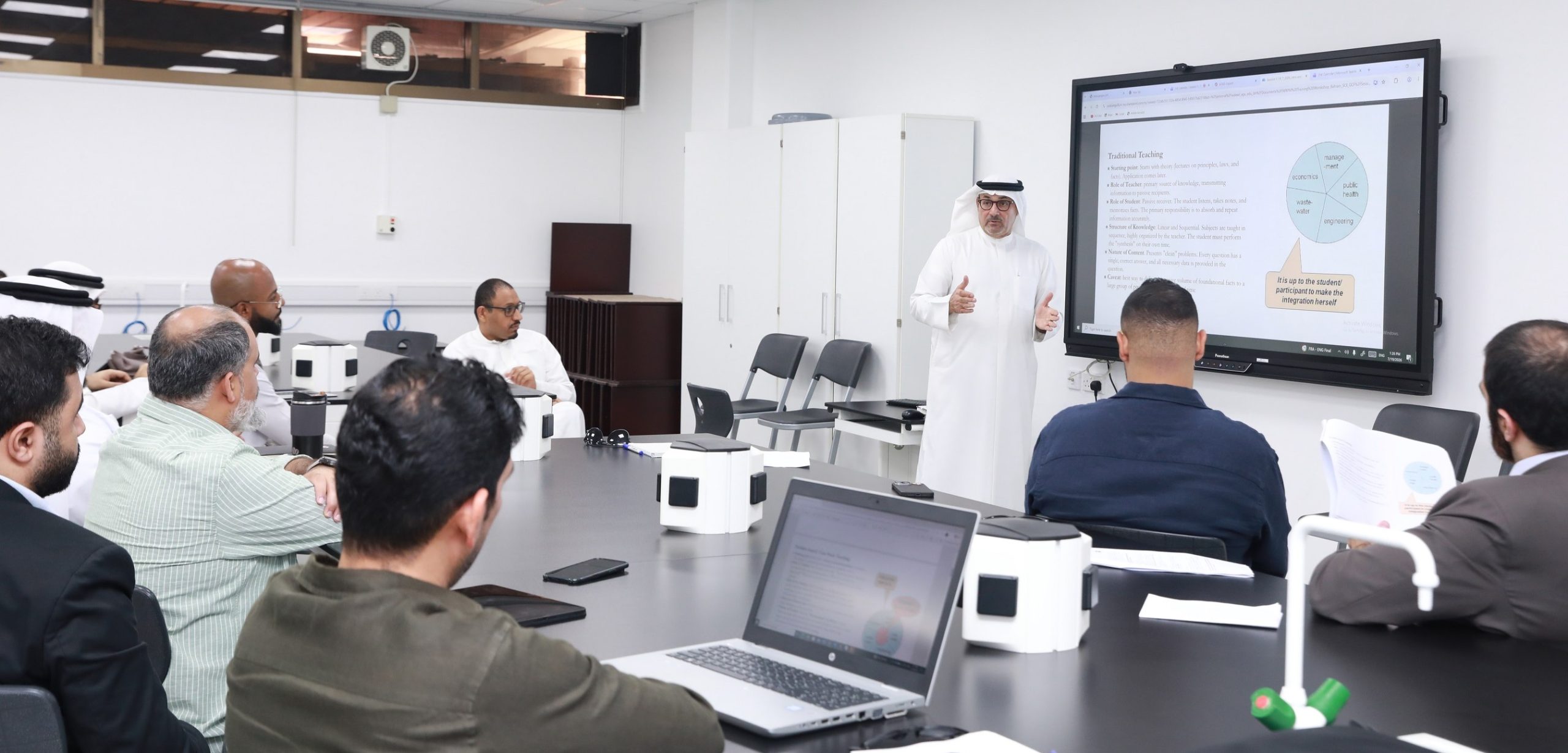
The Supreme Council for Environment (SCE), in collaboration with the Permanent Technical Advisory Committee of the Water Resources Council and the Arabian Gulf University (AGU), has launched the second training programme entitled "Integrated Water Resources Planning and Management". The programme forms part of the project to strengthen the institutional capacity of the Water Resources Council to address climate change challenges, with support from the Green Climate Fund (GCF).
The four-month programme, which runs until 12 November, brings together 20 promising Bahraini specialists and engineers in early- to mid-career management positions from various government entities. The programme is delivered by six faculty members from the Arabian Gulf University.
On this occasion, Engineer Laila Ali Sabeel, Director of the Climate Change and Sustainable Development Directorate at the Supreme Council for Environment, stressed that adopting integrated water resources planning constitutes a fundamental pillar for advancing the sustainable management of Bahrain's water resources. She noted that the approach supports evidence-based decision-making through the use of modern scientific tools, including modelling, simulation and resilience-building methodologies, thereby enhancing water resources management efficiency, promoting environmental sustainability and strengthening water security.
She added that institutional integration among the Permanent Technical Advisory Committee of the Water Resources Council, the Supreme Council for Environment and the entities responsible for water resources management continues to ensure the effective and sustainable governance of the water sector. This collaborative approach aligns national efforts towards integrated and sustainable water resources management in the Kingdom of Bahrain, particularly in light of the growing environmental challenges associated with climate change. She also commended the partnership with the Arabian Gulf University and its significant role in strengthening national capacities by delivering specialised training programmes that support applied research and equip Bahraini professionals with the latest planning and management methodologies and tools, thereby enhancing evidence-based decision-making and the development of effective, knowledge-driven environmental policies.
For his part, Dr. Waleed Khalil Zubari, Professor of Water Resources at the Arabian Gulf University and the programme's lead trainer, said the initiative carries significant strategic importance for Bahrain's water sector. It aims to prepare the next generation of water leaders to apply the principles of integrated water resources planning across water sources and uses, while taking into account the interlinkages between the water, energy, food and environmental sectors. Participants will be trained in mathematical modelling of these interactions and in designing effective interventions to achieve a balance between water supply and demand. The programme also introduces a range of decision-support tools, including linear programming, artificial neural networks and probabilistic modelling.
Dr. Zubari added that the programme provides participants with training in the application of emerging technologies—including artificial intelligence, blockchain, the Internet of Things (IoT), cybersecurity, and the integration of Geographic Information Systems (GIS) with artificial intelligence—to water resources management. It also covers dynamic mathematical modelling of Bahrain's water sector, simulation of future scenarios, and assessment of trade-offs and policy impacts on the country's water resources.
He further explained that the programme has been designed to equip participants with practical and applied skills that will enable them to make meaningful contributions to water resources management. As part of the programme requirements, participants will work in teams on a comprehensive case study encompassing all stages of the planning process, from data collection and dynamic modelling to scenario development, results analysis, and the presentation and defence of proposed solutions before peers and instructors.
The programme seeks to strengthen participants' capabilities in integrated water resources planning and management within the context of Bahrain's water sector. It focuses on forecasting sectoral water demand, balancing supply and demand, modelling the water-energy-food-environment nexus, and applying advanced decision-support tools such as artificial neural networks, linear programming, decision trees and Monte Carlo simulation. Participants will also explore emerging technologies, including artificial intelligence and blockchain, while learning to utilise Geographic Information Systems (GIS) and geospatial intelligence for monitoring and management. In addition, the programme covers the development of dynamic models to simulate future scenarios and evaluate trade-offs and policy impacts under changing climatic, social and economic conditions.
by ashokaib | Jul 20, 2026 | Uncategorized
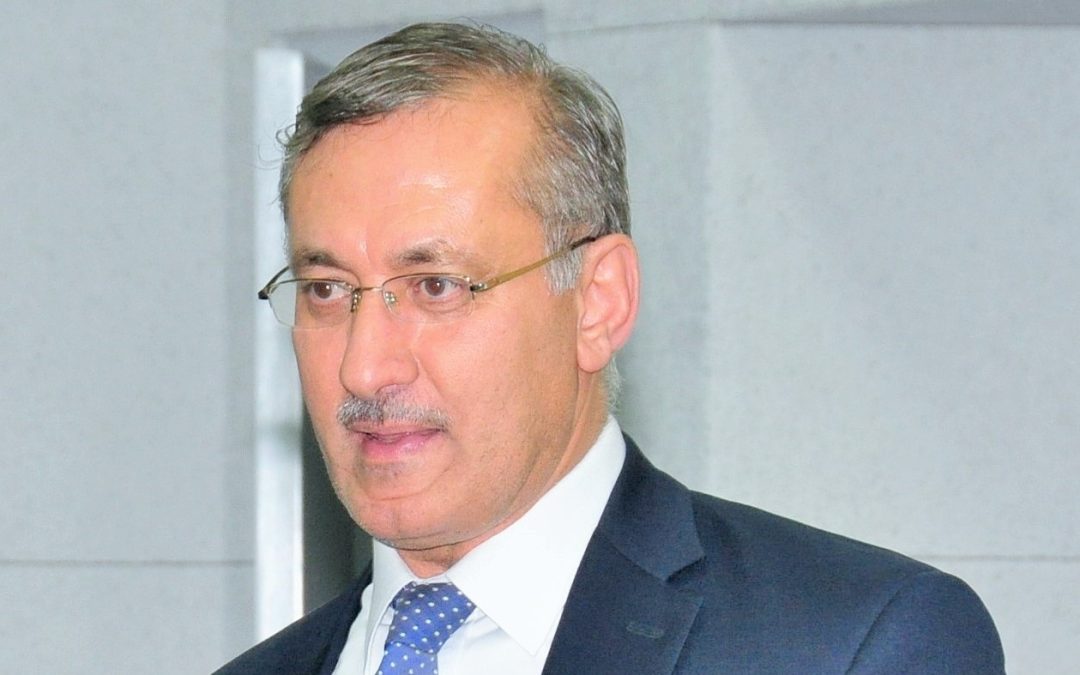
The Arab Scientific Community Organization published an article by Prof. Dr. Odeh Al Jayyousi, Professor of Innovation Policy at Arabian Gulf University, titled “The Arab Scientific and Technological Project: Prospects for the Arab Knowledge Space,” in which he addressed the challenges facing the establishment of an Arab scientific system capable of keeping pace with global transformations in the fields of knowledge and artificial intelligence.
Al-Jayyousi emphasized that the Arab world faces the problem of the absence of a comprehensive Arab scientific and technological initiative, noting that the challenge is no longer limited to possessing technology but requires the ability to produce and develop it within a knowledge-based and institutional environment that supports innovation.
He explained that building a sustainable scientific renaissance requires developing an independent Arab knowledge ecosystem, strengthening the role of universities and research centers in knowledge production and public policy formulation, and forging closer ties between scientific research and the productive sector.
The article noted that digital transformations and artificial intelligence have redefined the concept of sovereignty, necessitating Arab cooperation that transcends national frameworks through the establishment of a unified Arab network for scientific research, a shared open-data infrastructure, and investment funds for advanced technologies.
He also called for investment in high-performance computing centers, the development of artificial intelligence models in Arabic, the enactment of legislation that strengthens digital sovereignty, as well as the establishment of knowledge networks connecting Arab scholars within the region and beyond, and the transformation of Arab talent in the diaspora into a strategic asset for the Arab scientific project.
Al-Jayyousi emphasized the importance of adopting “major national missions” in the fields of water and food security, renewable energy, and the knowledge economy, as drivers to guide scientific research and innovation, stressing that the future belongs to societies capable of connecting minds, networks, and knowledge within open, cross-border innovation ecosystems.
The article concluded by emphasizing that the Arab scientific and technological project represents a civilizational endeavor that transcends national borders, aiming to transform science and innovation into a force for sustainable development and to strengthen the Arab world’s position in the global knowledge economy.
You can read the article via the following link: https://arsco-ai.org/publications/2298
by ashokaib | Jul 16, 2026 | Uncategorized
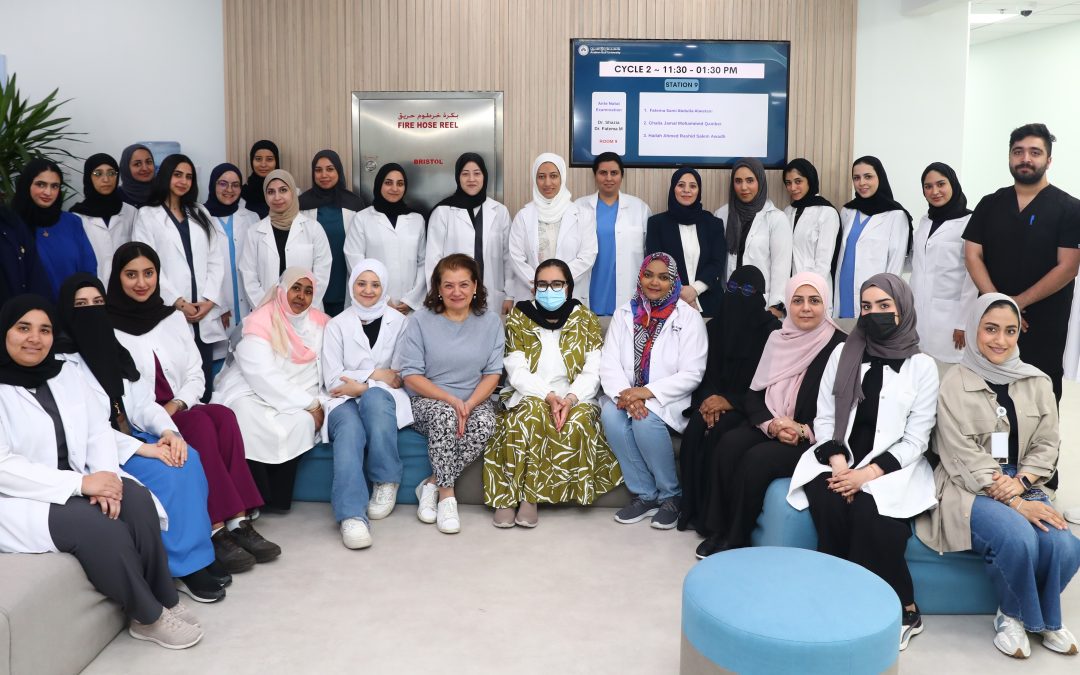
The Medical Skills and Simulation Center at Arabian Gulf University concluded a specialized training workshop aimed at first-year residents in the Bahraini Board of Family Medicine program. This initiative is part of the university’s commitment to supporting medical education and continuing professional development, as well as strengthening its strategic partnership with the Ministry of Health, thereby contributing to sustained cooperation between the two parties and the development of national healthcare competencies.
The workshop was conducted over a full training day under the supervision of family medicine consultants, with the participation of physician and nurse instructors from the Medical Skills and Simulation Center. It comprised 12 clinical simulation stations addressing 12 core cases that are part of the training requirements for first-year physicians in the Bahraini Board Program in Family Medicine, in accordance with the program’s approved training roadmap, which aims to prepare medical professionals who are competent and ready for professional practice.
The workshop utilized the latest medical simulation techniques by designing clinical scenarios that mimic real-world practice in primary health care, in line with the program’s requirements and the trainees’ needs. The cases presented covered multiple fields, including surgery, internal medicine, pediatrics, and obstetrics, with a focus on the community-based aspects that family physicians encounter in their daily practice.
Dr. Reem Al-Ansari, Head of the Medical Skills and Simulation Center, emphasized that this workshop is part of the university’s vision to utilize medical simulation as an advanced educational tool that contributes to enhancing the effectiveness of clinical training and strengthening physicians’ readiness to handle various cases in a safe, realistic environment. She added: “We are proud of our ongoing collaboration with the Ministry of Health and the Bahraini Board of Family Medicine, and through these programs, we strive to provide high-quality training experiences based on global best practices, thereby contributing to the development of physicians’ clinical, communication, and decision-making skills, and enhancing the quality of healthcare provided to the community.”
This workshop is part of a series of training programs implemented by the Medical Skills and Simulation Center at Arabian Gulf University, reaffirming the university’s commitment to supporting specialized medical training programs, developing healthcare competencies, and contributing to the preparation of qualified national professionals capable of providing high-quality healthcare in accordance with the latest professional standards.
by ashokaib | Jul 15, 2026 | Uncategorized
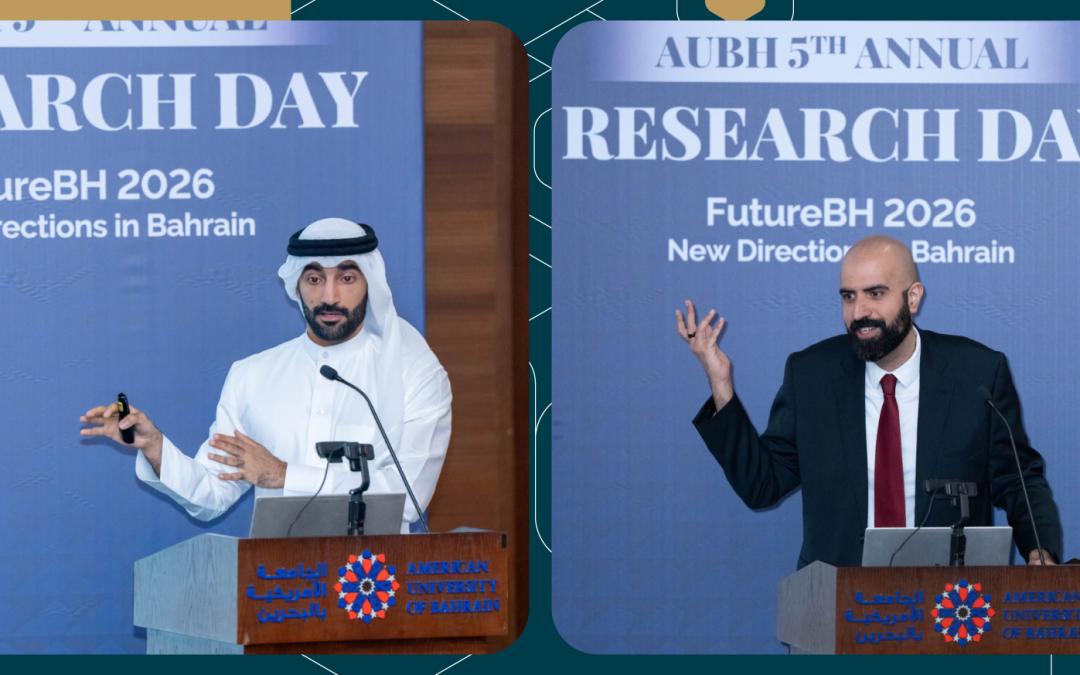
Two academics from the College of Education, Administrative and Technical Sciences at Arabian Gulf University participated in the events of the Fifth Annual Scientific Research Day, organized by the American University of Bahrain (AUBH) under the theme “Bahrain Vision 2026: New Directions in Bahrain,” with broad participation from academics, researchers, and experts from various higher education institutions and government agencies.
Dr. Manaf Al-Khuzaei and Dr. Yousif Al-Nawakhtha, both academics at Arabian Gulf University, delivered two academic lectures addressing the latest trends in the fields of technology and digital transformation, as part of efforts to strengthen academic cooperation and the exchange of research expertise among higher education institutions in the Kingdom of Bahrain. Dr. Al-Khuzaei delivered a lecture titled “Ask the Map: How Artificial Intelligence and Geospatial AI Can Drive Bahrain’s Future,” in which he reviewed applications of geospatial AI in supporting planning and sustainable development. Meanwhile, Dr. Al-Nawakhtha presented a research paper on “Securing Bahrain’s Digital Future: The Transition to Quantum-Resistant Encryption,” in which he emphasized the importance of preparing for future challenges in the field of cybersecurity.
Dr. Al-Khuzaei, a researcher in artificial intelligence applications, modeling, and programming languages, emphasized that artificial intelligence—particularly geographic artificial intelligence (GeoAI)— is bringing about a radical transformation in the way spatial data is analyzed and decisions are made. He explained that modern technologies now allow users to ask questions in natural language on maps and receive accurate answers within seconds—tasks that previously required specialized expertise, complex software, and a significant amount of time.
He said: “Artificial intelligence is not intended to replace humans, but to empower them. It handles repetitive tasks and saves time and effort, while the human role remains essential in understanding problems and making decisions. When AI works alongside experts, the results become more accurate and impactful.”
He noted that the real opportunity lies in developing AI models tailored specifically for Bahrain and the Gulf states, based on regional data and taking into account the region’s climatic and geographical characteristics, which makes them more efficient than generic models developed for different environments. He added: “Bahrain has a significant competitive advantage due to its small size and the ease of implementing smart solutions nationwide, which gives it a real opportunity to serve as a leading model in the use of geospatial artificial intelligence to advance sustainable development.”
Al-Khuzaei explained that the practical applications of these technologies have become a tangible reality, showcasing a model of a smart geographic assistant developed for Bahrain, which has successfully mapped the highest temperature areas, monitored changes in vegetation cover, identified roads at risk of flooding, and extracted buildings from satellite imagery. He concluded his remarks by emphasizing that the tools and technologies are more accessible today than ever before, and that future leadership in this field depends on investing in the development of national solutions led by the people of Bahrain. He said: “The tools are in our hands, and the opportunity is available today. If we take the initiative to build our own solutions, Bahrain can be at the forefront of countries that utilize artificial intelligence to serve society and promote development.”
For his part, Dr. Yousif Al-Nawakhtha, Assistant Professor of Quantum Computing and Cryptography in the Department of Computing at the College of Education, Administrative and Technical Sciences at Arabian Gulf University, emphasized that preparing for the era of quantum computing requires an immediate start in adopting quantum-resistant cryptography, emphasizing that protecting the Kingdom of Bahrain’s digital infrastructure requires early planning and a systematic transition to security solutions capable of addressing future challenges.
He said, “Quantum computing represents a major scientific breakthrough, but at the same time, it poses an unprecedented challenge to the traditional encryption systems on which most digital services rely today. This highlights the importance of quantum-resistant encryption as a practical solution capable of protecting data using current conventional hardware.”
He added that one of the most significant threats is “collect now, decrypt later” attacks, in which adversaries collect and store encrypted data today in anticipation of future quantum computers capable of decrypting it—a threat to data that must remain confidential for extended periods, such as medical records and government data. He noted that the transition to quantum-resistant encryption is not a process that can be carried out quickly, but rather requires planning and investment in time, resources, and expertise. He said: “Starting early reduces security risks and gives organizations sufficient time to carry out a secure and well-planned transition, whereas delaying or rushing implementation may lead to new security vulnerabilities.”
He concluded by emphasizing that investing in information security today is an investment in Bahrain’s digital future, calling on institutions to prepare now to ensure continued trust in digital services and the protection of national data in the face of the challenges of the quantum computing era.
During the event, participants discussed the future of innovation, digital transformation, and smart technologies, as well as their implications for various economic and industrial sectors in the Kingdom. The participation of faculty members from the College of Education, Administrative and Technical Sciences in this scientific event reflects the college’s commitment to supporting scientific research, strengthening its presence in academic forums, and contributing to the discussion of research issues related to national development, in line with the Kingdom of Bahrain’s vision for a knowledge-based and innovative economy.
by ashokaib | Jul 15, 2026 | Uncategorized
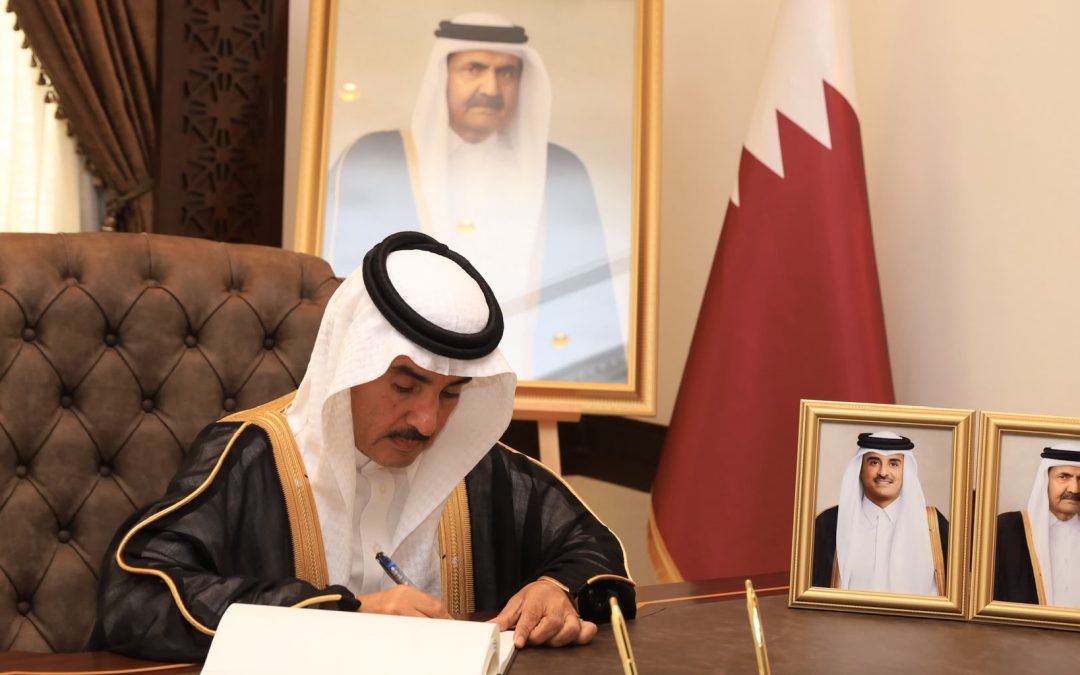
His Excellency Ambassador Nasser bin Abdullah Al-Nasr, Ambassador of the State of Qatar to the Kingdom of Bahrain, received at the embassy headquarters in Manama His Excellency Dr. Saad bin Saud Al-Fahaid, President of the Arabian Gulf University, and the accompanying academic delegation, who offered their condolences on the passing of His Highness the late Amir, Sheikh Hamad bin Khalifa Al Thani, may he rest in peace.
His Excellency Dr. Al-Fahaid expressed his sincere condolences and heartfelt sympathy, asking Allah the Almighty to grant the deceased mercy and eternal paradise, and grant the Al Thani family and the brotherly Qatari people with patience and solace.
His Excellency praised the pioneering role played by the late Amir in building the modern State of Qatar, strengthening Gulf cooperation, and consolidating its regional and international presence. He also commended the late Amir’s generosity and contributions in supporting the development of the Arabian Gulf University, most notably the funding of the His Highness Sheikh Hamad bin Khalifa Al Thani Chair in Geographic Information Systems at the College of Education, Administrative and Technical Sciences.
His Excellency emphasized that these initiatives embody the late Amir’s commitment to supporting higher education and scientific research and reflect his steadfast vision of human development and the advancement of knowledge, in a manner that serves the cause of development and academic cooperation among the Gulf Cooperation Council (GCC) states.